Bookmarks 2026-04-19T18:51:39.093Z
by Owen Kibel
31 min read
Bookmarks for 2026-04-19T18:51:39.093Z
-
Deer | YouTube Music Added: Apr 19, 2026
Deer
Site: YouTube Music
Adrián Berenguer
-
Quantum model explains how single electrons cause damage inside silicon chips Added: Apr 19, 2026
Quantum model explains how single electrons cause damage inside silicon chips
Researchers in the UC Santa Barbara Materials Department have uncovered the elusive quantum mechanism by which energetic electrons break chemical bonds inside microelectronic devices—a detrimental process that slowly degrades performance over time. The discovery, published as an Editors' Suggestion in Physical Review B, explains decades-old experimental puzzles and moves scientists closer to engineering more reliable devices.

-
Gothic Harpsichord
Site: YouTube Music
Rafael Krux

-
Tres sirenas
Site: YouTube Music
Christina Pluhar/L'Arpeggiata/Vincenzo Capezzuto/Katerina Papadopoulou/Raquel Andueza
-
Overture
Site: YouTube Music
Adrián Berenguer
-
Lyrid meteor shower 2026: See spring's first rain of 'shooting stars' peak in moonless skies | Live Science Added: Apr 19, 2026
Lyrid meteor shower 2026: See spring's first rain of 'shooting stars' peak in moonless skies
Site: Live Science
Expect bright fireballs during the Lyrid meteor shower, which will peak in moonless skies on April 22, 2026.

-
President Donald J. Trump is Accelerating Medical Treatments for Serious Mental Illness - YouTube Added: Apr 19, 2026
President Donald J. Trump is Accelerating Medical Treatments for Serious Mental Illness
Site: YouTube
Enjoy the videos and music you love, upload original content, and share it all with friends, family, and the world on YouTube.

-
Jordan Peterson Health Update and Psych Med Injury Discussion
Site: YouTube
We figured out that dad has a psych med induced neurological injury, and has been suffering from akathisia. It’s been 6 years since any psych medications. La...

-
Quantum-informed AI improves long-term turbulence forecasts while using far less memory
An AI model informed by calculations from a quantum computer can better predict the behavior of a complex physical system over the long term than current best models that use only conventional computers, according to a new study led by UCL (University College London) researchers. The findings, published in the journal Science Advances, could improve models predicting how liquids and gases move and interact (fluid dynamics), used in areas ranging from climate science to transport, medicine and energy generation.

-
Victor Davis Hanson: Divided, MAGA Falls. Together, We Win
Site: YouTube
My message to the so-called anti-MAGA right is simple: Stop nullifying the whole America First agenda over your singular disagreement with the administration...

-
ERNIE-Image Turbo Beats Z-Image-Turbo in Benchmarks?!
Site: YouTube
ComfyUI is a great app for playing with the very last AI models, and ERNIE-Image is one of the very latest which you can use at home, on your own computer.ER...

-
 KV Cache Is Eating Your VRAM. Here’s How Google Fixed It With TurboQuant. | Towards Data Science
Added: Apr 19, 2026
KV Cache Is Eating Your VRAM. Here’s How Google Fixed It With TurboQuant. | Towards Data Science
Added: Apr 19, 2026KV Cache Is Eating Your VRAM. Here’s How Google Fixed It With TurboQuant. | Towards Data Science
Site: Towards Data Science
Explore the end-to-end pipeline of TurboQuant, a novel KV cache quantization framework. This overview breaks down how multi-stage compression achieves near-lossless storage through PolarQuant and QJL residuals, enabling massive context windows with minimal memory overhead

-
Holding a Teacher Accountable for Spewing Nonsense About ICE and the Holocaust (THE SAAD TRUTH_2019)
Site: YouTube
Pre-order Suicidal Empathy: https://lnk.to/SuicidalEmpathyPre-order signed copy of Suicidal Empathy: https://squarebooks.com/book/9780063446533s_____________...

-
This Calculation Could Change The Periodic Table
Site: YouTube
Get 5% off all Radiacode devices and accessories with a link https://radiacode.com/100-series?discount=SABINE2026RC or use promo code SABINE2026RC at checkou...

-
 A 10-Year-Old Girl Wrote to NASA Asking Them to 'Restore Pluto to a Planet,' and NASA's chief Replied with Four Words No One Expected
Added: Apr 19, 2026
A 10-Year-Old Girl Wrote to NASA Asking Them to 'Restore Pluto to a Planet,' and NASA's chief Replied with Four Words No One Expected
Added: Apr 19, 2026A 10-Year-Old Girl Wrote to NASA Asking Them to 'Restore Pluto to a Planet,' and NASA's chief Replied with Four Words No One Expected
Site: The Daily Galaxy - Great Discoveries Channel
A fourth grader's handwritten note reached the top of NASA. The administrator's four word reply changed the conversation overnight.

-
NSA using Anthropic's Mythos despite Defense Department blacklist Added: Apr 19, 2026
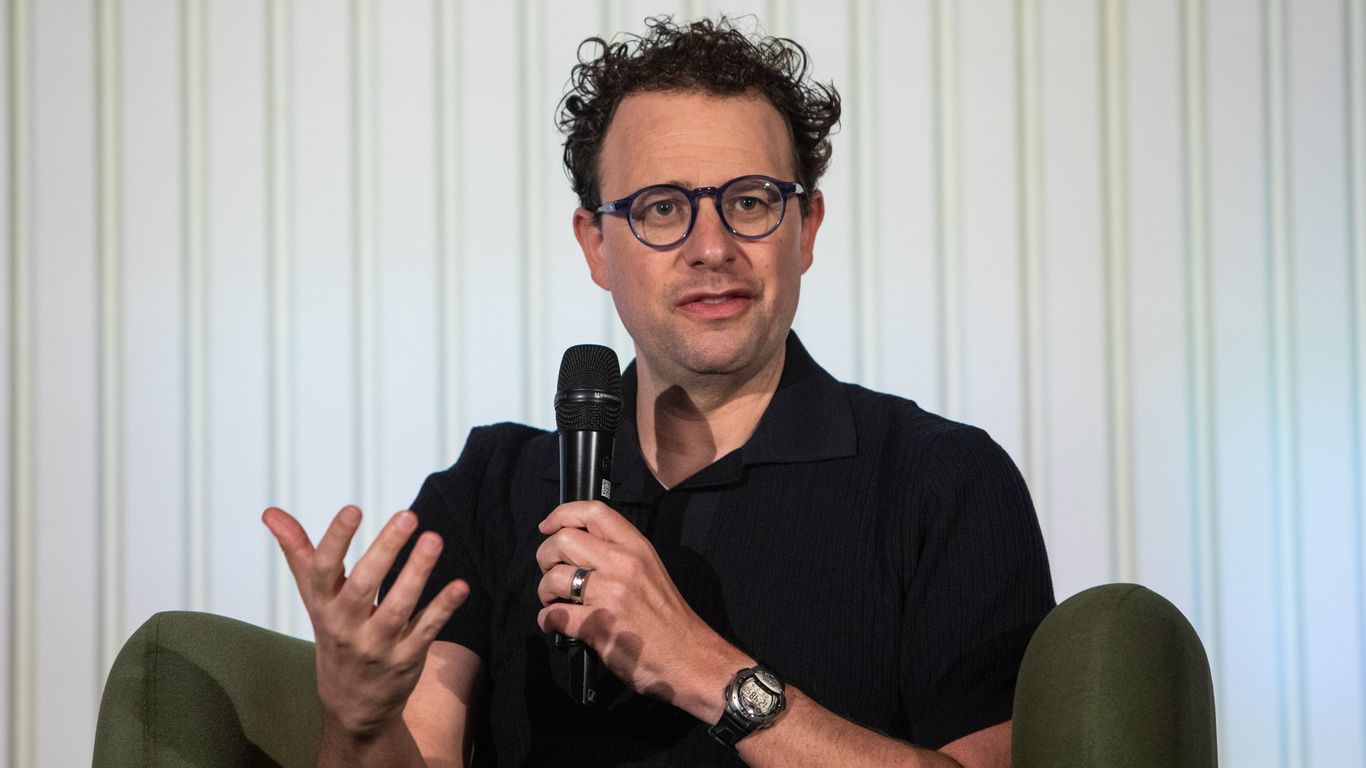
Scoop: NSA using Anthropic's Mythos despite Defense Department blacklist
Site: Axios
The government's cybersecurity needs are outweighing the Pentagon's feud with Anthropic.
-
Mental math's shortcut—pupil dilation suggests people start solving before all numbers are in
People often solve simple arithmetic problems, such as basic addition, subtraction, multiplication or division, in their minds. The precise mental processes they rely on to solve these problems, however, are not entirely clear. Researchers at Université de Bordeaux and UCLouvain recently tried to better understand how humans tackle simple math mentally by tracking the size of their pupils.

-
 I stopped using LM Studio once I found this open-source alternative
Added: Apr 19, 2026
I stopped using LM Studio once I found this open-source alternative
Added: Apr 19, 2026I stopped using LM Studio once I found this open-source alternative
Site: MakeUseOf
LM Studio had competition. I found it.

-
 Is Trump Acting Crazy On Purpose? New Report Suggests Yes.
Added: Apr 19, 2026
Is Trump Acting Crazy On Purpose? New Report Suggests Yes.
Added: Apr 19, 2026Is Trump Acting Crazy On Purpose? New Report Suggests Yes.
Site: Forbes
The president said negotiators would return to Islamabad, Pakistan for another round of peace talks on Monday.

-
This simple CachyOS feature lets me use Windows without dual-booting
Added: Apr 19, 2026
This simple CachyOS feature lets me use Windows without dual-booting
Site: How-To Geek
There are fewer and fewer reasons for me to use Windows.

-
New clever way to make cheap DDR5 RAM may be Intel-exclusive only with no AMD support | Neowin Added: Apr 19, 2026
New clever way to make cheap DDR5 RAM may be Intel-exclusive only with no AMD support
Site: Neowin
Intel and its partners are working on quite a smart technology that could soon make cheap DDR5 RAM widely accessible and more affordable.

-
 Why Do Humans Have Clear White Eyes While Most Apes Have Dark Ones?
Added: Apr 19, 2026
Why Do Humans Have Clear White Eyes While Most Apes Have Dark Ones?
Added: Apr 19, 2026Why Do Humans Have Clear White Eyes While Most Apes Have Dark Ones?
Site: ZME Science
Wolves and humans share the same eye trait that helped both species become the ultimate pack hunters.

-
Why Do Humans Cry? An Evolutionary Biologist Explains Its True Purpose
Added: Apr 20, 2026
Why Do Humans Cry? An Evolutionary Biologist Explains Its True Purpose
Site: Forbes
Research suggests that crying is not a sign of weakness, but one of the most sophisticated social technologies in the natural world.

-
 I finally figured out when to use Gemini Notebooks vs NotebookLM — here’s the winning workflow | Tom's Guide
Added: Apr 20, 2026
I finally figured out when to use Gemini Notebooks vs NotebookLM — here’s the winning workflow | Tom's Guide
Added: Apr 20, 2026I finally figured out when to use Gemini Notebooks vs NotebookLM — here’s the winning workflow
Site: Tom's Guide
This "sync loop" is a productivity game-changer

-
IT HAS BEGUN
Site: YouTube
The United States has seized an Iranian-flagged cargo ship attempting to break a naval blockade near the Strait of Hormuz, escalating tensions and disrupting...

-
President Donald J. Trump Tax Week, Las Vegas Roundtable
Site: YouTube
Enjoy the videos and music you love, upload original content, and share it all with friends, family, and the world on YouTube.

-
Tim Pool DEBATES Tom Renz On Charlie Kirk Assassination & Doubting The Official Narrative
Site: YouTube
WATCH THE FULL EPISODE HERE: https://www.youtube.com/watch?v=fZR6LZEWFswSUPPORT THE SHOW BUY CAST BREW COFFEE NOW - https://castbrew.com/JOIN THE DISCORD: ht...

-
America Seizes Iranian Ship, Pope-Trump Détente, Trump Backs Psychedelic Research: AM Update 4/20
Site: YouTube
A chaotic weekend in the US-Iran standoff as the Strait of Hormuz shuts down again, ships are attacked and seized, and peace talks remain uncertain. Pope Leo...

-
Mamdani Raids Pension Funds to Pay for Spending Priorities | National Review Added: Apr 20, 2026
Mamdani Raids Pension Funds to Pay for Spending Priorities | National Review

-
NYC Mayor Mamdani's response to alleged terror plot shows his failed leadership | Fox News Added: Apr 20, 2026
NYC Mayor Mamdani's response to alleged terror plot shows his failed leadership | Fox News

-
Grocery Socialism in New York City - WSJ Added: Apr 20, 2026
-
US takes Iran-flagged ship into custody, Trump says
Site: Axios
Trump said the Navy fired on the ship's engine room

-
A new force of nature is reshaping the planet, study finds | ScienceDaily Added: Apr 20, 2026
A new force of nature is reshaping the planet, study finds
Site: ScienceDaily
Human societies didn’t just adapt to the planet—they learned to reshape it. From early fire use to today’s global supply chains, our cultural and social innovations have unlocked extraordinary power to transform Earth and improve human life. But that progress has come with serious costs, including climate change, pollution, and mass extinction. Instead of framing this era—the Anthropocene—as pure crisis, Erle Ellis argues it’s also proof of something hopeful: when people work together, they can drive massive positive change.

-
THIS JUST BLEW UP IN THEIR FACES
Site: YouTube
Its all fakeKash Patel suing The Atlantic for defamation. I hope he winsBecome A Memberhttp://youtube.com/timcastnews/joinThe Green Room - https://rumble.com...

-
Woman FREAKS OUT Over Having to Be An Adult, Goes On TIRADE Over Paying Bills
Site: YouTube
WATCH THE FULL EPISODE HERE: https://www.youtube.com/watch?v=jRFEjXHloPMSUPPORT THE SHOW BUY CAST BREW COFFEE NOW - https://castbrew.com/JOIN THE DISCORD: h...

-
Site: X (formerly Twitter)

-
Elon Musk Shares Playful Roadmap to Grok AGI and Beyond / X Added: Apr 20, 2026
Site: X (formerly Twitter)
-
Site: X (formerly Twitter)
-
Site: X (formerly Twitter)
-
Site: X (formerly Twitter)
-
Site: X (formerly Twitter)
-
Site: X (formerly Twitter)
-
Site: X (formerly Twitter)
-
GNOME 50 is the Linux desktop update I've waited years for
Added: Apr 20, 2026
GNOME 50 is the Linux desktop update I've waited years for
Site: How-To Geek
New features that have been a long time coming
-
I used Gemini wrong for months, here's the setup that actually works
Added: Apr 20, 2026
I used Gemini wrong for months, here's the setup that actually works
Site: Android Police
Stop using Gemini like ChatGPT
-
Palantir Calls For MILITARY DRAFT Amid World War 3 Fears | Tim Pool
Site: YouTube
Become A Memberhttp://youtube.com/timcastnews/joinThe Green Room - https://rumble.com/playlists/aa56qw_g-j0BUY CAST BREW COFFEE TO FIGHT BACK - https://castb...

-
Why Justices Alito and Thomas Might Not Retire This Year... But Someone Might, with Mollie Hemingway
Site: YouTube
Why justices Alito and Thomas might not retire this year... but someone might, with Mollie Hemingway.LIKE & SUBSCRIBE for new videos everyday: https://bit.ly...

-
The Atlantic's LONG History of Trash "Reporting" Leading to Kash Patel Lawsuit, w/ Mollie Hemingway
Site: YouTube
The Atlantic's long history of trash "reporting" leading to Kash Patel lawsuit, with Mollie Hemingway.LIKE & SUBSCRIBE for new videos everyday: https://bit.l...

-
America DOESN’T Want To Help The Homeless, Its A MASSIVE Money Maker
Site: YouTube
WATCH THE FULL EPISODE HERE: https://www.youtube.com/watch?v=TxDyYrShxbUSUPPORT THE SHOW BUY CAST BREW COFFEE NOW - https://castbrew.com/JOIN THE DISCORD: ht...

-
 Why Companies That Choose AI Augmentation Over Automation May Win in the Long Run
Added: Apr 20, 2026
Why Companies That Choose AI Augmentation Over Automation May Win in the Long Run
Added: Apr 20, 2026Why Companies That Choose AI Augmentation Over Automation May Win in the Long Run
Site: Harvard Business Review
Leaders are making a choice with their AI strategy: Are they primarily seeking to improve the bottom line through automation and headcount reduction, or grow the top line in innovative ways through augmentation? As they make this decision, leaders are underestimating how employee perception—and the predictable behavioral dynamics that follow—will determine the success of their AI strategy. While automation strategies will likely show early gains relative to the deeper investment required for augmentation, but that augmentation will likely perform better in the long run. That’s because while automation offers immediate cost-savings, a company’s long-term success is determined by how people feel about their work, whether they meaningfully engage with new tools, and whether top talent stays.
CEOs are facing a strategic fork in the road when it comes to AI. Are they primarily seeking to improve the bottom line through automation and headcount reduction? Or is their ultimate goal to grow the top line in innovative ways through augmentation? In the past few months, several prominent leaders have shown what each looks like. In February, Jack Dorsey laid off more than 4,000 people—nearly half of Block’s workforce. “Intelligence tools have changed what it means to build and run a company,” he wrote in a letter to shareholders, adding that most other firms would reach the same conclusion within the year. Dorsey’s vision is a great example of automation, where leaders expect the company to be able to continue to do what it does, but with fewer people. Micha Kaufman of Fiverr also made headlines for his stark predictions about AI. In a blunt letter to employees, he wrote, “[H]ere is the unpleasant truth: AI is coming for your jobs. Heck, it’s coming for my job too. This is a wake-up call.” But Kaufman wasn’t announcing layoffs—he was arguing that AI was going to dramatically change work and that everyone needed to adapt. “You free up your time to do things that human beings have special capabilities in—nonlinear thinking, judgment calls, issues that have to do with taste, making decisions, thinking about strategy,” he told CBS. Even if employees could automate all of their repetitive tasks, he indicated in the interview, they wouldn’t be replaceable. Instead, he was betting on human potential. There’s evidence that companies may follow some version of Dorsey’s path, adopting AI tools with automation and cost-cutting in mind. Goldman Sachs bankers expect the total headcount across their investment banking clients, which span industries, to drop by around 11% on average over the next three years because of AI. And the 2025 Indeed Workforce Insights Report, which surveyed some 80,000 workers across eight countries, found that the time saved with AI was mostly redirected into doing “more of same tasks” or was absorbed by other projects. Hints of genuine augmentation, such as innovation/creative work and increased client interaction didn’t even break the top five use cases. This might reflect leaders’ status quo bias as much as AI’s potential: It’s easier for executives to imagine using AI to streamline what people already do than to reimagine how it might be used to produce entirely new value. Based on our research and expertise—spanning psychology, economics, and communication—we believe that automation and augmentation will generate different yet predictable behavioral dynamics and associated performance outcomes. Specifically, automation strategies will show early gains relative to the deeper investment required for augmentation, but that augmentation will perform better in the long run. The Underappreciated Power of Perception As leaders roll out AI strategies, they aren’t simply introducing new tools; they are signaling whether employees have a future in that organization. For example, it gets murky at best for a company to tell one group of employees that it is investing in their growth while laying off other colleagues in the name of efficiency. The inconsistency erodes trust because it shows that the organization will cut employees once it has opportunity to do so. Perceptions of strategic intent are signals that travel fast. When people sense that AI is being deployed to ultimately replace them rather than empower them, their behavior shifts. We know this because we’ve studied how employees’ perceptions shape their work and workplaces. Between the three of us, our research has covered workplace well-being, the effect of employee happiness on sales, and productivity, retention, and talent attraction (Jan); and AI’s effect on how people think, feel, and perform in the workplace , including why people create “workslop” (Kate and Jeff). To understand how employees perceive their companies’ intentions around AI, automation, and augmentation, we surveyed 1,294 full-time desk workers (who spend more than 50% of their time at a computer) across the United States, Canada, and the United Kingdom this past January. The survey included individual contributors, managers, and senior leaders across 19 industries with the majority from technology, financial services, healthcare, retail, and professional services. We asked respondents to identify their organization’s ultimate motivation for integrating AI from three options: to augment employees’ capabilities by enabling people to do higher-value, more creative, or more effective work; to automate work and reduce costs, possibly by reducing headcount or avoiding new hiring; or that they were unsure. Notably, only 44% of respondents said their organization had formally announced any AI plans at all. Overall, approximately 62% reported they believe that their organization incorporates AI to augment their capabilities. Thirty-four percent of employees believe their organization is using AI to automate work; 4% remain unsure. However, this masks substantial variation by level, industry, and country. In some industries (such as retail and professional services) about 40-50% of employees suspect that adopting AI is ultimately undercutting their own job security. Employees who perceive automation intent are also more likely to report feeling forced rather than encouraged to adopt AI—a distinction that turns out to matter beyond morale, as we explore later in this article. See more HBR charts in Data & Visuals Other research shows that leaders are vastly overestimating employee enthusiasm for AI. A recent survey found that while 76% of executives believed employees were enthusiastic about AI adoption, just 31% of individual contributors agreed. Our survey similarly shows that 81% of senior leaders think their organization is all-in on augmentation, while those who are closest to the frontlines are more skeptical. At the individual contributor level, 53% perceive augmentation and 40% suspect automation. The seniority gap underscores the importance of perceptions: it’s not enough to have an augmentation strategy. Employees need to believe it. Based on our prior collective research, we believe that employee perceptions should be a central factor in developing a company’s AI strategy, not an afterthought or a question saved for implementation conversations. To understand why, consider three behavioral dynamics that help explain how people integrate—or resist—these new tools in their daily work: 1. The well-being lever. A leading concern for workers is that AI will lead to layoffs. In our survey, approximately 60% expressed concern about job displacement, with 32% expressing moderate to high concern. The specter of layoffs undermines employees’ sense of job security and, in turn, their workplace well-being. If layoffs do eventually hit, they also impact those who stay. In the book Why Workplace Wellbeing Matters, one of us (Jan and co-author George Ward) shows that drops in workplace well-being are directly linked to declines in productivity, retention, and talent attraction. Yet leaders routinely underestimate how the ripple effects of layoffs—or the threat thereof—can undermine the very efficiencies they aim to achieve. 2. Workflow integration lever. Employees are told to “use AI” without clear guidance on why or how it will improve their work. When workers aren’t empowered to take control of this process—as we call being “pilots” of AI—they default to following instructions with limited conviction, like passengers along for the ride. This shallow engagement often coexists with shrinking teams and growing workloads, creating the perfect conditions for “workslop”—the proliferation of low-effort, low-quality AI-generated work. Without coordination or guardrails, automation amplifies noise rather than value. Collaboration fragments, trust is undermined, and productivity becomes harder to sustain. Our survey data reflects this: employees who suspect their organization’s ultimate goal is replacement, not empowerment, are most likely to produce “workslop.” 3. The talent pipeline lever. Long-term, cost-cutting AI strategies can hollow out the junior talent pool. Entry-level white-collar roles are where future leaders build judgment, networks, and expertise. When companies automate these roles away, they trade short-term savings for long-term fragility. Recent research from economics scholars at both Harvard University and Anthropic shows that generative AI protects top roles while compressing or eliminating junior roles. The result: fewer future leaders and aggressive dependence on external hiring. Over time, this erodes institutional knowledge and weakens culture. A Tale of Two J-Curves Employee perception is also a useful lens for leaders because of how the adoption of new general purpose technologies play out. Integrating a new technology into how we work takes time, as organizations have to invest in new processes, workforce training, data infrastructures, and management practices before productivity gains materialize. Erik Brynjolfsson, a leading scholar on the economics of artificial intelligence, and his colleagues call this lag between adoption and productivity growth “the Productivity J-curve” because of the initial dip in productivity prior to the sharp rise. Earlier research from Brynjolfsson and co-authors suggests that organizational re-wiring and skill development might require about 10 times the investment as rolling out the technology itself. Brynjolfsson and colleagues are describing macro-economic trends—their J-curve captures how and when the adoption of a new general-purpose technology shows up in national income statistics. But we believe that the same logic applies at the level of individual firms—the macro J-curve is the aggregation of micro J-curves that play out at the firm-level. As such, it’s a useful lens for thinking about how AI investments—and the automation vs. augmentation choice—might play out and show up in the company results. Think, for a moment, about the nuts and bolts of how automation with AI works. At its most basic level, automation substitutes human labor with AI in relatively well-specified tasks. If a person’s job is characterized by a bundle of tasks, a machine can do a proportion of those tasks, enabling similar or possibly even more output from smaller teams. Looking at this process through the lens of the J-curve, the dip in productivity is relatively shallow and short, with early and more visible improvements driven by cost savings and increased throughput. Augmentation, on the other hand, requires deep organizational transformation and learning-by-doing, as well as job redesign and the development of effective human-AI coordination routines—a longer and deeper initial dip. The J-curve logic, however, also suggests that augmentation holds greater long-run potential: once complementary investments are absorbed and new socio-technical routines stabilize, performance rises to reflect not just efficiency gains, but a shift in the organization’s productive frontier. Augmentation is about inventing the future rather than automating the past. What this micro J-curve framework helps us see is what happens inside organizations as these processes unfold. That dynamic is critically important, because the relative advantage of augmentation over time is a function of human behavior. And that behavior is largely shaped by employee perceptions. Whether AI is deployed for automation or augmentation, it sends powerful signals that shape employee expectations, feelings, and actions. These behavioral responses can actively bend the trajectory upward or downward. To understand why the AI automation path is likely to underdeliver in the longer run, we therefore need to look at the predictable behavioral dynamics that unfold as workers respond to perceived threats, uncertainty, and erosion of trust. Gradually all of this undermines the cost-saving promise of an automation path or bolsters the impact of an augmentation path. Our survey data reflects early signs of this progression already in motion: employees who feel mandated to adopt AI report lower well-being, higher intent to leave, and a greater suspicion of automation intent, consistent with the earliest phases of the decline we describe in this article. We believe this follows a six-phase progression for both options, which begins after the initial up-front investment in Al tools and capability building. The Automation Path: A Six-Phase Decline The automation path generates a negative organizational trajectory that undermines long-term performance. When organizations signal that AI is primarily a tool for cost-cutting and workforce reduction, employees rationally disengage, trust erodes, and effort shifts toward short-term self-preservation rather than value creation. What begins as an efficiency play can compound into a capability deficit that weakens innovation and growth, eroding the very talent and adaptability needed to realize AI’s full potential. Phase 1: Early resistance to AI adoption. When employees sense that AI is being introduced without a genuine commitment to their future—and may be a precursor to layoffs—they naturally begin to resist its broader integration into the workplace. Adoption appears to rise (because it is mandated), but engagement remains shallow. Instead of producing pilots, organizations generate passengers. Phase 2: Layoffs undermine well-being and productivity. As redundancies begin, workplace well-being drops sharply. Research one of us contributed to (Jan), found that happy workers are roughly 13% more productive. When well-being erodes, productivity does, too. Anxiety spreads, focus deteriorates, and initiative collapses. Phase 3: Leaner teams become overburdened—and “workslop” rises. Smaller teams paired with lower morale result in overextended employees. Many turn to AI to fill gaps in their workflows, often without training or context. This accelerates “workslop,” which undermines efficiency rather than enhancing it. As we saw in our workslop research, employees who feel forced to adopt AI, as opposed to those who are encouraged, show meaningfully higher intent to leave and a 65% higher self-reported rate of producing workslop. Phase 4: Rising attrition as employees seek stability. Declining well-being and rising overload lead more employees to seek opportunities elsewhere. High performers often leave first. Institutional knowledge dissipates. Innovation slows. Phase 5: Declining employer brand and talent attraction. As layoffs, disengagement, and churn accumulate, the organization’s reputation as an employer suffers. It becomes harder to attract the kind of talent that drives growth. Phase 6: Erosion of leadership pipelines and culture. In the space of a few years, a deeper consequence emerges: the loss of internal leadership pipelines. Junior roles disappear, continuity erodes, and future leaders aren’t cultivated nor steeped in the distinct culture of the organization. See more HBR charts in Data & Visuals The Augmentation Path: Six Phases that Drive Growth In contrast, the augmentation path generates a positive trajectory where the same behavioral dynamics in the same sequence help bolster chances of successful business development. When organizations signal genuine commitment to their people and pair that commitment with thoughtful AI integration and investment, a compounding advantage emerges. Phase 1: Trust accelerates AI adoption. When employees believe AI is being introduced to make their work better, they engage with curiosity and a sense of agency. Adoption rises due to intrinsic uptake over compliance. The organization cultivates pilots over passengers. Phase 2: Sustained workplace well-being raises productivity. Without the specter of layoffs undermining morale, workplace well-being holds; and with it, productivity rises. Well-being translates directly into higher output, stronger focus, and greater motivation to secure longer-term competitive advantage. Phase 3: Teams develop new capabilities and “workslop” is minimized. Employees invest in collaboration, using judgment in when and where to use AI. With clear expectations and a culture of trust, “workslop” is kept to a minimum. Phase 4: Retention strengthens and institutional knowledge broadens. Employees who perceive investment stay and flourish. High performers deepen their expertise and grow their networks within the organization. Institutional knowledge accumulates across teams. Phase 5: Employer brand becomes a talent magnet. As the organization’s commitment to people becomes visible through culture, reputation, and career building, it creates a virtuous cycle of talent retention and attraction. Phase 6: Leadership pipelines deepen and culture strengthens. Junior roles are preserved and reimagined and become the training ground for future leaders. Continuity builds, culture strengthens, and the organization benefits from a workforce that has embedded AI in a way that affords efficiency, collaboration, and innovation. A Credible Commitment There’s an important caveat here: The augmentation path requires a credible commitment to working with existing employees, even if it means a longer dip in the J-curve at first. This includes a deep upfront investment in capability-building as part of the rollout of AI technologies. In practice, this might mean co-developing AI tools and business processes with employees to improve how they work, even if that takes change management, reskilling programs, and, when necessary, respectful right-sizing through natural attrition rather than layoffs. Employees will see this commitment—or its absence—in everyday workflow decisions, such as which tasks get routed to AI as opposed to humans. Consider an example from the professional services firm Aon. Greg Case, Aon’s CEO, has emphasized a commitment to the firm’s 60,000 employees to increase AI literacy and treat headcount as a cornerstone of the company’s “Aon United” strategy and a driver of future growth. Aon’s strategy focuses on training employees to work with AI and gain digital fluency rather than replacing them; in 2025, chief administrative officer Lisa Stevens noted that the only job displacement from AI will be among those unwilling to learn the technology. An employee-centric approach has worked for Aon before. During the Covid-19 pandemic, Case publicly pledged that there would be no redundancies for what was then a 50,000-person workforce, a move funded by temporary salary cuts for top executives. Today, when Case signals that AI will expand rather than erode opportunity at Aon, his workforce has direct evidence that such pledges are real: cutting jobs during Covid would have been far simpler and, in the short term, more profitable. This strategy has also played out during a previous technological disruption. When Satya Nadella became CEO of Microsoft in 2014, the company faced a strategic inflection point: whether to optimize its legacy software business or reinvent itself around cloud computing and AI. Nadella chose transformation—and paired it with a company-wide investment in people. As described in his 2017 book Hit Refresh, Microsoft rebuilt its culture around continuous learning, shifting from a “know-it-all” to a “learn-it-all” organization. The company redesigned roles across engineering, sales, and product teams to align with cloud and AI, while investing heavily in reskilling. Rather than relying primarily on automation or workforce reduction, Microsoft focused on equipping employees to work alongside new technologies—an approach that helped drive its resurgence as a leader in cloud and AI. Choosing the Path of Human Potential AI is a test of whether leaders truly believe their people are costs to be minimized—or potential to be amplified. We believe the former produces a brief spike in perceived efficiency before a sequence of behavioral dynamics begins to erode engagement, talent, and performance. The latter produces durable, long-term gains rooted in engagement and innovation. The first is a path of contraction; the second is a path of expansion. While AI adoption is too recent to have produced longitudinal outcome data, the behavioral preconditions for these long-term gains or losses are already visible. In our survey, employees who perceive augmentation intent report higher AI engagement, stronger collaboration, and 32% lower intent to leave than those who perceive automation intent. Choosing the path of human potential is not the easy option. It is the more imaginative, strategically demanding path, and it requires leaders to take a leap of faith in their existing teams. It also requires leaders to articulate a credible commitment to their people, to invest in their capacity to use AI well, and to redesign workflows so that technology augments rather than replaces human judgment. It demands communication that is consistent, transparent, and anchored in trust. And it calls for patience, because compounding advantages—like compounding returns—are only visible to those who look beyond the next quarter. In the end, the AI revolution will not be won by those who replace people fastest, but by those who empower them best. It might be the road less traveled, but it’s the one that will make all the difference. Disclosure: Both Block and Aon are BetterUp coaching customers. None of the authors have worked directly with either company.


