Bookmarks 2026-03-19T15:32:49.865Z
by Owen Kibel
46 min read
Bookmarks for 2026-03-19T15:32:49.865Z
-
BREAKING: European allies make MAJOR pivot on Strait of Hormuz - YouTube Added: Mar 19, 2026
BREAKING: European allies make MAJOR pivot on Strait of Hormuz
Site: YouTube
Gillian Turner provides details on the Trump administration's messaging on the war in Iran. #foxnews #usnews #world #iran #trump #hegseth #caine #middleeast ...

-
President Trump Participates in a Bilateral Meeting, Mar. 19, 2026
Site: YouTube
The White House

-
Nvidia CEO Jensen Huang says gamers calling DLSS 5 AI slop are "completely wrong" | TechSpot Added: Mar 19, 2026
-
Gold and silver prices hit one-month lows despite Iran war - Google Search Added: Mar 19, 2026
Google Search
-
 Your music playlist might reveal subtle clues about your intelligence
Added: Mar 19, 2026
Your music playlist might reveal subtle clues about your intelligence
Added: Mar 19, 2026Your music playlist might reveal subtle clues about your intelligence
Site: PsyPost - Psychology News
Researchers used smartphone tracking to study how people listen to music in the real world. They found that natural listening habits, especially the lyrics of chosen songs, provide evidence of a person's general cognitive ability.
A new study published in the <em>Journal of Intelligence</em> suggests that a person's everyday music listening habits contain subtle clues about their general cognitive ability. Scientists discovered that the lyrics of the songs people choose to play provide more insight into their intelligence than the musical beats or melodies do. These findings provide evidence that the digital footprints we leave behind in our daily lives could eventually help approximate cognitive skills without formal testing.
Traditional intelligence assessments rely on formal tests given in highly controlled, stressful environments. Yet, cognitive abilities are used constantly to navigate the complexities of everyday life outside of the laboratory.
With smartphones and digital apps capturing so much of what we do, researchers saw an opportunity to study cognitive ability in a natural setting. They chose to focus on music listening because it is a very common daily activity that engages multiple brain networks involving memory, emotion, and auditory processing.
Past research linking music to intelligence has mostly relied on laboratory experiments or self-reported surveys. In those settings, people might misremember what they listen to or claim to like sophisticated music to look good. By using digital tracking data, the scientists aimed to capture exactly what people were listening to in the real world.
"Most research on cognitive abilities, or intelligence in simpler terms, focuses on situations where people try to perform their best, such as tests, school performance, or job tasks. Because of that, we know a lot about how cognitive abilities relate to achievement, but much less about whether they appear in everyday, low-stakes behaviors," said study author <a href="https://www.lmu.de/psy/en/persons/contact-page/larissa-sust-d42de5af.html" target="_blank">Larissa Sust</a>, a postdoctoral researcher at Ludwig Maximilian University of Munich.
"At the same time, many daily activities now leave digital traces that allow us to study such real-life behavior more naturally than before. Our study was motivated by this gap: we wanted to see whether patterns in an everyday digital activity might also reflect differences in cognitive ability. As a starting point, we chose music listening, which is a common behavior that can easily be tracked on smartphones using custom research applications."
The researchers tracked the smartphone usage of 185 participants over a period of five months. They utilized a custom research application installed on the participants' personal phones to log every song played.
The participants also completed a short cognitive ability test on their smartphones. This test measured their capacity for fluid reasoning, vocabulary comprehension, and mathematical knowledge. These skills together make up a person's general cognitive ability, which reflects how well someone can think rationally and adapt to new situations.
Over the course of the study, the participants listened to 58,247 unique songs. The researchers then gathered detailed information about these tracks from online music databases like Spotify. They extracted audio characteristics, such as the tempo and the acoustic qualities of the sound.
They also analyzed the lyrical content of the songs using a specialized linguistic tool. This tool categorized the words in the lyrics based on psychological themes, emotional tone, and social references. In total, the scientists gathered 215 different features related to audio, lyrics, and general listening habits for each participant.
To make sense of this massive amount of data, the researchers employed machine learning. Machine learning is a type of artificial intelligence where computer programs analyze large sets of data to identify complex patterns. They trained these computer models to see if the music listening features could predict a participant's score on the cognitive ability test.
The researchers tested different types of computer algorithms. Only the complex, nonlinear models successfully detected meaningful patterns in the data. This suggests that the relationship between music habits and intelligence is highly intricate rather than simple and direct.
The computer models detected a small but reliable link between a person's music listening behavior and their cognitive test scores. The most informative predictors were not the musical sounds, but the words within the songs. The lyrical preferences of the participants provided the strongest evidence of their cognitive ability.
"When we looked more closely at how our prediction models worked and which aspects of music listening were most informative, one finding surprised us," Sust told PsyPost. "The lyrics of the songs people listened to were more useful for predicting cognitive ability than the musical features."
"In other words, the themes and language used in the lyrics seemed to matter more than aspects like tempo or musical key. This was unexpected because previous research often suggested that melodic preferences play a larger role (e.g., when predicting personality traits), and many people assume that intelligence is mainly reflected in preferences for certain genres, such as classical or jazz music."
Specifically, the models found that people who listened to songs with less positive emotional tones tended to have higher predicted intelligence scores. The researchers suggest that sad or melancholic music might appeal to those who use music for introspection and reflection.
Songs with lyrics focused on the present moment, perceived honesty, and home-related topics were also associated with higher cognitive ability. On the other hand, preferring lyrics with many social words or tentative language tended to predict lower intelligence scores.
Audio characteristics contributed very little to predicting cognitive ability, with one notable exception. The models found that a preference for songs with low liveness was a strong predictor of higher intelligence. Liveness refers to the probability that a track was recorded in front of a live audience.
The scientists propose that live recordings are often highly energetic and less controlled. Individuals with higher cognitive ability might prefer studio recordings because they often use music for focused, intellectual engagement rather than high-energy stimulation.
Listening habits also played a role in the predictions. Participants who spent more time overall listening to music tended to have higher intelligence scores. Additionally, preferring songs in languages other than German, which was the native language of the sample, was associated with higher cognitive ability.
"One key takeaway is that cognitive abilities (or intelligence) may be reflected not only in tests or high-stakes performance but also subtly in everyday behavior," Sust explained. "In our study, patterns in people’s music listening contained small but detectable signals related to their cognitive ability, suggesting that the digital traces we leave behind in daily life could potentially help approximate intelligence."
"While music listening alone provides only limited information, combining multiple types of digital behavior (e.g., what books people read, what places they visit) in the future might make such predictions more accurate and could eventually support adaptive digital tools or early detection of cognitive decline."
While these patterns are interesting, the researchers note some potential misinterpretations and limitations. The predictive power of music listening alone was quite small, meaning an app cannot accurately judge a person's intelligence just by looking at their playlist.
"On their own, these effects are therefore likely not strong enough to be practically useful," Sust noted. "However, they suggest that everyday digital behavior may contain small signals of cognitive differences, which could become more meaningful if combined with many other types of behavioral data."
The relationships observed in the study are purely correlational, meaning that listening to certain music does not cause a person to become smarter or vice versa. The researchers caution that other unmeasured factors, such as a person's age, could be influencing both their intelligence test scores and their music preferences.
"An important caveat is that the associations we found may be influenced by other factors, known as confounding variables," Sust said. "For example, age could play a role, because it is related both to cognitive abilities and to the kinds of music people tend to listen to. We are currently working on follow-up analyses to better understand and account for such effects."
The study, “Deep Beats, Deep Thoughts? Predicting General Cognitive Ability from Natural Music-Listening Behavior,” was authored by Larissa Sust, Maximilian Bergmann, Markus Bühner, and Ramona Schoedel.

-
Parasitic Ideas Are Killing the West | Gad Saad and Batya Ungar-Sargon on Wokeness in Academia
Site: YouTube
In this wide-ranging talk taken from the Heterodox Social Science Conference 2025, Gad Saad and Batya Ungar-Sargon discuss how parasitic ideas infect institu...

-
SECTION 230 IN JEOPARDY
Site: YouTube
SUPPORT THE SHOW BUY CAST BREW COFFEE NOW - https://castbrew.com/Join - / @timcastirl Hosts: Tim @Timcast (everywhere)Ian @IanCrossland (everywhere) | ht...

-
Trump Official Who Resigned, Joe Kent, Under FBI Investigation For LEAKING | Timcast IRL
Site: YouTube
Visit http://truegoldrepublic.com/tim or call 800-628-GOLDSUPPORT THE SHOW BUY CAST BREW COFFEE NOW - https://castbrew.com/Join - https://www.youtube.com/cha...

-
this is a major bombshell
Site: YouTube
Joe Kent speaking with Tucker Carlson implies the US is covering up the assassination of Charlie Kirk or possibly was involvedBecome A Memberhttp://youtube.c...

-
This massive crater could expose the heart of a lost planet | ScienceDaily Added: Mar 19, 2026
This massive crater could expose the heart of a lost planet
Site: ScienceDaily
A mysterious metal-rich asteroid called Psyche has been baffling scientists for over two centuries, and its true origin remains one of the biggest unanswered questions in planetary science. Is it the exposed core of a failed planet, or a chaotic mix of rock and metal forged through countless violent collisions? To find out, researchers simulated how a massive crater near Psyche’s north pole formed, revealing that the asteroid’s internal “porosity” — how much empty space it contains — may hold the key to its secrets.

-
Site: X (formerly Twitter)

-
11 Grand Preludes and Transcription of Handel's Messiah, Op. 66: I. Allegro | YouTube Music Added: Mar 19, 2026
11 Grand Preludes and Transcription of Handel's Messiah, Op. 66: I. Allegro
Site: YouTube Music
Joseph Nolan
-
SHE ACTUALLY CRIED
Site: YouTube
BUY CAST BREW COFFEE TO SUPPORT THE SHOW - https://castbrew.com/Become A Member And Protect Our Work at http://www.timcast.comHost:Tim Pool @Timcast (everywh...

-
Seven U.S. allies back potential Strait of Hormuz coalition Added: Mar 19, 2026
-
SHE ACTUALLY ADMITTED IT
Site: YouTube
What a liarBecome A Memberhttp://youtube.com/timcastnews/joinThe Green Room - https://rumble.com/playlists/aa56qw_g-j0BUY CAST BREW COFFEE TO FIGHT BACK - ht...

-
Marc Andreessen is a philosophical zombie | The Verge Added: Mar 19, 2026
Marc Andreessen is a philosophical zombie
Site: The Verge
A quasi-scientific polemic.
I admit, this is an innovation I did not see coming: Silicon Valley has invented the philosophical zombie from the classic thought experiment “lol how crazy would it be if there were a philosophical zombie.” Until recently, the philosophical zombie was a concept closely associated with Australian philosopher David Chalmers, who defines it as “someone or something physically identical to me (or to any other conscious being), but lacking conscious experiences altogether.” Chalmers’ zombie twin is identical to him functionally and psychologically — except that he feels nothing. This is different from a Hollywood zombie, which has “little capacity for introspection and lack[s] a refined ability to voluntarily control behavior.” So okay, Marc Andreessen is even shallower than our standard philosophical zombie — but still, I think there is a strong case he should be hunted and captured by the Stanford philosophy department so they can try their thought experiments out on him in real life. (Humanely, of course.) But I think for all of us who are interested in consciousness, Andreessen is certainly a specimen. [Media: https://www.youtube.com/watch?v=qBVe3M2g_SA&t=56s] For those of you who are not as internet-poisoned as I am, let me recap: A video of Andreessen on David Senra’s podcast — podcasts being Andreessen’s favored form of self-disclosure — has been making the rounds. In the video, Andreessen cheerfully says he has “zero” levels of introspection — “as little as possible.” This is a positive for entrepreneurs, we are told. “And you know, if you go back 400 years ago, it never would have occurred to anybody to be introspective,” Andreessen says, thus setting himself up for thunderous dunking. I could point to the many ancient traditions of introspection (set out variously in the Bhagavad Gita, Plato, or Psalm 119) or note that his comments about a “guilt-based whammy” that showed up from Vienna in the 1910s and 1920s due to the work of Sigmund Freud suggests Andreessen has never met a Catholic (and is unfamiliar with major Catholic thought, to boot, as introspection is famously important to St. Augustine). I could post a portrait of René “I think therefore I am” Descartes. I could note that this is such a significant misunderstanding of Freud as to suggest Andreessen is totally unfamiliar with him. I am not going to do any of those things, as I believe they have already been done by internet commenters. I am instead going to try to set out what happened, which is that I believe Andreessen read a book. The reference Andreessen gives is The Mind Is Flat by Nick Chater, a professor of behavioral science at the Warwick Business School at the University of Warwick in the UK. Now personally I am somewhat skeptical of how serious a book is when its title references Thomas Friedman, especially when it is being written by some business school guy. Still, the basic thrust of the book — as far as I can tell — is a polemic against the notion of an unconscious mind. I have not read the book, so I am relying on a lecture Chater gave at Google and reviews by his peers in order to summarize it; if this seems unfair to Andreessen, I am happy at his request to actually read the book and do this again in much more irritating detail. In Chater’s Google lecture, he begins by providing a series of optical illusions, demonstrating that our vision cannot work the way we believe it works. This is pretty convincing stuff! It turns out perception is very weird. (That noise you just heard was everyone who’s ever taken a philosophy 101 class yell “qualia” in unison. That’s the philosophy word for the “red-ness” of the color red, or the sensation of the smell of napalm in the morning.) From here, Chater proposes that the idea of an “inner self” is an illusion similar to the illusion we experience when we think we are perceiving more than one color at once. According to Chater, our minds can only do one thing at a time — that is, that we cannot have two thoughts at once, and the idea that we can is an illusion. From there, he suggests that there are no mental depths, there’s no such thing as the unconscious, and there’s no organizing principle to anyone’s mind. To the degree that an “inner self” exists, it is a kind of “tradition,” the cumulative effect of your accumulated experiences, just as a canyon exists because of the cumulative effects of water. There are some obvious problems with this polemic, which are highlighted in the reviews. The key thing I think Andreessen is badly summarizing is an assertion Chater makes in his Google speech: The idea that the conscious mind is like the part of the iceberg above water and that there is a mysterious part of the self below the water is attributable to Sigmund Freud, and this conception of the “larger self” is wrong. There’s only the part above the water. Here’s Andreessen’s read of Chater: “TLDR There is no inner self, you’re chasing an imaginary concept, the end.” In one of several follow-up posts to the interview on X, Andreessen went on to something even sillier: “You’re a 15 second sliding context window with the working memory of a goldfish, your long term memory is mainly fake, and it’s a minor miracle you can get out of the door in the morning.” It’s impressive in the sense that almost every single part of Andreessen’s sentence is wrong. I will begin, pedantically, with the goldfish, which actually have impressive memories, like, years’ worth. But let’s get to the point: “your long term memory is mainly fake.” I suppose this depends on what Andreessen means, doesn’t it? On the one hand, any cradle Catholic can do an “Our Father” or a “Hail Mary” basically at will for the rest of their lives, even if they haven’t set foot in a church in 20 years. There are other indications that memory is in some sense “real”: Small studies suggest that musical memory is preserved even in Alzheimer’s patients. Finally, most of us have attended a play, where actors recite speeches at will. How this is possible if long-term memory is fake, I don’t know. On the other hand, long-term memory can be unreliable — it is possible even to implant false memories. But “mainly fake”? I hope Andreessen stretched before that reach. Obviously, if you’re a “sliding 15 second context window” it would be impossible to have consistent thoughts, preferences, and beliefs over time — except, of course, people do. Personality may change over a lifetime, but there is often stability for years or decades. As for “it’s a minor miracle you can get out of bed in the morning,” well, I have to assume this reflects Andreessen’s own mornings. (Also, any parent of a toddler can tell you that gross motor skills are independent of sophisticated thought, memory, or introspection.) This is the only part of the sentence I can’t really argue with — I personally don’t have much trouble getting out of bed, but I can’t speak for him. At this point, a reader may be tempted to point out to me that Andreessen is trolling, and I am taking him far too seriously. But unfortunately for everyone, Andreessen has waded into an interest of mine, making it intersect with my actual job. He has been posting about his theory of mind for days now — a repeated behavior, which suggests it must be important to him. So since we’re doing quasi-scientific polemics, I’ll throw my own in. I’ve been wondering for a while why many of our Silicon Valley overlords behave like they’ve repeatedly sustained traumatic brain injuries, and I think I’ve come to a conclusion. One thing we know from a variety of studies is that cognition doesn’t decline for some people as they age — those people tend to have stayed in school longer and tend to have greater intellectual engagement. We also know that if you don’t use one of your languages on a regular basis, you start to forget it — even if it was your first language. Writing by hand is better for memory; predictive text leads to boring writing. I am now going to extrapolate from this: If you stop using some skill, mental or physical, you lose it and its benefits. We’ve already seen signs of this with heavy users of AI, along with AI psychosis, which may occur because chatbots are too sycophantic. (I have pitched my editors on attempting to give myself AI psychosis, but they seem to think I am making a joke.) So I’m going to suggest that overreliance on AI is bad for you — which suggests a corollary: Whatever is happening to normal people as a result of AI overreliance has already happened to the ultra-wealthy. Consider: I spend a lot of time standing in line (at the supermarket, at the post office, at a bakery, at a coffee shop). While I’m standing there, I can either be annoyed at how long it’s taking me to get to the front of the line or do something else: goof around on social media or retreat into my mind palace, where I might daydream, review events from earlier in the day, or think about something interesting, like whether it matters if I don’t have free will. I have a lot of opportunities to hang out in my mind palace, because I do a lot of mundane chores, like grocery shopping, laundry, and picking up after myself. The ultra-wealthy don’t have to do any of this. They pay people to do it for them — cooking, cleaning, shopping, you name it. There are no periods of the day where they are forced to figure out how to entertain themselves in the face of repetitive chores. If you don’t use it, you lose it — so maybe a lot of them lose introspection. In fact, they can offload any cognitive activity they don’t enjoy! That’s what subordinates are for, isn’t it? And whatever gets consistently offloaded, they lose. But, worse, they don’t notice they’re losing any skills because they are constantly surrounded by people on their payroll, or people who want something from them. People who are, you know, aggressively financially motivated to flatter them and agree with them. If that yes-man tendency in chatbots is what’s driving AI psychosis or social skill atrophy in normal people, then the same thing has already happened to the very rich. So I am inclined to take Andreessen at his word. He’s having a little meltdown, as he sometimes does, first of all because people are making fun of him online — a thing he doesn’t encounter on a regular basis outside social media due to the yes-man phenomenon of wealth, and which is for this reason much more upsetting for him than it would be to a normal person. He has wholesale adopted Chater’s thinking, or at least a version of it, and it probably felt revelatory and correct to him because his own mind is shallow. (He doesn’t strike me as the kind of guy who’s thought about the hard problem of consciousness much, you know?) I’m not convinced he knows he was reading a polemic. But second, I also believe him when he says he doesn’t introspect. Because we know he agrees with Chater, we can just use Chater’s definition of thought here, bracketing whatever problems that definition may have. Because introspection under Chater’s definition is just another kind of perception, Andreessen has just functionally told us that he is missing qualia. We’ve got ourselves a philosophical zombie right here, and possibly a methodology for creating them at will. Someone should get on the horn to Australia — Chalmers is going to be so excited. I am also going to presume that in his posts, Andreessen is describing himself. But obviously there’s some overlap with a thing that Andreessen invests in, which is to say AI — which also has no long-term memory, no actual perception (and no qualia), and no ability to get out of bed. It is possible that Andreessen likes Chater because Chater suggests there is no depth to humans, which means that AI “intelligence” is very close to human intelligence, which means AI can replace humans at their jobs and Andreessen’s investments will make a boatload more money. So, inspired by Vanity Fair, I thought it might be fun to interview Andreessen via ChatGPT — an a16z investment — since he seems to be implying that humans aren’t much different than AI. (Andreessen’s firm is also invested in xAI, but I think asking Mecha Hitler to impersonate Andreessen is probably too rude, even for me.) I asked ChatGPT, roleplaying as Andreessen, why he didn’t introspect; it told me “I wouldn’t actually say that,” before going on at length about why people who want to be entrepreneurs should use it but also “validate everything against external feedback.” But hey, if improvising nonsense is all Andreessen does, this is as much of an answer as the real guy can give us. So I decided to ask ChatGPTeessen another question: What did Andreessen mean when he wrote “Introspection = neuroticism x narcissism x thumbsucking”? Here’s the answer:
What I meant is: most of what people call “introspection” is not some high-fidelity path to truth—it’s a distortion loop. Break it down. * Neuroticism: you’re obsessing over your own thoughts, replaying decisions, second-guessing. That’s not clarity—that’s anxiety masquerading as insight. * Narcissism: you’re assuming your internal state is uniquely important, that your feelings are the central object worth analyzing. In reality, the world doesn’t care. Markets don’t care. Users don’t care. * Thumbsucking: you’re not acting. You’re sitting there, self-soothing with analysis instead of making decisions and moving forward. So the equation is deliberately provocative, but the point is practical: introspection is often a trap. In startups, this kills you. Founders sit around debating their own motivations, their fears, their identity—meanwhile someone else is shipping product, talking to customers, and taking the market. The bias should be toward external reality and action: * What do users do, not what do you feel * What works, not what you think should work * What ships, not what you’ve analyzed Use introspection sparingly, like a diagnostic tool. But if it becomes your default mode, you’re just spinning in place.
This answer, much like the first one, doesn’t sound stylistically like Andreessen: It’s not succinct or tendentious enough. On the other hand, it’s an improvising 15-second context window with no introspection telling me what Marc Andreessen thinks, which is what Andreessen also claims to be. And the gist does sound like his thinking, doesn’t it? If there’s no “inner self,” what’s the difference? So I guess we’ve all learned something important: Marc Andreessen, a philosophical zombie, can be easily replaced with AI. I bet that’s great news for a16z’s investors, since it means Andreessen no longer must be paid — and it frees him up to be the subject of some philosophy experiments. (Well, unless the neuroscientists get to him first, I guess.) I look forward to finding out what it’s like to be a philosophical zombie — or maybe that it’s not like anything to be a philosophical zombie.

-
Site: X (formerly Twitter)
-
Elon Musk on X: "Minute-long story made w Grok Imagine https://t.co/N8qnMkNsg0" / X Added: Mar 19, 2026
Site: X (formerly Twitter)
-
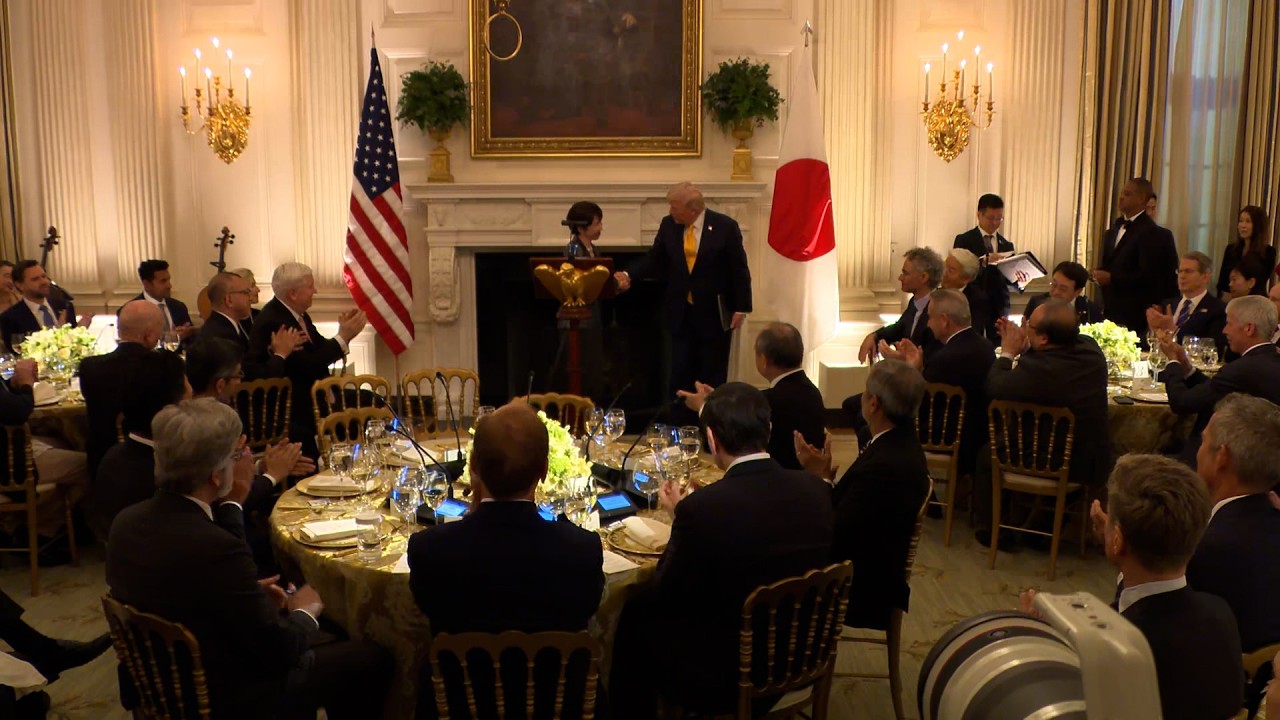
President Trump Participates in a Dinner with the Prime Minister of Japan
Site: YouTube
The White House
-
 flybirdxx/ComfyUI-Qwen-TTS: A Simple Implementation of Qwen3-TTS's ComfyUI
Added: Mar 19, 2026
flybirdxx/ComfyUI-Qwen-TTS: A Simple Implementation of Qwen3-TTS's ComfyUI
Added: Mar 19, 2026GitHub - flybirdxx/ComfyUI-Qwen-TTS: A Simple Implementation of Qwen3-TTS's ComfyUI
Site: GitHub
A Simple Implementation of Qwen3-TTS's ComfyUI. Contribute to flybirdxx/ComfyUI-Qwen-TTS development by creating an account on GitHub.
-
Scientists Discover Bizarre New Tarantula Species Unlike Anything Seen Before Added: Mar 19, 2026
Scientists Discover Bizarre New Tarantula Species Unlike Anything Seen Before
Site: SciTechDaily
Four tarantulas discovered in Arabia and Africa form a new genus, Satyrex, distinguished by males with unusually long palps and burrowing lifestyles.

-
PGCRT/ComfyUI-QWEN3_TTS
Added: Mar 19, 2026
GitHub - PGCRT/ComfyUI-QWEN3_TTS
Site: GitHub
Contribute to PGCRT/ComfyUI-QWEN3_TTS development by creating an account on GitHub.
-
mailzwj/ComfyUI-Qwen-TTS: Qwen-TTS nodes for ComfyUI
Added: Mar 19, 2026
GitHub - mailzwj/ComfyUI-Qwen-TTS: Qwen-TTS nodes for ComfyUI
Site: GitHub
Qwen-TTS nodes for ComfyUI. Contribute to mailzwj/ComfyUI-Qwen-TTS development by creating an account on GitHub.
-
Releases · pixaroma/pixaroma-workflows
Added: Mar 19, 2026
Releases · pixaroma/pixaroma-workflows
Site: GitHub
Comfy UI workflows from Pixaroma YouTube channel, episode backups. - pixaroma/pixaroma-workflows
-
Humans tend to like the same mating calls as animals
Site: YouTube
Your taste in music may feel unique, but there may be something more biologically innate driving your acoustic choices: A new study found that animals and hu...

-
Welcoming the Prime Minister of Japan to the White House. 🇺🇸🇯🇵
Site: YouTube
Enjoy the videos and music you love, upload original content, and share it all with friends, family, and the world on YouTube.

-
Jensen Huang: Nvidia's Future, Physical AI, Rise of the Agent, Inference Explosion, AI PR Crisis
Site: YouTube
(0:00) Jensen Huang joins the show!(0:26) Acquiring Groq and the inference explosion(8:53) Decision making at the world's most valuable company(10:47) Physic...

-
Joe Kent’s Resignation, the Democrats’ Anti-Israel Shift, and America’s Blue-State Decline | VDH
Site: YouTube
Jack Fowler and Victor Davis Hanson discuss Joe Kent’s recent resignation over opposition to military action against Iran. Hanson argues Iran’s long record o...

-
Why 2026 Could Be the Most Dangerous and Transformational Year Since World War II | VDH
Site: YouTube
President Donald Trump has been the catalyst for a lot of the world’s current upheaval—Iranian threat decimated, Donroe Doctrine enforced in Latin America—an...

-
This Free AI Just Beat ElevenLabs at Voice Cloning (It's Not Even Close)
Site: YouTube
Every voice cloning model has a breaking point, throw a complex, layered voice at ElevenLabs, Qwen TTS, or any open-source model, and the clone falls apart. ...

-
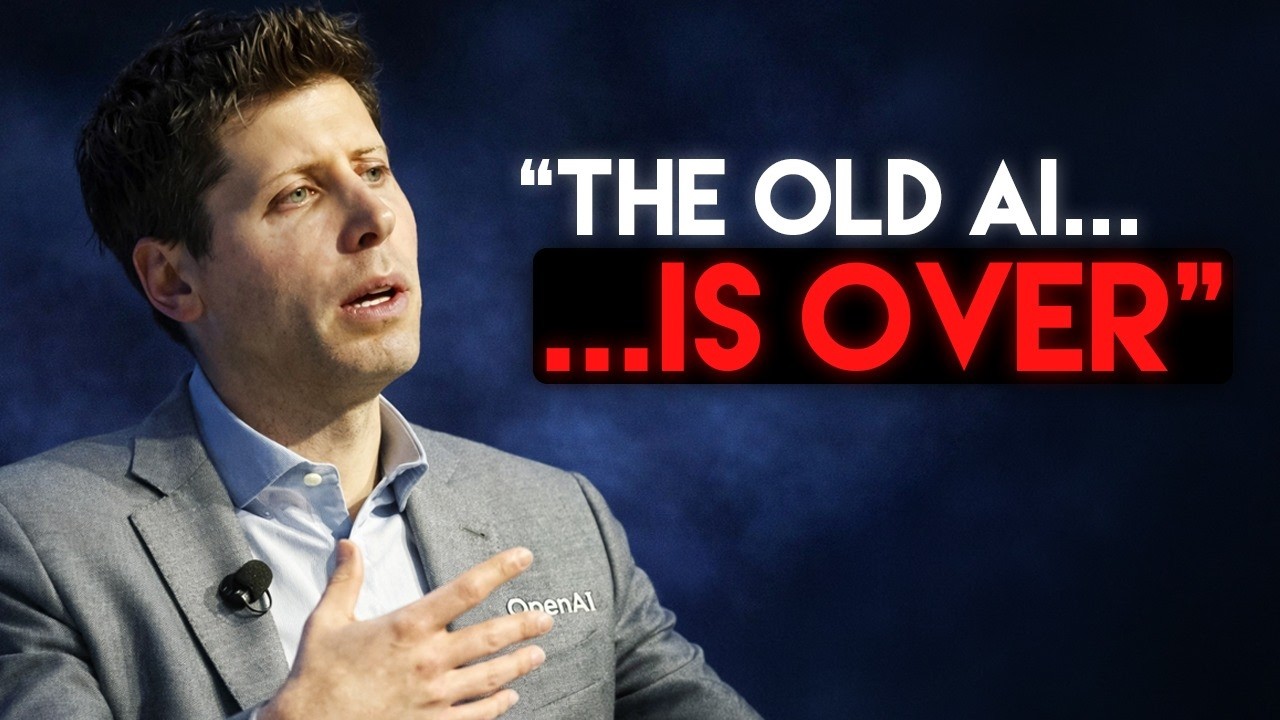
Sam Altman Just Declared the Death of Transformers (ChatGPT Getting Replaced)
Site: YouTube
Sam Altman just said the architecture behind ChatGPT and most modern AI may soon be replaced. Apple introduced LiTo, a model that can turn one image into a r...
-
Light becomes matter: Shadowless projection mapping makes images indistinguishable from print Added: Mar 19, 2026
Light becomes matter: Shadowless projection mapping makes images indistinguishable from print
Projection mapping is widely known as a lighting technique that overlays images onto buildings or objects to create visual effects. In fields such as extended reality (XR) and vision science, however, researchers have suggested that projection could go beyond simple overlays, potentially allowing the color, pattern, or even the perceived material properties of an object to appear as though they have physically changed.

-
The ONLY Free LTX 2.3 Setup You Need (No Subscription)
Site: YouTube
LTX Video 2.3 is here, and I've created a free Kaggle notebook to show you exactly how to run this powerful ai video generator. This guide covers the good, t...

-
Site: X (formerly Twitter)
-
LTX 2.3 - The New KING Of UNCENSORED AI VIDEO
Site: YouTube
Discover the power of LTX 2.3, the ultimate open-source AI video model! 🚀 In this full tutorial, I’ll show you step-by-step how to generate high-quality vid...

-
AIknowlege2go Creator Profile | Civitai Added: Mar 19, 2026
AIknowlege2go Creator Profile | Civitai
Learn more about AIknowlege2go on Civitai.
-
After criticism from Mamdani, Palestinian author speaks out against him, calls American Jews 'monsters' | The Times of Israel Added: Mar 19, 2026
-
Study pinpoints exactly when the bow-and-arrow era began - Earth.com Added: Mar 19, 2026
Study pinpoints exactly when the bow-and-arrow era began in North America and how it spread so quickly across the West
Site: Earth.com
The bow and arrow arrived across western North America almost all at once, offering new insight into how fast ideas can spread and evolve.

-
quote of the day today march 17: Quote of the Day by George Orwell: 'War is Peace, Freedom is…'—Inspiring quotes by the author of dystopian novel Nineteen Eighty-Four - The Economic Times
Quote of the Day: A powerful Quote of the Day has the ability to cut across time, speaking not just to the era in which it was written but to the world we live in today. Few writers have managed this as sharply as George Orwell, whose work continues to shape modern conversations about politics, truth, and control. His words often feel less like literature and more like a warning—one that grows louder in moments of uncertainty. That is precisely why a Quote of the Day matters: it forces reflection, challenges assumptions, and reveals uncomfortable truths about society.Today’s quote is one of Orwell’s most haunting and widely discussed lines: “War is Peace, Freedom is Slavery, Ignorance is Strength.” These words come from his iconic novel Nineteen Eighty-Four and capture the essence of how language can be manipulated to control thought. Before understanding its deeper meaning, it is important to understand the life and experiences of the man behind it.Early Life of George OrwellGeorge Orwell was born on June 25, 1903, in Motihari, Bengal, India, under the name Eric Arthur Blair. His father worked as a minor official in the Indian civil service, while his mother came from a family with roots in Burma. Orwell grew up in what he later described as the “landless gentry,” a class that valued social status despite limited financial means, as per information sourced from Britannica.After moving to England, he attended boarding school, where he stood out not just for his intelligence but also for his awareness of class differences. These early experiences of inequality and discomfort would later shape his writing, especially his deep concern with power structures and social injustice.Career, Writing and Political AwakeningOrwell’s career took an unusual path. Instead of attending university, he joined the Indian Imperial Police in Burma in 1922. Though he initially served as a model officer, he grew increasingly uncomfortable with the realities of colonial rule. This internal conflict led him to resign in 1928, a decision that marked the beginning of his transformation into a writer and political thinker, as per information sourced from Britannica.He immersed himself in the lives of the poor, living in London and Paris among laborers and struggling workers. These experiences inspired his first book, Down and Out in Paris and London (1933), which brought him early recognition.Orwell went on to write novels like Animal Farm (1945), a political allegory of revolution and corruption, and Nineteen Eighty-Four (1949), a dystopian masterpiece exploring surveillance, propaganda, and authoritarian control. His work consistently reflected his rejection of imperialism and his evolving political beliefs, moving from anarchism to a form of democratic socialism, as per information sourced from Britannica.The Meaning Behind the Quote of the DayThe quote—“War is Peace, Freedom is Slavery, Ignorance is Strength”—is deliberately paradoxical. At first glance, it seems nonsensical. But that is precisely Orwell’s point.In Nineteen Eighty-Four, these phrases are slogans of a totalitarian regime that uses language to distort reality. Each statement represents a form of psychological manipulation:“War is Peace” suggests that constant conflict keeps citizens united and distracted, preventing rebellion.“Freedom is Slavery” implies that independent thinking leads to suffering, while obedience ensures safety.“Ignorance is Strength” means that a population kept uninformed is easier to control, strengthening those in power.Orwell was illustrating how governments—or any powerful institutions—can reshape truth itself. When language is twisted, people begin to accept contradictions as reality. Over time, this erodes critical thinking and replaces it with blind acceptance.The quote is not just about fictional regimes. It serves as a warning about real-world systems where propaganda, misinformation, or selective narratives influence public perception. It reminds us to question what we are told, to think independently, and to recognize when language is being used as a tool of control.Other Iconic Quotes by George OrwellBeyond this famous line, George Orwell left behind a body of work filled with equally powerful observations:“Perhaps one did not want to be loved so much as to be understood.”“Who controls the past controls the future. Who controls the present controls the past.”“In a time of deceit telling the truth is a revolutionary act.”“All animals are equal, but some animals are more equal than others.”“The best books... are those that tell you what you know already.”A Quote of the Day like this does more than inspire—it unsettles. Orwell’s words force us to confront how easily reality can be reshaped when people stop questioning authority. Decades after his death in 1950, his ideas remain strikingly relevant, reminding us that the battle for truth is never truly over.

-
Site: X (formerly Twitter)
-
Site: X (formerly Twitter)
-
Site: X (formerly Twitter)
-
White House eyes Friday rollout for AI framework Added: Mar 19, 2026
-
Google unveils new ‘vibe design’ tool to help anyone design a high-fidelity UI using natural language | TechRadar Added: Mar 19, 2026
Google unveils new ‘vibe design’ tool to help anyone design a high-fidelity UI using natural language
Site: TechRadar
Stitch goes all in on vibe designing

-
Chavez erased: Statues fall, streets renamed, murals wiped Added: Mar 20, 2026
Cesar Chavez erased across California as statues fall, streets renamed and murals wiped
Site: New York Post
Cesar Chavez is disappearing across California.

-
Israel strikes South Pars gas field Iran war Trump Netanyahu politics 2026 - India Today Added: Mar 20, 2026
Israel, US and Iran: The tail that wagged the superpower
Site: India Today
Israel's covert strike deepens Iran conflict as US faces political fallout
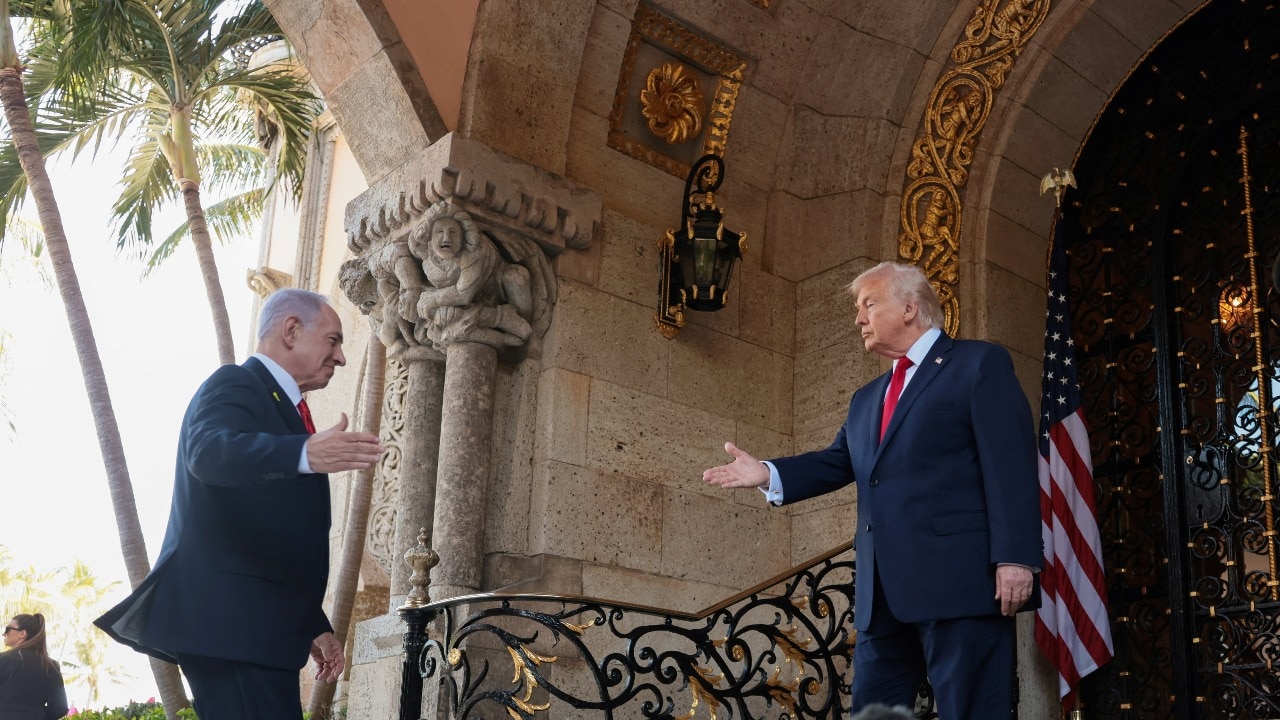
On the morning of March 18, 2026, Israel struck the South Pars natural gas field in the Persian Gulf, the world's largest, without telling the United States it was going to do so. Donald Trump, the man whose military is also fighting the war, found out when everyone else did.Trump went to Truth Social. Israel had, he wrote, “violently lashed out” out of “anger for what has taken place in the Middle East,” and "the United States knew nothing about this particular attack.” Within hours, a US defence official told NBC News that was not true: Washington and Tel Aviv had coordinated on the strike, as they have on strategically significant targets throughout the campaign.Either the President of the United States was blindsided by his own ally, or he was covering for them. Both explanations are extraordinary. Both are consistent with everything that has happened since February 28th.This is where we are, three weeks into America's largest military operation in the Middle East in two decades. An ally strikes the world's largest gas field. The president says he didn't know. His own officials say he did. Gulf states that trusted American security guarantees are watching their refineries burn. And the man at the centre of all of it, the man who pushed, lobbied, and manoeuvred until the bombs finally fell, is not in Washington. He is in Jerusalem, fighting for his own political survival, watching his poll numbers, and reportedly counting on regime change in Tehran to finish the job.Welcome to the most consequential outsourcing deal of the modern era.THE PHONE CALL THAT STARTED WARThe story of how this war began is, at its core, the story of a phone call. On February 23rd, Netanyahu rang Trump with a piece of intelligence: Iran's supreme leader and his top advisers were all convening at a single location in Tehran that Saturday morning. They could all be killed in one strike. It was, Netanyahu told the President of the United States, a now-or-never moment. Trump took the deal.Netanyahu had visited the White House a record-breaking six times in the prior year. In call after call, he had been methodically shifting Trump's gaze toward Iran's nuclear ambitions. When Omani mediators were reportedly on the verge of announcing a potential diplomatic breakthrough in Geneva, Netanyahu worked to derail those talks. Then came the Saturday morning airstrike.THE MAN WITH EVERYTHING TO GAINTo understand why Netanyahu pushed so hard, we have to understand the corner he was painted into before this war began.Israel's elections are scheduled for October 2026. It is the first vote since Netanyahu presided over the single greatest security catastrophe in modern Israeli history: the October 7th attacks. Polls before the war showed his coalition projected to win just 49 to 52 seats in the 120-member Knesset, against 57 or 58 for the opposition. His corruption trial grinds on. Conviction could mean prison.He was desperate for a distraction. He had made Iran the central theme of his long political career, and now, finally, he had a US president willing to act on it.The political logic was brutally direct. Political analysts say the war is one of the cornerstones of his reelection strategy. The plan: battlefield achievements would allow him to reframe October 7th not as a catastrophic failure of his leadership but as the opening chapter of a broader, triumphal transformation of the Middle East.So, within hours of the opening strike, his office had branded the campaign “Operation Roaring Lion”. It is a campaign logo as much as a military designation.And yet the polls aren't cooperating. Despite 81 percent of Israeli Jews supporting the strikes, the latest Channel 12 survey shows Likud receiving exactly the same number of Knesset seats as before the war began. The pro- and anti-Netanyahu blocs remain deadlocked at 53 seats each, well short of the 61 needed for a majority. He needed a game changer. The war alone may not be enough. He is now reportedly counting on regime change in Tehran.THE MAN WITH EVERYTHING TO LOSENow turn the lens to Washington. Trump ran for president in 2024 promising to end wars, not start them. MAGA's core instinct is isolationist. And yet here he stands, the man who once mocked endless Middle Eastern entanglements, presiding over America's largest military operation in the region in two decades, without a congressional vote.The American public has noticed. Poll after poll tells a damning story. According to NPRPBSMarist, 56 percent of Americans oppose the military action, and just 36 percent approve of Trump's handling of Iran. The Quinnipiac poll puts his overall approval at 37 percent, with 57 percent disapproval. His economic numbers are at their worst ever. CNN found that 59 percent of Americans disapprove of the initial decision to strike.Most strikingly, 61 percent of independents, the swing voters who put Trump back in the White House, oppose the war outright.Analysts suggest Trump is fast losing his MAGA support. He is now being guided by “neo-conservatists” like Marco Rubio in the government. These hawks want him to put boots on the ground to either capture Kharg, or Iran’s stock of Uranium. The war is being fought on the go.The midterms are in November. History is not kind to incumbent presidents in midterm elections. History is especially unkind when those presidents are conducting unpopular wars with no exit plan.The irony is almost too perfect. Netanyahu needed this war to survive an election. Trump may lose one because of it.THE UNCOMFORTABLE TRUTHOman's Foreign Minister Badr Al-Busaidi, the man who was literally brokering US-Iran nuclear talks in the weeks before the bombs fell, and whose country is now being struck by Iranian drones, chose language in The Economist that no diplomat uses lightly. America, he wrote, had lost control of its own foreign policy. It was “an uncomfortable truth to tell.” But it had to be told.The evidence is hard to dismiss. White House officials themselves are, by their own admission, “cognisant of the appearance of doing Israel's bidding.”The resignation of the National Counterterrorism Center director, who claimed Israel had goaded Trump into an unnecessary war, laid bare a schism inside the administration that no amount of triumphalist messaging can paper over.Even Netanyahu confirmed the dynamic without embarrassment: “I have tried to persuade successive American administrations to take firm action, and President Trump did.”THE DIVERGING ENDGAMESNetanyahu's objective is, by his own admission, regime change in Tehran. Israel has “no interest in what comes after,” as Al-Busaidi observed and has, in every conflict it has entered over the last two and a half years, set objectives so absolute that the wars effectively cannot end. These are not war aims; they are blank checks drawn on American power.Trump, by contrast, needs this over. He wants a win he can take a victory lap on before November. Three of his own advisers believe he will want to end major operations before Netanyahu does. Oil prices are spiking. The Strait of Hormuz is disrupted. Gulf allies who trusted American security cooperation now experience that cooperation as a direct threat to their own stability.The two men want different things from the same war. And one of them, the one whose survival depends on this war continuing, has more leverage over its pace than most Americans realise.Senator Chris Van Hollen put it more pungently than any diplomat would: Netanyahu “finally found a president stupid enough to attack Iran.”THE TABThere is a scene that captures this entire relationship. Netanyahu, meeting with US Ambassador Mike Huckabee, reportedly showed him a literal “punch card” of Iranian leaders Israel had already assassinated or intended to assassinate. A punch card. As though the lives of leaders, the fate of a 90-million-person nation, the disruption of global energy markets, and the risk of American soldiers dying were items to be tallied toward some reward.At least thirteen American soldiers have already been killed. Hormuz shipping is in crisis. Gulf states are under Iranian drone attack. And Americans, who were promised an end to adventurism, not a new chapter of it, are being asked to foot the bill.Netanyahu may yet get his election win. He may avoid prison. He may get his regime change and his place in history as the man who finally neutralised Iran.But as Al-Busaidi warned, and as Trump's own numbers now confirm: there is no scenario in which both men get what they want. Israel has a clear endgame. America, watching its midterms approach and its approval ratings crater, does not.The tail has wagged the superpower. The question now is whether the superpower notices, and whether it will matter by November.- EndsPublished By: Priya PareekPublished On: Mar 20, 2026 14:48 ISTTune In Must Watch
-
Cyclical trap: How America is repeating history's fatal mistake in Iran - India Today Added: Mar 20, 2026
Cyclical trap: How America is repeating history's fatal mistake in Iran
Site: India Today
History's great powers rose on innovation, dominated through trade, then crumbled under peripheral wars. As US strikes on Iran escalate costs and nuclear risks, the familiar pattern emerges.
Writing in the Washington Post on Friday (March 13), Fareed Zakaria argues that America has walked again into the Middle East, and that this walk echoes the strategic folly that undid Britain. "Great powers do not usually fall because they are conquered by foreign armies," he wrote. "They fall because they overextend themselves on the periphery while neglecting the core."It is a persuasive argument because it reflects the arc of history that suggests all great powers follow a cyclical pattern: rise, dominance, struggle and eclipse because of similar mistakes.THE CURSE OF HISTORYThe idea that great powers rise and fall in cycles is an old observation.Ibn Khaldun, the 14th-century Arab historian, is famous for his theory of the three generations. He used it to explain the rise and fall of dynasties and empires, arguing that they collapse because of a predictable psychological and social decay that happens over three generations.The modern version arrived in 1987, in two books published almost simultaneously. George Modelski's Long Cycles in World Politics identified a recurring pattern. He suggested that global politics operates in 100-year cycles, where a dominant power emerges after a major global war to provide world leadership.Paul Kennedy's The Rise and Fall of the Great Powers explained the pattern. The empire expands because expansion is profitable. Then expansion becomes a habit. Then the habit becomes an obligation. Then the obligation becomes a burden.Five centuries of evidence suggest the burden breaks the back.THE SPANISH CENTURY: FIRST GLOBAL EMPIREIn the 16th century, Spain became a great power spanning four continents. Between 1492 and 1550, Spanish explorers and soldiers seized control of the Caribbean, Mexico, Peru, and significant portions of what is now the United States. It also controlled vast territories across the Philippines and Europe.The empire discovered the biggest silver deposits in human history, concentrated in the mines of Potosi, in present-day Bolivia. The silver changed everything. Spain now controlled the global money supply. Every major European transaction of the 16th century was ultimately denominated in Spanish reales. The Spaniards used this financial dominance to build the most powerful military force in Europe.Philip II (1556–1598) ruled Spain, Portugal, the Netherlands, large parts of Italy, and the Americas. His was the first empire on which, with genuine accuracy, the sun never set. Spain controlled the global money supply. It should have been an unassailable foundation. Instead, it was a trap.The Habsburg rulers of the empire used the wealth to fund continuous religious and dynastic warfare across Europe. Collectively, they were ruinous.Eventually, naval defeats to Britain and the Dutch handed global trade dominance to more agile, industrial powers.1600-1700: THE WORLD GOES DUTCHWhile Spain extracted silver, the Dutch were inventing the institutional technologies that would make silver itself obsolete as the basis of global power.By 1600, a small republic of 1.5 million people was outcompeting everyone. The Dutch had developed joint-stock companies, the bond market, and commodity futures. They had built, in effect, the first modern economy.At its peak in the mid-17th century, the Dutch Golden Age produced a commercial superpower unlike anything the world had seen. Its foundation was liquidity, leverage, and logistics.The VOC, the Dutch East India Company, founded in 1602, was granted sovereign powers to wage war, mint money, and establish colonies entirely in the name of profit.By 1650, the VOC was the wealthiest private company of its era. Its sister company, the West India Company, controlled the slave trade from West Africa and governed New Amsterdam, the island the English would later rename New York.The Dutch controlled what would later be called the Rimland: the critical coastal chokepoints connecting the world's major economies. They possessed over 16,000 merchant ships, more than England, France, and Spain combined. The Amsterdam Stock Exchange and the Bank of Amsterdam gave them access to cheap capital that no rival monarchy could match.It was the most improbable hegemony in history. A small nation with no natural resources, sitting behind no mountain range, protected by no ocean. It had a long, flat land border with France, the most powerful military in Europe.That border was the fatal flaw. In 1672, het rampjaar, the Year of Disaster, French monarch Louis XIV sent his armies across it. Within weeks, three of the seven Dutch provinces were under French occupation. England attacked simultaneously by sea.In The Hague, a mob seized the Republic's Johan de Witt, the architect of Dutch commercial supremacy, dragged him into the street, and murdered him. His body was mutilated. Parts of it, by contemporary accounts, were eaten.By 1700, the Republic was borrowing to service its debts. It collapsed under the accumulated weight of obligations it could no longer afford.THE FRENCH CONNECTIONWhat followed was a brief French interlude. Louis XIV commanded the largest army in Europe, and a cultural dominance so total that French replaced Latin as the language of diplomacy, philosophy, and aristocratic refinement.His armies pushed French borders to the Rhine. Every European monarch of the late 17th century organised their foreign policy around a single question: how do we survive French dominance?But the French armies could never cross the British Channel. Louis could not control the sea lanes connecting Europe to the Americas, to India, to the East Indies.Fighting simultaneously across five continents, Britain defeated France in Canada, in India, in the Caribbean, and in West Africa. France lost its North American empire at Quebec. It lost its Indian ambitions at Plassey. The Treaty of Paris in 1763 left Britain the undisputed master of global commerce. Britain's moment had arrived.91TH CENTURY: THE BRITISH RAJThe British Empire at its peak was the largest empire in human history, covering roughly 25% of the world's land area and governing one-fifth of its population.Having defeated France and neutralised the Dutch, they seized every major maritime chokepoint: Gibraltar, Suez, Aden, Singapore, and Hong Kong. India provided the manpower, resources, and captive market that fuelled British industrial growth and military reach across Asia. The Pound Sterling became the global reserve currency, backed by a banking system that outscaled all rivals.Then came the endless wars. As Zakaria points out, from the 1880s through the 1920s, Britain found itself responding to instability and power vacuums across Asia and Africa. Sudan. Somalia. Iraq. Jordan.Two world wars completed what overextension had begun. Britain’s economy was almost crippled by the German strikes and production blitz.The Suez Crisis (1956) was the definitive eclipse moment. When Britain tried to seize the Suez Canal without US approval, American financial pressure forced a humiliating withdrawal. It proved that Britain could no longer act as an independent superpower.The gold-sterling standard that had organised global commerce for a century was replaced by the gold-dollar standard. Britain negotiated as a debtor. America set the terms. The baton of global hegemony was passed to the United States.20TH CENTURY: THE US FOOTPRINTThe United States emerged from the debris of the Soviet Union as the sole superpower. For a brief historical moment, American hegemony looked like the only available form of order with nobody to challenge Washington.Today the United States maintains over 750 military bases across 80 countries. It is simultaneously committed to the defence of Taiwan, the security of Europe through NATO, the Korean Peninsula, the Gulf monarchies, and even Israel.The US enjoys several advantages: continental scale, ocean geography, industrial supremacy, and advanced weapons. The dollar as reserve currency means every nation on earth holds American debt as its savings account.But it is repeating the mistakes of the past with an imperial overstretch. It has been at war, in some theater or the other, every single year since 2001. It has now embarked on a war with Iran that, many fear, could be its undoing.THE FUTURE DIAGNOSEDEvery hegemon that inherited the world spent the next hundred years discovering the same truth: inheriting the world is the first step toward losing it.So, is this history repeating its cyclical pattern? Is this the beginning of the end of US hegemony? The historical precedent for this scenario is not encouraging.University of Chicago political scientist John Mearsheimer argues, the world has moved from one great power to three: the United States, China, and Russia. He predicts the age of unchallenged American primacy is gone.In Mearsheimer's assessment, the US has spent its years of dominance messing things up across China, Europe, and the Middle East. It pursued a policy of liberal hegemony that failed miserably and helped create the disorder it now confronts.The US, Mearsheimer observes, has become a country entangled in wars, diverting resources and attention from the only rivalry that will define the century: the rise of China.THE HOUR OF RECKONINGThe Iran war is already 18 days old. The military costs are already staggering. Pentagon officials told Congress that the first week of operations cost over $11 billion, with estimates from multiple congressional sources putting the daily burn rate at between $1 billion and $2 billion.The war has exposed every existing vulnerability. Iran's closure of the Strait of Hormuz has disrupted roughly 20 percent of global oil supplies, sending Brent crude above $110 a barrel. The US is now urging other countries for help in opening the chokepoint.At home, Democrat Hakeem Jeffries told reporters that the administration is "plunging America into another endless conflict", spending billions to bomb Iran while unable to "find a dime" to lower grocery bills, reduce healthcare costs, or help first-time homebuyers.Beyond the immediate costs, analysts warn of a deeper, structural shift. If the US fails to decisively neutralise Iran's nuclear infrastructure in the ongoing strikes, Tehran's path to nuclear weapons becomes far more resolute. A rebuffed Washington would erode global faith in US deterrence, emboldening rivals like China and Russia while prompting allies to hedge.One economist described the strikes on Iran as "an injection of adrenaline" into a global realignment already underway, as middle powers accelerate their efforts to reduce dependence on the United States. The Gulf monarchies are calculating the cost of allying with the US, as Iranian missiles and drones fall without being effectively intercepted.Zbigniew Brzezinski, writing decades earlier, had imagined the most dangerous scenario: a grand coalition of China, Russia, and Iran bound together by shared grievances against American overreach.That coalition, once a theoretical concern, now has the look of a geopolitical possibility.The trap's set. The clock is ticking.- EndsPublished By: Sahil SinhaPublished On: Mar 18, 2026 08:00 IST

-
Trump mulls risky Kharg Island takeover to force Iran to open strait Added: Mar 20, 2026
-
Site: X (formerly Twitter)
-
Site: X (formerly Twitter)


