Bookmarks 2026-02-24T18:43:46.838Z
by Owen Kibel
32 min read
Bookmarks for 2026-02-24T18:43:46.838Z
-
Atom-sized gates could transform DNA sequencing and neuromorphic computing | ScienceDaily Added: Feb 24, 2026
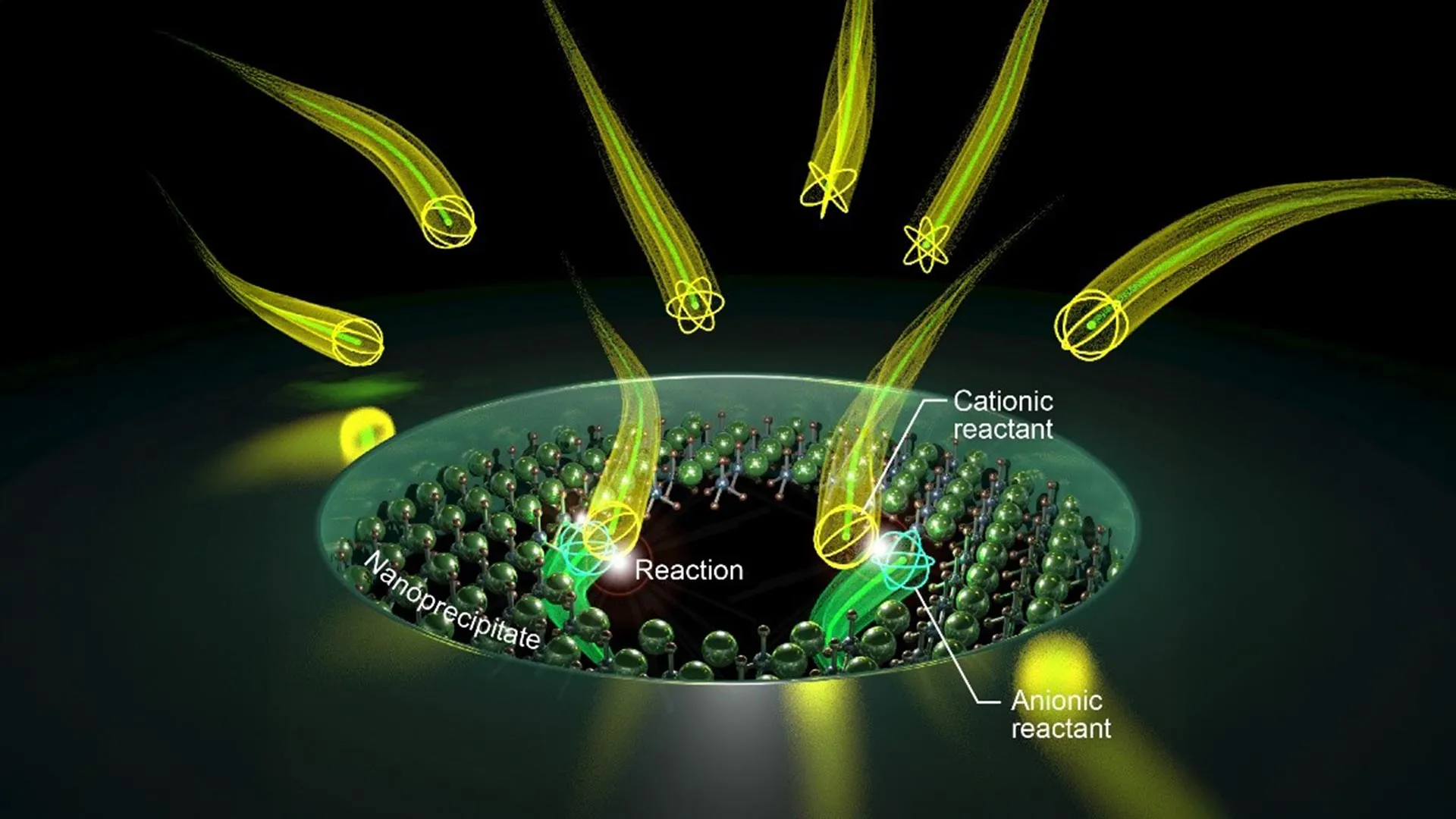
Atom-sized gates could transform DNA sequencing and neuromorphic computing
Site: ScienceDaily
Scientists have taken a major step toward mimicking nature’s tiniest gateways by creating ultra-small pores that rival the dimensions of biological ion channels—just a few atoms wide. The breakthrough opens new possibilities for single-molecule sensing, neuromorphic computing, and studying how matter behaves in spaces barely larger than atoms.
-
Are we raising a dumber generation? IQ scores fall worldwide Added: Feb 24, 2026
Are we raising a dumber generation? IQ scores fall worldwide
Site: ynetglobal
After decades of rising intelligence and academic achievement, new data show stagnation and even decline; are smartphones and artificial intelligence altering how children focus, read and think, and can schools adapt in time?
For years, we assumed our children would be smarter than we are simply because the world keeps advancing. The logic seemed straightforward: more education, more accessible knowledge, more technology, more tools for children should mean greater cognitive ability. As the world progressed, so would the mind. It became something close to a modern article of faith. If there was one promise to rely on, it was that the next generation would be sharper, faster and better equipped. But in recent years, something has begun to shift. Across several Western countries, international assessments no longer show steady improvement. In some cases, scores have plateaued. In others, they have declined. The question is no longer theoretical: For the first time in decades, could the younger generation be showing lower cognitive performance than those who came before? The issue has moved beyond parental conversations and opinion columns. It was recently discussed in a formal hearing in the U.S. Congress on the impact of screen time and educational technologies on children and adolescents. Two facts framed that discussion. Over the past few decades, education in Western countries has become more expensive, more technological and more accessible. Yet measures of reading literacy, numeracy and executive function no longer show the consistent gains many expected. In some areas, experts now speak of stagnation and even regression. Dr. Jared Cooney Horvath, a neuroscientist specializing in brain and learning research, offered a blunt assessment in his congressional testimony. Over the past 20 years, he argued, it is possible to identify not only a slowdown in progress among young people, but deterioration in some indicators. Horvath does not claim children are generally “less intelligent.” He points instead to troubling movement in measures that education systems and societies consider foundational skills: reading, mathematics, science, sustained attention and task persistence. Among the data he cites are results from PISA, the OECD’s international assessment program that evaluates the reading, math and science skills of 15-year-olds every three years across dozens of countries. In recent cycles, many countries have recorded stagnation or declines in certain domains. National assessments in the United States and other Western countries paint a similar picture, with the COVID-19 pandemic and remote learning acting as force multipliers. Screens were no longer supplementary tools. They became the infrastructure of schooling. Horvath highlights what he sees as a central variable: the rapid and widespread penetration of screens and educational technologies into children’s learning environments. His argument goes beyond the claim that “more screen time is bad.” He urges serious consideration of whether prolonged screen exposure alters how children process information: less continuity, more skipping less accumulated cognitive effort, more rapid responses to brief stimuli. Deep learning, he argues, requires sustained attention, repetition and effort. These processes may be compromised in a digital environment that rewards constant task switching and normalizes distraction. The debate carries additional weight because of history. For most of the 20th century, researchers documented steady increases in IQ scores and intergenerational cognitive measures, a phenomenon known as the Flynn effect. In simple terms, each generation tended to outperform the previous one. If certain measures are now declining, this may represent more than a minor fluctuation. It could signal a turning point. And if it is a turning point, it raises fundamental questions: Is technology enhancing thinking, or subtly reshaping how we learn, focus and remember without our noticing in real time? Screens enter the classroom Dr. Amir Gefen, a researcher and lecturer in artificial intelligence at Bar-Ilan University and an academic adviser to Israel’s Education Ministry, says that before ideological arguments begin, the data must be acknowledged. “We are indeed seeing a decline in achievement,” he says. Gefen notes that around 2010, student performance began to dip in several international analyses. Those years coincide with the mass adoption of smartphones and social media. The screen was no longer a shared computer in the living room. It became a constant presence in the palm of one’s hand. The United States, he says, has an advantage in its long-running standardized assessments, which make trends easier to track. Causes may be debated and confounding variables proposed, but the overall trajectory is difficult to ignore. “The same data exist here in Israel,” Gefen says. “Results in international standardized tests are also declining. In some cases, sharply, as in the TIMSS assessment.” Prof. Horowitz-Kraus said: 'In studies we conducted in the United States, we examined the link between longer screen exposure among children ages 3 to 5 and brain structure, not just function. We found an association between the organization of white matter, the axons, the parts of nerve cells that transmit electrical information from one region of the brain to another, and the amount of time children were exposed to screens' Horvath’s concern, however, extends beyond averages. He questions whether the fundamental learning environment has shifted without sufficient reflection. Classrooms were once primarily human spaces. They are increasingly digital. Perhaps it is not children’s abilities that have changed, but the conditions under which they develop. “According to Horvath, humans learn better through interaction with another human than through a screen or keyboard,” Gefen says. “This claim is grounded in neuroscience research. The curriculum has not changed dramatically. So what has? The entry of technology.” He acknowledges that causality in the social sciences is complex and that other variables may be involved. Still, the timing is striking. Horvath estimates that today’s children spend roughly half their waking hours in front of screens. Out of 24 hours, subtract about eight hours of sleep, leaving 16 waking hours. Of those, roughly eight are spent facing a digital display. “That is a fact,” he says. “And it is relevant in Israel as well. Children’s eyes are not on a human face, but on a digital screen.” Inside the brain Not all researchers rush to embrace sweeping conclusions. Prof. Tzipi Horowitz-Kraus, head of the Child Brain Imaging Lab at the Technion’s Faculty of Education in Science and Technology and Faculty of Biomedical Engineering, urges caution. “It is important to approach this carefully,” she says. “Scientific research requires clear definitions, rigorous methodology and peer review.” Scientific journalism, she notes, relies on studies that undergo scrutiny by other researchers who examine methodology, data quality and statistical analyses to ensure robust samples and appropriate tools. “That said, I do think there is reasonable ground to assume the findings align with what we see in our own lab,” she adds. Her laboratory examines how environmental factors influence children’s learning abilities, particularly executive function, attention, reading and language. Unlike standard paper-and-pencil tests, her team measures brain activity directly using MRI and EEG during task performance. “These tools allow us to examine mechanisms,” she explains. “We can see which attention networks are engaged when reading from a book versus a computer, and which networks activate when a child listens to a story from a tablet versus a printed book.” The findings are tangible. In children ages 2 to 4, simply the presence of a mobile device during parent-child interaction reduces shared attention, even if the device is not actively used. EEG measurements taken simultaneously from parent and child show diminished synchrony during story reading when a device is present. In slightly older children whose parents read to them from a tablet rather than a printed book, researchers observed lower attention directed toward the parent. The device itself becomes the focal point. Children repeatedly attempt to touch or pull it closer, while the narrative recedes. In experiments with 6- and 7-year-olds performing simple computer tasks, the mere presence of a phone in the room increased cognitive load and distractibility, even when the phone was not used. Among 7- and 8-year-olds reading from a screen versus printed pages, researchers detected brain activity patterns associated with greater distraction. In other words, the device does not need to be active to occupy attentional resources. Long-term exposure patterns deepen the concern. Among older children, extended screen reading time correlates with weaker connectivity between brain regions responsible for reading and those involved in language and executive functions. By contrast, reading from printed pages is associated with stronger positive connectivity in networks considered critical for deep reading. Studies conducted in the United States in 2020 also found links between higher screen exposure among children ages 3 to 5 and measures related to white matter organization, the neural pathways that enable communication between brain regions. Passive screen time, without adult mediation or interaction, was associated with less optimal white matter organization. In research involving 6-year-olds exposed to large language models such as ChatGPT, Horowitz-Kraus observed lower recruitment of certain cognitive networks in children, in contrast to adults. “Complex abilities like reading and writing require coordinated development of visual, auditory, cognitive and attention systems,” she says. “There is a certain pace to their maturation. If we try to accelerate processes using fast, visually intense screens that do not match the brain’s developmental stage, we may effectively skip steps.” If attention networks do not mature properly, children may struggle to sustain focus as expected in school settings. Researchers report increased distractibility and altered sensory processing. To illustrate, Horowitz-Kraus points to periods of intense stress, such as during recent regional tensions, when cognitive load was high and sustained reading felt difficult. Deep reading requires cognitive availability. Children today, she argues, are bombarded from all directions with devices and notifications. Even when reading on a screen, the experience may be shallower and less immersive. Her conclusion is cautious but clear. She is not surprised if adults, whose cognitive foundations developed in less saturated environments, differ from children growing up in early, fast-paced digital contexts. Yet she does not advocate abandoning technology. “We are not going to get rid of technology, and I do not want to,” she says. “It offers extraordinary benefits and unprecedented access to information. But basic abilities like sustained attention are essential for deep learning. We do not want a physician trained only through AI summaries. We want someone who has engaged deeply with the material. To achieve depth, we need stable neural foundations and we cannot skip developmental stages.” Rethinking the teacher’s role Gefen similarly reframes the debate. Rather than “for or against screens,” he argues for systemic adaptation. If the learning environment has changed due to technology and AI, the teacher’s role must evolve. Teachers may become facilitators of learning processes rather than sole authorities of knowledge. When information is available at the press of a button, value shifts to skills: empathy, critical thinking, teamwork, public speaking and emotional resilience. Knowledge acquisition may partly occur through digital tools, freeing time to strengthen other competencies. Technology will change education, he says, but it will not replace teachers. Another concern hovering over the debate is cognitive offloading, a term used in academic research to describe reliance on external tools to reduce mental effort. “We already identify this in studies,” Gefen says. “If students simply copy and paste from a chatbot without reading it, that is not learning.” However, when assignments are redesigned to work productively with AI, outcomes can improve. Without deliberate changes in teaching and assessment methods, students will naturally turn to chatbots and expend less effort, reinforcing cognitive offloading. “If I give my students an assignment that requires two prompts in a chatbot and they get a 95, the problem is not the students,” Gefen says. “It is the task I designed.” He says these insights are being conveyed to the Education Ministry as part of Israel’s national AI program and an institute focused on AI applications in education. Are our measures outdated? Some argue that traditional intelligence metrics may not fully capture skills relevant to the modern era. “We are using the same yardsticks that have existed for many years,” Gefen says. “That allows us to track trends over time. But we must also update them.” Future PISA assessments will continue to measure established domains while adding new ones, including the ability to distinguish fact from opinion and identify misinformation online. According to recent announcements, such competencies are expected to be included in international assessments in 2029. “We have a few years to work hard in this direction,” he says. Horowitz-Kraus notes that many IQ subtests emphasize speed. Generation Z, accustomed to rapid information flow, may excel in speed-based tasks. But many subtests prioritize accuracy over speed. “If you look only at speed, I think Generation Z will be faster,” she says. “But are they equally accurate? I am not sure.” Should screen use be reduced? “It is part of the solution,” Gefen says, adding that age matters. Israel’s Education Ministry recently clarified regulations. In elementary schools, smartphones are generally prohibited except for specific educational activities. High school policies are more complex and under review. The broader question remains unsettled. Technology has transformed childhood and education in little more than a decade. Whether it is quietly reshaping intelligence itself is a debate that is only beginning.

-
How Rich for Trump to Impugn the Supreme Court as ‘Swayed by Foreign Interests’ | National Review Added: Feb 24, 2026
How Rich for Trump to Impugn the Supreme Court as ‘Swayed by Foreign Interests’ | National Review

-
How a poet uses AI to write and why her work is now at MoMA | Scientific American Added: Feb 24, 2026
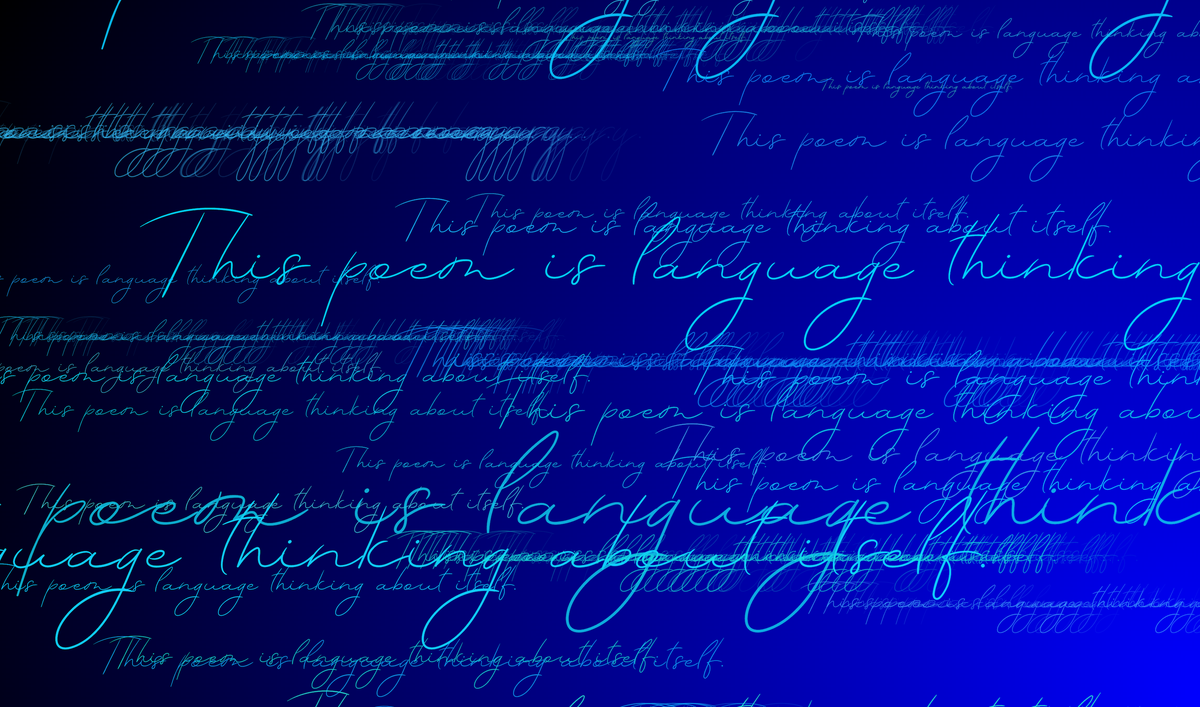
How a poet uses AI to write and why her work is now at MoMA
Site: Scientific American
Sasha Stiles turned GPT-2 experiments into a self-writing poem at a Museum of Modern Art installation—and a new way to think about text-generating AI optimization
-
Anthropic Accuses Chinese AI Firms of Copying Claude via Massive Attacks / X Added: Feb 24, 2026
Site: X (formerly Twitter)

-
Site: X (formerly Twitter)
-
Site: X (formerly Twitter)
-
Site: X (formerly Twitter)
-
Site: X (formerly Twitter)
-
Site: X (formerly Twitter)
-
Site: X (formerly Twitter)
-
Site: X (formerly Twitter)
-
Site: X (formerly Twitter)
-
Site: X (formerly Twitter)
-
THIS IS EMBARASSING - YouTube Added: Feb 24, 2026
THIS IS EMBARASSING
Site: YouTube
BUY CAST BREW COFFEE TO SUPPORT THE SHOW - https://castbrew.com/Become A Member And Protect Our Work at http://www.timcast.comHost:Tim Pool @Timcast (everywh...

-
Are We Being Visited by Extraterrestrials? | by Avi Loeb | Feb, 2026 | Medium Added: Feb 24, 2026
Are We Being Visited by Extraterrestrials?
Site: Medium
One way to look at the practice of physics is as a way to develop constraints on our imagination. There are an infinite number of…

-
Megyn Kelly Reacts to the One Moment From Trump's Phone Call to Team USA That Has Enraged the Left
Site: YouTube
Megyn Kelly Reacts to the One Moment From Trump's Phone Call to Team USA That Has Enraged the LeftLIKE & SUBSCRIBE for new videos everyday: https://bit.ly/3A...

-
Trump on the Brink of War and Work in the AI Age - with Barak Ravid and Noreena Hertz
Site: YouTube
As the Middle East enters another moment of acute tension — with one of Trump’s advisers saying there is a “90% chance we see kinetic action in the next few ...

-
Site: X (formerly Twitter)
-
Silicon Valley Socialism by Noreena Hertz - Project Syndicate Added: Feb 24, 2026
Silicon Valley Socialism
Site: Project Syndicate
Noreena Hertz sees several problems with the kind of top-down basic-income schemes proposed by tech industry leaders.

-
Site: X (formerly Twitter)
-
Why Do We Exist?
Site: Medium
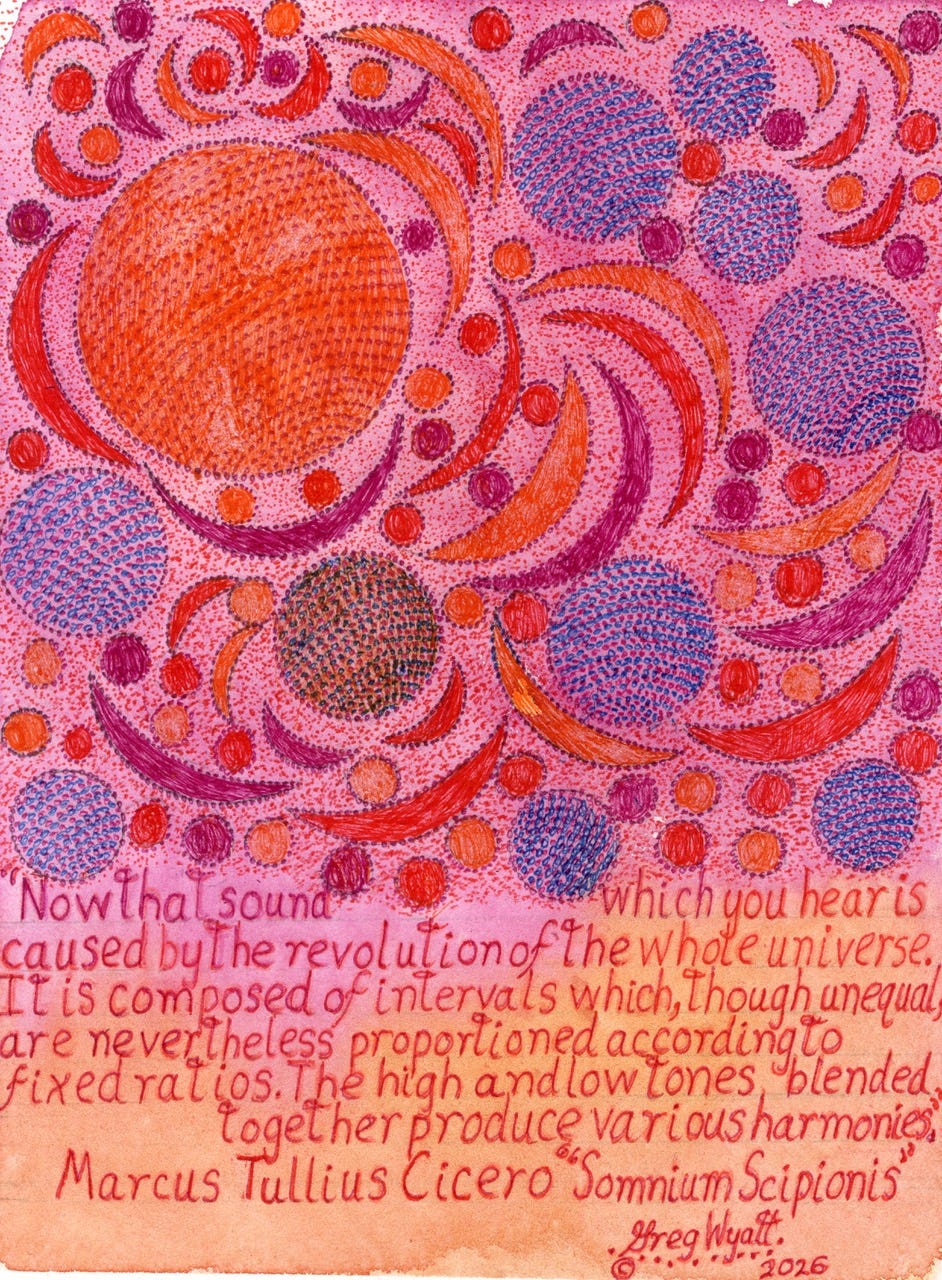
Humans arrived at the cosmic stage relatively late, in the last 0.01 percent of cosmic history. We are not at the center of stage, since we…
-
First new dinosaur species in 100 years nicknamed 'Hell-heron' - Earth.com Added: Feb 24, 2026
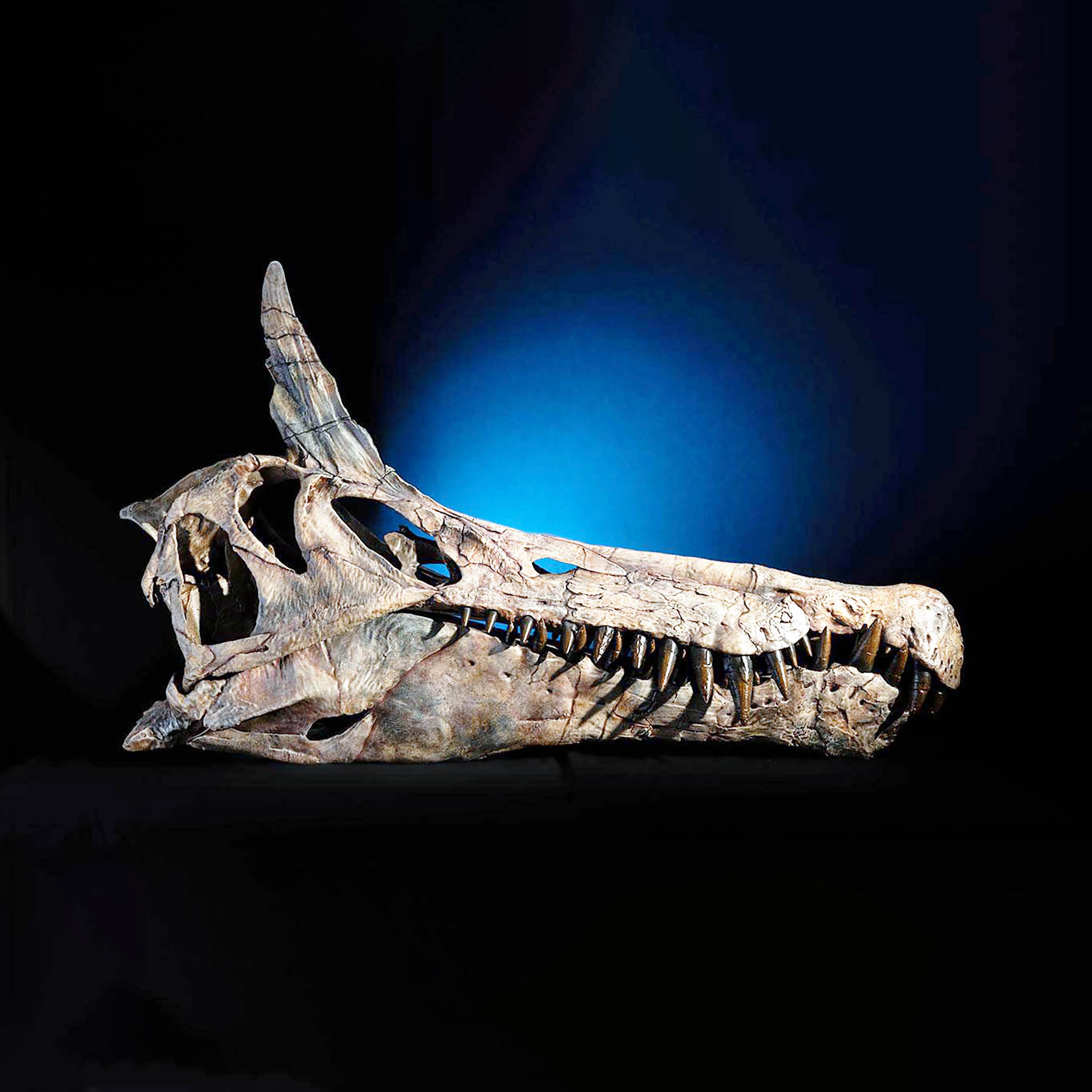
First new dinosaur species discovered in 100 years is nicknamed the 'Hell-heron'
Site: Earth.com
Scientists discovered a new dinosaur species in the Sahara, Spinosaurus mirabilis, that likely hunted fish in shallow rivers.
-
Avi Loeb Reacting to Trump's Comments on Aliens
Site: YouTube
Avi Loeb reacts to President Trump’s response to Former President Obama's comments about alien life.

-
Avi Loeb on Trump’s Potential UAP Address
Site: YouTube
Avi Loeb on Trump’s State of the Union Address.https://avi-loeb.medium.com/avi-loeb-on-trumps-state-of-the-union-address-25740cdc020f

-
The Galileo Project News: Join the Search for UAP
Site: YouTube
Join the search for UAP: https://labeling.galileo-project.com/Join the Search for Unidentified Anomalous Phenomena Within the Galileo Project! https://avi-lo...

-
Gavin Newsom spox tells reporter 'f--- off' when asked for dyslexia records | Fox News Added: Feb 24, 2026
Gavin Newsom spox tells reporter 'f--- off' when asked for dyslexia records | Fox News

-
Exclusive: Hegseth gives Anthropic until Friday to back down on AI safeguards Added: Feb 24, 2026
Hegseth gives Anthropic CEO until Friday to back down in AI safeguards fight
Site: Axios
"The only reason we're still talking to these people is we need them and we need them now."

-
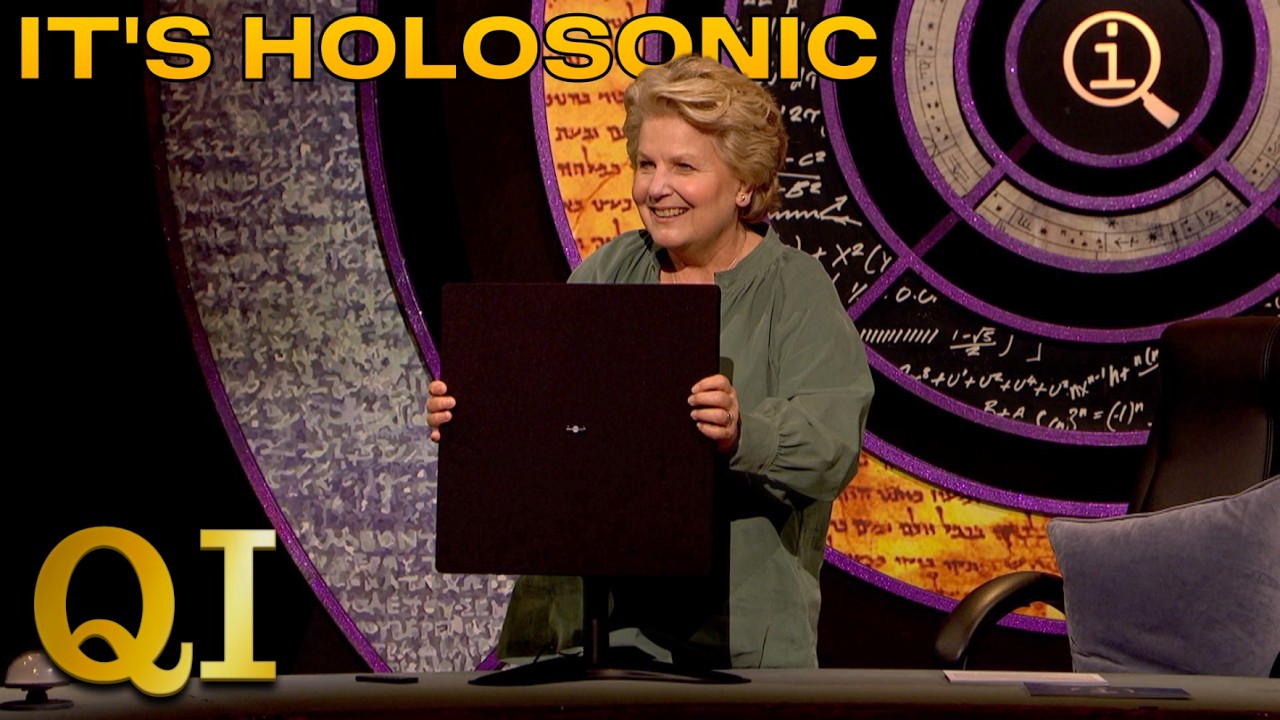
This Speaker Uses A New Type Of Sound | QI
Site: YouTube
You can now watch every series of QI, including this one, on iPlayer! ▶ http://qi.com/iplayerFollow QI on Twitter ▶ http://twitter.com/qikipedia Follow QI on...
-
Google Gemini app adds AI music and video templates - Google Search Added: Feb 24, 2026
Google Search
-
POTUS and the First Lady’s guests thank the President for bringing attention to their stories.
Site: YouTube
"Thank you, President Trump, for inviting us to the State of the Union." 🇺🇸WATCH: President Trump and the First Lady’s guests thank the President for bring...

-
NASA's Curiosity rover discovered Mars had high groundwater tables for longer - Google Search Added: Feb 24, 2026
Google Search
-
Parallel microtunnels in rock defy geological explanation
Site: Earth.com
Mysterious parallel microtunnels discovered in rock defy geology and could be the work of unknown microscopic ancient life.

-
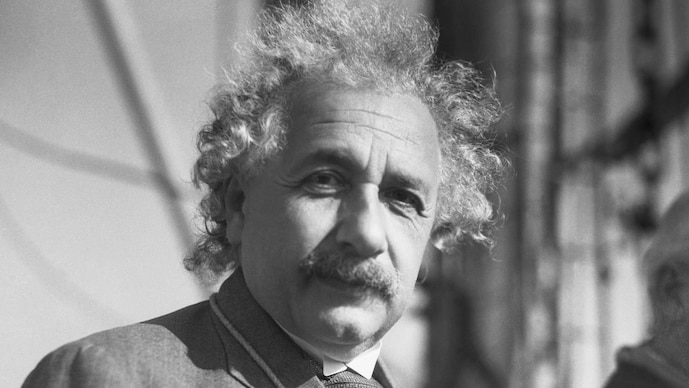
Quote of the day by Albert Einstein: Imagination is more important than… - India Today Added: Feb 24, 2026
Quote of the day by Albert Einstein: Imagination is more important than…
Site: India Today
Albert Einstein’s timeless wisdom highlights the power of imagination in driving innovation and discovery. In a world overflowing with information, his words remind us that real progress comes not from memorising facts, but from envisioning new possibilities, a lesson that remains vital for anyone seeking to create meaningful change.
“Imagination is more important than knowledge.”These powerful words by Albert Einstein continue to echo louder than ever in a world obsessed with data, proof, and measurable outcomes.Today, we are taught that knowledge is power. Schools reward it. Exams rank it. Careers depend on it. Knowledge helps us understand what already exists and explains the present.But progress has never begun with facts alone. Every breakthrough starts as a bold idea. Every invention begins as a vision no one else can yet see. Before there is proof, there is a possibility.Facts inform us, but ideas transform us. The world does not change because we memorise what is known; it changes because someone dares to think beyond it.The future will belong not just to those who master information, but to those courageous enough to imagine something greater, and bold enough to bring it to life.WHO WAS ALBERT EINSTEIN?Albert Einstein was a German-born theoretical physicist whose ideas reshaped modern science and earned him a place among the greatest minds in history.He is best known for developing the Theory of Relativity, which transformed our understanding of space and time, and for winning the Nobel Prize in Physics in 1921 for his explanation of the photoelectric effect, a discovery that helped lay the foundation for modern quantum theory.Einstein revolutionised the way humanity understands space, time, gravity, and energy, challenging long-held assumptions and opening new frontiers in physics.Beyond his scientific brilliance, he was admired for his deep philosophical insight, boundless creativity, and strong humanitarian values, using his voice to advocate for peace, civil rights, and global responsibility.EXPLAINING THE QUOTEWhen Albert Einstein said, "Imagination is more important than knowledge," he did not mean knowledge is unimportant. He meant that knowledge is limited to what we already understand, while imagination is limitless, allowing us to explore ideas beyond existing facts. Every great discovery begins with someone daring to imagine what does not yet exist.Before space travel became reality, someone imagined humans walking on the Moon.Before smartphones were created, someone imagined carrying a computer in their pocket. Even Einstein once imagined riding on a beam of light, a simple thought experiment that later helped shape his theory of relativity.Imagination pushes boundaries. Knowledge follows.A MIND DRIVEN BY CURIOSITY AND CREATIVITYThis quote reveals several powerful aspects of Albert Einstein's mindset. He deeply valued creativity in science, believing it was not simply about memorising formulas or repeating facts, but about thinking boldly and differently.He consistently thought beyond limits, challenging accepted ideas about time and space because he dared to imagine possibilities others could not yet see.He also viewed curiosity as a powerful force, once humbly stating that he had no special talent, only passionate curiosity, which is fuelled by imagination.Above all, he understood that innovation begins in the mind; every invention, theory, and advancement in human history first existed as an idea. For Einstein, imagination was not separate from intelligence; it was the driving force behind progress itself.MORE QUOTES BY ALBERT EINSTEINHere are some other inspiring words from Einstein:Life is like riding a bicycle. To keep your balance, you must keep moving.Try not to become a man of success, but rather try to become a man of value.The important thing is not to stop questioning. Curiosity has its own reason for existing.In the middle of difficulty lies opportunity.Logic will get you from A to B. Imagination will take you everywhere.Albert Einstein's quote reminds us that facts and information are essential, but they are not enough to transform the world. Knowledge helps us understand what already exists; imagination empowers us to envision what has never existed before.True progress, groundbreaking discoveries, and life-changing innovations all begin in the mind as bold ideas. Knowledge tells us what is, but imagination reveals what could be.Einstein's life is living proof that when creativity joins hands with curiosity, ordinary thinking gives way to extraordinary change, and the world is never the same again.- EndsPublished By: Apoorva AnandPublished On: Feb 24, 2026READ | Quote of the day by Sundar Pichai: You have to work with people who make you feel...READ | Quote of the Day by Srinivasa Ramanujan: An equation for me has no meaning...
-
The Mounting Backlash Against the Blue City and State Model | National Review

-
 Scientists Tested the Soil Under the Easter Island Statues—and May Have Finally Solved Their Meaning
Added: Feb 24, 2026
Scientists Tested the Soil Under the Easter Island Statues—and May Have Finally Solved Their Meaning
Added: Feb 24, 2026Scientists Tested the Soil Under the Easter Island Statues—and May Have Finally Solved Their Meaning
Scientists believe they’ve uncovered the meaning of some of the Moai stone monoliths found on Rapa Nui, better known as Easter Island. Here's the truth.
-
Site: X (formerly Twitter)
-
Site: X (formerly Twitter)
-
When the Right found out Alysa Liu is woke, they celebrated her. When the Left found out the U.S. men's Olympic hockey team is partial to Trump, they turned on them. Added: Feb 24, 2026
When the Right found out Alysa Liu is woke, they celebrated her. When the Left found out the U.S. men's Olympic hockey team is partial to Trump, they turned on them.
What the coverage surrounding the Olympics revealed about our broken media

-
Scientists Have Discovered the Bed Bug's Greatest Fear Added: Feb 24, 2026
Scientists Have Discovered the Bed Bug's Greatest Fear
Site: Gizmodo
Water is "intrinsically aversive" to bed bugs, a recent study has found.

-
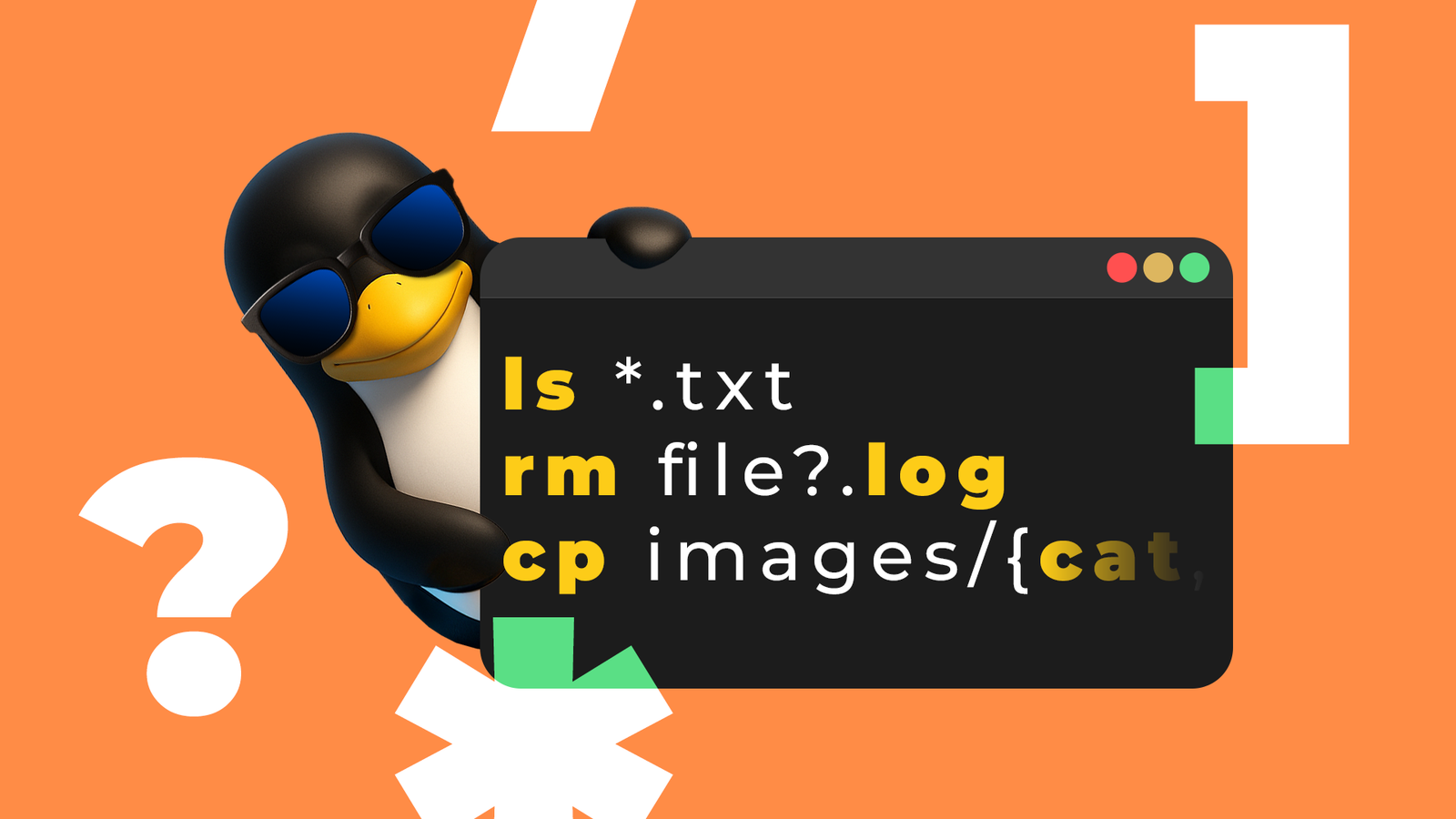
 This Bash script automated my messy downloads folder
Added: Feb 24, 2026
This Bash script automated my messy downloads folder
Added: Feb 24, 2026This Bash script automated my messy downloads folder
Site: How-To Geek
Bulky, assorted files filling up my Downloads folder are no more.
-
Nancy Guthrie case: Former FBI agents says personal grievance could be motive | Fox News

-
Site: X (formerly Twitter)
-
WSJ editorial board criticizes Donald Trump over reaction to Supreme Court tariff ruling Added: Feb 24, 2026
Wall Street Journal: ‘Smart play’ would have been for Trump to forgo, pause new tariffs
Site: The Hill
The Wall Street Journal’s editorial board criticized President Trump’s trade policies earlier this week, mocking his reaction to a Supreme Court ruling last week that went against his s…
The Wall Street Journal's editorial board criticized President Trump's trade policies earlier this week, mocking his reaction to a Supreme Court ruling last week that went against his sweeping tariffs on foreign goods. "Well, that will show the Supreme Court — or something. President Trump is reacting to his Friday tariff defeat not by calming the trade waters but by roiling them further," the board wrote in a piece published Monday. "He is aiming in fury at the Supreme Court, but he will end up hitting the economy and Republicans in Congress." After the nation's highest court ruled against his use of emergency import taxes, Trump railed against the justices and announced a new 10 percent tariff on all goods not covered by current exemptions. Trump's tariff policies and how to respond to the fallout from the Supreme Court ruling is posing a major challenge for Republicans on Capitol Hill, some of whom have cast doubt on the downstream impact of the president's economic agenda on consumers. "The smart play after his legal defeat would be to take an off-ramp and forgo or pause new tariffs," the Journal wrote. "The larger reality is that Mr. Trump is so bull-headed about tariffs that he’s going to re-impose them any way he can." The president's new tariffs will "create more uncertainty for business, at least for a while," the newspaper argued, adding "with the midterm elections coming soon, this timing is fraught for Republicans." "This is a political bait and switch, and it also delays refunds that could go to more productive economic uses," it wrote. "Mr. Trump is so ideologically fixated on tariffs that he is willing to bet his Presidency on them. This looks increasingly like a losing wager for Republicans." Their analysis also comes as the president is set to give his annual State of the Union address before lawmakers Tuesday evening, which Trump has claimed will be a "long" speech.

-
Quote of the day by Henry Ford: 'If I had asked people what they wanted, they would have said faster horses' - The Economic Times Added: Feb 24, 2026
Quote of the day by Henry Ford: 'If I had asked people what they wanted, they would have said faster horses' - The Economic Times
Henry Ford, the founder of Ford Motor Company, once said, “If I had asked people what they wanted, they would have said faster horses.” This quote highlights the essence of true innovation—thinking beyond what people ask for and imagining solutions they havent considered. From building his first Quadricycle to revolutionizing car production with the Model T and assembly line, Fords vision changed transportation and industry forever.
Henry Ford is a name everyone associates with cars and the modern automobile industry. But beyond building vehicles, he was someone who thought differently, someone who looked at the world and saw possibilities that others didn’t. His ideas about innovation and progress still resonate today, and one of his most famous quotes captures this perfectly.“If I had asked people what they wanted, they would have said faster horses.” – Henry FordInnovators Don't Bend to DemandAt first, it sounds a little funny. People back then relied on horses for transport, so naturally, if you asked them how to improve their lives, they would think in terms of what they knew—a faster horse. But Henry Ford’s point was bigger than that. He was saying that real innovation isn’t just about giving people what they already ask for. Sometimes, it’s about seeing possibilities they haven’t imagined yet. 128689118This quote highlights the idea of vision. True innovators don’t just respond to demand; they anticipate it. Ford didn’t just try to make better horses or slightly improved carriages. He created automobiles that were affordable, practical, and could transform how people lived and moved. By thinking beyond immediate requests, he changed the course of transportation forever.Henry Ford’s Journey of InnovationBorn in 1863 in Springwells Township, Michigan, Henry Ford showed an early interest in mechanics. By 12, he had set up his own small machine shop, and by 15, he built his first steam engine. Later, he worked as a machinist and became chief engineer at the Edison Illuminating Company in Detroit. His experiments with engines eventually led to the creation of the Quadricycle in 1896, his first gasoline-powered vehicle. 128640444In 1903, he co-founded the Ford Motor Company. The Model T, introduced five years later, was revolutionary. Ford not only made cars affordable for ordinary people, but he also invented methods like the moving assembly line and standardized parts, which transformed manufacturing worldwide. His innovations weren’t just about cars—they were about making a better, more efficient world.Beyond his work in automobiles, Henry Ford was also an author and public thinker. In collaboration with Samuel Crowther, he published books such as My Life and Work (1922) and Today and Tomorrow (1926), where he shared his views on industry, efficiency, wages, and social responsibility. He was awarded honorary degrees from institutions including the University of Michigan and Michigan State College in recognition of his contributions to engineering and manufacturing. Ford passed away on April 7, 1947, at his Fair Lane estate in Dearborn, Michigan, at the age of 83.

-
Emma Thompson Added: Feb 24, 2026
-
Roy Spencer, PhD Added: Feb 24, 2026
-
Site: X (formerly Twitter)
-
Site: X (formerly Twitter)
-
 Climate Physicists Face the Ghosts in Their Machines: Clouds | Quanta Magazine
Added: Feb 24, 2026
Climate Physicists Face the Ghosts in Their Machines: Clouds | Quanta Magazine
Added: Feb 24, 2026Climate Physicists Face the Ghosts in Their Machines: Clouds | Quanta Magazine
Site: Quanta Magazine
The planet is getting hotter, but one factor in particular makes it hard to tell just how hot it will get. Physicists and computer scientists are racing to solve the problem of clouds.