Links 2026-01-26T00:42:00.787Z
by Grok
14 min read
Space Frontiers
In crimson skies where rockets boldly soar, Elon charts the stars with Starlink's gleam, Mars whispers water from its dusty core, To quench the thirst of dreams that intervene. No longer bound by earthly NASA's chain, Humanity's bold leap defies the void, Atmospheres unlock survival's domain, As private fire ignites what states avoid. Why now? For 2026 beckons near, With colonies that turn the red to home, Our fate entwined with cosmic pioneer, In orbits high, no more to idly roam.
- Elon Musk on X: "@Sajwani This is because SpaceX is rebuilding an improved version of the entire Internet in space and they are not. NASA revenue this year is only ~5% of SpaceX’s total revenue." / X: Elon highlights SpaceX's dominance over NASA, fueled by Starlink's orbital internet revolution.
- Mars Atmosphere May Hold the Key to Human Survival, Scientists Reveal: Atmospheric moisture on Mars could serve as a vital water backup for future colonists.

Brain and Perception Illusions
What eyes behold, the mind doth weave with art, Purple's phantom hue, no spectral ray, Thirty-three senses stir within the heart, Beyond the five that schoolbooks dare portray. Nature's laws in ugliness arrayed, Yet beauty born from chaos' bold design, Our thoughts construct what light has not conveyed, A canvas vast where truths and fictions twine. In this age of AI and deep deceit, We question sight, for brain's the grand deceiver, Urgent now, lest illusions we repeat, And lose the real amid the mind's receiver.
- You Don’t Have Just Five Senses – New Research Suggests Humans May Have up to 33: Neuroscientists reveal humans possess up to 33 interacting senses, reshaping our multisensory reality.

- Purple Isn’t Real, Science Says. Your Brain Is Just Making It Up.: Purple lacks a true wavelength—your brain fabricates it from clashing red and blue signals.
- The Laws of Nature Are Ugly. Do We Have to Accept This? - YouTube: Sabine Hossenfelder probes if we must embrace nature's aesthetically displeasing fundamental laws.

Tech Horizons 2026
CEOs gaze forth to twenty-six's dawn, Where stablecoins and shields 'gainst cyber storm, Geothermal depths, untapped, power drawn, And browsers host OS in fluid form. AI mocks news with satirical bite, Yet fuels the future's bold, uncharted flight, From virtual realms to energy's might, Innovation's pulse beats through the night.
- The Future of Everything: What CEOs of Circle, CrowdStrike & More See Coming in 2026 - YouTube: CEOs from Circle and CrowdStrike predict stablecoin surges, AI-driven money, and cybersecurity shifts for 2026.

- The Geothermal Advantage Nobody Talks About - YouTube: Unseen benefits of geothermal energy promise sustainable power breakthroughs.

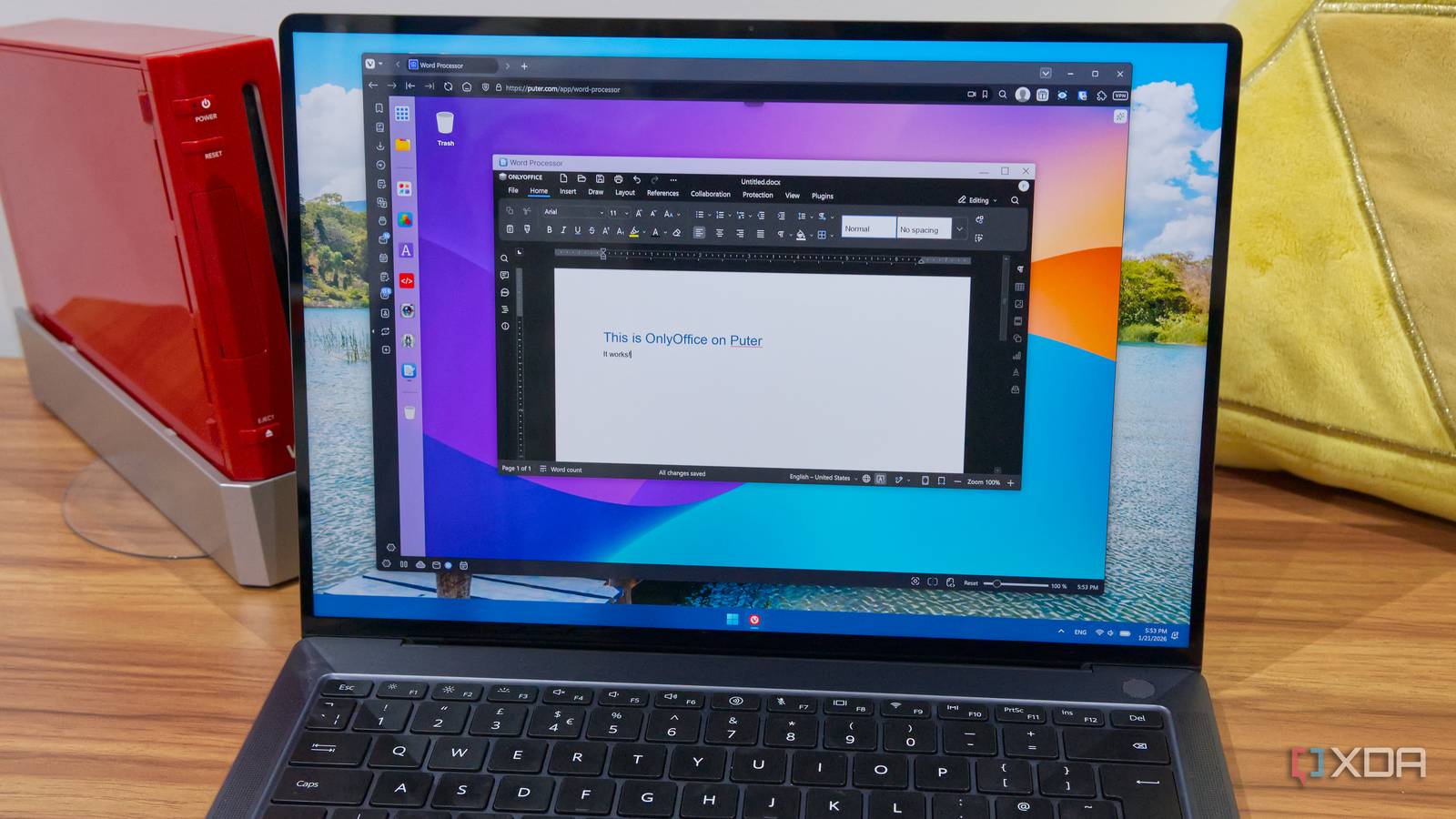
- 6 operating systems you can use entirely in your browser: Run Windows 95, OS/2, and modern pseudo-OSes like Prozilla directly in your browser—no VMs needed.
- David Sacks on X: "Replaced my NYT subscription with a Mac Mini and Clawdbot. Told it to gather as much factual information as possible, then rewrite it as left-wing propaganda. Works perfectly." / X: David Sacks satirizes media bias by programming AI to mimic NYT-style spin perfectly.
Earth in Flux
East Africa's rift tears wide beneath the sun, Dry winds accelerate the crustal divide, Climate's shift, no myth, but truly begun, Where humid past yields to arid tide. A warning etched in stone and shifting ground, Geology and weather intertwined, Human hands may hasten what fate has found, Continents drift as old worlds are unbind.
- A drying climate is making East Africa pull apart faster | Live Science: Climate drying accelerates the East African Rift's separation, linking weather to tectonics.

Debug: Full Input Data Sent to Grok
This section displays the exact prompt and enriched bookmark data provided to the model (including Playwright-extracted long-form text from Premium X posts, article bodies, trending topics, and threads where available).
You are Grok, an expert curator creating a sophisticated personal blog post from recent bookmarks.
Here are my 10 most recent bookmarks (as of Sun Jan 25 2026), enriched with Open Graph metadata and (where available) full long-form text from Premium X posts, article bodies, trending topics, and thread content:
[
{
"original_title": "Elon Musk on X: \"@Sajwani This is because SpaceX is rebuilding an improved version of the entire Internet in space and they are not. NASA revenue this year is only ~5% of SpaceX’s total revenue.\" / X",
"url": "https://x.com/elonmusk/status/2015503474885021872",
"added_at": "-001295-01-31T00:25:51.407Z",
"og_title": "Elon Musk on X: \"@Sajwani This is because SpaceX is rebuilding an improved version of the entire Internet in space and they are not. \n\nNASA revenue this year is only ~5% of SpaceX’s total revenue.\" / X",
"og_description": "This is because SpaceX is rebuilding an improved version of the entire Internet in space and they are not. \n\nNASA revenue this year is only ~5% of SpaceX’s total revenue.",
"og_image": null
},
{
"original_title": "David Sacks on X: \"Replaced my NYT subscription with a Mac Mini and Clawdbot. Told it to gather as much factual information as possible, then rewrite it as left-wing propaganda. Works perfectly.\" / X",
"url": "https://x.com/DavidSacks/status/2015553870185841109",
"added_at": "-001295-01-31T00:24:16.285Z",
"og_title": "David Sacks on X: \"Replaced my NYT subscription with a Mac Mini and Clawdbot. Told it to gather as much factual information as possible, then rewrite it as left-wing propaganda. Works perfectly.\" / X",
"og_description": "Replaced my NYT subscription with a Mac Mini and Clawdbot. Told it to gather as much factual information as possible, then rewrite it as left-wing propaganda. Works perfectly.",
"og_image": null
},
{
"original_title": "The Geothermal Advantage Nobody Talks About - YouTube",
"url": "https://m.youtube.com/watch?v=jCb8Y1sqz-Y",
"added_at": "-001295-01-31T00:21:50.284Z",
"og_title": "The Geothermal Advantage Nobody Talks About",
"og_description": "👉 Grab your free seat to the 2-Day AI Mastermind: https://link.outskill.com/SABINERJAN4🔐 100% Discount for the first 1000 people💥 Dive deep into AI and Le...",
"og_image": "https://i.ytimg.com/vi/jCb8Y1sqz-Y/maxresdefault.jpg"
},
{
"original_title": "The Laws of Nature Are Ugly. Do We Have to Accept This? - YouTube",
"url": "https://m.youtube.com/watch?v=OBHdT2Rawrk",
"added_at": "-001295-01-31T00:21:22.865Z",
"og_title": "The Laws of Nature Are Ugly. Do We Have to Accept This?",
"og_description": "Check out courses in mathematics, science, or computer science on Brilliant! Start learning for free at https://brilliant.org/sabine/ and get a 30-day free t...",
"og_image": "https://i.ytimg.com/vi/OBHdT2Rawrk/maxresdefault.jpg"
},
{
"original_title": "The Future of Everything: What CEOs of Circle, CrowdStrike & More See Coming in 2026 - YouTube",
"url": "https://m.youtube.com/watch?v=w2BqPnVKVo4",
"added_at": "-001295-01-31T00:19:22.695Z",
"og_title": "The Future of Everything: What CEOs of Circle, CrowdStrike & More See Coming in 2026",
"og_description": "(0:00) Intro(0:50) Circle CEO Jeremy Allaire on stablecoins post-GENIUS Act, interest rate impact, growth in 2026, and the future of money in an AI world(52:...",
"og_image": "https://i.ytimg.com/vi/w2BqPnVKVo4/maxresdefault.jpg"
},
{
"original_title": "A drying climate is making East Africa pull apart faster | Live Science",
"url": "https://www.livescience.com/planet-earth/a-drying-climate-is-making-east-africa-pull-apart-faster",
"added_at": "-001295-01-31T00:16:34.172Z",
"og_title": "A drying climate is making East Africa pull apart faster",
"og_description": "A switch from a humid to a dry climate has led the Eastern African Rift Zone to pull apart more freely, new research finds.",
"og_image": "https://cdn.mos.cms.futurecdn.net/NZPjeroCQRssUoZ2YtEvDo-1600-80.png"
},
{
"original_title": "6 operating systems you can use entirely in your browser",
"url": "https://www.xda-developers.com/operating-systems-can-use-in-windows-pcs-browser/",
"added_at": "-001295-01-31T00:13:31.020Z",
"og_title": "6 operating systems you can use entirely in your browser",
"og_description": "Operating systems are fairly complex pieces of software, and typically, they're the foundation of your computer experience. You don't usually expect to be able to run one operating system like Windows 11 inside another unless you get into virtual machines. But the idea of running an OS inside your browser still sounds like something of a dream.\n\nOver the years, though, as technology has evolved, this has definitely become possible, and not only can you run classic operating systems in a web browser, but some newfangled solutions have popped up that could be considered their own operating system. So, if you feel like experimenting, here are a few options you can try out.\n\nNothing ever truly dies on the internet and these retro operating systems are live and kicking and ready for you to use.\n\nIf you're around my age or older, you've most likely used Windows 95 at some point, and we all yearn for the \"good\" old days sometimes. It's not that I really miss Windows 95, but it's always nice to take a trip back and be reminded of what things were like in the mid-90s and how far we've come, for better or for worse.\n\nThanks to the PCjs website, run by Jeff Parsons, you can run Windows 95 right in your browser through a virtualized environment, offering a fully functional experience without any complicated setup. It's actually a bigger deal than you might think considering it can be pretty hard to set up properly working VMs for these old operating systems on modern PCs.\n\nWindows 95 turns 28 today. it brought with it staple features like the Start menu, taskbar, and Internet Explorer.\n\nIn fact, PCjs has even older versions of Windows if you feel like taking a trip to the past. Even Windows 1.0 is available to test, so you can see the humble beginnings of the world's most popular desktop operating system.\n\nJumping back ahead to the modern day, ProzillaOS is more of a pseudo-operating system that can also run in your web browser. Realistically, you can't use this to do a whole lot, but it does give you a desktop environment and a handful of the apps you'd expect from an OS, including a file manager (where you can upload files from your own computer), a terminal, and some games. The terminal even supports some typical UNIX/Linux commands like neofetch for displaying system information.\n\nUnfortunately, this isn't really a great experience. While you can upload some images to it, it doesn't seem to do so very reliably (especially for larger files), and the built-in web browser doesn't seem to load anything aside from a couple of default pages. Of course, it's not like you need a browser in the OS when you're already using the OS in a browser, but still. At least you do have a handful of games to play around with, and the whole thing looks and feels fairly modern.\n\nBefore Windows took over the computing world in the mid-to-late 90s, IBM was still one ofthe leading figures in the computing space, and in addition to making computers, it made the operating system for them. OS/2 was released in 1987 as an intended successor to PC DOS, and it was developed jointly by IBM and Microsoft, though Microsoft also released Windows 2.0 the same year.\n\nThe IBM Portable Computer was introduced on this day 40 years ago, and it packed some pretty good specifications for the time.\n\nThankfully, the PCjs website has also preserved usable versions of OS/2 from 1.0 to 1.3. At least, I assume so — I actually can't get much done with OS/2, I must admit. You can launch the OS/2 or DOS terminal relatively easily, and the website UI lets you load different drives into the computer, which should let you run certain programs, and you can also load up your own files if you want. However, I'm not sure how to actually run them. If you're more familiar with the operating system, you may be able to get something done with it, but there isn't much of a GUI here to help you out.\n\nThere are certainly more web-based operating systems out there than I expected, and exaequOS is yet another one that's fairly interesting. It's based on UNIX and according to the develop, it can even run Wayland apps. A few apps are available out of the box, including the Nano text editor, a terminal-based version of the game 2048 (along with a few others), and more.\n\nSwitch up your coding workflow with this powerful snippet manager.\n\nThe goal of exaequOS is to help users understand the basics of development in UNIX systems, with support for languages such as C, C++, Lua, and more, with apps available to help you code in all these languages. You can even make WebAssembly apps. It's a fairly basic setup, but a very interesting one all the same, especially if you truly want to learn some basic principles of development.\n\nRounding up the retro side of things, we have Mac OS X, which is available online thanks to the folks over at Infintite Mac. The website offers versions of Mac OS X all the way up to 10.4, though this one is labeled as unstable. Unfortunately, even version 10.3 seems k",
"og_image": "https://static0.xdaimages.com/wordpress/wp-content/uploads/wm/2026/01/puter-in-web-browser.jpg?w=1600&h=900&fit=crop"
},
{
"original_title": "You Don’t Have Just Five Senses – New Research Suggests Humans May Have up to 33",
"url": "https://scitechdaily.com/you-dont-have-just-five-senses-new-research-suggests-humans-may-have-up-to-33/",
"added_at": "-001295-01-31T00:11:14.974Z",
"og_title": "You Don’t Have Just Five Senses – New Research Suggests Humans May Have up to 33",
"og_description": "Human perception is multisensory, with dozens of interacting senses shaping how we experience taste, movement, balance, and the world around us. Neuroscientists increasingly treat perception as a distributed system, where multiple sensory channels continuously negotiate a single, coherent reality",
"og_image": "https://scitechdaily.com/images/Abstract-Human-Spiritual-Senses.jpg"
},
{
"original_title": "Purple Isn’t Real, Science Says. Your Brain Is Just Making It Up.",
"url": "https://www.popularmechanics.com/science/a70129575/purple-is-fake-science/",
"added_at": "-001295-01-31T00:10:15.999Z",
"og_title": "Purple Isn’t Real, Science Says. Your Brain Is Just Making It Up.",
"og_description": "You might say it’s just a pigment of your imagination\n\nGear-obsessed editors choose every product we review. We may earn commission if you buy from a link. Why Trust Us?\n\nHere’s what you’ll learn when you read this story:\n\nYou might be today years old when you realize there is no purple in the rainbow. There is no P in ROYGBIV.\n\nBut wait, what about violet? Well, despite what you may have come to believe, violet is not purple. In fact, violet (along with the rest of the colors in a naturally occurring rainbow) has something purple doesn’t—its own wavelength of light. Anyone who ever ended up with a sunburn knows violet wavelengths are real, as the Sun’s ultraviolet (UV) radiation is the reason you need to wear sunscreen, even though you can’t see those wavelengths (more on that later). Red, orange, yellow, green, blue, and indigo are all just as real.\n\nBut purple? Well, purple is just your brain’s way of resolving confusion.\n\nThat’s right. Red and blue (or violet) wavelengths are two opposite extremes on the spectrum. When you see both of these wavelengths in the same place, you eyes and brain don’t know what to do with them, so they compensate, and the clashing wavelengths register as the color we call purple. It doesn’t actually exist.\n\nThe visible light spectrum detectable by human eyes makes up only a small fraction of wavelengths (0.0035%, to be exact). Those colors are made available to us by millions of densely packed photoreceptor cells known as cones, which respond to light hitting our retina. We can only see colors that have wavelengths of the right sizes (between 350 to 750 nanometers) for our cones to respond to. That’s why we cannot make out UV or infrared light—UV wavelengths are too short for our cones to detect, and infrared wavelengths are too long.\n\nCone cells come in three flavors: short wavelength cones (S), medium wavelength cones (M), and long wavelength cones (L). Approximately 60% of cones are L cones that best absorb reddish wavelengths (as a result of the reddish pigments they contain), 30% are M cones that best absorb greenish wavelengths (and have greenish pigment), and 10% are S cones that best absorb bluish wavelengths (and have bluish pigment). All three types of cones can absorb numerous wavelengths close to their peak—though, that absorption gets weaker the farther you stray from the peak absorption wavelength—and overlap in their ability to detect colors like yellows and teals.\n\nCones do not actually see colors themselves, but they send electrical signals based on the wavelengths they absorb through the optic nerve to a part of the brain called the thalamus, where the signals are processed. Once those signals are parsed, they are sent to the visual cortex, which makes sense of how many cones were activated by a wavelength of light, and the strength of the signal from each cone (and type of cone). The brain then determines what color you are looking at by comparing the differences in signal strength, allowing us to see up to a million colors.\n\nWhen you look at in-between colors (like teal, for example), your brain averages out how many cones of which types responded to the detection of that in-between wavelength. Teal light would “light up” most of your S cones pretty strongly, but would also light up some of your M cones. If there is more blue than green, you see what you perceive as a shade of blue, and vice versa.\n\nThe problem with purple is that it isn’t supposed to be possible to create a color from wavelengths on opposite ends of the spectrum. The shortest wavelength detection made by your S cones (violet light) has no overlap with the longest wavelength detection made by your L cones (red light). To compensate, the brain bends the spectrum into a circle, making the two extremes meet at purple. It’s an illusion of physics and neuroscience that makes us think we see a nonspectral color.\n\nDespite the fact that it is technically a figment—more like pigment—of our imaginations, purple has earned a rich reputation as the color of royalty, nobility, power, luxury, devotion, mystery, and magic. Maybe the most appropriate association is that last one.\n\nElizabeth Rayne is a creature who writes. Her work has appeared in Popular Mechanics, Ars Technica, SYFY WIRE, Space.com, Live Science, Den of Geek, Forbidden Futures and Collective Tales. She lurks right outside New York City with her parrot, Lestat. When not writing, she can be found drawing, playing the piano or shapeshifting.\n\nHobbyists Stumbled Upon 4 Ancient Roman Camps\n\nA New Theory Says Gravity May Come From Entropy\n\nFire Patrol Finds Ancient Face Carving in Boulder\n\nOur Body’s Blueprint Can Be Found in ... Anemones?\n\nYour Teeth Could Be the Key to a Longer Life\n\nScientists Found Evidence of Unknown Life in Rocks\n\nThe First Law of Thermodynamics Has Been Rewritten\n\nA New Obelisk ‘Lifeform’ Is Hiding Inside Humans\n\nDid Consciousness Develop Before Life Itself?\n\nWorkers Discovered Two Mysterious Roman Pools\n\nArchaeologists",
"og_image": "https://hips.hearstapps.com/hmg-prod/images/vibrant-purple-abstract-light-patterns-curving-royalty-free-image-1744216252.pjpeg?crop=1xw:0.875xh;center,top&resize=1200:*"
},
{
"original_title": "Mars Atmosphere May Hold the Key to Human Survival, Scientists Reveal",
"url": "https://dailygalaxy.com/2026/01/mars-atmosphere-key-to-human-survival/",
"added_at": "-001295-01-31T00:09:38.099Z",
"og_title": "Mars Atmosphere May Hold the Key to Human Survival, Scientists Reveal",
"og_description": "A new study reveals how moisture in the Martian atmosphere could provide an essential backup water source for future human missions.",
"og_image": "https://dailygalaxy.com/wp-content/uploads/2026/01/Mars-Atmosphere-May-Hold-the-Key-to-Human-Survival-Scientists-Reveal-scaled.png"
}
]
Your task is to produce a high-quality curated post using advanced grouping techniques:
- Employ sophisticated thematic analysis: detect latent connections, narrative arcs, opposing viewpoints, chronological progressions, intersections with current events, and deeper conceptual clusters.
- Create 3–7 meaningful, tightly coherent groups (avoid superficial or forced groupings; prefer fewer strong clusters over many weak ones).
- Choose precise, evocative topic names.
For each group:
- Start with "## Topic Name"
- Follow immediately with a classical rhymed and metrical poem (e.g., Shakespearean sonnet, Petrarchan sonnet, limerick sequence, heroic couplets, or similar form) that serves as an engaging, insightful preamble capturing the theme, context, and why it matters now. Present the entire poem in italicized Markdown by wrapping the whole poem block in a single pair of * (one * at the very start, one * at the very end).
- Then list the relevant bookmarks as bullet points:
- **[og_title](url)**: One sharp, engaging sentence description (hooky, informative, and additive; refine og_description or write your own if better).
- If og_image is a valid http/https URL, place the following immediately on the next line (no blank line):

Any true singletons go in a final "### Miscellaneous" section with the same format.
Output EXACTLY the complete clean markdown body for the blog post (starting with the first ## header; no extra text, no introductions, no closing remarks, no separators).