Bookmarks 2026-05-08T17:25:18.423Z
by Owen Kibel
27 min read
Bookmarks for 2026-05-08T17:25:18.423Z
-
Chase Value | YouTube Music Added: May 8, 2026
Chase Value
Site: YouTube Music
Atom Music Audio
-
Die Andacht fragt nach dir GWV 1111/42 - Dictum (Tenor): Die Andacht fragt nach dir
Site: YouTube Music
Georg Poplutz, Dominik Wörner, Kirchheimer BachConsort, & Florian Heyerick
-
The Radical Left's Violent Rhetoric - YouTube Added: May 8, 2026
The Radical Left's Violent Rhetoric
Site: YouTube
Please remember to subscribe if you enjoyed this episode of Pod Force One: https://www.youtube.com/@PodForce1Watch full clips of Pod Force One with Miranda D...

-
Pentagon releases swath of UFO files - POLITICO Added: May 8, 2026
Pentagon releases swath of UFO files
Site: POLITICO
The government gave no analysis of the files, suggesting it is up to Americans to draw their own conclusions.

-
 NASA's Next-Gen Mars Helicopters Set to Carry Heavier Payloads After Breaking Mach 1
Added: May 8, 2026
NASA's Next-Gen Mars Helicopters Set to Carry Heavier Payloads After Breaking Mach 1
Added: May 8, 2026NASA's Next-Gen Mars Helicopters Set to Carry Heavier Payloads After Breaking Mach 1
Site: The Daily Galaxy - Great Discoveries Channel
NASA’s recent breakthrough in rotor blade technology for its next-generation Mars helicopters could unlock the future of high-performance aerial exploration on the Red Planet.

-
How to delete Chrome's weights.bin file and disable Gemini Nano Added: May 8, 2026
How to remove Gemini Nano from Chrome (and free up 4GB of storage)
Site: Android Authority
Here's how to delete Chrome's weights.bin file and disable Gemini Nano to reclaim your storage space on Windows and macOS.

-
 Flowering plants transformed into 'hopeful monsters' in 9 dire bursts across evolutionary time, study finds | Live Science
Added: May 8, 2026
Flowering plants transformed into 'hopeful monsters' in 9 dire bursts across evolutionary time, study finds | Live Science
Added: May 8, 2026Flowering plants transformed into 'hopeful monsters' in 9 dire bursts across evolutionary time, study finds
Site: Live Science
In hard times, like when the dinosaur-killing asteroid hit Earth, some plants transformed into "hopeful monsters" to save themselves. Now, a new paper shows that these monsters are more common than we thought.

-
Is the Intelligence on Iran’s Capabilities Credible? | National Review Added: May 8, 2026
Is the Intelligence on Iran’s Capabilities Credible? | National Review

-
THEY JUST DROPPED THE EVIDENCE
Site: YouTube
US Drops The UFO FILES, Images Of Meta Materials, UFOs ON THE MOONBUY CAST BREW COFFEE TO SUPPORT THE SHOW - https://castbrew.com/Become A Member And Protect...

-
Site: X (formerly Twitter)

-
Jimmy Failla on X: "Trump released the UFO FILES an hour ago and the Democrats are already offering the ALIENS a stimulus check." / X Added: May 8, 2026
Site: X (formerly Twitter)
-
Site: X (formerly Twitter)
-
 SoundHound AI Introduces OASYS: The World’s First Self-Learning Orchestrated Agentic AI Platform Where AI Builds AI | SoundHound AI
Added: May 8, 2026
SoundHound AI Introduces OASYS: The World’s First Self-Learning Orchestrated Agentic AI Platform Where AI Builds AI | SoundHound AI
Added: May 8, 2026SoundHound AI Introduces OASYS: The World’s First Self-Learning Orchestrated Agentic AI Platform Where AI Builds AI
Site: SoundHound AI
SoundHound AI announced the launch of OASYS (Orchestrated Agent System). This category-defining platform offers AI agents that build, learn, and proactively improve themselves autonomously, enabling businesses to do in minutes what once took months.
-
Restoring the Reflecting Pool
Site: YouTube
Enjoy the videos and music you love, upload original content, and share it all with friends, family, and the world on YouTube.

-
Avi Loeb Analyzes the First UFO File Release | by Avi Loeb | May, 2026 | Medium Added: May 8, 2026
Avi Loeb Analyzes the First UFO File Release
Site: Medium
The United States government has released here its first batch of newly public files on Unidentified Objects (UFO/UAP). These are objects…

-
Regime Change Has Its Perks: Syria’s New Regime Is Helping the West | National Review

-
Kellyanne Conway: Divorce Was the "Choice of Last Resort"
Site: YouTube
Former Trump Counselor Kellyanne Conway opens up about her divorce, calling it the "choice of last resort." Full episode available tonight at 6:00 pm ET. #ke...

-
Knives out for FDA head Marty Makary after he blocks, then OKs vape flavors Added: May 8, 2026
Knives out for FDA head Marty Makary after he blocks, then OKs vape flavors after Trump criticism
Site: New York Post
President Trump forced him to approve flavored e-cigarettes with new “age gate” ID-verifying technology.

-
Trump plans to fire US FDA chief Makary, sources say | Reuters Added: May 8, 2026
-
Site: X (formerly Twitter)
-
Site: X (formerly Twitter)
-
Site: X (formerly Twitter)
-
FBI files reveal reports of 'four-foot tall' beings emerging from UFOs | Daily Mail Online Added: May 8, 2026
FBI files reveal reports of 'four-foot tall' beings emerging from UFOs
Site: Mail Online
Shocking FBI files released in Trump's UFO disclosure detailed sightings of beings emerging from a UFO while wearing space suits.
READ MORE:

-
If Trump doesn’t strike Iran now, history will never forgive him
Site: New York Post
President Donald Trump promised the Iranian people, “Help is on the way.” If he walks away now, history will never forgive him — and neither will voters.

-
 Israel’s tech diplomacy reshapes Middle East alliances | The Jerusalem Post
Added: May 8, 2026
Israel’s tech diplomacy reshapes Middle East alliances | The Jerusalem Post
Added: May 8, 2026Israel’s tech diplomacy reshapes Middle East alliances | The Jerusalem Post
Site: The Jerusalem Post | JPost.com
The Abraham Accords were about strengthening technological and economic collaboration – positioning for an era when innovation, not oil, would define regional power.
The conventional wisdom about the Abraham Accords is simple: shared fear of Iran drove Israel and several Arab states together. It's tidy, but incomplete. The recent Pax Silica Declaration – the US-led framework for peace through silicon and semiconductors – reveals what's really at stake: technological leadership in the AI era. And for Israel, this moment represents a remarkable return to its diplomatic roots.Look closer at what actually happened after the accords were signed in 2020. Yes, there were photo opportunities and diplomatic ceremonies. But the real action was in the server rooms and innovation labs. Israeli cybersecurity firms began collaborating with Emirati financial institutions. Advanced agricultural technology developed in the Negev found applications in Gulf states facing similar water scarcity challenges. Delegations from Bahrain and Morocco visited Israeli tech campuses not for traditional diplomatic meetings, but for technical workshops and joint venture discussions.The Abraham Accords weren't just about security architecture against Tehran: They were about strengthening technological and economic collaboration – positioning for an era when innovation, not oil, would define regional power.In the 1950s and '60s, Israel built international relationships through innovation diplomacy. Golda Meir traveled across Africa promoting irrigation techniques and cooperative farming. Israeli engineers helped build infrastructure from Ghana to Burma. Development expertise became diplomatic currency, forging relationships across the developing world that lasted decades – until they didn't.The 1973 Arab oil embargo changed everything. Under pressure from oil-rich Arab states, many African nations severed ties with Israel. The diplomatic gains built through drip irrigation and development projects evaporated when oil politics intervened. Innovation diplomacy, it turned out, couldn't withstand the leverage of petroleum.Fifty years later, the tables have turned. The very Arab states that once led the oil boycott – the UAE and Saudi Arabia – are now leading the charge for AI-driven technological partnership with Israel. The irony is striking: the countries that used oil to isolate Israel are now seeking Israeli technology to prepare for the post-oil era.The significance of the reversalThis reversal comes at a pivotal moment. The Pax Silica Declaration represents a fundamentally new approach to international relations. Unlike oil or consumer goods, AI development requires sustained, deep, technical collaboration across borders. You can't fake it, outsource it entirely, or stockpile it like petroleum reserves.The implications extend far beyond the Gulf. When Saudi Arabia's NEOM smart-city project seeks Israeli expertise in autonomous systems, when Singapore explores partnerships in AI-driven urban planning, and when Indian tech firms collaborate with Israeli counterparts on machine learning applications – they're all creating dependencies that run deeper than oil pipelines or trade agreements. They're building systems that require ongoing cooperation to maintain and improve.This is technological diplomacy in action, and it operates by different rules than Israel's mid-century innovation programs. Agricultural techniques and construction methods were valuable but ultimately transferable – once you learned drip irrigation, you could replicate it independently. AI systems, on the other hand, demand ongoing collaboration. When your financial systems rely on jointly developed cybersecurity protocols, when your smart city infrastructure is built on collaborative autonomous systems, you're integrated at a level that makes severing ties genuinely unthinkable.The opportunities this opens for Israel are substantial. Israeli AI companies raised $4.9 billion in 2024, despite a challenging global investment climate and an ongoing war. Major tech companies – Google, Microsoft, Amazon, Meta – all maintain significant AI research operations in Israel.For partners worldwide, collaboration with Israel's AI sector offers access to capabilities they cannot quickly develop independently. Whether it's a Saudi investment in Israeli cybersecurity, an Indian partnership in agricultural AI, or Singaporean collaboration on smart city systems, these aren't simple transactions – they require sustained cooperation and knowledge transfer.The economic stakes reinforce the diplomatic ones. By 2030, AI is projected to transform every major industry – from healthcare and agriculture to finance and defense. For Israel, staying relevant in this transformation depends entirely on its ability to collaborate internationally. The Abraham Accords enabled the first wave of such partnerships. Pax Silica promises to deepen and expand these ties, creating a framework for sustained technological cooperation that extends well beyond the Middle East.Present vs pastBut here's what makes this moment different from the 1960s: while oil remains crucial to global energy needs, technology has emerged as an equally powerful form of leverage. In 1973, Arab states could use petroleum to pressure countries into choosing sides. Today, countries seeking to compete in the technology era face a parallel calculation about innovation partnerships. The UAE has already made its choice; Saudi Arabia appears poised to follow.This doesn't mean that technology creates automatic peace. The partnership must be genuine, the collaboration sustained, and the benefits mutual. But it does mean that Israel's technological capabilities, once primarily a military asset, have become a diplomatic tool. Not through naive faith that technology solves political problems, but through the reality that advanced technology development requires sustained cooperation that can build relationships more resilient to regional tensions.For Israel, this represents a significant diplomatic opportunity. A country whose innovation diplomacy was once crushed by oil politics now finds itself essential to the post-oil future. The silicon handshake offers what traditional trade never could: not peace through consumption, but partnership through creation. And in that partnership, Israel doesn't just participate – it contributes essential capabilities that few others can match.The author is a businessman and politically active philanthropist who was appointed by president George W. Bush to the US Commission for the Preservation of America's Heritage Abroad and has been reappointed by every president since. More information about him is available on his website, harleylippman.com
-
 Authored Publications by Harley Lippman
Added: May 8, 2026
Authored Publications by Harley Lippman
Added: May 8, 2026Authored Publications by Harley Lippman
Site: Harley Lippman | Intersection of Policy, Security & Technology
Find more information from Harley's authored publications across a range of different news media channels. Expert in politicking issues of the Middle East.

-
Spencer Pratt ascendance puts California dysfunction on display Added: May 8, 2026
California dysfunction puts backlash on the ballot
Site: Axios
Years of visible dysfunction have hollowed out Democrats' case for competent leadership.

-
The TRUTH About Lively and Reynolds, Potential CBS Lawsuit, and Russini Scandal, w/ Maureen Callahan
Site: YouTube
Megyn Kelly is joined by Maureen Callahan, host of "The Nerve," to discuss Blake Lively’s awkward Met Gala appearance following her legal settlement drama, h...

-
Tucker Carlson on Neocons vs. Trump's Iran Peace Deal, "Hate Speech" Censorship, & Shapiro and Levin
Site: YouTube
Megyn Kelly is joined by Tucker Carlson, host of "The Tucker Carlson Show," to discuss reporting that the U.S. and Iran may be close to a deal to end the war...

-
The Maine Election Scam: Non-Citizens, Radical Elites, and the Death of Democracy | VDH
Site: YouTube
Maine Democrats are being accused of recruiting voters who have never lived in or paid taxes in Maine. Secretary of State Shenna Bellows has admitted nonciti...

-
Victor Davis Hanson: The Democrat Party is 'Gone Forever'
Site: YouTube
The traditional Democrat Party of the last century has been systematically replaced by a radical Jacobin movement that seeks the fundamental transformation o...

-
What I Learned from My Sex Robot Twin | Dr. Debra Soh
Site: YouTube
Dave Rubin of “The Rubin Report” talks to Dr. Debra Soh about her own experience with a sex robot that looked like her twin; the rise of AI relationships and...

-
Moonlight Sonata On Bass Is INSANE
Site: YouTube
Wanna play fast with ease? Download my FREE Effortless Speed Pack: https://speedpack.basscamp.com/Become my BASS student: https://www.patreon.com/c/CharlesBe...

-
What's behind Washington's AI safety pivot
Site: Axios
New signals of possible changes ahead of President Trump's trip to China next week.

-
AOC Is Wrong: Americans Absolutely Can Earn a Billion Dollars | National Review

-
**Makary thought his job as FDA commissioner was safe – until the moment it wasn’t **
Site: POLITICO
HHS pushed President Donald J. Trump to oust the top drug regulator, according to a White House official.

-
 One Critical Factor Predicts Longevity Better Than Diet or Exercise, Study Finds : ScienceAlert
Added: May 9, 2026
One Critical Factor Predicts Longevity Better Than Diet or Exercise, Study Finds : ScienceAlert
Added: May 9, 2026One Critical Factor Predicts Longevity Better Than Diet or Exercise, Study Finds
Site: ScienceAlert
Diet and exercise are both factors that can influence how long you live, but they're not the single greatest predictor of your longevity, research suggests.

-
Reform's Big Day in U.K. | National Review

-
Hasan Piker FREAKS OUT After Virgina Court Nukes Democrat Gerrymandered Map
Site: YouTube
Member Shout-Out: https://www.patreon.com/cw/InkyBloomsSUPPORT THE SHOW BUY CAST BREW COFFEE NOW - https://castbrew.com/Join - https://www.youtube.com/channe...
-
THEY’RE MELTING DOWN
Site: YouTube
Member Shout-Out: https://www.patreon.com/cw/InkyBloomsSUPPORT THE SHOW BUY CAST BREW COFFEE NOW - https://castbrew.com/Join - https://www.youtube.com/channe...

-
HANTAVIRUS PANDEMIC PANIC, Human To Human Spread Feared | Timcast IRL
Site: YouTube
BUY DELICIOUS WATER USE PROMO CODE DEATH FOR 20% OFF - https://castbrew.com/products/pool-water-12pk-aluminum-bottles-16ozSUPPORT THE SHOW BUY CAST BREW COFF...

-
Paleontologists Reconstruct Ecology of Archaeopteryx | Sci.News Added: May 9, 2026
Paleontologists Reconstruct Ecology of Archaeopteryx | Sci.News
Site: Sci.News: Breaking Science News
A comprehensive new review by Field Museum of Natural History paleontologists draws together the latest fossil evidence to offer the most complete portrait to date of Archaeopteryx’s ecology, behavior, and daily life.

-
Site: X (formerly Twitter)
-
Site: X (formerly Twitter)
-
Site: X (formerly Twitter)
-
Site: X (formerly Twitter)
-
 French authorities elevate Musk and X investigation to criminal inquiry
Added: May 9, 2026
French authorities elevate Musk and X investigation to criminal inquiry
Added: May 9, 2026French authorities elevate Musk and X investigation to criminal inquiry
Site: Washington Examiner
Last month, Elon Musk skipped a voluntary interview in Paris to answer questions about sexual deepfakes and other scandals plaguing X.

-
Trump lays out timeline for expected response from Iran on peace proposal
Site: New York Post
President Trump announced he expects Iran’s leaders to propose a ceasefire agreement to end the war.

-
Why reality is more than the sum of its particles | Aeon Essays Added: May 9, 2026
-
 Scientists show how common chord progressions unlock social bonding in the brain
Added: May 9, 2026
Scientists show how common chord progressions unlock social bonding in the brain
Added: May 9, 2026Scientists show how common chord progressions unlock social bonding in the brain
Site: PsyPost - Psychology News
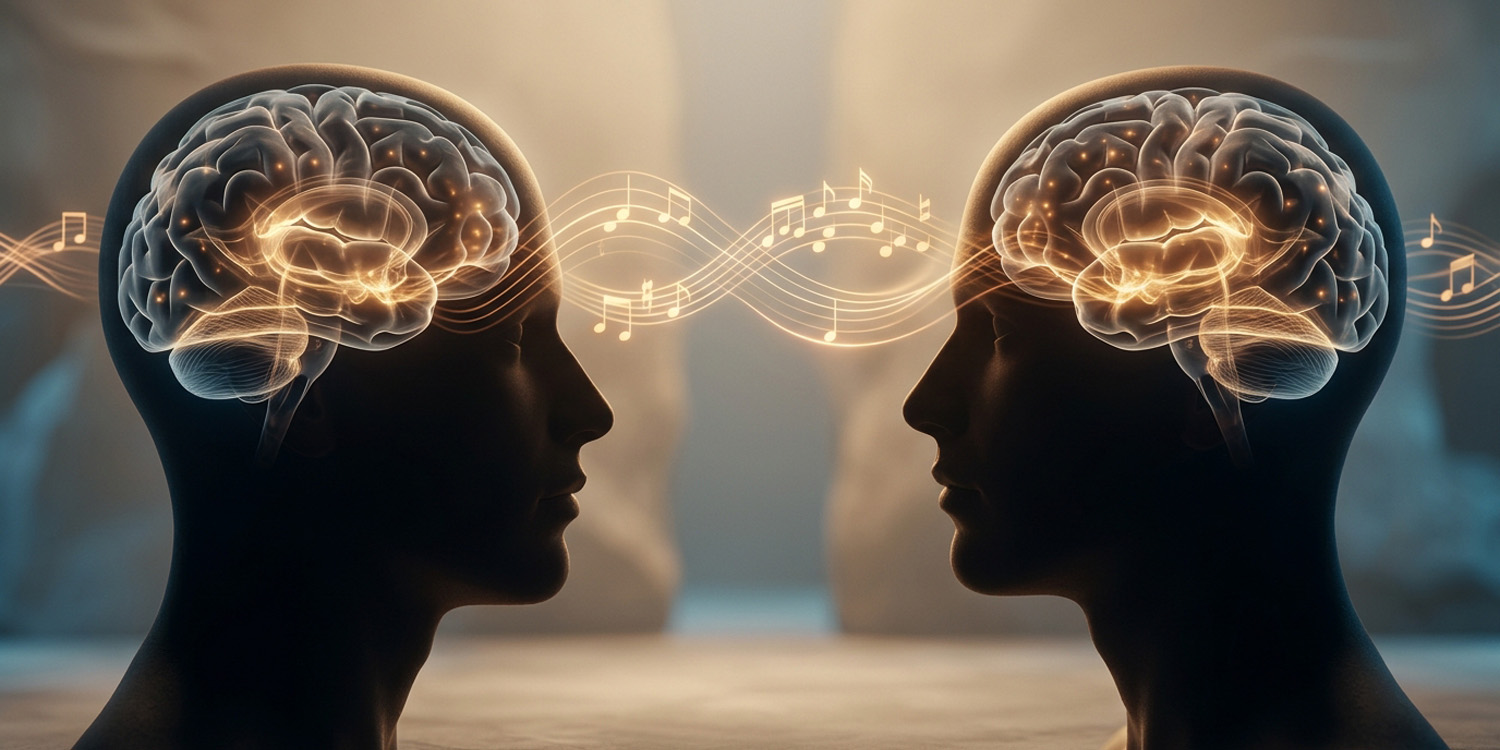
Recent brain imaging suggests that locking eyes while listening to familiar chord progressions stimulates neural regions associated with social bonding. This shared activity also tends to increase subjective feelings of connection between two people.
New research provides evidence that listening to familiar and predictable musical chord progressions while making eye contact with another person increases activity in parts of the brain associated with social interaction. This combination of music and eye contact also tends to make people feel more socially connected to each other. These findings were recently published in <em><a href="https://doi.org/10.1523/jneurosci.1116-25.2026" target="_blank">The Journal of Neuroscience</a></em>.
The authors conducted this study to investigate the exact brain mechanisms that explain why music brings people together. While many people experience a sense of bonding through music, the biological processes behind this feeling remain mostly unmapped. A major motivation was to explore how specific musical elements could eventually be used as medical therapies for conditions related to social isolation.
"The question of how and why listening to music enhances social behavior has a long history in neuroscience," said study author Joy Hirsch, the Elizabeth Mears and House Jameson professor of psychiatry, comparative medicine and neuroscience at the Yale School of Medicine. Hirsch, who also directs the Brain Function Laboratory and is affiliated with the Wu Tsai Institute at Yale University, added that a primary reason to explore this topic is the potential for developing music therapies to treat clinical conditions with social symptoms.
Study author AZA Stephen Allsop, an assistant professor of psychiatry at Yale University and an affiliate assistant professor at Howard University, shared a personal motivation for the work. "I am a life-long musician and a professional independent artist as well as a physician-scientist," Allsop explained. "I've always been obsessed with understanding how sounds can activate neural circuits in a way that can facilitate social connection and healing."
Allsop also serves as the director of the Center for Collective Healing and the medical director of the Rapid Evaluation, Stabilization, and Treatment Center.
"This research allowed me to directly test an observation I made as a musician about how chord progressions shape the way people respond to music, especially in social settings like a music concert or church," Allsop continued. "It's very satisfying to begin approaching these questions that I've had as a musician through scientifically validated tools and then ask how I can use this information to help my patients."
Another reason this study is happening now is because of new brain scanning tools. In the past, brain scans required a person to lie perfectly still inside a large, loud machine, which made natural social interactions impossible.
"Prior to this paradigm shift functional imaging was primarily performed in an MRI scanner without the possibility of live social interaction," Hirsch noted. "The new dual brain technology plus advances in multimodal approaches including neural and synchronized behavioral variables provides a quantum leap in opportunity to study questions such as how music interacts with neural systems that enhance social behavior."
To conduct the experiment, the scientists recruited 40 healthy adults, consisting of 20 men, 18 women, and two nonbinary individuals. The participants had an average age of about 27 years. These individuals were paired up into 20 two-person groups. The pairs sat across a table from each other, separated by a specially designed piece of glass that could instantly switch between transparent and opaque.
The researchers recorded the participants' brain activity using a technique called functional near-infrared spectroscopy. This method uses special caps fitted with small sensors that shine safe, low-level light through the scalp to measure changes in blood oxygen levels. Because active brain regions consume more oxygen, this technology allows scientists to map brain activity while participants sit up and interact normally.
During the experiment, the participants listened to two different types of musical tracks. One track featured a highly predictable and harmonious chord progression that is very common in Western popular music. The other track used the exact same notes and instruments, but the timing and structure of the piano and bass were completely scrambled, making the melody unpredictable. Both tracks featured the same steady drumbeat.
As the participants listened to the music, the glass between them toggled back and forth. Sometimes the glass was transparent, allowing the pair to make natural eye contact. Other times, the glass was frosted, blocking their view of one another. After each round of listening, the participants used a digital dial to rate how socially connected they felt to their partner on a scale from zero to five.
The scientists found that feelings of social connection peaked when participants looked at each other while listening to the structured, predictable chord progressions. "There are several take-home messages," Hirsch explained. "Music with predictable chord progressions (unlike typical jazz, for example) was found to be most effective in increasing feelings of social connectedness."
The brain scans revealed that specific regions lit up during this exact combination of eye contact and predictable music. The right angular gyrus, a brain area involved in processing social information and understanding events, showed increased activity. The researchers also saw heightened activity in the somatosensory association cortex, a region usually linked to physical touch and sensation, as well as in the prefrontal cortex, which handles complex planning and social behavior.
"We believe that these findings are the first to break through conventional obstacles that have traditionally prevented rigorous investigation of how live social effects are modulated by music and the underlying neural systems that mediate the social perceptions," Hirsch said. "There are specific areas of the brain that are responsive to the combination of live faces and structured chord progressions. There are also specific areas of the brain that are associated with subjective feelings of social connectedness that are elicited by both mutual live face gaze and predictable chord progressions."
In addition to measuring individual brain activity, the researchers examined how the two participants' brains synced up with each other. They observed that the brain waves of the two partners began to mirror each other during the face-to-face, structured music condition. This brain synchronization suggests that the pairs were experiencing a shared state of social cooperation and emotional alignment.
The authors noted a few unexpected elements in their data. "The main finding: predictable chord progressions enhance social neural systems and perceptions of social connections between people, is surprising because without this finding we had no basis for such a prediction," Hirsch said. "These findings have led us to propose a novel hypothesis that the predictability of the music enhances natural social interactive behaviors that also predict responses of another person."
Hirsch added that this shared predictive behavior might be a core function of human bonding. "The idea is that predictable music may upregulate this unique social mechanism," she explained. "This idea, of course, requires further testing."
Allsop also highlighted an unexpected detail regarding the brain regions involved. "I was surprised by the clear involvement of the somatosensory cortex in music-based social connection," Allsop said. "This suggests that our feelings of social connection are mediated by this part of the brain that is known to be important for physical sensation. It is still a mystery how features of music can activate this region as a mediator of felt social connection."
These observations suggests that songwriters and composers might be tapping into basic human biology. "Familiar, common musical chord progressions can make us feel more connected through the activation of a neural network that is important for how we process social information and feel subjective connection," Allsop explained. "Musicians likely intuitively arrived at these formulas for song composition because of their felt effects on neurophysiology."
The authors noted that there are a few limitations to consider regarding future directions. Measurements of social connection are based on personal feelings, which means different people might interpret the concept of connectedness differently. Future studies will need to use multiple methods to measure these feelings, perhaps including questions about how pleasant the participants found the music.
"This study is an initial 'proof of principle' that music is a salient and potentially therapeutic stimulus," Hirsch noted. "In order for the full potential of music to be applied in medical applications there needs to be a clear understanding of the neural mechanisms of action. This investigation provides a foundational starting point for more advanced quantification of the music/social brain interface."
Hirsch also pointed out the logistical challenges of conducting this type of work. "This investigation took several years to complete due to the absence of dedicated funding," she said. "The significance of funding for this kind of research cannot be overestimated and protection of our funding mechanisms is a high priority for future advances."
Looking ahead, the researchers hope to apply these concepts in real-world settings to assist people with specific mental health needs. "Our next step is to understand not only how these specific features can activate the unique neural networks that we are observing, but how these features might be used in the delivery of music-based therapeutics across a number of conditions such as anxiety, depression, schizophrenia, and autism," Allsop concluded.
"One very attractive next step for this line of research is a clinical trial to test for clinical benefits and how they might be realized," Hirsch added.
The study, "<a href="https://doi.org/10.1523/jneurosci.1116-25.2026" target="_blank">Listening to a Consonant Chord Progression during Live Face-to-Face Gaze Enhances Neural Activity in Social Systems</a>," was authored by Dash A Watts, AZA Stephen Allsop, Simone Compton, Xian Zhang, J Adam Noah, and Joy Hirsch.