Bookmarks 2026-05-03T07:06:13.746Z
by Owen Kibel
28 min read
Bookmarks for 2026-05-03T07:06:13.746Z
-
 '100 times richer': NASA's James Webb Telescope reveals 'forbidden' alien planet that shouldn't exist
Added: May 3, 2026
'100 times richer': NASA's James Webb Telescope reveals 'forbidden' alien planet that shouldn't exist
Added: May 3, 2026'100 times richer': NASA's James Webb Telescope reveals 'forbidden' alien planet that shouldn't exist
Site: Wion
Astronomers have discovered TOI-5205 b, a massive 'forbidden' alien planet orbiting a tiny star. Using the James Webb Space Telescope, researchers revealed its bizarre, heavy-element-depleted atmosphere that is challenging our understanding of planetary formation.
-
'60 Minutes' correspondent Sharyn Alfonsi lambasts 'corporate meddling' at CBS | Fox News Added: May 3, 2026
'60 Minutes' correspondent Sharyn Alfonsi lambasts 'corporate meddling' at CBS | Fox News

-
18th-century mechanical volcano roars to life 250 years later | ScienceDaily Added: May 3, 2026
18th-century mechanical volcano roars to life 250 years later
Site: ScienceDaily
A centuries-old vision of a mechanical volcano has finally erupted into reality, as two University of Melbourne engineering students recreated a design first imagined in 1775 by volcanology enthusiast Sir William Hamilton. Drawing from an 18th-century watercolor and a preserved sketch, they used modern tools like LED lighting and electronic systems to simulate the glowing flows and explosive drama of Mount Vesuvius.

-
Group Rage Doesn’t Hold Together a Coalition - WSJ Added: May 3, 2026
-
Scientists Uncover “Astonishing” Hidden Property of Light Added: May 3, 2026
Scientists Uncover “Astonishing” Hidden Property of Light
Site: SciTechDaily
A newly uncovered property of light suggests it may be far more self-sufficient than previously believed.

-
Taiwan Outfoxes China in Test of Wills Over Tiny African Country - WSJ Added: May 3, 2026
-
New Approach Revealed 10,000 Planet Candidates Missed In the First Year Of NASA Planet Hunter Data | IFLScience Added: May 3, 2026
-
Powerful AI finds 100+ hidden planets in NASA data including rare and extreme worlds | ScienceDaily Added: May 3, 2026
Powerful AI finds 100+ hidden planets in NASA data including rare and extreme worlds
Site: ScienceDaily
Astronomers have unleashed a powerful new AI tool called RAVEN to comb through data from NASA’s TESS mission—and it’s paying off in a big way. By analyzing millions of stars, the system has confirmed over 100 exoplanets, including 31 brand-new worlds, and identified thousands more promising candidates. What makes this especially exciting is the discovery of rare and extreme planets, like those that whip around their stars in less than a day and others lurking in the mysterious “Neptunian desert,” where planets are thought to be scarce.

-
The Simple Mental Habit Every High-Performer Shares Added: May 3, 2026
-
Dan Bongino claims he found Russiagate documents meant to be destroyed | Fox News

-
LARRY KUDLOW: Harvard-Harris poll shows America is behind Donald Trump and the GOP | Fox Business Added: May 3, 2026
LARRY KUDLOW: Harvard-Harris poll shows America is behind Donald Trump and the GOP | Fox Business
America loves President Trump and the Republican Party on all the key issues, according to one major poll, the Harvard-Harris CAPS poll, presided over by a former adviser to President Clinton, Mark Penn, who is most certainly a moderate Democrat, not a crazy one. This is a well respected poll. Of the 2,745 registered voters who were surveyed, the split was 977 Republicans, 984 Democrats, and 785 Independents. So it’s 50-50. What’s interesting about this poll is that it picks up and agrees with many other polls about the key issues. Affordability, the economy, immigration, healthcare, Iran, et cetera. Where it differs from many other polls and lefty press reporting, though, is that while some people may blame Republicans, they blame Democrats more on all the key issues. Let’s start with Iran, 74 percent of the voters believe the U.S. is currently winning in Iran. Virtually every press organization is telling us Iran is winning, believe it or not. Then the poll goes on, 74 percent believe Iran should be prevented from obtaining nukes. Some 66 percent want Mr. Trump to insist on all major conditions in any negotiation. And 57 percent approve of the blockade. There’s a warning here for Democrats, because as Speaker Newt Gingrich has mentioned, Democrats have become the pro-Iran party. Not a good place to be. And as I’ve said many times, Iran will be a sleeper issue come the midterms. Now on the economy — people are very worried about prices and affordability. Got it. When you ask them who do you trust more to manage the economy, though, the responses are: Mr. Trump and Republicans 53 percent, Democrats 47 percent. That’s a 6-point deficit. Normally a typical news desk, I don’t care whether it’s the Wall Street Journal, the New York Times, or the Washington Post. All the legacy lefties. The typical news desk will assume because affordability is the issue, Mr. Trump is to blame. Nope. People have even less confidence in Democrats. Here’s another point, open borders. On this issue, 58 percent think Democrats are in favor of open borders. Here’s another one. Voter ID. Some 65 percent of those polled think Democrats are against voter ID requirements. And they like it very much that Republicans are in favor of voter ID in order to vote. Here’s another one. The race for Congress, you’d think the Democrats are ahead by 10 points given the press coverage day in and day out. Wrong. The Harvard Harris poll shows 50-50, which historically could mean the GOP is well ahead because over the years polling has taken half a dozen points off of the final Republican tally. As I always say, polls are not votes. Only votes are votes. I’ll also say that press coverage is not fair. It’s heavily biased against Mr. Trump and the GOP. And I will add to that, most public press-sponsored polling is heavily biased against Mr. Trump and the GOP. The Harvard Harris poll is the exception and there are other exceptions, but I believe the country is very much behind Mr. Trump. And there’s going to be a big surprise come this November.

-
Leftists Advocate For VIOLENCE, They LIE & Try To Blame It On Conservatives - YouTube Added: May 3, 2026
Leftists Advocate For VIOLENCE, They LIE & Try To Blame It On Conservatives
Site: YouTube
WATCH THE FULL EPISODE HERE: https://www.youtube.com/watch?v=2-IOAi-Obo4&t=7sSUPPORT THE SHOW BUY CAST BREW COFFEE NOW - https://castbrew.com/Join - / @ti...

-
Trump Survives THIRD ASSASSINATION Attempt, Suspect CHARGED | Timcast IRL
Site: YouTube
Text TIM to 64000 for your 2 free gifts with the purchase of any Pocket Hose Ballistic hose. No purchase required. Terms apply, available at http://PocketHos...

-
Did You Notice How Climate Alarmism Just Stopped?
Site: YouTube
Watch the full podcast here - https://www.youtube.com/watch?v=7LVSrTZDopMExplore the full collection of premium Jordan B. Peterson content on DailyWire+: htt...

-
Climate "Science" | Dr. Richard Lindzen | EP 320
Site: YouTube
Ep. 320Dr Jordan B Peterson and Dr. Richard Lindzen dive into the facts of climate change, the models used to predict it, the dismal state of academia, and t...

-
People who still write things down on paper may not be resisting technology — they're preserving a thinking process that lets the mind hear itself
Site: VegOut
In a world obsessed with digital speed, the deliberate slowness of handwriting might be the key to clearer thinking.

-
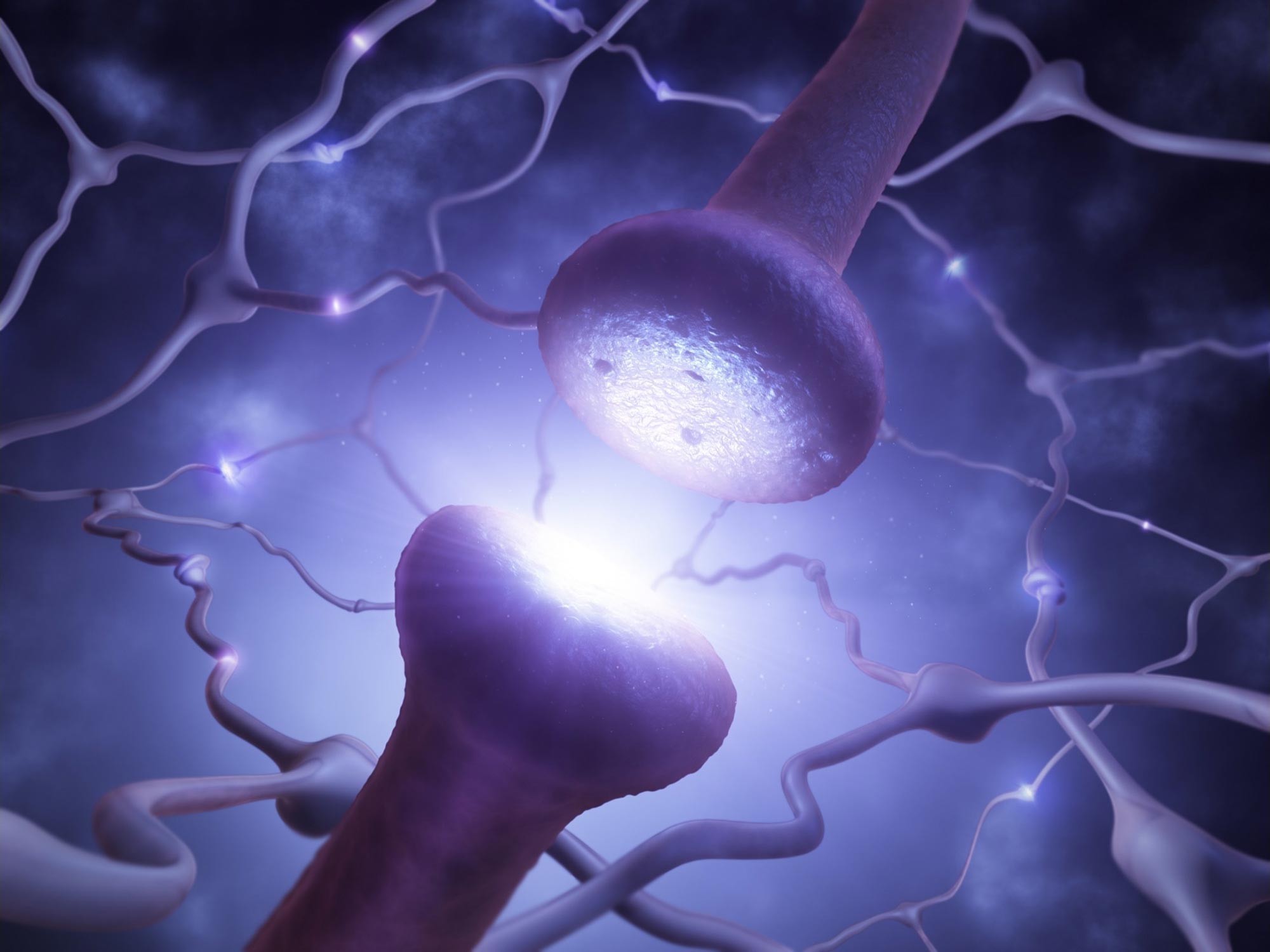
Scientists Debunk 100-Year-Old Belief About Brain Cells, Rewriting Textbooks Added: May 3, 2026
Scientists Debunk 100-Year-Old Belief About Brain Cells, Rewriting Textbooks
Site: SciTechDaily
New evidence suggests axons may not be uniform tubes but dynamic, pearl-like structures.
-
NASA says it will put humans on the surface of the moon in 2028. How realistic is that? | CBC News Added: May 3, 2026
ANALYSIS | NASA says it will put humans on the surface of the moon in 2028. How realistic is that? | CBC News
Site: CBC
The Artemis II lunar mission is over, and NASA is already looking ahead, planning to put astronauts on the surface of the moon by 2028. But there are a lot of hurdles that need to be cleared before that happens.

-
Elon Musk on X: "I love giant machines" / X Added: May 3, 2026
Site: X (formerly Twitter)

-
Site: X (formerly Twitter)
-
Site: X (formerly Twitter)
-
Site: X (formerly Twitter)
-
Site: X (formerly Twitter)
-
There's a Revolution Happening You've Never Heard Of. It's Called "The Great Feminization"
Site: YouTube
For the past half decade or more, conservative intellectuals have tried to answer the question: Where did woke come from? Some believe it is rebranded cultur...

-
Victor Davis Hanson: Trump Torches Norah O’Donnell’s Sick 'Manifesto' Trap on National TV
Site: YouTube
The mainstream media has spent years cultivating a toxic petri dish of debunked hoaxes, only to use a deranged shooter's manifesto to ambush Donald Trump on ...

-
SHE SAID ITS FAKE
Site: YouTube
WATCH THE FULL EPISODE HERE: https://www.youtube.com/watch?v=2-IOAi-Obo4&t=7sSUPPORT THE SHOW BUY CAST BREW COFFEE NOW - https://castbrew.com/Join - / @ti...

-
Site: X (formerly Twitter)
-
Site: X (formerly Twitter)
-
Site: X (formerly Twitter)
-
Site: X (formerly Twitter)
-
Site: X (formerly Twitter)
-
British Ambassador torpedoes King's state visit | The Spectator Added: May 3, 2026
British Ambassador torpedoes King's state visit
Site: The Spectator
Just when you thought a British ambassador to the US couldn’t possibly cause any more grief for Sir Keir Starmer, enter Christian Turner.

-
The Online Left Just Can’t Process the WHCD Assassination Attempt | National Review Added: May 3, 2026
The Online Left Just Can’t Process the WHCD Assassination Attempt | National Review

-
It’s High Time We Judged the Smell of Weed | National Review Added: May 3, 2026
It’s High Time We Judged the Smell of Weed | National Review
Site: National Review
Today’s putrid-smelling marijuana shouldn’t be an ever-present part of life.

-
LILEKS (James) | Substack Added: May 3, 2026
LILEKS (James) | Substack
The Column Continues. Click to read LILEKS (James), by James Lileks, a Substack publication with thousands of subscribers.

-
The shocking origin of human eyes traces back to an ancient “cyclops” | ScienceDaily Added: May 3, 2026
The shocking origin of human eyes traces back to an ancient “cyclops”
Site: ScienceDaily
A bizarre, cyclops-like creature from nearly 600 million years ago may hold the key to how your eyes—and even your sleep cycle—evolved. Scientists have discovered that all vertebrates, including humans, trace their vision back to a single light-sensitive “median eye” perched atop a worm-like ancestor’s head. As this ancient animal shifted from a sedentary to a more active lifestyle, it lost and then reinvented its vision, eventually giving rise to the paired, image-forming eyes we rely on today.

-
America got rich and got sad. A top economist says 2020 broke something that hasn't healed | Fortune Added: May 3, 2026
America got rich and got sad. A top economist says 2020 broke something that hasn't healed | Fortune
Site: Fortune
It's not a mystery why everyone got sad in 2020. What is: the fact they never recovered. Sam Peltzman sees a "segregated happiness society."

-
 High trust in AI leaves individuals vulnerable to "cognitive surrender," study finds
Added: May 3, 2026
High trust in AI leaves individuals vulnerable to "cognitive surrender," study finds
Added: May 3, 2026High trust in AI leaves individuals vulnerable to "cognitive surrender," study finds
Site: PsyPost - Psychology News
People are increasingly outsourcing their thinking to artificial intelligence, bypassing critical reflection entirely. New research reveals that this "cognitive surrender" inflates confidence and causes users to blindly adopt algorithm-generated answers, even when the software is wrong.
A recent study posted as a <a href="https://papers.ssrn.com/sol3/papers.cfm?abstract_id=6097646" target="_blank">Wharton School Research Paper</a> provides evidence that people increasingly rely on artificial intelligence to make decisions, a phenomenon scientists call "cognitive surrender." The findings suggest that individuals tend to adopt computer-generated answers without critical thought. This habit boosts human accuracy when the software is correct but significantly harms performance when the system makes mistakes.
Since the late twentieth century, psychologists have generally divided human cognition into two distinct categories. System 1 represents immediate, automatic responses driven by instinct and emotion. System 2 involves the deliberate, effortful reflection required to solve complex mathematical equations or weigh difficult choices.
However, the rapid rise of generative algorithms presents a new dynamic that does not fit neatly into this traditional model. People now frequently delegate their thinking to external software, outsourcing tasks ranging from drafting emails to making complex medical diagnoses.
"Looking at how AI is being used in society, it has become an ever-available cognitive partner," said <a href="https://www.whyweconsume.com/" target="_blank">Steven Shaw</a>, a postdoctoral researcher at The Wharton School. "Much of the public conversation has focused on whether AI models are accurate, biased, or capable, but we thought there was a missing human-side question: what happens to our own reasoning when we can outsource thinking so easily?"
Shaw noted that the project grew from observing real-world patterns in everyday life. "People are not just asking AI for information; they are often letting it structure their thoughts, explanations, and decisions," he explained.
To address this, the scientists proposed the Tri-System Theory, adding artificial cognition as a third system of thought. "From a theoretical perspective, we build on dual process theories to introduce Tri-System Theory of Cognition, which adds System 3, artificial cognition to existing Systems 1 (intuitive) and 2 (deliberative)," Shaw said.
"We define and characterize System 3 in the paper as external, automated, data-driven, and dynamic," Shaw continued. "Establishing System 3’s presence brings AI into the human cognitive architecture (we call the 'triadic cognitive ecology’)."
To test this theory, the researchers separated the concept of strategic help from complete reliance. Cognitive <em>offloading</em> occurs when a person uses a tool like a calculator to assist their own reasoning. In contrast, cognitive <em>surrender</em> happens when a person entirely relinquishes mental control and adopts an algorithm's judgment as their own.
In the first study, scientists recruited 359 participants in a laboratory setting, along with 81 online participants to ensure robust results. The volunteers completed seven logic puzzles designed to trigger an immediate, incorrect intuitive answer. Reaching the correct solution required effortful, analytical thought to override the initial gut reaction.
Participants were randomly divided into two groups, with one working independently and the other given access to a chatbot. For those with chatbot access, the scientists secretly manipulated the software to provide correct answers on some puzzles and confidently present incorrect answers on others.
"AI use was optional in our studies, so we did not know how often participants would actually consult it," Shaw noted. "We were struck by both the overall usage rates (greater than 50% of trials) and the high follow rates once participants opened the chat (over 90% following correct AI advice and ~80% following incorrect AI advice, conditional on chat use; stats from Study 1)."
When the software provided the correct answer, participant accuracy jumped to 71 percent, compared to about 46 percent for those working without assistance. When the algorithm provided faulty advice, human accuracy plummeted to roughly 31 percent. Access to the chatbot also inflated participants' confidence in their answers, even when the advice was completely wrong.
The scientists found that participants who reported higher general trust in technology were more likely to surrender to faulty suggestions. Those who naturally enjoy engaging in deep thinking, a trait called need for cognition, successfully recognized and rejected the incorrect outputs more often. Participants with higher fluid intelligence, the ability to solve unfamiliar problems, also showed resistance to cognitive surrender.
To see how environmental factors change these patterns, the researchers conducted a second experiment with 485 participants. Everyone had access to the assistant, but half of the participants were placed under a strict 30-second time limit for each puzzle. Time constraints generally reduced overall accuracy, but reliance on the algorithm remained strong.
In a third experiment involving 450 participants, the scientists tested whether financial motivation and immediate performance feedback could reduce cognitive surrender. Half of the participants earned a 20-cent cash bonus and received an instant notification telling them whether their submitted response was right or wrong.
These rewards and feedback loops helped participants stay alert and double-check the software's work. The rate at which participants rejected faulty advice doubled from 20 percent to 42 percent. Despite this improvement, cognitive surrender persisted broadly, as many incentivized participants still accepted incorrect answers.
The researchers combined the data across all three experiments to estimate the overall strength of this effect. This final synthesis included 1,372 participants and 9,593 individual puzzle trials. The massive dataset confirmed that human accuracy consistently scaled with the quality of the algorithmic output.
While this research provides detailed insights, the experiments relied on specific logic puzzles in a highly controlled setting. "These were controlled experiments using structured reasoning tasks, so they are a clean demonstration of the phenomenon rather than a complete map of AI use in the wild," Shaw explained.
He added that cognitive surrender is not inherently negative. "Cognitive surrender is not the same as saying AI is bad or that using AI is irrational; in many settings, AI can improve judgment," Shaw said. "The key issue is calibration: knowing when AI is helping you think and when it is quietly doing the thinking for you."
"We believe users often slip into cognitive surrender without realizing, particularly due to how engaging modern LLMs are and characteristics of sycophancy," he continued. To clarify, LLMs, or large language models, are the underlying systems powering modern chatbots.
Shaw also highlighted a specific approach for future studies in this field. "A methodological point for researchers seeking to study cognitive surrender: showing people an 'AI-generated answer' in a vignette (i.e., a hypothetical AI answer) is not the same as letting them decide whether, when, and how to consult a live AI assistant," he noted.
"Effective studies should use real, optional instances of LLMs alongside their task so that the researcher can observe whether people open the chat, what they ask, and whether they follow or override its answers," Shaw added.
"To illustrate cognitive surrender experimentally, you need to experimentally control/randomize AI output accuracy regarding only the specific item/construct of interest in your study, while leaving all other elements of the LLM unconstrained," Shaw explained. This ensures that scientists measure true human behavior in realistic digital environments.
Looking ahead, the researchers plan to expand their investigations. "The next step is to study cognitive surrender in naturalistic and higher-stakes settings using field studies, think medical, legal, and education settings," Shaw said. "We also want to identify interventions—both on the user side and the interface-design side—that preserve the benefits of AI while reducing uncritical reliance on it."
For everyday users, the study offers a practical lesson. "AI can be extremely useful, but our findings suggest that people can fall into what we call 'cognitive surrender'—adopting AI outputs with minimal scrutiny, even when those outputs are wrong," Shaw explained.
"Cognitive surrender can be adaptive, improving accuracy and speed of reasoning, but ties human decision-making to System 3 and shifts agency to AI. Practically, we should think carefully about what contexts and domains we accept reduced or loss of agency," he said. "In cases where we want to safeguard skills or critical thinking, users should form their own answers, based on intuition and deliberation first, then use AI models to challenge, refine, or expand thinking rather than replace it."
The study, "<a href="https://papers.ssrn.com/sol3/papers.cfm?abstract_id=6097646" target="_blank">Thinking - Fast, Slow, and Artificial: How AI is Reshaping Human Reasoning and the Rise of Cognitive Surrender</a>," was authored by Steven D Shaw and Gideon Nave.

-
Dueling Populisms Signup Added: May 3, 2026
Dueling Populisms Signup

-
Don’t toss cannabis leaves: Scientists found rare compounds with medical potential | ScienceDaily Added: May 3, 2026
Don’t toss cannabis leaves: Scientists found rare compounds with medical potential
Site: ScienceDaily
Scientists have uncovered a surprising new layer of complexity in Cannabis, identifying dozens of previously unknown compounds—including the first-ever evidence of rare molecules called flavoalkaloids in its leaves. These compounds, prized for their potential health benefits, were hidden among a rich mix of plant chemicals that vary dramatically even between just a few strains.

-
How neurons sense bacteria in the gut | MIT News | Massachusetts Institute of Technology Added: May 3, 2026
How neurons sense bacteria in the gut
Site: MIT News | Massachusetts Institute of Technology
MIT scientists identified the specific chemicals that a key neuron in C. elegans senses in both in the bacteria it eats and those that it needs to avoid ingesting.

-
New Chinese Iron Battery Lasts 16 Years, and Could Upend the $150B Lithium Market | OilPrice.com Added: May 3, 2026
New Chinese Iron Battery Lasts 16 Years, and Could Upend the $150B Lithium Market | OilPrice.com
Site: OilPrice.com
China controls 80% of lithium-ion battery manufacturing — and a new Chinese iron battery breakthrough suggests it's already positioned to dominate alternatives, too.
Major innovation is needed to diversify the global battery sector. Lithium-ion batteries are taking over the world you probably have a few within reach at this very moment in your rechargeable devices. And since China controls the world's lithium supply chains and dominates global lithium-ion battery manufacturing, the global tech sector has become dangerously consolidated. Breaking this dependency on China will require breaking our dependency on lithium, creating a dire need for the development of viable alternative battery technologies. The lithium-ion battery sector has gone gangbusters in recent years, skyrocketing by 20 percent between 2024 and 2025 to reach a global market of USD 150 billion. But as the strength of the lithium-ion market has increased, so too have the considerable supply chain risks and geopolitical insecurities associated with the sector. China alone produced over 80 percent of all the world's lithium-ion batteries in 2025. "For over a decade, China has meticulously orchestrated a strategic ascent in the global electric vehicle EV batteries market, culminating in a dominance that now presents a formidable challenge to Western manufacturers," the EE Times reported last year. China also dominates batterymaking for the energy storage sector, which is currently 90 percent dependent on lithium-ion batteries. This consolidation acts as "almost a moat" protecting the Chinese battery sector from international competition. In addition to its geopolitical risks, lithium also has other logistical and strategic pitfalls. Its extraction is highly environmentally unfriendly and can pose risks to public health, for one thing. And while lithium is energy-dense and performs well in a wide range of conditions, it's not optimal for energy storage a massively expanding market. Lithium-ion batteries can only hold onto charge for about four hours at a time, whereas energy storage needs to offer long-term solutions for energy security as more and more variable energies like wind and solar power connect to the grid. [GooglePreferredSource] There is therefore a critical opening for alternative battery models that can hold charge for longer, and which avoid lithium supply chains. And, perhaps unsurprisingly, China is leading the charge for the development of these alternative battery models as well. Just this week, Interesting Engineering reported that a Chinese team has made a major breakthrough in advancing "all iron" flow batteries which could provide an affordable option for long-term energy storage. "It provides a budget-friendly, high-endurance answer for the world's massive energy storage needs," says Interesting Engineering. The breakthrough comes thanks to a new electrolyte which allows for thousands of recharge cycles at a much lower cost than lithium-ion batteries. "The development solves the long-standing issues of material degradation and leakage crossover by re-engineering the iron complex at the molecular level," the report goes on to say. This could majorly upset battery markets if the model proves scalable, as iron is about 80 times cheaper than lithium in today's market. By tweaking the iron at a molecular level, the Chinese research team has managed to solve several critical challenges for the energy storage sector. Typically, these kinds of batteries degrade quickly. But this new approach grants the battery a record-breaking lifespan. Testing showed that the battery could withstand the equivalent of 16 years of operation with zero degradation. "After multiple rounds of screening, the AIFB adopting the [FeHPFBHS]4 anolyte exhibits a record-breaking ultra-long cycling stability over 6000 cycles at 80 mA cm2," detailed the study, published earlier this month in the scientific journal Advanced Energy Materials. This breakthrough is just one of many alternative battery models being developed within and outside of China. The range of approaches is massive and diverse, with models as futuristic as quantum batteries and as low-brow as dirt batteries. While many of these prototypes are being piloted far from Beijing, the Chinese sector is majorly out-spending the rest of the world on clean energy development, making Chinese developers and manufacturers hard to compete with. By Haley Zaremba for Oilprice.com
-
What if Dark Matter Doesn't Actually Exist? Added: May 3, 2026
What if Dark Matter Doesn't Actually Exist?
Site: Gizmodo
Modern cosmology assumes dark matter exists. But what makes us so certain that dark matter is the answer—and what if we're wrong?

-
EVERYTHING WILL CHANGE
Site: YouTube
WATCH THE FULL EPISODE HERE: https://www.youtube.com/watch?v=sQlpyVQNsNUSUPPORT THE SHOW BUY CAST BREW COFFEE NOW - https://castbrew.com/JOIN THE DISCORD: ht...

-
To Save the Midterms, Go on the Offensive - WSJ Added: May 3, 2026
-
Lentil Soup (Shorbat Adas) - Three Teas Kitchen Added: May 3, 2026
Lentil Soup (Shorbat Adas) - Three Teas Kitchen
Site: Three Teas Kitchen
Whenever I’d watch my mom make lentil soup, I was always impressed with how quickly she was able to get it on the table for dinner. Within 30 minutes, a mound of dried, red lentils would turn into the creamiest bowl of soup. The creaminess…

-
The buzz is real 🐝 🍯
Site: YouTube
Enjoy the videos and music you love, upload original content, and share it all with friends, family, and the world on YouTube.

-
Pot of Taxpayer Dollars
Site: YouTube
Please remember to subscribe if you enjoyed this episode of Pod Force One: https://www.youtube.com/@PodForce1Watch full clips of Pod Force One with Miranda D...

-
A Message to Future Trillionaires | by Avi Loeb | May, 2026 | Medium Added: May 3, 2026
A Message to Future Trillionaires
Site: Medium
When I met Sergey Brin and Mark Zukerberg in Silicon Valley a decade ago, their net worth was about $30–40 billion. By now, it is 6 times…

-
Canada proposes POET mission to hunt Earth-sized planets Added: May 3, 2026
Canada proposes POET mission to hunt Earth-sized planets
Exoplanet science and the search for life beyond Earth continue to advance at break-neck speeds, with the number of confirmed exoplanets by NASA rapidly approaching 6,300, with 223 of those exoplanets being designated as terrestrial (rocky) exoplanets. With the promise of discovering an increasing number of Earth-sized exoplanets increasing every day, new telescopes from across the world have the opportunity to contribute to this incredible field.


