Bookmarks 2026-04-09T21:59:56.238Z
by Owen Kibel
31 min read
Bookmarks for 2026-04-09T21:59:56.238Z
-
 Artemis II Flight Day 9: Crew Prepares to Come Home - NASA
Added: Apr 9, 2026
Artemis II Flight Day 9: Crew Prepares to Come Home - NASA
Added: Apr 9, 2026Artemis II Flight Day 9: Crew Prepares to Come Home - NASA
Site: NASA
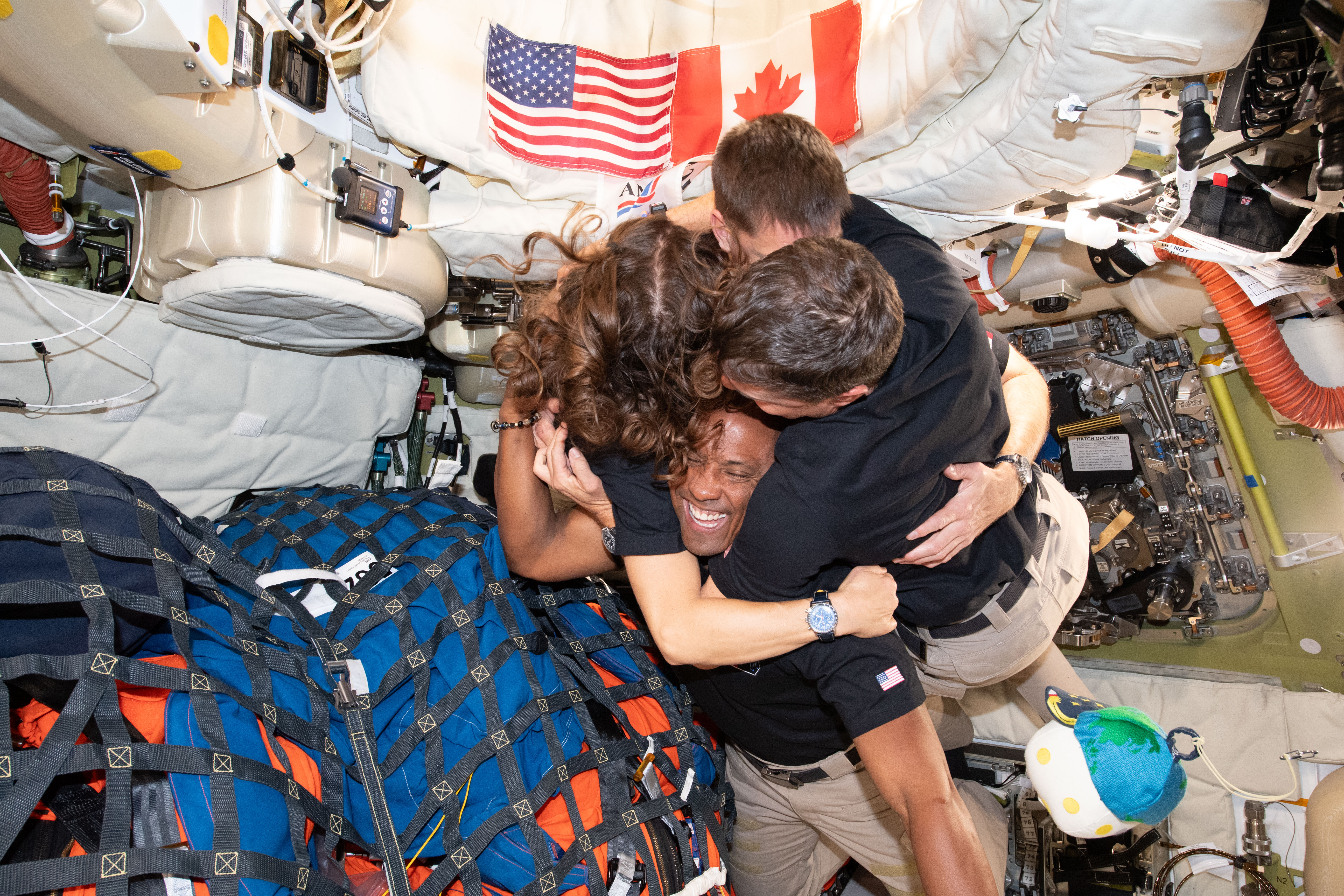
On their last full day in space, the Artemis II crew began the morning with “Lonesome Drifter” by Charley Crockett as they approached Earth at 147,337 miles.
-
Gad Saad on X: "Woah!" / X Added: Apr 9, 2026
Site: X (formerly Twitter)

-
Site: X (formerly Twitter)
-
Canada Lawmaker Is Very Concerned About Treatment of "MMIWG2SLGBTQQIA+" People, with Michael Knowles - YouTube Added: Apr 9, 2026
Canada Lawmaker Is Very Concerned About Treatment of "MMIWG2SLGBTQQIA+" People, with Michael Knowles
Site: YouTube
Megyn Kelly is joined by Michael Knowles, host of "The Michael Knowles Show," to discuss a Canadian lawmaker using the term "MMIWG2SLGBTQQIA+" to describe op...

-
Could We Actually Terraform Mars? A New Scientific Roadmap Lays Out the Blueprint—And the Risks - Universe Today Added: Apr 9, 2026
Could We Actually Terraform Mars? A New Scientific Roadmap Lays Out the Blueprint—And the Risks
Site: Universe Today
Reading the Mars Trilogy by Kim Stanley Robinson brings the benefits and pitfalls of efforts to terraform the Red Planet into sharp relief. Since the 1970s, when Carl Sagan first suggested the possibility that we could make Mars more Earth-like, that process has been a staple of science fiction. But there’s always been a significant amount of humanity that thinks we shouldn’t. A new paper available in pre-print on arXiv from Edwin Kite of the University of Chicago and his co-authors skirts around the ethical and moral questions of whether we should and tries to take a long hard look at whether we can.

-
The Gemini app can now generate interactive simulations and models.
Site: Google
Gemini can now transform your questions and complex topics into custom and interactive visualizations.

-
How introverts can flourish in an extrovert's world Added: Apr 9, 2026
-
Exclusive: Record funding for fusion power lands as Trump eyes cuts Added: Apr 9, 2026
-
Ivanka Trump tears up about losing her mother, Jared's battle with cancer and watching her father get shot in 'real time' Added: Apr 9, 2026
**Ivanka Trump tears up about losing her mother, Jared’s battle with cancer and watching her father get shot in ‘real time’ **
Site: New York Post
“You just can’t take anything for granted,” Ivanka Trump said.

-
Artemis II crew will endure 3,000°C on re-entry. A hypersonics expert explains how they will survive Added: Apr 9, 2026
Artemis II crew will endure 3,000°C on re-entry. A hypersonics expert explains how they will survive
Site: The Conversation
The high-speed, hypersonic and extremely hot re-entry is the last challenge the Artemis II crew will have to endure on their epic 10-day mission.

-
Artemis II Headed Home, but Do We Have Neighbors? | by Avi Loeb | Apr, 2026 | Medium Added: Apr 9, 2026
Artemis II Headed Home, but Do We Have Neighbors?
Site: Medium
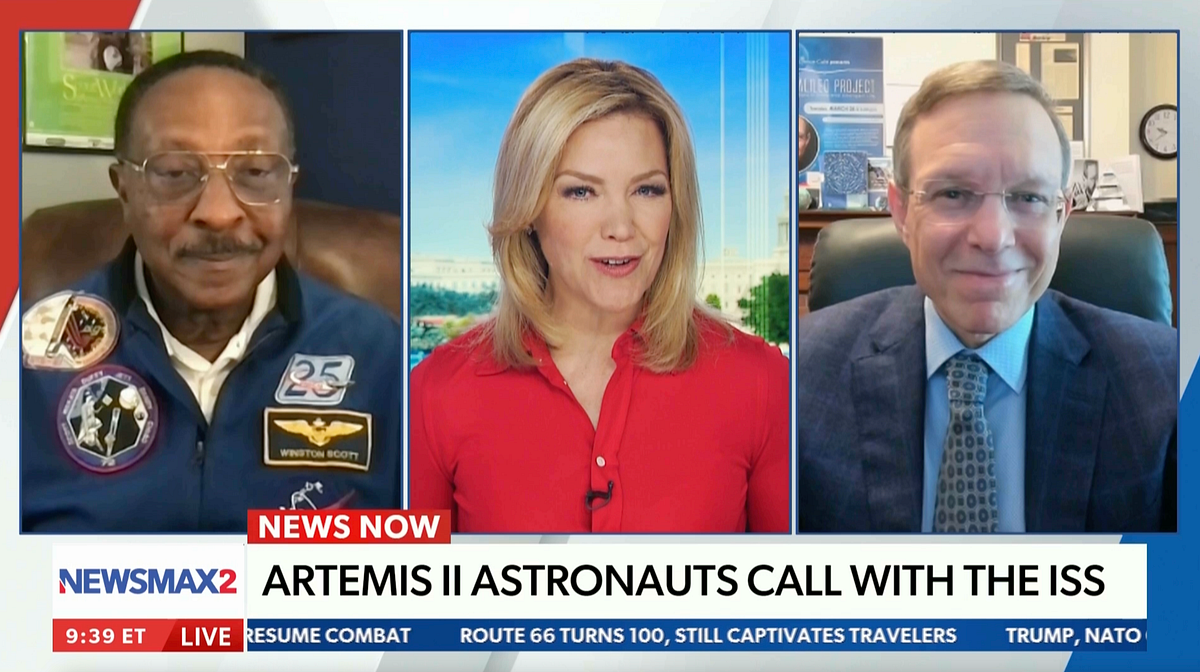
Today, April 8, 2026, the Artemis II spacecraft will carry the four humans who reached farther than any human did, back to their home…
-
Strait of Hormuz remains all but closed, Trump demands Iran stop tolls Added: Apr 9, 2026
Strait of Hormuz remains all but closed, Trump demands Iran stop tolls
Site: Axios
The normal functioning of the strait is vital to the global economy.

-
Site: X (formerly Twitter)
-
Site: X (formerly Twitter)
-
 Linux does these 3 things better than Windows, and the gap is widening
Added: Apr 9, 2026
Linux does these 3 things better than Windows, and the gap is widening
Added: Apr 9, 2026Linux does these 3 things better than Windows, and the gap is widening
Site: How-To Geek
Windows is better than Linux in some stuff, but Linux has always been better than Windows in other things.

-
Trump’s Iran Miscalculation | National Review Added: Apr 9, 2026
Trump’s Iran Miscalculation | National Review

-
The Most Powerful Free TTS Model You've Never Heard Of - YouTube Added: Apr 9, 2026
The Most Powerful Free TTS Model You've Never Heard Of
Site: YouTube
OmniVoice is a free, open-source text-to-speech model that supports 600 languages, zero-shot voice cloning, cross-lingual TTS, and voice design — all in unde...

-
From ‘Deplorables’ to Dress-Up: Why Democrats Can’t Win Back Trump’s Base | Victor Davis Hanson
Site: YouTube
Following the Democrats’ crushing defeat at the ballot box in 2024, the DNC launched a postmortem to answer a very simple yet surprisingly elusive question: ...

-
I Tested the Top NSFW AI Image Generators. These Are the 5 Best
Site: PCMAG
If vanilla AI image generators leave you feeling underwhelmed, it's time to play with the spicy stuff. I put the most popular NSFW options to the test so you can find the one that really hits the mark.

-
Explanation: What you get with SuperGrok Lite, and whether it is worth the price! : r/grok Added: Apr 9, 2026
-
 Gemini - direct access to Google AI
Added: Apr 9, 2026
Gemini - direct access to Google AI
Added: Apr 9, 2026Gemini - direct access to Google AI
Site: Gemini
Created with Gemini

-
 Imagine - Grok
Added: Apr 9, 2026
Imagine - Grok
Added: Apr 9, 2026Make your own video with Grok Imagine
Site: Grok
Video generated by Grok.
-
 This founder helped build SpaceX's most powerful rocket engine. Now he's building a 'fighter jet for orbit.' | TechCrunch
Added: Apr 9, 2026
This founder helped build SpaceX's most powerful rocket engine. Now he's building a 'fighter jet for orbit.' | TechCrunch
Added: Apr 9, 2026This founder helped build SpaceX's most powerful rocket engine. Now he's building a 'fighter jet for orbit.' | TechCrunch
Site: TechCrunch
The company's novel rocket engine could be a game changer for the U.S. military.

-
 If You See Bats Flying Over Your House at Night, It Often Means a Good Thing for Your Yard
Added: Apr 9, 2026
If You See Bats Flying Over Your House at Night, It Often Means a Good Thing for Your Yard
Added: Apr 9, 2026If You See Bats Flying Over Your House at Night, It Often Means a Good Thing for Your Yard
Site: The Daily Galaxy - Great Discoveries Channel
Scientists tracked what these nighttime visitors are actually hunting above homes and the numbers are staggering.

-
Artemis II landing San Diego: NASA astronauts to reenter near Hawaii before splashing down off San Diego Added: Apr 9, 2026
Artemis II Orion capsule to reenter near Hawaii before splashing down off San Diego
Site: FOX 5 San Diego & KUSI News
NASA’s Orion space capsule is set to reenter the Earth’s atmosphere near Hawaii on Friday night, with the crew landing 50 to 100 miles off the San Diego coast. NASA officials are asking…
SAN DIEGO (FOX 5/KUSI) -- As long as the weekend rain holds off until the late evening Friday or Saturday, NASA says reentry is a go for Friday night. But San Diegans most likely won't be able to see the Orion capsule streak across the sky as the crew will be entering the Earth's atmosphere thousands of miles away before its parachutes bring them all the way to the San Diego coast. The Orion space capsule will reenter the Earth's atmosphere close to Hawaii, about 2,000 miles away. In just 13 minutes, the spacecraft's parachutes will bring the crew about 50 to 100 miles, or more, off the San Diego coast, weather permitting. NASA said during a news conference on Thursday they are expecting good weather for reentry at this time, but there are weather alternatives available for splashdown in case the rain and thunderstorms that are forecast to move into the region late Friday night come earlier than expected. NASA and SpaceX regularly use the Pacific Ocean off Southern California as their reentry point as the waters are usually pretty calm; San Diego's wave height typically stays between 3 to 5 feet, giving them optimal conditions to recover the crew from the hatch. NASA has set parameters for splashdown -- there cannot be rain or thunderstorms within 30 nautical miles of the recovery site during the splashdown, wave height cannot exceed six feet and winds need to remain under 25 knots so boats can help recover the crew. An elite U.S. Navy special operations dive team, helicopter squadron and the USS John P. Murtha (LPD 26), all based out of San Diego, will be assisting NASA with recovering the Artemis II crew when they end their historic moon mission off the San Diego coast. The crew is expected to be on the Navy recovery ship within two hours from splashdown. NASA officials are asking the public to avoid the area as there will be debris falling from the Orion capsule during reentry, like the forward main cover that deploys the parachutes. After the crew is recovered and the space capsule and is onboard the Navy ship, NASA and assisting Navy teams will attempt to recover any debris. Watch NASA’s live return coverage on NASA+, Amazon Prime, Apple TV, Netflix, HBO Max, Discovery+, Peacock and Roku.

-
Trump Lashes Out at MAGA Critics Amid Iran Split Added: Apr 9, 2026
-
Gemini - direct access to Google AI
Added: Apr 9, 2026
Gemini - direct access to Google AI
Site: Gemini
Created with Gemini
-
The eerie “Exposed Skull” nebula has once again left NASA speechless, and new images from the James Webb Space Telescope reveal in stunning detail how a star has been disintegrating for thousands of years
Site: ECOticias.com
NASA’s Webb reveals a haunting “skull” nebula, exposing how a dying star sheds its layers in stunning cosmic detail

-
Site: X (formerly Twitter)
-
Victor Davis Hanson: This is a massive victory for Trump
Site: YouTube
Steven Edginton of GB News sits down with renowned historian Victor Davis Hanson to break down the Iran ceasefire and what it means for Donald Trump’s presid...

-
Site: X (formerly Twitter)
-
 Your brain might understand music theory better than you think, regardless of formal training
Added: Apr 9, 2026
Your brain might understand music theory better than you think, regardless of formal training
Added: Apr 9, 2026Your brain might understand music theory better than you think, regardless of formal training
Site: PsyPost - Psychology News
A recent study reveals that formal musical training isn't necessary for the brain to grasp complex harmonic structures. Both musicians and nonmusicians systematically use musical context to accurately predict, remember, and segment melodies.
A recent study published in <em><a href="https://doi.org/10.1177/09567976251400331" target="_blank">Psychological Science</a></em> provides evidence that people naturally absorb the underlying rules of music just by listening to it over their lifetime. The findings suggest that both trained musicians and people with no musical background use harmonic context in remarkably similar ways to predict and remember musical patterns.
Scholars have long debated whether formal training is required to understand the deeper harmonic frameworks of music. Music is organized into layers of notes, phrases, and sections, similar to how language is structured into words and sentences. Some experts believe that understanding this organization requires explicit instruction in music theory.
Other scientists argue that mere passive exposure to music allows the brain to implicitly learn these rules. Previous studies have yielded mixed results regarding how formal training impacts a listener's ability to process tonal context. Tonal context refers to the overarching harmonic organization or key of a piece of music.
"There has been quite a bit of work looking at how listeners build up musical context, but the open question was how much context is actually used," said corresponding author Riesa Y. Cassano-Coleman, a PhD candidate at the University of Rochester and member of <a href="https://www.piazzalab.com/" target="_blank">the SoNIC (“Science of Neural, Interpersonal Communication”) lab</a>.
"This study was also motivated by an analogous line of research in language/narrative: different areas of the brain respond to different amounts of coherent context in narratives (Lerner et al., 2011 J. Neurosci.). Basically everyone is an "expert" in narratives (at least in the sense that people use language and stories to communicate in everyday life) but not everyone is an expert in music. So music provides an interesting test case: do we need formal training in music to understand musical structure?"
To resolve this debate, the researchers designed a systematic way to test listeners. They wanted to see how the amount of coherent musical information affects a person's ability to encode, predict, and segment music. By scrambling musical pieces at different time intervals, the scientists manipulated the amount of musical context available to the listener.
The researchers conducted four separate experiments using piano pieces from Pyotr Ilyich Tchaikovsky's Album for the Young. They created different versions of the music by scrambling the pieces at various timescales. The conditions included one-bar scrambles, two-bar scrambles, eight-bar scrambles, and completely intact music.
A musical bar, or measure, is a small segment of time containing a specific number of beats. By keeping features like volume, instrument type, and speed constant, the scientists ensured that participants were reacting only to changes in the harmonic structure.
"On the surface, our different musical stimuli sound pretty uniform: same piano timbre, same tempo, no change in dynamics (volume)," Cassano-Coleman explained. "So the only thing that changes across conditions is the underlying structure. What we wanted to test is to what extent listeners used that structure, specifically to remember and predict in the music."
In the first experiment, the researchers tested musical memory. They recruited 108 adults between the ages of 19 and 41, splitting them evenly into musicians with at least five years of training and nonmusicians with no training.
Participants listened to a sixteen-second prompt from one of the scrambled conditions. After a brief delay, they had one and a half seconds to identify which of two short musical clips had appeared in the prompt. The results showed that memory improved for both groups as the music became less scrambled.
Musicians performed better overall on the memory task, but both groups benefited from longer stretches of intact music at the exact same rate. Even within the musician group, having more years of practice did not predict better memory performance. This suggests a shared underlying mechanism for memory encoding.
The second experiment tested musical prediction using a distinct sample of 108 adults, again divided evenly between musicians and nonmusicians. Participants listened to fourteen-second prompts and then chose which of two short clips best completed the musical sequence. The data revealed that prediction accuracy increased as the amount of intact musical context increased.
In this prediction task, musicians did not perform better than nonmusicians. Both groups utilized the available harmonic information equally well to guess the upcoming notes. This provides evidence that people unconsciously apply the rules of music theory to anticipate what comes next, regardless of their formal education.
In the third experiment, the scientists explored event segmentation, which is how people mentally divide continuous sounds into meaningful chunks. A sample of 95 adults listened to longer, one-minute musical pieces. They were instructed to press the spacebar on their keyboard whenever they heard a meaningful change in the music.
"The event segmentation task requires context integration in real time: in order to segment the music into meaningful events, as you're listening, you have to remember what you just heard, predict what's coming next, and decide if it's enough of a meaningful change to mark an event boundary," Cassano-Coleman told PsyPost. "This gives us some insight into how these processes unfold under more natural listening conditions over tens of seconds or minutes, rather than just the 15 or so seconds in the memory and prediction tasks."
As the music became more heavily scrambled, all participants pressed the button more frequently. Their responses naturally aligned with the new boundaries created by the scrambling process. When the music was left intact, both groups successfully identified standard eight-bar phrases as meaningful events.
A difference between the groups emerged when looking at longer musical structures. Musicians tended to align their button presses with sixteen-bar hyperphrases, which are larger musical sections made up of multiple smaller phrases. Nonmusicians tended to stick to identifying the shorter eight-bar phrases.
The researchers conducted additional checks to ensure that simple changes in pitch height or rhythmic speed were not guiding these responses. This provides evidence that listeners were genuinely tracking the underlying harmonic rules.
The fourth experiment tested explicit awareness of the structural disruptions. The researchers asked 108 participants from the first two experiments to listen to the one-minute pieces and explicitly identify the level of scrambling. Participants had to choose whether the music was scrambled every bar, every two bars, every eight bars, or left intact.
Musicians performed better on this categorization task than nonmusicians. This suggests that explicit theory training helps people consciously reason about musical structure. Yet both groups struggled most with identifying the completely intact music and the highly chaotic one-bar scrambles, achieving their highest accuracy on the midlevel scrambles.
"What we found is that listeners do integrate musical context over time, and that you don't need formal training to make use of it," Cassano-Coleman summarized. "In other words, disrupting structure (via scrambling) disrupted listeners' ability to remember and accurately predict what comes next. The biggest thing that surprised us was just how similarly musicians and non-musicians perform in these tasks - musicians did seem to have an advantage in explicit labeling (experiment 4), but otherwise both groups performed better (at similar rates) with more intact context."
While this study offers a detailed look at music cognition, it does have a few limitations. The researchers utilized pieces from Western classical music, which follows a very specific set of harmonic rules. It remains unclear if listeners would show the exact same patterns of context integration when listening to diverse genres or music from other cultures.
Future research could explore how different musical features, such as changing rhythms or different combinations of instruments, drive event segmentation. Scientists also plan to investigate how highly trained musicians use this type of context while actively performing. Combining behavioral tests with brain imaging could help pinpoint exactly how the mind merges multiple streams of auditory information.
"In terms of future directions, we're interested in what's happening in the brain as people listen to or as expert pianists play these scrambled stimuli in the fMRI scanner," Cassano-Coleman said. "Stay tuned for that!"
The study, "<a href="https://doi.org/10.1177/09567976251400331" target="_blank">Listeners Systematically Integrate Hierarchical Tonal Context, Regardless of Musical Training</a>," was authored by Riesa Y. Cassano-Coleman, Sarah C. Izen, and Elise A. Piazza.

-
A “mini-brain” created in the lab faces the challenge of solving one of engineering's most complex problems, and what happens in just 45 minutes raises a profound question about artificial intelligence
Site: ECOticias.com
Lab-grown mini-brains learn a complex task in minutes, raising new questions about intelligence, biology, and AI limits

-
Self-hosted LLM took my personal knowledge management system to the next level
Added: Apr 9, 2026
Self-hosted LLM took my personal knowledge management system to the next level
Site: XDA
I upgraded my second brain with fully local intelligence.

-
Someone may have maliciously caused a huge rodent invasion in Calif. Added: Apr 9, 2026
Client Challenge
-
Why Empathy-Blindness Is the Ultimate Leadership Failure | Psychology Today Added: Apr 9, 2026
Why Empathy-Blindness Is the Ultimate Leadership Failure
Site: Psychology Today
Research suggests that power creates a "neurological disconnect" where the brain stops simulating the actions and feelings of others.

-
Site: X (formerly Twitter)
-
Site: X (formerly Twitter)
-
Claude Mythos and misguided open-weight fearmongering Added: Apr 9, 2026
Claude Mythos and misguided open-weight fearmongering
Another dance around fears of open-source.

-
Gemma 4 and what makes an open model succeed
Hint: it's not benchmark scores.

-
 Why Your Brain Already Understands Complex Music Theory Without Ever Taking a Single Piano Lesson
Added: Apr 9, 2026
Why Your Brain Already Understands Complex Music Theory Without Ever Taking a Single Piano Lesson
Added: Apr 9, 2026Why Your Brain Already Understands Complex Music Theory Without Ever Taking a Single Piano Lesson
Site: ZME Science
Our brains master complex musical rules just through a lifetime of casual, passive listening.

-
 As ceasefire halts fighting, Iran war becomes a battlefield for votes | The Times of Israel
Added: Apr 9, 2026
As ceasefire halts fighting, Iran war becomes a battlefield for votes | The Times of Israel
Added: Apr 9, 2026As ceasefire halts fighting, Iran war becomes a battlefield for votes | The Times of Israel

-
 How the Brain Replays Sight to Create Mental Images - Neuroscience News
Added: Apr 9, 2026
How the Brain Replays Sight to Create Mental Images - Neuroscience News
Added: Apr 9, 2026How the Brain Replays Sight to Create Mental Images - Neuroscience News
Site: Neuroscience News
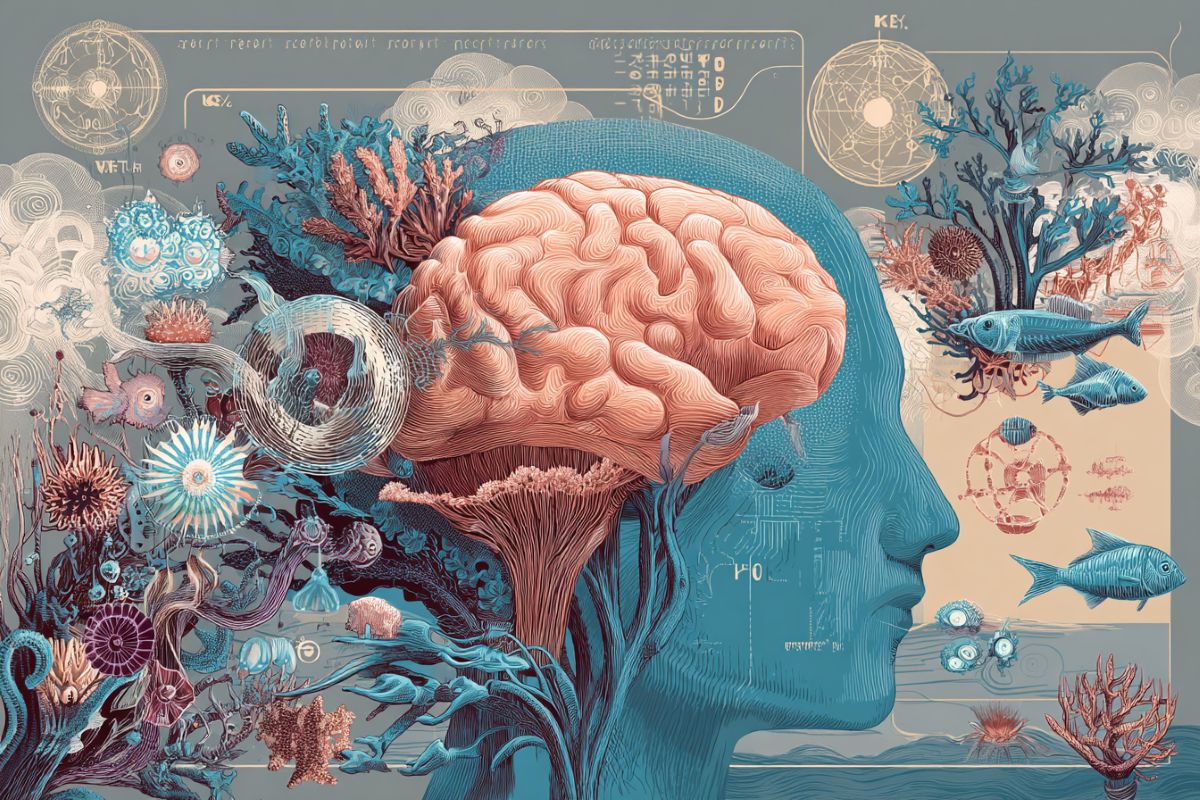
How does the brain create mental images? A new study reveals that visual imagination and perception share a common neural code.
-
homie has finally snapped
Site: YouTube
Trump roasts Tucker Carlson, Candace owens, Alex Jones, and Megyn KellyIts MAGA CIVIL WARBecome A Memberhttp://youtube.com/timcastnews/joinThe Green Room - h...

-
Trump bashes MAGA media figures over their Iran war criticism Added: Apr 10, 2026
Trump bashes MAGA media figures over their Iran war criticism
Site: NBC News
The president went after Tucker Carlson, Megyn Kelly, Candace Owens and Alex Jones in a lengthy Truth Social post, calling them "losers" and "nut jobs."
President Donald Trump went after big-name conservative media figures Thursday over their criticism of his handling of the war in Iran, calling some of his former allies “low IQ," “losers” and "nut jobs." Trump criticized Tucker Carlson, Megyn Kelly, Candace Owens and Alex Jones, who have all broken with him over the war. “They’re losers, just trying to latch on to MAGA,” Trump wrote on Truth Social before dishing out personal insults. "They’re stupid people, they know it, their families know it, and everyone else knows it, too!" he wrote. He said Carlson "should see a good psychiatrist," called Owens "crazy," described Jones as saying "some of the dumbest things” and referred to Kelly as having "nastily" asked him about his past remarks about comedian Rosie O'Donnell. Owens responded by posting a screenshot of Trump’s post on X and writing, “It may be time to put Grandpa up in a home.” “Trump’s mad that he’s wrong. He’s mad that he got set up by Israel," Jones said on his show. "Once a man, twice a child,” he added. “This is dementia.” Spokespeople for Carlson and Kelly did not immediately respond to requests for comment. In the past week, Carlson, a former Fox News host, called on U.S. military aides to reject plans to kill Iranian civilians, while Owens, the former communications director of Turning Point USA, said the Trump administration was “satanic” and urged Congress to “have the Mad King Trump removed.” Kelly, a former Fox host and NBC News anchor, said on her podcast this week that she was “sick of this s---,” adding, "You don’t just threaten to wipe out an entire civilization.” On his show, Jones, the right-wing conspiracy theorist, called for Trump to be removed through the 25th Amendment. Their comments, which intensified after Trump threatened to wipe out Iranian civilization, underscore a growing schism within Trump’s base over the Iran war, particularly after he campaigned on "no new wars." In his post, Trump said his former supporters in conservative media like Carlson and the others are “not ‘MAGA.’” "MAGA is about WINNING and STRENGTH in not allowing Iran to have Nuclear Weapons," he said. "MAGA is about MAKING AMERICA GREAT AGAIN, and these people have no idea how to do that."

-
Trump 'optimistic' about Iran peace deal even as ceasefire appears strained
Site: NBC News
The temporary break in fighting appeared fragile as Israeli forces continued pummeling Lebanon and the Strait of Hormuz saw only minimal shipping traffic.
WASHINGTON — President Donald Trump told NBC News on Thursday that he was “very optimistic” a peace deal with Iran was within reach as a diplomatic delegation led by Vice President JD Vance prepared to head to Pakistan for high-stakes talks aimed at ending the nearly six-week conflict. Iran’s leaders “talk much differently when you’re at a meeting than they do to the press. They’re much more reasonable,” Trump said in a phone interview. “They’re agreeing to all the things that they have to agree to. Remember, they’ve been conquered. They have no military.” “If they don’t make a deal, it’s going to be very painful,” Trump added. But the tentative ceasefire between the U.S. and Iran already showed signs of strain, as Israeli forces continued carrying out attacks across southern Lebanon, where the Tehran-backed Hezbollah militant group is based. In a phone call Wednesday, Trump asked Israeli Prime Minister Benjamin Netanyahu to pull back on the strikes to help ensure the success of the upcoming negotiations, two senior administration officials told NBC News. Trump confirmed that conversation in his interview with NBC News on Thursday, saying the Israelis were “scaling back” operations in Lebanon. “I spoke with Bibi and he’s going to low-key it. I just think we have to be sort of a little more low-key,” Trump said. Vance, speaking to reporters in Hungary on Wednesday, used similar rhetoric, saying the Israelis may “check themselves a little bit” in the assault on Lebanon. European leaders have likewise pleaded for Lebanon to be included in the limited ceasefire. Netanyahu has shown no public indication he’s prepared to scale back the strikes, though on Thursday he said his government will seek “direct negotiations” with Lebanon. “I insisted that the temporary ceasefire with Iran not include Hezbollah, and we continue to strike them forcefully,” Netanyahu said in a statement Wednesday, adding that the “deep friendship” between Israel’s government and Trump was “changing the face of the Middle East.” In an interview Thursday with “Meet the Press NOW,” Ophir Falk, Netanyahu’s chief foreign policy adviser, refused to say that Israel was curtailing its military operation in Lebanon while insisting that the president and the prime minister are in “complete agreement.” David Miliband, the former British foreign secretary who is the president and CEO of the International Rescue Committee, said there were concerns in Beirut last week that Lebanon might be left out of any agreements among the U.S., Israel and Iran. “I found a lot of anger at Hezbollah for dragging Lebanon into the war, anger at Israel for the strikes, anger at the U.S. for starting the war and anger at their own government for its lack of agency” to do anything about it, Miliband told NBC News, describing his conversations in Lebanon. Trump announced a two-week pause in bombing on Tuesday after threatening that a “whole civilization will die tonight” if Iran did not open the Strait of Hormuz, a crucial passageway choked off in the conflict. But the leaders disagree on the terms; Trump and Netanyahu say Lebanon is not part of the agreement, yet Iran says it is. At least 250 civilians were killed in Lebanon on Wednesday, according to the Lebanese Health Ministry, in what Israel described as its largest offensive yet against Hezbollah. Meanwhile, only five ships crossed the Strait of Hormuz on Wednesday, the first day of the fragile truce, according to MarineTraffic, a ship tracking and maritime analytics provider. All five vessels were bulk carriers, and none were oil and gas tankers, MarineTraffic reported — raising questions about whether Iran is actually loosening its stranglehold on the crucial commercial waterway. Two had crossed by Thursday midday. In notable comments online, the United Arab Emirates’ industry minister blasted the status quo around the strait. “This moment requires clarity,” wrote Sultan Ahmed Al-Jaber, who is also the chief executive of the state-controlled oil giant ADNOC. “Let’s be clear: the Strait of Hormuz is not open. Access is being restricted, conditioned and controlled.” Vance, in his remarks in Hungary, vowed the war would resume unless Tehran followed through on its promise to reopen the Strait of Hormuz, where around 110 ships traveled daily before the war broke out. “The president is not going to abide by our terms if the Iranians are not abiding by their terms,” he said. White House press secretary Karoline Leavitt, hailing the two-week ceasefire as a “victory” for the U.S., said it was “completely unacceptable” if the Strait of Hormuz was indeed largely closed, though she added that the president was privately assured it would be open. “We have seen an uptick of traffic in the strait today, and I will reiterate the president’s expectation and demand that the Strait of Hormuz is reopened immediately, quickly and safely,” Leavitt told reporters at a briefing. “That is his expectation. It has been relayed to him privately that that is what’s taking place, and these reports publicly are false.” Mahdi Mohammadi, an adviser to the speaker of Iran’s parliament, suggested on X that Israel’s continued wave of strikes in Lebanon threatened to derail the talks altogether. “Without fully restraining America’s rabid dog in Lebanon, there will be no ceasefire or negotiations, and the missiles are ready to launch,” Mohammadi said. The exact nature of the scheduled diplomatic talks in the Pakistani capital of Islamabad were still coming into focus Thursday. Vance will be joined by Steve Witkoff, the White House’s special envoy, and Jared Kushner, Trump’s son-in-law. The makeup of the Iranian delegation was not immediately known. Vance had been in touch with intermediaries from Pakistan about a potential deal in the last two weeks, leading to a flurry of diplomatic activity while he was overseas in Hungary on Monday and Tuesday, according to a source familiar with the discussions. Trump directed him to communicate a version of the message he had made publicly: The U.S. is open to a possible ceasefire, but only if certain U.S. demands are met, the source said. Vance also repeatedly communicated a “stern message” that Trump was growing increasingly impatient and that there would be more pressure on Iranian infrastructure until Tehran made a deal, telling the intermediaries that Trump was going to make “crystal clear” that he was prepared to hit targets not yet struck by the U.S. Iran’s envoy to Pakistan, for his part, said on X that the regime’s delegation would arrive in Pakistan on Thursday night — before deleting the post without explanation. Ambassador Reza Amiri Moghadam said that “despite skepticism of Iranian public opinion due to repeated ceasefire violations by the Iranian regime,” the group would travel to Islamabad on the invitation of Pakistan’s Prime Minister Shehbaz Sharif. He did not provide further comment after deleting the post less than an hour later. Pakistani authorities have ramped up security measures in Islamabad, according to The Associated Press, deploying hundreds of additional police and paramilitary forces. (NBC News has not independently verified that report.) The 10-point peace plan outlined by Iranian state media calls for the Islamic Republic to keep control of transit through the Strait of Hormuz, and for the complete withdrawal of U.S. combat forces from bases across the region. Trump has suggested that is not a plan he believes could form the basis for a deal. In an interview with NBC News, a former commander with the Islamic Revolutionary Guard Corps, Iran’s powerful paramilitary group, conceded that many of the regime’s conditions were unlikely to be accepted by Washington but insisted Tehran was prepared to make concessions. “Negotiation between Iran and the United States is like a trade — both sides have to give something,” Hussein Kanani Moghadam said in a video interview from Tehran.

-
Trump warns failure to reach Iran deal would be ‘very painful’
Site: YouTube
US President Donald Trump remains optimistic about reaching a peace deal with Iran despite ongoing tensions in Lebanon. In a phone interview with NBC, the US...

-
Trump speaks with Artemis II crew after moon flyby: 'Made all of America really proud'
Site: YouTube
President Donald Trump congratulated Reid Wiseman, Christina Koch, Victor Glover and Jeremy Hansen, calling them "brave" and "modern-day pioneers."For more c...

-
HE WENT NUCLEAR
Site: YouTube
Watch the full livestream here: https://www.youtube.com/watch?v=kQ_b0tFpn1wSUPPORT THE SHOW BUY CAST BREW COFFEE NOW - https://castbrew.com/Join - / @timc...

-
Trump DECLARES WAR On Candace Owens Alex Jones & Others Who Call For His IMPEACHMENT | Timcast IRL
Site: YouTube
Do not wait for another IRS letter or a frozen bank account.Call (866) 686-1535 or visit http://tnusa.com/TIM Go to http://kalshi.com/timcast and get a $10 c...


