Bookmarks 2026-04-02T15:51:21.559Z
by Owen Kibel
12 min read
Bookmarks for 2026-04-02T15:51:21.559Z
-
Trump Teases Next Iran War Phase, Judge Reverses Migrant Policy, Artemis II Launches | AM Update 4/2 - YouTube Added: Apr 2, 2026
Trump Teases Next Iran War Phase, Judge Reverses Migrant Policy, Artemis II Launches | AM Update 4/2
Site: YouTube
President Trump signals an intensified next phase of Operation Epic Fury against Iran over the next "two to three weeks" as polling shows most Americans oppo...

-
Charlie Kirk Murder Trial Bullet and Gun Questions, and Major SCOTUS "Birthright Citizenship" Case
Site: YouTube
Megyn Kelly is joined by Dave Aronberg, MK True Crime host, and Mike Davis, founder of the Article III Project, to discuss the major "birthright citizenship"...

-
Google just doubled your cloud storage (and then some) on AI Pro plan Added: Apr 2, 2026
Google just doubled your cloud storage (and then some) on AI Pro plan
Site: Android Authority
Google has announced that it's upgraded the cloud storage for its AI Pro plan from 2TB to 5TB at no extra cost.

-
The End of the GPU Era? 1-Bit LLMs Are Here.
Site: YouTube
In this video I go over the history of 1Bit (or Bitnet) and talk about the total breakthrough in 1Bit models by PrismML - the company behind Bonsai. Bonsai i...

-
Opinion | Trump Will Lose the Birthright Citizenship Case. But in a Way, He’s Already Won. - The New York Times Added: Apr 2, 2026
-
Democrats Are Suddenly Dropping F-Bombs Left and Right | WSJ Politics Newsletter for April 2 - WSJ Added: Apr 2, 2026
-
No Time for War Paperwork - WSJ Added: Apr 2, 2026
-
NASA Heads Back to the Moon - WSJ Added: Apr 2, 2026
-
 The Linux backup tool nobody talks about—and why it beats every official sync app
Added: Apr 2, 2026
The Linux backup tool nobody talks about—and why it beats every official sync app
Added: Apr 2, 2026The Linux backup tool nobody talks about—and why it beats every official sync app
Site: How-To Geek
It lets you download and upload files anywhere with one command.
-
THIS COULD CHANGE EVERYTHING
Site: YouTube
Democrats funding raising platform is under fire for not vetting foreign donations. This could lead to criminal charges for democrats who are currently panic...

-
Biltong - Wikipedia Added: Apr 2, 2026
Biltong - Wikipedia

-
Welcome Gemma 4: Frontier multimodal intelligence on device Added: Apr 2, 2026
Welcome Gemma 4: Frontier multimodal intelligence on device
We’re on a journey to advance and democratize artificial intelligence through open source and open science.

-
Pam Bondi's AWKWARD Pivot From the Epstein Files to the Dow Average Ahead of Potential Firing
Site: YouTube
Pam Bondi’s awkward pivot from the Epstein files to the Dow average ahead of potential firing.LIKE & SUBSCRIBE for new videos everyday: https://bit.ly/3Aw93y...

-
Megyn Kelly Reacts to Reports President Trump is About to FIRE AG Pam Bondi and DNI Tulsi Gabbard
Site: YouTube
Megyn Kelly reacts to reports President Trump is about to fire AG Pam Bondi and DNI Tulsi Gabbard.LIKE & SUBSCRIBE for new videos everyday: https://bit.ly/3A...

-
Trump Ousts Pam Bondi as U.S. Attorney General - WSJ Added: Apr 2, 2026
-
30 Unpublished Poems From Iconic Greek Philosopher Discovered in Cairo Added: Apr 2, 2026
30 Unpublished Poems From Iconic Greek Philosopher Discovered in Cairo
Site: Gizmodo
For over two millennia, the philosopher’s poetic work had largely been alluded to in the writings of others.

-
 NASA Discovers Hidden Dynamo in Space That Powers Earth’s Magnetic Field
Added: Apr 2, 2026
NASA Discovers Hidden Dynamo in Space That Powers Earth’s Magnetic Field
Added: Apr 2, 2026NASA Discovers Hidden Dynamo in Space That Powers Earth’s Magnetic Field
Site: The Daily Galaxy - Great Discoveries Channel
NASA’s new discovery of a plasma-driven dynamo in Earth’s magnetosheath provides critical insights into space weather and its effects on technology.

-
'What the hell did he just say?' GOP Iran worries build after Trump speech. - POLITICO Added: Apr 2, 2026
-
 The neuroscience of hypocrisy points to a communication breakdown in the brain
Added: Apr 2, 2026
The neuroscience of hypocrisy points to a communication breakdown in the brain
Added: Apr 2, 2026The neuroscience of hypocrisy points to a communication breakdown in the brain
Site: PsyPost - Psychology News
People who act dishonestly while condemning others show reduced activity in a brain area responsible for decision making. Researchers found that acting ethically requires the mind to actively sync up different types of information.
People often fail to practice what they preach, a behavioral pattern that stems from specific biological processes rather than just poor character. According to a new study published in the journal <em><a href="https://www.cell.com/cell-reports/fulltext/S2211-1247(26)00136-1" target="_blank">Cell Reports</a></em>, individuals who act dishonestly while condemning the same behavior in others show reduced activity in a specific brain region. The research indicates that matching one's actions to personal moral standards requires active mental integration.
Societal harmony relies heavily on people maintaining consistent ethical standards. When a person acts against the very rules they use to judge others, they risk damaging their reputation and social relationships. Yet this sort of hypocrisy happens constantly in daily life, from minor workplace lies to major political scandals.
Most ethical choices involve a basic trade-off between personal gain and doing the right thing. When people make decisions for themselves, they face a direct temptation to secure a reward. When they watch someone else make a decision, they do not face that same temptation. This difference in perspective makes it easy to hold others to a higher standard.
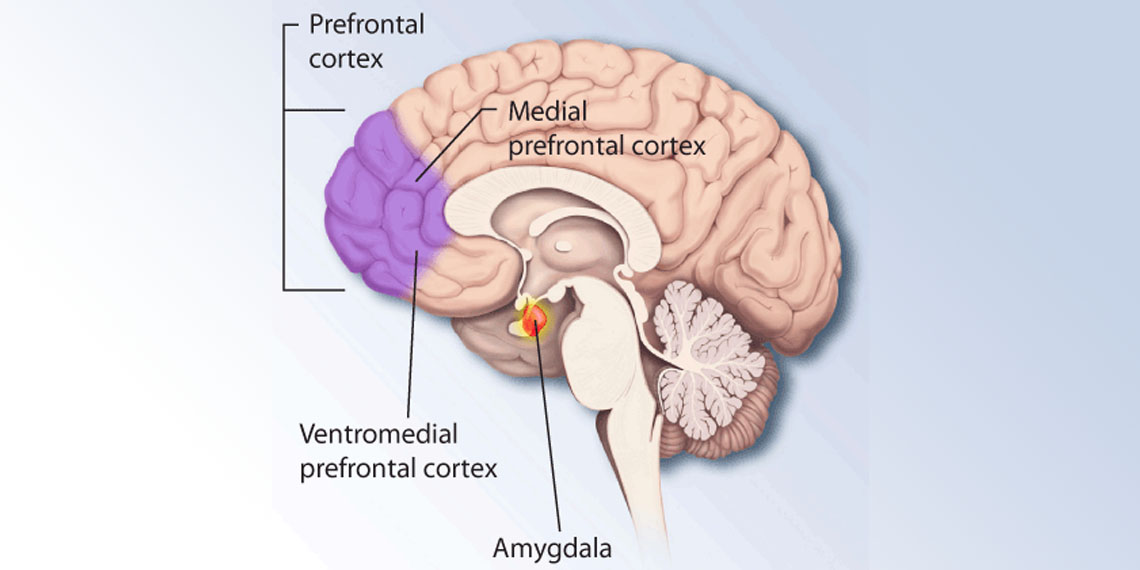
Valley Liu, a researcher at the University of Science and Technology of China, led a team of investigators to figure out why this disconnect happens. "As neuroscience researchers, we wanted to understand why knowing the right thing to do doesn't always translate into doing it," says coauthor Xiaochu Zhang of the University of Science and Technology of China. They suspected the answer lay in a brain area called the ventromedial prefrontal cortex.
The ventromedial prefrontal cortex is located deep in the lower frontal lobe of the brain. It acts as an information hub during decision making. It helps individuals evaluate risks, weigh potential rewards, and process social rules.
To test their ideas, the research team designed two different tasks for a group of fifty-eight participants. In the first task, participants acted as instructors who had to help a learner identify a hidden number on a digital card. The instructors could choose to report the number honestly or lie to the learner.
The game was structured so that lying would earn the instructor more money. This created a direct conflict between financial gain and honest behavior. While making these choices, the participants lay inside a functional magnetic resonance imaging scanner. This machine uses strong magnetic fields to track blood flow in the brain, revealing which areas are active at any given moment.
In the second task, the same participants watched another person play the exact same card game. They were asked to rate the other person's decisions on a scale ranging from extremely immoral to extremely moral. They completed this judgment task while also having their brain activity monitored in the scanner.
The scientists used statistical models to calculate exactly how much each person valued profit compared to honesty. The results showed a distinct gap between the two tasks. When participants made their own choices, they were heavily influenced by the potential for financial profit. When they evaluated others, they based their judgments strictly on whether the observed person was honest.
The brain scans revealed physical differences between people who held consistent moral views and those who did not. The researchers looked at the specific patterns of brain activity rather than just the overall brightness of the brain scans. In morally consistent people, the ventromedial prefrontal cortex showed similar activity patterns during both the behavioral and the judgment tasks.
For morally inconsistent people, the activity patterns did not match across the two situations. The ventromedial prefrontal cortex typically communicates with other brain areas that process rewards and ethical rules. In hypocritical participants, this brain region had weaker connections to those other areas during the behavioral task.
The brain was simply not pulling the necessary information together. This lack of connection means that hypocritical individuals likely understand the rules of right and wrong perfectly well. They just fail to apply those concepts to their own choices. "Individuals exhibiting moral inconsistency are not necessarily blind to their own moral principles; they are just biologically failing to consider and apply them in their own moral behavior," says Zhang.
The team then wanted to see if changing the activity in this brain region could alter a person's behavior. They recruited a new group of fifty-two participants for a second experiment. This time, they used a noninvasive technique called transcranial temporal interference stimulation to deliver specific electrical frequencies to deep parts of the brain.
This technique involves placing electrodes on the scalp to send high-frequency currents into the head. These currents are too fast to affect the surface of the brain. When the currents intersect deep inside the tissue, they create a slower wave that alters how specific brain cells communicate.
Half of the participants received actual stimulation aimed at the ventromedial prefrontal cortex. The other half received a fake version of the treatment, known as a sham stimulation. After the procedure, all participants completed the same card game and judgment exercises.
The people who received the real brain stimulation showed a wider gap between their behavior and their judgments. By disrupting the normal function of the brain region, the researchers successfully made people more hypocritical. This proved that the ventromedial prefrontal cortex directly controls moral consistency.
These results suggest that moral consistency is not an automatic trait. It is a biological process that relies on the brain's ability to sync up different types of information. "Our findings suggest that we should treat moral consistency like a skill that can be strengthened through deliberate decision making," says senior author Hongwen Song of the University of Science and Technology of China.
The study has a few limitations. The research team only looked at a specific scenario involving financial profit and honesty among Chinese adults. Different cultures might process moral dilemmas in entirely different ways.
The scenarios also focused entirely on the perspective of the person making the decision and the person observing from the outside. The study did not measure how these actions affect the person being lied to. Incorporating the viewpoint of the victim might change how the brain evaluates the situation.
It is also possible that a lack of moral consistency might reflect a deliberate opportunistic strategy rather than an unconscious cognitive bias. Some individuals might publicly hold high standards to preserve their image while secretly engaging in bad behavior for personal gain. Future work will try to untangle these specific personality traits from general brain network activity.
The authors note that understanding these brain networks could eventually help educators design better ways to teach ethical reasoning. Recognizing the biological limits of moral integration could also assist programmers in developing artificial intelligence systems that make consistent ethical choices.
The study, “<a href="https://www.cell.com/cell-reports/fulltext/S2211-1247(26)00136-1" target="_blank">Moral inconsistency is based on the vmPFC’s insufficient representation across tasks and connectedness</a>,” was authored by Valley Liu, Zhuo Kong, Jiaxin Fu, Lihao Zheng, Isaac Wang, Min Wang, Yifei Du, Lin Zuo, Bensheng Qiu, Chongyi Zhong, Lusha Zhu, Zhen Yuan, Xiaochu Zhang, and Hongwen Song.
-
 Google's Gemma 4 model goes fully open-source and unlocks powerful local AI - even on phones | ZDNET
Added: Apr 2, 2026
Google's Gemma 4 model goes fully open-source and unlocks powerful local AI - even on phones | ZDNET
Added: Apr 2, 2026Google's Gemma 4 model goes fully open-source and unlocks powerful local AI - even on phones
Site: ZDNET
Now open-source under Apache 2.0, Gemma 4 brings offline, multimodal AI to servers, phones, and Raspberry Pi - giving developers total local control over edge and on-premises deployments.

-
Axios Finish Line: How Yiddish went from dinner table to mainstream Added: Apr 2, 2026
-
Tell me more about the recent fossil discovery in China challenging the Cambrian explosion theory. - Google Search Added: Apr 2, 2026
Google Search
-
Google and Samsung are finally fixing Android's most frustrating feature
Added: Apr 2, 2026
Google and Samsung are finally fixing Android's most frustrating feature
Site: Android Police
I'm excited to share files again