Bookmarks 2026-03-26T13:44:45.919Z
by Owen Kibel
29 min read
Bookmarks for 2026-03-26T13:44:45.919Z
-
Site: X (formerly Twitter)

-
Site: X (formerly Twitter)
-
LLMs and the 'Blandification' of Writing | Psychology Today Added: Mar 26, 2026
LLMs and the 'Blandification' of Writing
Site: Psychology Today
A new study looks at the impact LLMs could be having on writing at scale.

-
Ari Fleischer on X: "Proof that the Economist lives in an alternative universe." / X Added: Mar 26, 2026
Site: X (formerly Twitter)
-
Site: X (formerly Twitter)
-
President Trump Participates in a Cabinet Meeting, Mar. 26, 2026 - YouTube Added: Mar 26, 2026
-
Candace Owens Launches ATTACK On Nick Shirley, Claims HES LYING In Wild Video | Tim Pool - YouTube Added: Mar 26, 2026
-
Site: X (formerly Twitter)
-
Site: X (formerly Twitter)
-
Site: X (formerly Twitter)
-
Site: X (formerly Twitter)
-
Site: X (formerly Twitter)
-
Site: X (formerly Twitter)
-
The U.A.E. Stands Up to Iran - WSJ Added: Mar 26, 2026
-
 AI can generate images that are just as effective at triggering human emotions as traditional photographs
Added: Mar 26, 2026
AI can generate images that are just as effective at triggering human emotions as traditional photographs
Added: Mar 26, 2026AI can generate images that are just as effective at triggering human emotions as traditional photographs
Site: PsyPost - Psychology News
Researchers have developed a new method for creating emotional images using artificial intelligence. The resulting pictures successfully trigger specific feelings and offer a highly customizable alternative to the outdated photographs traditionally used in psychological experiments.
A recent study provides evidence that artificial intelligence can successfully generate customized images designed to trigger specific human emotions. The findings suggest that these computer-generated pictures work just as well as traditional photographs, while offering the added benefit of being adaptable to different cultures, ages, and genders. The research was published in the journal <em><a href="https://doi.org/10.1177/25152459251415336" target="_blank">Advances in Methods and Practices in Psychological Science</a></em>.
Generative AI refers to computer systems that can create new content, such as text or pictures, based on simple written instructions. Scientists often use collections of photographs to study human emotions, a process known as affect induction.
By showing participants specific images, researchers can reliably trigger feelings like fear, joy, or disgust in a laboratory setting. This allows scientists to study how emotions influence human behavior and decision making.
However, older image collections have started to show their age. Many traditional photographs suffer from low resolution or feature outdated fashion styles that might distract participants from the intended emotion. Existing image databases also tend to lack cultural diversity. Most traditional photos feature Western settings and people, which can limit how well they work for individuals from other parts of the world.
To solve these problems, a massive international team of forty six scientists joined forces. They wanted to see if generative AI could create a more flexible and up to date collection of emotional images.
"What led me to explore this topic was really two things. First, in affective science we have long worked with image sets that are valuable, but also come with clear limitations — for example in diversity, flexibility, cultural fit, and the ability to update or expand them for new research questions," said corresponding author Maciej Behnke, an associate professor of psychology at Adam Mickiewicz University.
"Second, this project also grew out of a personal step in my academic career. After securing tenure in Poland, I decided to take a step back intellectually and begin a bachelor’s degree in computer science, because I wanted to understand AI more deeply rather than only follow it from a distance. Over time, it became natural to combine these two paths: my background in affective science and my growing interest in artificial intelligence."
The scientists ChatGPT-4o to write detailed descriptions of existing emotional photographs, and then fed those descriptions into image-generating tools, such as Midjourney and Freepik, to produce the new pictures. They produced eight hundred forty seven distinct images designed to trigger twelve specific emotional states, including amusement, awe, anger, attachment love, craving, disgust, excitement, fear, joy, neutral, nurturant love, and sadness.
The research team did not rely on the computer programs alone. They used a collaborative process where local cultural experts reviewed the images and asked the AI to make specific adjustments.
This allowed the team to adapt the base images for different demographic groups. They created specific versions of the pictures to reflect six broad cultural regions, including Asian, African, Arabic, Indian, Latin American, and Western contexts.
They also made sure the images could feature different types of people. The scientists generated matching variations that changed the sex and age of the people in the photos without altering the overall emotional scene.
To test how well the pictures worked, the researchers recruited 2,470 participants from 58 different countries. The participants were divided across six separate experiments. During the experiments, participants looked at both traditional photographs and the newly generated pictures. Each image appeared on a screen for four seconds.
After seeing a picture, participants rated how strongly they felt different emotions on a scale from one to seven. They also rated whether the image made them feel positive or negative, and whether it made them feel calm or energized.
The scientists found that the computer-generated images were just as effective at bringing about emotional responses as the traditional photographs. For positive emotions like amusement and awe, the AI pictures often produced even stronger reactions.
When participants viewed images tailored to their specific cultural background, they reported slightly stronger emotional responses compared to viewing mismatched images. This suggests that customizing visual materials to fit a person's culture can improve how well those materials work.
"Our findings showed that culturally adjusted images produced slightly stronger emotional responses, which reinforces the idea that people respond more strongly to stimuli that better reflect their own context," Behnke told PsyPost. "That also carries a broader message: in psychological research, we should move beyond the habit of showing the same White, Western-centered imagery everywhere."
The researchers also found that changing the sex or age of the people in the images did not reduce the emotional impact. This provides evidence that scientists can safely change demographic details to fit their specific research needs.
The scientists also calculated the smallest difference in emotional intensity that a person can actually notice. They found that even when participants rated two images as causing similar emotional reactions, minor shifts in their feelings could still be measured mathematically.
The computer-generated images were slightly less effective at triggering negative emotions like sadness or anger. The researchers noted that safety filters built into the AI programs often prevented the creation of mildly graphic or upsetting content.
"I think the key message is that AI can help us do better science," Behnke said. "We found that AI-generated images were good enough to evoke emotional responses at a level comparable to traditional research image sets, and that they can also be adapted to different cultural contexts without losing their impact. That matters not only for researchers, but also for the public, because it shows that AI-generated images are already powerful enough to influence how people feel."
One potential misinterpretation of this study is that creating emotional images is now a fully automated process. The researchers point out that human oversight remains strictly necessary to ensure the pictures are psychologically useful and ethically acceptable.
"AI can help generate and refine stimuli, but it still takes human creativity to come up with meaningful ideas and human expertise to judge whether an image is psychologically useful, culturally appropriate, and ethically acceptable," Behnke said. "Our study really supports a human-in-the-loop model, not a replacement-of-humans model."
The study also has some limitations. All the experiments were conducted in English, and the broad cultural categories used by the researchers do not capture the full diversity within specific global regions. The AI programs also struggled with certain visual details. Some generated faces appeared unrealistically attractive, and the software sometimes produced anatomical errors like poorly rendered hands.
Because AI technology advances very quickly, specific computer programs change from month to month. This rapid evolution means that scientists will need to constantly update their image collections to keep up with changing standards.
In the future, the research team hopes to explore how AI might generate dynamic videos rather than just still photographs. They also plan to investigate ways to personalize emotional images for individual participants to make scientific studies even more accurate.
"One of our long-term goals is to understand more broadly what AI can contribute to affective science," Behnke explained. "In <a href="https://arxiv.org/abs/2602.00123" target="_blank">related work</a>, we are already examining whether AI models can predict viewers’ emotional reactions to images, which opens up a new set of questions about how AI might support emotion research beyond stimulus creation."
"More broadly, I think AI could help move the field toward personalization. At the moment, affective science largely relies on one-size-fits-all stimuli, even though people differ a lot in what actually makes them feel happy, sad, afraid, or angry. In the future, AI may allow us to tailor stimuli to the individual, so that emotion induction becomes more reliable and more meaningful for each participant."
"I would also like to emphasize that this study was only possible because so many people were willing to contribute their time, expertise, and energy," Behnke added. "For me, that is part of a bigger lesson: I believe large-scale team science is the future of affective science. If we want to understand emotions across people and cultures, we need to stop thinking so locally and start building more global, collaborative research efforts."
The study, "<a href="https://doi.org/10.1177/25152459251415336" target="_blank">Using Artificial Intelligence to Generate Affective Images: Methodology and Initial Library</a>," was authored by Maciej Behnke, Maciej Kłoskowski, Michał Klichowski, Wadim Krzyżaniak, Kacper Szymański, Patryk Maciejewski, Patrycja Chwiłkowska, Marta Kowal, Rafał Jończyk, Jan Nowak, Szymon Kupiński, Dominika Kunc, Stanisław Saganowski, Aakash A. Chowkase, Farida Guemaz, Kevin S. Kertechian, Ameer I. M. T. Maadal, Leonardo A. Aguilar, Barnabas T. Alayande, Vimala Balakrishnan, Dana M. Basnight-Brown, Jordane Boudesseul, Tomás A. D’Amelio, Jovi C. Dacanay, Abhishek Dedhe, Shan Gao, Joao F. G. B. Takayanagi, Md. Rohmotul Islam, Alvaro Mailhos, Christine M. Mpyangu, Moises Mebarak, Arooj Najmussaqib, Ju Hee Park, Ekaterine Pirtskhalava, Eli Rice, Sohrab Sami, Yuki Yamada, Jan Baczyński, Lilianna Dera, Szymon Jęśko-Białek, Jakub Łączkowski, Hubert Marciniak, Filip Nowicki, Bartosz Wilczek, James J. Gross, and Nicholas A. Coles.

-
Site: X (formerly Twitter)
-
NASA Goes ALL IN On Moon Base, Announces $20 BILLION Plan For Humans On The Moon - YouTube Added: Mar 26, 2026
-
this is it, his final move... - YouTube Added: Mar 26, 2026
-
Site: X (formerly Twitter)
-
Windows Laptops Will Find It Impossible To Compete With The MacBook Neo As Their Survival Depends On Three Companies Getting Everything Right Added: Mar 26, 2026
Windows Laptops Will Find It Impossible To Compete With The MacBook Neo As Their Survival Depends On Three Companies Getting Everything Right
Site: Wccftech
A YouTuber explains why the MacBook Neo has shocked all rivals and how it will be impossible for Windows laptops to compete

-
Quote of the Day today march 25: Quote of the Day by Leonardo da Vinci: ‘There are three classes of people: those who see, those who…’ Life lessons from the Renaissance Man - The Economic Times
Quote of the Day: In an age where information is abundant but understanding remains uneven, today’s Quote of the Day turns the spotlight on perception and awareness. It reflects on how individuals engage with knowledge differently, some intuitively grasp truths, others require guidance, while a few remain resistant to insight altogether.Attributed to Leonardo da Vinci, the thought underscores the enduring importance of observation, curiosity and intellectual openness, qualities that defined one of history’s greatest minds.Quote of the Day Today“There are three classes of people: those who see, those who see when they are shown, those who do not see.”129797139 Quote of the Day MeaningThe quote categorises people based on their ability to perceive and understand the world around them.The first group, “those who see” represents individuals with natural insight and awareness.The second, “those who see when they are shown” includes those who can understand but need guidance or explanation.The third, “those who do not see” refers to individuals who remain closed-minded or unwilling to learn.At its core, the quote emphasises that perception is not merely about eyesight, but about awareness, curiosity and willingness to engage with knowledge.Quote of the Day by Leonardo da VinciLeonardo da Vinci believed that observation was the foundation of all knowledge. His philosophy of saper vedere, “knowing how to see” was central to his work across art, science and engineering.This quote reflects his belief that true understanding requires more than passive observation. It demands active engagement, questioning and a readiness to explore beyond the obvious.129779738 Life Lessons from the Quote1. Cultivate awarenessBeing observant and attentive helps uncover deeper truths.2. Stay open to learningEven if understanding does not come naturally, guidance can lead to clarity.3. Avoid intellectual complacencyRefusing to see or learn limits personal and professional growth.4. Ask questionsCuriosity is key to moving from ignorance to understanding.5. Embrace different perspectivesLearning from others enhances one’s ability to “see.”129759650 Leonardo da Vinci BiographyLeonardo da Vinci (1452–1519) was one of the most extraordinary figures of the Renaissance, excelling as a painter, scientist, engineer, architect and inventor.Born in Vinci, Italy, he trained under artist Andrea del Verrocchio in Florence, where his talent quickly became evident. His masterpieces, including the Mona Lisa and The Last Supper, remain among the most celebrated works in art history.Beyond painting, Leonardo’s notebooks reveal groundbreaking studies in anatomy, physics, engineering and flight—many ideas far ahead of his time. His relentless curiosity and observational skills defined his approach to both art and science.Why the Quote is Relevant TodayIn today’s fast-paced digital world, access to information does not always translate into understanding. This Quote of the Day is particularly relevant as it highlights the importance of critical thinking and awareness.It reminds individuals to:Move beyond surface-level knowledgeSeek deeper understanding rather than passive consumptionRemain open to new ideas and perspectivesIn an era shaped by rapid technological and social change, the ability to “see” clearly is more valuable than ever.Other Famous Quotes by Leonardo da VinciLeonardo da Vinci offered numerous insights that continue to inspire:“Learning never exhausts the mind.”“Simplicity is the ultimate sophistication.”“Art is never finished, only abandoned.”“The noblest pleasure is the joy of understanding.”These quotes reflect his deep belief in curiosity, creativity and lifelong learning.Leonardo da Vinci QuotesLeonardo’s quotes often bridge the worlds of art and science, emphasising observation, imagination and intellectual discipline. His words encourage individuals to think critically and explore the unknown.Leonardo da Vinci LegacyThe legacy of Leonardo da Vinci continues to shape modern thought across disciplines. He is widely regarded as the embodiment of the Renaissance ideal, a thinker who seamlessly combined art, science and innovation.His influence extends beyond his masterpieces, inspiring generations of artists, scientists and thinkers to pursue knowledge with curiosity and determination.

-
Druski MOCKS Erika Kirk, Video Goes SUPER VIRAL, Normies Are Kirkposting - YouTube Added: Mar 26, 2026
-
Linux kernel czar says AI bug reports aren't slop anymore • The Register Added: Mar 26, 2026
Linux kernel czar says AI bug reports aren't slop anymore
Interview: Greg Kroah-Hartman can't explain the inflection point, but it's not slowing down or going away

-
 Scientists Found an Exoplanet That Was Too Extreme for Life, But New Research Says Otherwise
Added: Mar 26, 2026
Scientists Found an Exoplanet That Was Too Extreme for Life, But New Research Says Otherwise
Added: Mar 26, 2026Scientists Found an Exoplanet That Was Too Extreme for Life, But New Research Says Otherwise
Site: The Daily Galaxy - Great Discoveries Channel
An exoplanet with one side burning hot and the other frozen solid, yet recent discoveries suggest life could still thrive.

-
 Gemini Live gets ‘biggest upgrade yet’ with Gemini 3.1 Flash Live
Added: Mar 26, 2026
Gemini Live gets ‘biggest upgrade yet’ with Gemini 3.1 Flash Live
Added: Mar 26, 2026Gemini Live gets its ‘biggest upgrade yet’ with Gemini 3.1 Flash Live
Site: 9to5Google
Google today announced Gemini 3.1 Flash Live as its “highest-quality audio and voice model yet" to power big upgrades to Gemini Live...

-
Mysterious trading patterns follow Trump into war Added: Mar 26, 2026
-
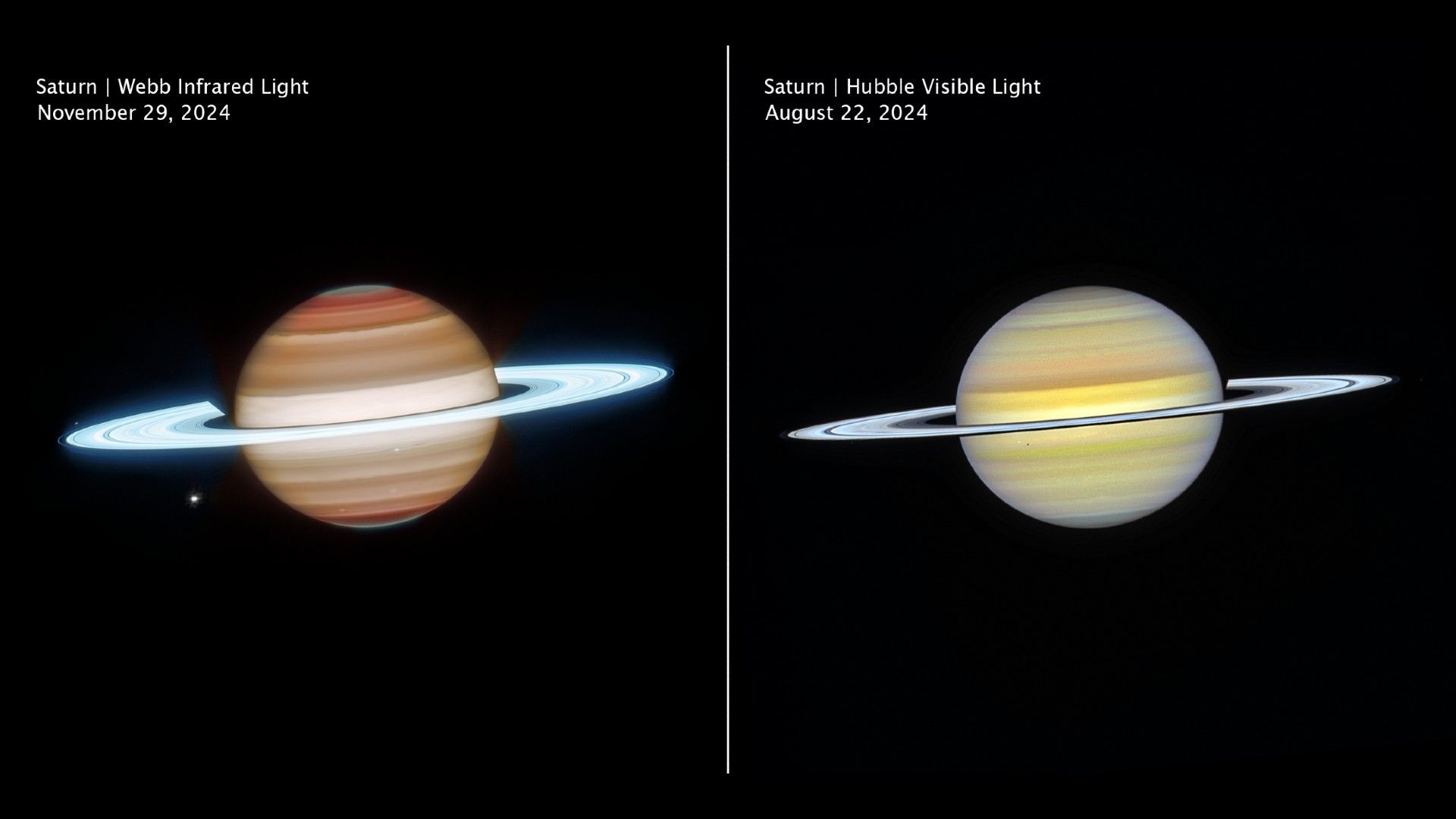
Incredible new NASA images reveal Saturn in a new light — and it's all thanks to a telescope team-up from Webb and Hubble | Space Added: Mar 26, 2026
Incredible new NASA images reveal Saturn in a new light — and it's all thanks to a telescope team-up from Webb and Hubble
Site: Space
Combined observations offer the most detailed portrait of the ringed planet to date.
-
Real NASA space telescope data creates soundtracks for Jupiter, Saturn and Uranus | Space Added: Mar 26, 2026
Real NASA space telescope data creates soundtracks for Jupiter, Saturn and Uranus
Site: Space
From crackling auroras to sweeping rings, the solar system gets a new soundtrack.

-
THIS HAS GONE TOO FAR - YouTube Added: Mar 26, 2026
-
Meet The New Secretary of DHS, Markwayne Mullin - YouTube Added: Mar 26, 2026
-
Site: X (formerly Twitter)
-
AI Just One-Shotted Another CEO Added: Mar 26, 2026
AI Just One-Shotted Another CEO
Site: Gizmodo
The old guard is out.
-
 Scientists Cloned a Mouse, Then Cloned the Clone, Et Cetera. The Results Were Horrific
Added: Mar 26, 2026
Scientists Cloned a Mouse, Then Cloned the Clone, Et Cetera. The Results Were Horrific
Added: Mar 26, 2026Scientists Cloned a Mouse, Then Cloned the Clone, Et Cetera. The Results Were Horrific
Site: Futurism
A team of scientists cloned a mouse and then cloned its clones for 20 years -- and found that there's a limit to "recloning."

-
What's 'Clipping?': How the Marketing Strategy Took Over the Music Biz Added: Mar 26, 2026
What Is ‘Clipping,’ the Viral Marketing Strategy That’s Taking Over the Music Biz?
Site: Variety
Over the past year, 'clipping' has grown from a promotional tool in the livestream space to a key strategy for promoting artist content.
In December, rapper Bbno$ posted a message on social media announcing that he was quitting music. “As you guys know, I am for the people,” he wrote. “And the people have asked me to stop making music. Due to the millions of people begging me to stop, I have made the incredibly difficult decision to […]

-
Inside Digital Marketer's Secret Tactics for Viral Songs Added: Mar 26, 2026
Inside the Secret Tactics Digital Marketers Use to Make Songs Go Viral in 2026
Site: Billboard
Insider digital marketer's secret tactics to make a song go viral
On Billboard's On the Record podcast, Chaotic Good's founders share how marketers simulate trending songs and control the discourse: "Everything on the internet is fake."

-
she works terribly in groups - YouTube Added: Mar 26, 2026
she works terribly in groups
Site: YouTube
Enjoy the videos and music you love, upload original content, and share it all with friends, family, and the world on YouTube.

-
Gemini 3.1 Flash Live: Google’s latest AI audio model Added: Mar 26, 2026
Gemini 3.1 Flash Live: Making audio AI more natural and reliable
Site: Google
Gemini 3.1 Flash Live is now available across Google products.

-
 Trump, fearing slaughter, said to have rejected Netanyahu proposal to jointly call for Iranian uprising | The Times of Israel
Added: Mar 26, 2026
Trump, fearing slaughter, said to have rejected Netanyahu proposal to jointly call for Iranian uprising | The Times of Israel
Added: Mar 26, 2026Trump, fearing slaughter, said to have rejected Netanyahu proposal to jointly call for Iranian uprising | The Times of Israel

-
Trump rebuffed Netanyahu on seeking Iran uprising: "They'll get mowed down" Added: Mar 26, 2026
-
 Toppling Iran's regime 'an art, not science,' security sources say | The Jerusalem Post
Added: Mar 26, 2026
Toppling Iran's regime 'an art, not science,' security sources say | The Jerusalem Post
Added: Mar 26, 2026Toppling Iran's regime 'an art, not science,' security sources say | The Jerusalem Post
Site: The Jerusalem Post | JPost.com
Security sources reveal how David Barnea's 2021 AI revolution at the Mossad could eventually 'open the gates' - helping Iranian people take to the streets.
Toppling a regime is an art, not a science, security sources have told The Jerusalem Post exclusively, as the debate continues about whether and when the Iranian regime might fall.After assuming his position in mid-2021, Mossad Director David Barnea started to build new structures and alter old ones to make whole new divisions and enact reforms. He focused on areas where the Mossad could most fully utilize its comparative advantages.Artificial intelligence (AI) was a major focus of a new, revolutionary, huge, and special Mossad department, which was highly effective with influence operations, security sources said.The department dealt with different fields, including widely publicizing various issues.Mossad expands AI, agent network to pressure Iran's regimeThere was a very large plan that it believed could eventually “open the gates and help the Iranian people get to the streets on a large scale,” although only at some more amorphous and distant time period beyond the end of the war, people familiar with the matter said.This time period could take several months or even a year, as Barnea predicted to the cabinet on the eve of the war, the security sources said.Foreign sources have reported that Iranian dissidents on the ground have been helping Israel locate and track top Iranian officials, as well as local Basij militia checkpoints used to block protests.The Mossad has publicly used an X/Twitter account to request that Iranian dissidents provide it with such sensitive information, including how successful Israeli airstrikes on certain regime targets have been.Under Barnea, the Mossad has made mega headlines for its lead role in the massive beeper sabotage operation in the fall of 2024, which eventually paved the way for the downfall of much of Hezbollah's power.But the Mossad and Israel seized supremacy in rivalries not only against Hezbollah, but also against the head of the snake – Iran.In September 2025, the Post revealed that early in his term in mid-2021, Barnea had realized that joining technological and operational supremacy was needed for the Mossad to reach new levels.In 2021, and even in later years, no one knew when the Mossad would finally carry out major operations in Iran, and certainly no one knew far in advance that it would be June 13, 2025, and then again this February 28.But Barnea's concept was to get the Mossad to be always ready for massive simultaneous operations throughout Iran with an unprecedented large number of agents.Barnea sent hundreds of Mossad agents, or their operatives, into operations in Iran simultaneously. All of the varying groups of staff were highly coordinated.There were set orders and processes to create new efficiencies and a ton of capabilities. Barnea managed a project leading to a diverse spectrum of all of the different kinds of agents and backgrounds of those agents one could imagine.Mossad reaches new heights in training Iranian dissidentsBesides actual Israeli Mossad agents, the spy service has reached new highs in recruiting and training local dissident Iranian agents to act against the ayatollahs' regime.There were clearly defined mission sets for each subgroup.The agency also carried out an elevated level of intelligence collection and surveillance for three years regarding Iran.There were many special covert actions that were running, which dated back two years or longer.A huge volume of new technologies were used to follow very specific items and specific people, the Post understands.Before Barnea's era, the Mossad had a limited number of large active attack operations – as opposed to classic patient and more passive surveillance – it could run at once, the Post has learned.It was not built to do more and did not always have enough human spies to do more who were also plugged directly into and highly trained with the latest technologies – unlike Mossad scientists giving Mossad covert attackers specific disposable gadgets to use once or twice in the field without much training.The Mossad could do one to one-and-half large-scale attack operations at the same time, but maybe not even two.Hundreds of Mossad agents and officials were working on dozens of attack and intelligence operations inside and outside Iran all at the same time, the Post has learned.Barnea created the option within the organization to deploy these dozens of big attack operations simultaneously.There was a much greater capacity to draft more new agents in Iran faster. There are new possibilities offered using AI and cyber technologies. Also, there are new ways to build their capabilities and train them from a distance, until they are capable of far more, the Post has learned.Barnea ran Tsomet, recruiting spies for the Mossad, and then was the deputy director, running day-to-day operations. By the time he became director, he knew what was needed to take the Mossad to the next level.The Mossad could not have dozens upon dozens of active attack agents all at once in prior eras.Collectively, the Mossad agents in Iran in June 2025 first targeted many radar platforms, then ballistic missiles, and also provided targeting information to the IAF for a wide variety of other Iranian targets.Due to the effectiveness of the Mossad's opening series of attacks, stunningly, Iran was only able to attack Israel at all on the second day of the 12 Day War.Next, the damage to the ballistic-missile program was very substantial, leading to aspects of it needing to be rebuilt from the start.The Post understood that as of last September, Iran's nuclear program basically needed to be rebuilt from the start.The full extent of the Mossad's current operations in Iran cannot yet be revealed.In recent days, there have been not-so-veiled attacks on Barnea by nameless sources, seemingly accusing him of misleading both the Israeli and US governments about the likelihood of regime change in Iran.All three offices have been fielding constant questions daily about why they have not yet succeeded – even slightly – in generating regime change.These anonymous leaks obscure Barnea's highly complex position on the issue and seem intent on tarring him and the Mossad, with the growing likelihood that efforts to topple the regime will fail or take a very long time, the Post has learned.Some of the sources behind the Channel 12 Uvda and The New York Times reports on the issue may be Prime Minister Benjamin Netanyahu's or US President Donald Trump's entourages, and some may even be from the IDF, in an attempt to shift any blame.In fact, anyone familiar with Barnea and his major calls during the last few years of war would know that he consistently presents predictions with many qualifications and almost never talks about a sea-change event being inevitable, the Post understands.Furthermore, while Barnea is a creative thinker, he is also a company man who prepares policies and presentations under Netanyahu's order and doesn't seek to push the prime minister into any more aggressive approach to war than Netanyahu himself would want.Moreover, any presentation that Barnea would have made to Trump administration officials during his widely reported trip to the US in mid-January or during other conversations would also have been tightly controlled by Netanyahu and not some kind of independent crusade.In fact, during earlier years of Barnea's term, there were significant points where, in theory, Netanyahu might have wanted the Mossad to undertake some kind of operation, but Barnea explained that it was unrealistic, despite pressure on him to approve, the Post has learned.When Uvda reported that on the eve of war, Barnea had told Netanyahu he believed toppling the Iranian regime was possible, it only later in the article detailed some of the conditions that Barnea would have put on such a prediction.Foreign reports also have made it clear that Trump had blocked Israeli attempts, despite a personal request by Netanyahu, to publicly push for Iranians to come out on the streets in mid-March after Israel assassinated senior Iranian official Ali Larijani.But time will tell after the war about whether the Mossad will eventually be able to add a new star to its wall of clandestine accomplishments.
-
Site: X (formerly Twitter)
-
Site: X (formerly Twitter)
-
Gemini now lets you import chats and memory from other AI apps
Added: Mar 26, 2026
Gemini now lets you import chats and memory from other AI apps
Site: 9to5Google
Besides Gemini 3.1 Flash Live today, Google is rolling out the ability to import memory and chats into Gemini from other AI apps.

-
Tell me more about the recent jawbone discovery in Egypt and human evolution. - Google Search Added: Mar 26, 2026
Google Search
-
WATCH: Trump joins 'The Five'... - YouTube Added: Mar 26, 2026
-
Quantum entanglement speed is measured for the first time - it's too fast to comprehend
Site: Earth.com
Quantum entanglement happens when two particles become interconnected and share a single state. Scientists have measured how fast it happens.

-
College students are writing with AI – but a pilot study finds they’re not simply letting it write for them Added: Mar 26, 2026
College students are writing with AI – but a pilot study finds they’re not simply letting it write for them
Site: The Conversation
A pilot study analyzing college students’ writing with AI shows an interactive process, from brainstorming to editing the output produced by chatbots.

-
Site: X (formerly Twitter)
-
Site: X (formerly Twitter)
-
Site: X (formerly Twitter)
-
 Gemini - direct access to Google AI
Added: Mar 26, 2026
Gemini - direct access to Google AI
Added: Mar 26, 2026Gemini - direct access to Google AI
Site: Gemini
Created with Gemini

-
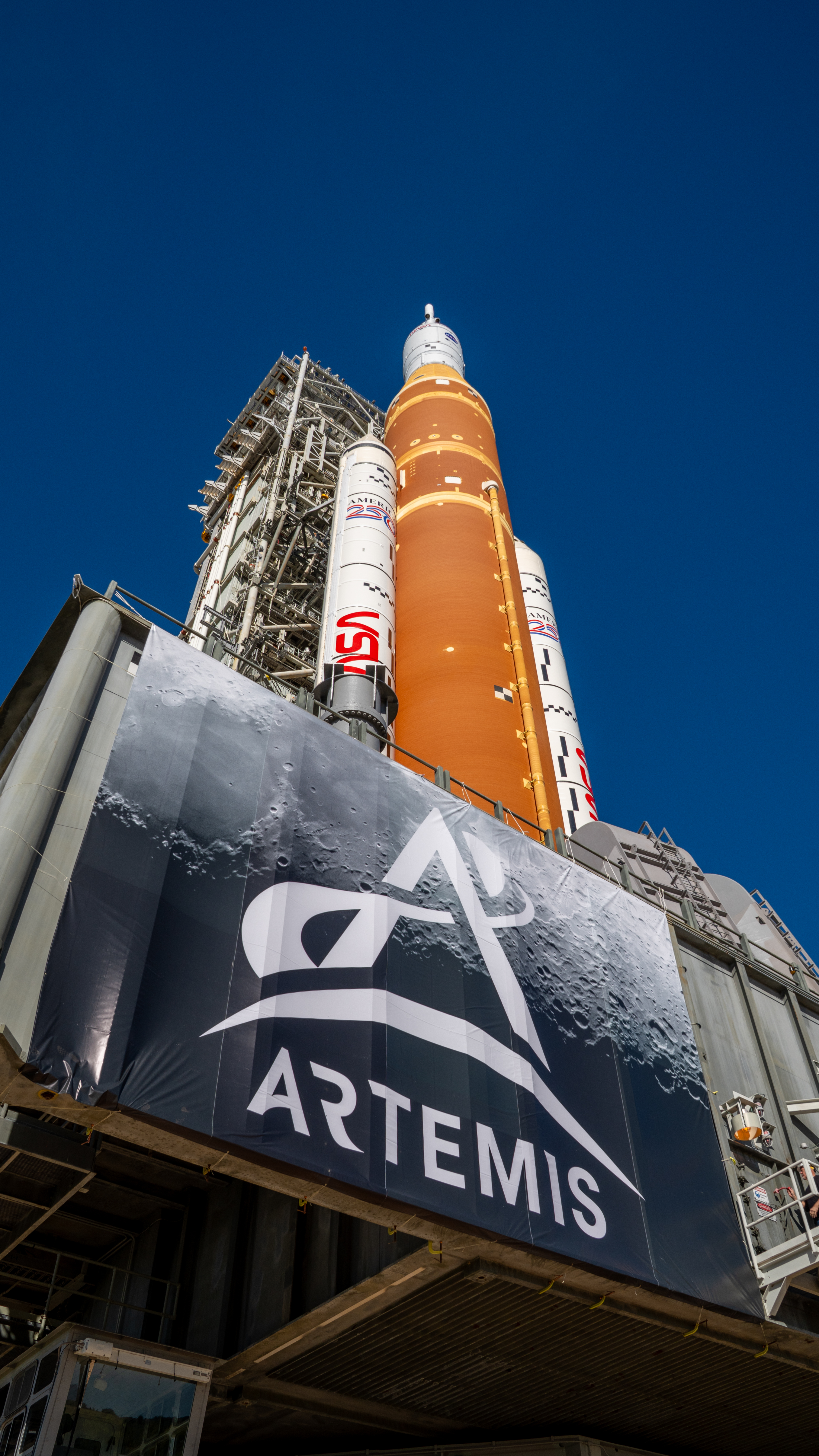
 NASA Releases Artemis II Moon Mission Launch Countdown - NASA
Added: Mar 26, 2026
NASA Releases Artemis II Moon Mission Launch Countdown - NASA
Added: Mar 26, 2026NASA Releases Artemis II Moon Mission Launch Countdown - NASA
Site: NASA
Before NASA sends its astronauts Reid Wiseman, Victor Glover, Christina Koch, and CSA (Canadian Space Agency) astronaut Jeremy Hansen on their Artemis II