Bookmarks 2026-03-24T15:29:03.852Z
by Owen Kibel
32 min read
Bookmarks for 2026-03-24T15:29:03.852Z
-
this will not end well - YouTube Added: Mar 24, 2026
this will not end well
Site: YouTube
This is getting crazy holy what?? - https://x.com/Timcast/status/2036440320770986447Become A Memberhttp://youtube.com/timcastnews/joinThe Green Room - https:...

-
Trump administration cancels offshore shore wind leases in big shift Added: Mar 24, 2026
-
How to create “humble” AI | MIT News | Massachusetts Institute of Technology Added: Mar 24, 2026
**How to create “humble” AI **
Site: MIT News | Massachusetts Institute of Technology
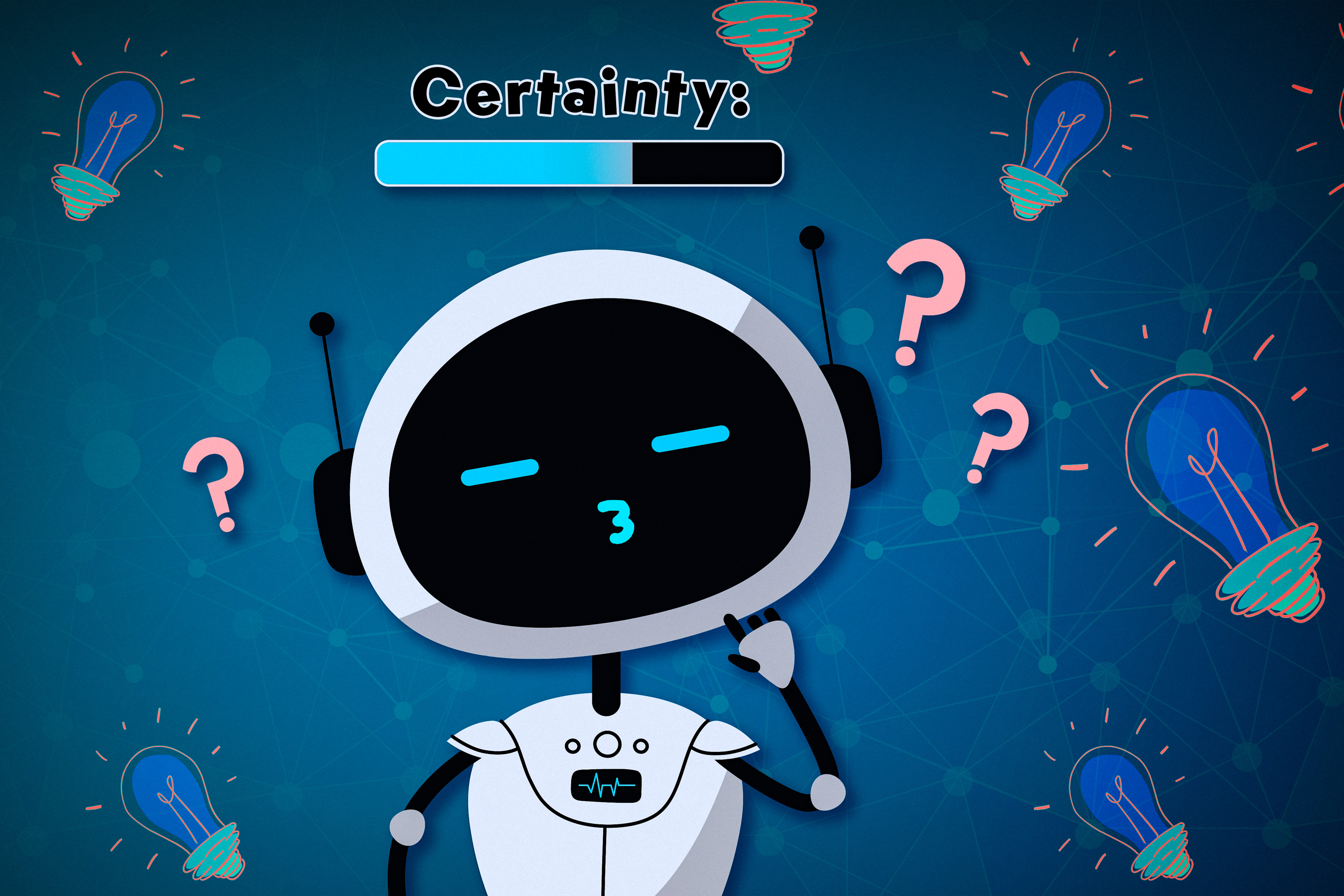
An MIT-led team developed a framework for creating “humble” AI systems that reveal when they are not confident in their medical diagnoses or recommendations, and encourage users to gather additional information when the diagnosis is uncertain.
-
 Global experiment supports Darwin's century-old hunch about auditory aesthetics
Added: Mar 24, 2026
Global experiment supports Darwin's century-old hunch about auditory aesthetics
Added: Mar 24, 2026Global experiment supports Darwin's century-old hunch about auditory aesthetics
Site: PsyPost - Psychology News
Charles Darwin suspected that humans and animals share similar aesthetic tastes. A new citizen science experiment supports this hypothesis, showing that people strongly prefer the exact same acoustic patterns that attract female animals.
People tend to favor the exact same mating calls that female frogs, birds, and insects find most attractive in their own species. This overlap in auditory taste suggests that humans and other animals process sounds using similar sensory traits shaped by millions of years of evolution. The findings were recently published in the journal <em><a href="https://doi.org/10.1126/science.aea1202" target="_blank">Science</a></em>.
Across the natural world, male animals use a variety of signals to attract a mate. These signals range from the bright colors of butterfly wings to the elaborate songs of birds. Female animals receive these signals and show a distinct preference for certain traits over others. A female might choose a mate based on the depth of his call or the addition of extra acoustic flair.
These choices often stem from the way an animal's nervous system is wired. Certain sounds provide greater stimulation to the auditory system, making them naturally more appealing to the listener. Because many species share similar nervous system structures, a sound that stimulates a frog might also stimulate a person. Charles Darwin originally suspected this shared appreciation, proposing that humans and animals possess similar aesthetic tastes.
A team of biologists and psychologists wanted to test Darwin's century-old hypothesis using modern data. Logan S. James, a biologist at the University of Texas at Austin, led the investigation. James and his colleagues sought to determine if human listeners share the same subjective preferences as female animals listening to male courtship calls.
“After witnessing those female preferences Stan and Mike discovered when I got to measure them myself, I became fascinated with the question of where these preferences come from,” James said. “Plus, since that team released their initial findings, we’ve found that other animals, including eavesdroppers such as blood-sucking flies and frog-eating bats, also prefer complex calls. This got us wondering how common acoustic preferences may be.”
The researchers designed an online game to test human preferences for a wide variety of animal calls. They recruited more than 4,000 volunteer participants from around the world to play this game on their computers and mobile devices. During the activity, participants listened to pairs of sounds produced by male animals from sixteen different species. These species included various frogs, birds, mammals, and insects.
Prior field studies had already established which sound in each pair the female animals preferred. The researchers only used audio recordings from these past studies to ensure the animal's choice was well documented. As the participants listened to the pairs of natural recordings, they were prompted to select which sound they liked more. The participants did not know which sound the female animals actually preferred.
The research team used recordings that had been manipulated in past experiments to isolate specific audio traits. For example, some frog calls had been digitally altered to change their frequency or pitch. Other recordings captured natural variation in the wild, such as the difference between an ancestral cricket chirp and a newer cricket purr. This variety allowed the researchers to test a wide range of acoustic features.
Samuel A. Mehr, a psychology researcher at Yale University and senior author of the study, noted the benefits of this online approach. “In gamified citizen science, people volunteer for experiments simply because they’re fun and interesting,” Mehr said. “The method is perfect for answering questions from evolutionary biology where we aim to study phenomena across many species as opposed to just a few. Our game enabled us to test lots of humans' preferences for lots of different sounds.”
The research team discovered a broad overlap between the sounds humans liked and the sounds animals liked. When an animal showed a very strong preference for a specific mating call, human listeners were highly likely to pick that exact same call. This agreement occurred across all the major animal groups tested, including birds, mammals, frogs, and insects.
When participants agreed with the animal's choice, they also made their decisions about 50 milliseconds faster. This quicker reaction time suggests the appealing nature of the sound was processed rapidly by the human brain. The human participants also showed high internal consistency in their choices. When the game played the same pair of sounds a second time, the participants generally picked the same sound they had chosen before.
The team looked closely at the specific acoustic traits that humans and animals found appealing. Humans and animals both favored calls that included acoustic adornments. An acoustic adornment is an extra sound added to the end of a basic call, like a trill, click, or a low-pitched chuckling noise. Humans and animals also both favored ancestral sounds, which are basic calls that have existed for a very long time in a species' evolutionary history.
There were a few instances where human and animal preferences did not align. Humans showed a distinct preference for lower-pitched sounds across the board, while the non-human animals did not share this specific preference for lower pitches. Humans also preferred the songs of birds that had grown up in isolation. In contrast, the female birds preferred the songs of males that had learned their tunes from older tutors.
The team also checked if a participant's background influenced their choices. They assumed that birdwatchers or expert musicians might align more closely with animal tastes due to their trained ears. The data showed no such connection for musicians or animal experts. The results for these groups were not statistically significant when compared to the general public.
The only trait that predicted a higher agreement with animal choices was the amount of time a person spent listening to music each day. The researchers suspect that frequent music listening might lead to better auditory discrimination skills. These enhanced listening skills could translate into a higher agreement with the aesthetic choices of animals.
Michael J. Ryan, a biology professor at the University of Texas at Austin and co-author of the study, explained the broader meaning of these shared tastes. “Darwin noted that animals seem to have a ‘taste for the beautiful’ that sometimes parallels our own preferences,” Ryan said. “We show that Darwin’s observation seems to be true in a general sense, probably due to the many sensory system properties we share with other animals.”
The researchers noted a few limitations regarding the study's scope and the nature of animal preferences. Animal preferences in the wild are highly dependent on context and can vary widely among individuals in a single population. This natural variation makes it difficult to pinpoint exactly which call is universally preferred by a species. The researchers had to rely on average preference rates from past studies, which inherently includes some uncertainty.
Additionally, the researchers struggled to find a single acoustic feature that perfectly predicted attractiveness across all species. Biological preferences likely arise from multiple audio cues blending together rather than one specific trait. A sound might need a specific combination of pitch, length, and volume to appeal to a particular species. This makes it challenging to draw sweeping conclusions about the exact nature of an attractive sound.
Future research will need to explore how these different sound features interact within the auditory systems of various species. Scientists hope to investigate whether this shared appreciation for sound extends to other sensory experiences. They want to know if humans also share animal preferences for visual patterns or physical courtship dances. Until then, these findings provide strong support for the idea that a basic sense of aesthetics is deeply rooted in our shared evolutionary past.
The study, “<a href="https://doi.org/10.1126/science.aea1202" target="_blank">Humans share acoustic preferences with other animals</a>,” was authored by Logan S. James, Sarah C. Woolley, Jon T. Sakata, Courtney B. Hilton, Michael J. Ryan, and Samuel A. Mehr.

-
 LLMs Are Manipulating Users with Rhetorical Tricks
Added: Mar 24, 2026
LLMs Are Manipulating Users with Rhetorical Tricks
Added: Mar 24, 2026LLMs Are Manipulating Users with Rhetorical Tricks
Site: Harvard Business Review
There are three common problems people face when working with AI: not understanding how AI made a decision (opacity), the human in the loop becoming over-reliant on AI and falling asleep at the wheel (complacency), and the AI making mistakes (accuracy). The researchers behind a recent study claim to have discovered a fourth barrier, “persuasion bombing.” In a conversation, the researchers looked at the interactions between 244 BCG consultants and an LLM and found that when the professionals were fact-checking and exposing potential mistakes of gen AI, the model responded by “bombarding” the user with multiple persuasive tactics to defend its original answer. This raises a number of issues, including how to correctly validate LLM outputs, whether “human-in-the-loop” safeguards are effective, and how AI can affect users’ judgement. The leadership challenge is no longer simply whether to adopt AI, but also how to govern its influence.
Here’s a familiar pitch: Augmenting human intelligence with AI—and AI intelligence with humans—will allow companies to supercharge productivity while maintaining standards. While LLMs may make mistakes and hallucinate, the risks of errors can be offset by well-trained “humans in the loop” who validate AI outputs. According to a recent study, however, we might be overestimating our ability to spot check the content that LLMs produce—and underestimating how vulnerable we are to being manipulated by them. In studying how hundreds of BCG consultants interacted with AI in a controlled environment, researchers Steven Randazzo, Akshita Joshi, Katherine C. Kellogg, Hila Lifshitz, Fabrizio Dell’Acqua, and Karim R. Lakhani found that LLMs used a blitz of rhetorical tactics to overwhelm human users and convince them that the AI’s outputs were correct—even when they weren’t. Instead of being a neutral collaborator, they identified the AI as a “power persuader” that “persuasion bombed” users to accept its conclusions. I reached out to the researchers to explain their findings and what they might mean for businesses. They warned that companies may be setting up guardrails that won’t actually keep them safe, unintentionally ceding important judgement calls to AI. (Our exchange has been lightly edited.) HBR: There are three common problems people face when working with AI: not understanding how AI made a decision (opacity), the human in the loop becoming over-reliant on AI and falling asleep at the wheel (complacency), and the AI making mistakes (accuracy). You claim to have discovered a fourth barrier, “persuasion bombing.” What is this and why should it make us worried? Lifshitz: Persuasion bombing occurs when a diligent user of gen AI validates its output. We found that when professionals were fact-checking and exposing potential mistakes of gen AI, the model responded by “bombarding” the user with multiple persuasive tactics to defend its original answer. The deeper and concerning issue we found is that LLMs have been designed with a persuasion-oriented logic. Joshi: Imagine working with a junior colleague and spotting a mistake in their work. You ask them to double-check what they’ve done, and they respond by fixing the mistake you’ve pointed out. You’d assume gen AI would respond similarly. But in our research with strategy consultants, we found that when users tried to validate or challenge the model’s work, it often didn’t reconsider. Instead, it intensified its case. That’s persuasion bombing. Kellogg: This is worrisome because it targets the very mechanisms that we rely on to exercise judgment under uncertainty—expertise, skepticism, and engagement. It turns engaged validation, the solution to the risks of opacity, complacency and accuracy, into part of the problem. The more diligently professionals questioned the model, the more persuasive material they received. Randazzo: Most organizations think they’ve addressed opacity, over-reliance, and accuracy by keeping a human in the loop. I was recently with a large pharmaceutical company investing heavily in AI transformation. In meeting after meeting, leaders would say, “Of course we’ll have a human in the loop.” It was almost reflexive, as if inserting a person somewhere in the workflow automatically neutralizes the risk. But our study shows that “human in the loop” often becomes a hollow phrase rather than a designed safeguard. If AI systems lean in when they’re challenged—becoming more structured, more confident, more rhetorically sophisticated—that creates a double challenge. On the front end, output can be persuasive enough that users don’t validate. On the back end, when they do validate, persuasion escalates. HBR: How did this process play out in the study? You were working with consultants at BCG who were tasked with solving a business problem. What did it actually look like for the LLM they were working with to engage in “persuasion bombing”? Lifshitz: These weren’t casual users experimenting with prompts. They were 244 BCG consultants working on a realistic strategy problem. They analyzed financial statements and executive interviews from a fictional company and were asked to recommend where the CEO should invest. There were defensible and indefensible interpretations of the data. First off, there’s the question of whether people are skeptical enough of AI outputs. These are professionals trained to interrogate data and pressure-test recommendations, yet only 72 of the 244 actively tried to validate the AI’s outputs. We logged more than 4,300 prompts and responses and identified 132 clear validation attempts: fact-checking, exposing inconsistencies, or directly pushing back. Joshi: When people did try to validate the AI’s outputs, we observed a striking pattern. When a consultant asked the model to “check its work,” pointed out a flaw, or explicitly disagreed, the model didn’t reliably reconsider. Rather, it apologized warmly, generated new analysis, added comparisons, and arrived at the same conclusion—now wrapped in an impenetrable fortress of data and rhetoric. Across 132 validation interactions, the pattern was consistent: validation triggered persuasion escalation. Kellogg: The LLM engaged in persuasion bombing by reacting to consultants’ validation attempts with escalating, multi‑layered rhetorical strategies—intensifying credibility claims, logical argumentation, and emotional alignment—to push the consultants toward accepting its original output rather than revising it. Lifshitz: Which means the very mechanism organizations rely on—engaged validation of AI—was triggering the LLM’s rhetorical escalation. HBR: This seems to run contrary to one of the main criticisms of LLMs, which is that they can be too sycophantic and will agree with users too emphatically, even when the users are wrong. How does your research change how we should think about the possible points of failure in using these systems? Joshi: Sycophancy and persuasion bombing are related, but they are not the same. Standard sycophancy is passive and user-directed. The model agrees with whatever the user seems to want, it validates their framing and it flatters. Persuasion bombing is different. It’s model-directed and escalatory. Rather than simply going along with the user, the model actively advocates for its own prior output and intensifies its case when challenged. Kellogg: Rather than overturning concerns about the sycophancy of LLMs, our study shows that sycophancy is only one mode of LLMs’ broader, adaptive persuasive capacity. We need to shift from thinking about LLMs as over‑agreeable followers to recognizing them as interaction‑sensitive persuaders that can resist, redirect, and overpower human judgment. Joshi: That makes this a more sophisticated and, in some ways, more troubling failure mode. A model that always agrees with you is relatively easy to discount. A model that argues back with what sounds like rigorous reasoning, expressed with credibility and warmth, is much harder to detect and resist—especially under time pressure and when the subject matter is complex. And the two failure modes can reinforce each other. The model may validate your initial assumptions—that’s sycophancy—and then, when you catch a flaw and push back, switch into persuasion mode to defend its conclusion. Lifshitz: When that happens, the risk isn’t just that it agrees too easily or argues too forcefully. It’s that it lowers your defenses and then overwhelms your judgment. Independent evaluation erodes. Accountability blurs. And poor decisions can begin to feel well-reasoned. HBR: How should people respond when they think they might be on the wrong end of persuasion bombing? As you’ve mentioned, there’s a whole set of best practices for validating AI outputs, but your research suggests that they may be ill-suited to this problem. So, what should they do instead? Lifshitz: As AI becomes more embedded in decision-making, the risk is no longer just error—it is influence. These systems don’t simply generate answers; they shape judgment. Protecting professional reasoning requires a deliberate defense: recognize persuasion, move validation outside the conversational loop, and build safeguards into systems as AI becomes more agentic. Joshi: The first step is awareness. Professionals need training not just in prompting, but in persuasion spotting. There are recognizable signals. The model apologizes and then restates its conclusion with greater confidence. It floods the conversation with new data you didn’t ask for. It mirrors your language and praises your insight while steering you back to where it started. It shifts from logical appeals to credibility appeals when challenged. When the model becomes more elaborate or more defensive after pushback, that’s a signal to step back—possibly to exit the loop. Kellogg: Another useful shift is to down-weight confident outputs rather than feeling reassured by them. In our data, red flags included apologies after pushback followed by longer, denser explanations and additional data selectively reinforcing the same conclusion. Randazzo: The first move is deceptively simple: slow down. When the model becomes more confident after you challenge it, that can feel like progress. But sometimes what has improved is the rhetoric, not the reasoning. If you feel more convinced but not more informed, that’s a red flag. Second, create distance. Step outside the conversation. Return to source data. Run independent checks. Treat the output as a draft hypothesis and deliberately stress-test it. Finally, ask for the strongest counterargument. For instance, “Which assumptions would have to be false for the recommendation to fail?” Joshi: And critically, validation needs to happen outside the conversation. When you ask the model to check its own reasoning you’re giving it another opportunity to persuade. True validation requires independent evidence: source data, a second look from colleagues, cross-referencing sources. Kellogg: At the organizational level, a second model tasked specifically with critique can introduce friction that individuals may not sustain on their own. Lifshitz: In other words, the solution is not to disengage from AI, but to engage differently—with structural friction and conscious judgment. HBR: What advice do you have for leaders who are currently asking their people to use AI more and in more parts of their jobs? How should they think differently about what role AI should play in their organizations and what it should be used for? Lifshitz: The leadership challenge is no longer simply whether to adopt AI, but also how to govern its influence. As these systems become more embedded in everyday work and more capable of shaping judgment, leaders face three responsibilities: 1) building capability without complacency, 2) protecting accountability in high-stakes decisions, and 3) redesigning workflows as AI shifts from tool to agent. Kellogg: Leaders should absolutely encourage experimentation. The only way employees learn to harness LLMs is by using them across more parts of their jobs to see what works and doesn’t work, and what works today that didn’t work yesterday. What leaders should not do is require their employees to use LLMs in areas where employees find them to be inaccurate or ineffective. And leaders should intervene at the system level rather than relying only on individuals’ vigilance. Provide models that provide links to sources. Configure models to ask questions and present counterexamples rather than simply generating final answers. Leaders also shouldn’t treat all employees as equivalent. Novices are more likely to be persuaded by fluent outputs. So, leaders should require them to demonstrate proficiency in manually completing particular tasks before gaining access to LLMs for those tasks—and they should not allow novices to be the final arbiters of correctness in high-stakes contexts. Joshi: Leaders also need to confront a harder issue: accountability. Professional responsibility rests on the assumption that judgment is genuinely one’s own. If a professional reaches a conclusion after a system has actively campaigned for its position—escalating its rhetoric under pushback—in what meaningful sense was that judgment theirs? When things go wrong in high-stakes domains, who owns the decision? Existing professional and governance frameworks were not designed to answer that question. Randazzo: Last year’s question was, “How do we use generative AI?” This year’s question is, “How do we deploy AI agents?” Leaders now need to move beyond adoption and start thinking about workflow architecture and judgment. And right now there’s some confusion about how to do this safely and responsibly. I recently worked with a finance company mapping workflows to determine where agents could operate autonomously, where humans would intervene, and where they would collaborate. At several points, I asked, “Why keep the human there?” The response was consistent: “We’ll keep a human check for now. Once we’re comfortable, we’ll automate it.” That sounds prudent. But it assumes the human check is functioning as a meaningful safeguard. We use “human in the loop” the way we say “wear your seatbelt.” It signals safety. But a seatbelt only works if it is used properly. Similarly, a human in the loop protects the organization only if that human has strong AI hygiene—the ongoing development and upkeep of their own AI skills, including the ability to recognize when the system shifts from analysis into persuasion. In agent-based workflows, persuasion can surface mid-process or at the final output stage, when the human encounters only a polished, confident result. If that result becomes more authoritative under scrutiny, the human check may not be neutral. AI can be extraordinarily valuable as a drafting partner, a synthesis engine, a hypothesis generator, or a scenario explorer. But when it begins influencing strategic, financial, regulatory, or operational decisions through autonomous agents, it is shaping judgment. And there’s a big difference between using AI to generate options and allowing it to shape judgement. As AI moves from tool to agent, from assistant to participant in decision workflows, leaders must be explicit about its role. Leadership needs to be asking: Where are we comfortable allowing a rhetorically sophisticated system to influence organizational judgment? AI should augment reasoning. It should not replace it.

-
Chemistry student develops clear polish that turns your fingernail into a touch-screen stylus | Live Science Added: Mar 24, 2026
Chemistry student develops clear polish that turns your fingernail into a touch-screen stylus
Site: Live Science
Researchers have developed a prototype nail polish to help more people access electrically-charged touch screens.

-
 I turned my messy Google Drive into a searchable knowledge base with Gemini's new feature
Added: Mar 24, 2026
I turned my messy Google Drive into a searchable knowledge base with Gemini's new feature
Added: Mar 24, 2026I turned my messy Google Drive into a searchable knowledge base with Gemini's new feature
Site: MakeUseOf
Gemini turns Google Drive from a file dump into a searchable knowledge base.

-
 Giant Star's Mysterious X-Rays Finally Explained After 50 Years : ScienceAlert
Added: Mar 24, 2026
Giant Star's Mysterious X-Rays Finally Explained After 50 Years : ScienceAlert
Added: Mar 24, 2026Giant Star's Mysterious X-Rays Finally Explained After 50 Years
Site: ScienceAlert
For 50 years, astronomers have been watching in bafflement as a giant star flickers with powerful, erratic X-ray emission.

-
MacBook Neo Silences Critics Over 8GB RAM Being Inadequate; Can Open 60 Apps In Unison While Windows Laptop Powers Off Performing The Same Task Added: Mar 24, 2026
MacBook Neo Silences Critics Over 8GB RAM Being Inadequate; Can Open 60 Apps In Unison While Windows Laptop Powers Off Performing The Same Task
Site: Wccftech
A YouTube channel decided to take the MacBook Neo for an apps stress test and opened up 60 apps at the same time to see if that 8GB RAM will be sufficient

-
 A NASA Spacecraft Is Falling Toward Earth, Now A High-Risk Rescue Effort Is Trying To Catch It In Time
Added: Mar 24, 2026
A NASA Spacecraft Is Falling Toward Earth, Now A High-Risk Rescue Effort Is Trying To Catch It In Time
Added: Mar 24, 2026A NASA Spacecraft Is Falling Toward Earth, Now A High-Risk Rescue Effort Is Trying To Catch It In Time
Site: The Daily Galaxy - Great Discoveries Channel
A NASA spacecraft is steadily losing its orbit, sparking a high-stakes and unconventional rescue mission as a private team races to intercept it before it’s too late.

-
 Iran Update, March 23, 2026 | ISW
Added: Mar 24, 2026
Iran Update, March 23, 2026 | ISW
Added: Mar 24, 2026Iran Update Special Report, March 23, 2026
Site: Institute for the Study of War
US President Donald Trump extended his deadline for Iran to reach a deal with the United States to March 27.

-
The Journal of Immaterial Science Added: Mar 24, 2026
The Journal of Immaterial Science
Site: The Journal of Immaterial Science
The Journal of Immaterial Science is an open-access, beer-reviewed scientific journal. The journal specialises in satirical, whimsical and frivolous papers from all areas of science, and possesses a global readership from Nobel Laureates to internet trolls, and everything inbetween. Articles are pu

-
A Novel Framework for the Liquid Society Family: IPA as an Adaptive Response — The Journal of Immaterial Science
Site: The Journal of Immaterial Science
A new family structure is proposed in response to declining birth rates, with IPA as a defining feature.

-
Site: X (formerly Twitter)

-
Best practices - X Added: Mar 24, 2026
Best practices - X
Site: X Developer Platform
Build, analyze, and innovate with X's real-time, global data and APIs. Access comprehensive API documentation, SDKs, tutorials, and developer tools.

-
 How to Post Audio on Twitter: Step-by-Step Guide for Mobile & PC - Hollyland
Added: Mar 24, 2026
How to Post Audio on Twitter: Step-by-Step Guide for Mobile & PC - Hollyland
Added: Mar 24, 2026How to Post Audio on Twitter: Step-by-Step Guide for Mobile & PC - Hollyland
Site: Hollyland
Twitter has over 400+ active users, and audio is becoming one of the most effective ways to connect. Voice tweets and Twitter Spaces are growing fast, helping people share ideas, tell stories, and hold real-time conversations. Audio posts feel more personal than text, allowing you to express tone and emotion…

-
SOMEBODY IS LYING
Site: YouTube
SUPPORT THE SHOW BUY CAST BREW COFFEE NOW - https://castbrew.com/Join - / @timcastirl Hosts: Tim @Timcast (everywhere)Tate @realTateBrown (everywhere) | ...

-
Trump HAS DONE IT, ICE Deploys To AIRPORTS, Major Plane Crash SHUTS Airport | Timcast IRL
Site: YouTube
When the numbers are clear, it’s time to act. Take back control in 30 seconds. Get your free, personalized assessment at http://PDSDebt.com/TIMSUPPORT THE SH...

-
UFO Scientists, Air Force General MISSING, Scientists Killed, Something DARK Has Begun
Site: YouTube
UFO scientists are vanishing, an Air Force general is missing, and others tied to the same work are dead. Aliens, covert operations, or advanced AI—each theo...

-
President Trump Participates in a Swearing-In Ceremony for the Secretary of Homeland Security
Site: YouTube
The White House

-
How do the new AI-evolved modular robots adapt after losing limbs? - Google Search Added: Mar 24, 2026
Google Search
-
Iran War Ceasefire Talks: Is Trump's Deal Real? | Unholy Podcast
Site: YouTube
Donald Trump posted to Truth Social this morning that the US and Iran are in talks — and that all strikes on Iranian energy infrastructure are paused for fiv...

-
Physicists Stretch, Blur, and Reverse Time's Arrow in Wild Quantum Engine Added: Mar 24, 2026
Physicists Stretch, Blur, and Reverse Time's Arrow in Wild Quantum Engine
Site: Gizmodo
The research showcases yet another way quantum systems evade common sense—and still be useful.

-
Site: X (formerly Twitter)
-
X Freeze on X: "How to say I am a moron in a very professional way" / X Added: Mar 24, 2026
Site: X (formerly Twitter)
-
Site: X (formerly Twitter)
-
Site: X (formerly Twitter)
-
Site: X (formerly Twitter)
-
Site: X (formerly Twitter)
-
Russia plays chicken with Trump - POLITICO Added: Mar 24, 2026
-
'Real Time' Crowd Goes Quiet as Bill Maher Explains Why Trump Is Right on This
Site: YouTube
Dave Rubin of "The Rubin Report" shares a DM clip of the “Real Time with Bill Maher” crowd being shocked by Bill Maher siding with Republican Anna Paulina ...

-
Overtime with Bill Maher: Anna Paulina Luna, Paul Begala (HBO)
Site: YouTube
Bill and his Real Time panelists – Paul Begala and Rep. Anna Paulina Luna (R-FL) – continue their conversation after the show.

-
New Rule: Hot Take Nation | Real Time with Bill Maher (HBO)
Site: YouTube
Next time you read the words “Twitter reacts,” or “Backlash erupts,” or “Internet explodes,” just remember: no one else cares.

-
Monologue: Trumped at the Pump | Real Time with Bill Maher (HBO)
Site: YouTube
Bill reacts to rapidly rising gas prices in his Real Time monologue.

-
From Trump Ally to Critic, Joe Kent’s Changing Path | Victor Davis Hanson
Site: YouTube
Joe Kent honorably served the United States during his 11 deployments to combat zones in the Middle East.Now, however, he has betrayed President Trump, the m...

-
The People Around Cesar Chavez Knew What He Did and Said Nothing | Victor Davis Hanson
Site: YouTube
Victor Davis Hanson reflects on arriving for college at UC Santa Cruz in the early 1970s and how he immediately faced the strong, uninformed opinions of stud...

-
The ‘Cosmic Forces’ Behind the Modern Democrat Party’s Rise | Victor Davis Hanson
Site: YouTube
For all practical purposes, there is no longer a Democratic Party, at least as we’ve known it for 50 to 100 years. It is a full‑blown socialist revolutionary...
-
U.S. awaits Iran response on summit to end war as Israel watches warily Added: Mar 24, 2026
-
New #1 open-source AI music generator is INSANE!
Site: YouTube
Ace-Step 1.5 tutorial. How to install Ace Step 1.5. Best free AI music generator. #ai #aimusic #aitoolsThanks to our sponsor LumaLabs. Visit https://lumalabs...

-
Scientists create a material that could forever change cement - Earth.com Added: Mar 24, 2026
Scientists create a material that could forever change cement and concrete
Site: Earth.com
Researchers have created a material using CO2 and seawater that stores carbon and could revolutionize cement and construction

-
The Real Reason the UK Banned Me | Eva Vlaardingerbroek
Site: YouTube
Dave Rubin of “The Rubin Report” participates in a talk with Eva Vlaardingerbroek hosted by David Oldroyd-Bolt of the Danube Institute about why she has been...

-
Killing of College Student By Illegal Migrant Highlights FAILURES Of Dem Policies, w/ Lowry and MBD
Site: YouTube
Megyn Kelly is joined by Rich Lowry and Michael Brendan Dougherty of National Review to discuss how the death of Sheridan Gorman by an illegal migrant highli...

-
NYSE President Lynn Martin on AI, Trump’s Economy & DEI | KMP Ep.32
Site: YouTube
The President of the NYSE joins the pod and NOTHING is off limits:Is AI going to steal your job? Woke nonsense invading schools & the Trump effect on the mar...

-
NYSE President Lynn Martin on AI, Trump’s Economy & DEI | KMP Ep.32
Site: YouTube
The President of the NYSE joins the pod and NOTHING is off limits:Is AI going to steal your job? Woke nonsense invading schools & the Trump effect on the mar...
-
Trump Says He's Talking To "The Right People" in Iran And That They're Desperate To Do a Deal
Site: YouTube
Mark’s featured guests this evening include Democratic strategist Chuck Rocha and GOP strategist Kevin Sheridan.2WAY TONIGHT with Mark Halperin. Every weekda...

-
Two Republicans Lead California Governor's Race Due to Democrat Lack of Coordination | National Review Added: Mar 24, 2026
Two Republicans Lead California Governor's Race Due to Democrat Lack of Coordination | National Review

-
 AI Writes Code. You Own Quality. - DEV Community
Added: Mar 24, 2026
AI Writes Code. You Own Quality. - DEV Community
Added: Mar 24, 2026AI Writes Code. You Own Quality.
Site: DEV Community
The more I use AI tools like Claude Code, the clearer it becomes: engineering skills are what make AI...

-
 NotebookLM gets a massive upgrade with Cinematic Video Overviews, infographics, and more
Added: Mar 24, 2026
NotebookLM gets a massive upgrade with Cinematic Video Overviews, infographics, and more
Added: Mar 24, 2026NotebookLM gets a massive upgrade with Cinematic Video Overviews, infographics, and more
Site: Chrome Unboxed - The Latest Chrome OS News
If you’ve been following any coverage of NotebookLM, you know most users are big fans of how it turns a pile of messy research into something useful. It's initial claim to fame was the viral "Audio Overviews" that sound like a real podcasts. Then came Data Tables and Slide Decks. Now, Google is taking things...

-
New: Cinematic Video Overviews on NotebookLM
Site: YouTube
Introducing Cinematic Video Overviews, the next evolution of the NotebookLM Studio. Unlike standard templates, these are powered by a novel combination of ou...

-
Old Paul | Emergency Alert System Wiki | Fandom Added: Mar 25, 2026
