Bookmarks 2026-02-18T19:53:48.876Z
by Owen Kibel
35 min read
Bookmarks for 2026-02-18T19:53:48.876Z
-
 8 Tests to Know If Your Idea Is Worth Writing | No Film School
Added: Feb 18, 2026
8 Tests to Know If Your Idea Is Worth Writing | No Film School
Added: Feb 18, 20268 Tests to Know If Your Idea Is Worth Writing
Site: No Film School
How to validate your script idea before you waste months on the wrong project,

-
Megyn Kelly on How She Brought Exclusive Information About Bannon, Ruemmler and Epstein Months Ago - YouTube Added: Feb 18, 2026
Megyn Kelly on How She Brought Exclusive Information About Bannon, Ruemmler and Epstein Months Ago
Site: YouTube
Megyn Kelly on how she brought exclusive information about Bannon, Ruemmler and Epstein months ago.LIKE & SUBSCRIBE for new videos everyday: https://bit.ly/3...

-
The ‘Enigma’: Why JD Vance Befuddles the World - POLITICO Added: Feb 18, 2026
-
Site: X (formerly Twitter)

-
Grok 4.20 Beta Says Yes to Misgendering Jenner in Nuclear Hypothetical / X Added: Feb 18, 2026
Site: X (formerly Twitter)
-
President Trump Participates in a Black History Month Reception
Site: YouTube
The White House

-
AOC dismisses 2028 presidential speculations after Munich Security Conference Added: Feb 18, 2026
-
 Stop using your browser for these 6 tasks — the terminal does them better
Added: Feb 18, 2026
Stop using your browser for these 6 tasks — the terminal does them better
Added: Feb 18, 2026Stop using your browser for these 6 tasks — the terminal does them better
Site: MUO
Daily tasks you didn't know your terminal could handle instantly.

-
Elon Musk wants to put a satellite catapult on the moon. It's not a new idea | Space Added: Feb 18, 2026
Elon Musk wants to put a satellite catapult on the moon. It's not a new idea
Site: Space
Gerard O'Neill proposed something similar back in 1974.

-
Inside the Musk vs. Bezos Billionaire Moon Race - WSJ Added: Feb 18, 2026
-
NYC IS COLLAPSING Under Socialist Mamdani ALREADY
Site: YouTube
BUY CAST BREW COFFEE TO SUPPORT THE SHOW - https://castbrew.com/Become A Member And Protect Our Work at http://www.timcast.comHost:Tim Pool @Timcast (everywh...

-
 The last generation of coders
Added: Feb 18, 2026
The last generation of coders
Added: Feb 18, 2026The last generation of coders
Site: TechCentral
Vibe coding and AI agents are upending software development — and the implications for jobs are profound, says iqbusiness's Morgan Goddard.

-
How Nick Land Became Silicon Valley’s Favorite Doomsayer | The New Yorker Added: Feb 18, 2026
Silicon Valley’s Favorite Doomsaying Philosopher
Site: The New Yorker
Nick Land believes that digital superintelligence is going to kill us all. In San Francisco, his followers ask: What if, instead of trying to stop an A.I. takeover, you work to bring it on as fast as possible?
Earth is captured by a technocapital singularity as renaissance rationalization and oceanic navigation lock into commoditization takeoff. Logistically accelerating techno-economic interactivity crumbles social order in auto-sophisticating machine runaway. As markets learn to manufacture intelligence, politics modernizes, upgrades paranoia, and tries to get a grip.
At the time, few people had any idea what he was talking about. For most, Land’s prognostications were easily dismissed as the ramblings of a tech-addled Continental philosopher. By 1998, burnt out on stimulants and anticipating a Y2K apocalypse, Land had a breakdown, left academia, and dropped off the map. A quarter of a century later, the world has changed. A.I. apocalypse no longer seems so far-fetched. Land’s visions of a technological revolution that abolishes the political order now appeal not to a marginalized, academic ultra-left but to the rising, Silicon Valley-aligned New Right. And Land, in recent years, has reëmerged as one of the most influential reactionary thinkers of our time. His thought has filtered into the highest levels of the tech world: Marc Andreessen, the founder of the behemoth venture-capital firm a16z, referred to Land as his “favorite philosopher,” and people who work in Silicon Valley told me that an increasing number of reading groups were featuring Land’s work. Land began to gain a new following in the early twenty-tens, when he became a key figure in “neo-reaction,” an intellectual movement that unfolded largely in the hinterlands of blogs and was a crossroads for the emerging strains of the online far right. In a long essay published online in 2012, he gave the movement a philosophical grounding and a catchy name: the Dark Enlightenment. Like Curtis Yarvin and other neo-reactionaries, Land abhors democracy. Politics since the Enlightenment, he argues, is a story not of the advance of human freedom but of constant resource transfer from the productive to the unproductive—a world-historical tragedy of the commons that would eventually spell its own doom. Land’s main contribution to this discourse was to find a radically anti-human, science-fiction-inflected optimism in democracy’s end. He projected a future where the postwar order collapsed and uncontrollable digital superintelligence led to runaway economic growth, a rapid hierarchization of society, and the eventual rule of a transcendent force that he called “technocapital,” or, simply, “Intelligence.” In 2008, the academic Benjamin Noys coined the word “accelerationism” to describe Land’s vision of capitalism as an unstoppable force and traditional politics as its enemy; the term was first taken up by leftists (who argued that unfettered technological progress would lead to a fully automated socialist utopia), and then by neo-Nazis (who imagined fomenting social breakdown through terrorism). By 2022, when the machine-learning revolution had entered full swing, some in Silicon Valley began to talk of “effective accelerationism” as they advocated removing any political or moral checks on technology. Sam Altman, the C.E.O. of OpenAI, posted, “You cannot out-accelerate me” on X; Andreessen published his widely shared “Techno-Optimist Manifesto,” calling for “the conscious and deliberate propulsion of technological development . . . to ensure the techno-capital upward spiral continues forever.” In 1993, Land had described capitalism as “an invasion from the future” by an artificial intelligence that had come back in time to assemble itself from “enemy resources”—that is, mankind. Three decades later, many in Silicon Valley are starting to believe that superintelligence is on the horizon and approaching fast. If A.I. takeover is inevitable, then maybe resistance is futile. What if, instead of trying to stop it, you joined it? “Increasingly, there are only two basic human types populating this planet,” Land wrote in 2013. “There are autistic nerds, who alone are capable of participating effectively in the advanced technological processes that characterize the emerging economy, and there is everybody else. For everybody else, this situation is uncomfortable.” On a recent Tuesday night, about a hundred people gathered at a Mediterranean Revival mansion in San Francisco to celebrate Land’s arrival in the city from Shanghai, where he moved in the early two-thousands. It was clear which of the two basic human types most of the people in the room could be categorized into. David Holz, the founder of the image-generating A.I. program Midjourney, was the party’s host. Onstage, Land wore loose jeans and a dark, baggy sweater with holes in the cuffs; the thought occurred to me that it might very well be the same one from his Warwick days, when he was wont to describe himself as “a palsied mantis constructed from black jumpers and secondhand Sega circuitry, stalking the crumbling corridors of academe systematically extirpating all humanism.” Despite his avowed desire to turn himself into a Terminator, the human remains; Land is still, as his former students remember him, preternaturally polite. This was his first public appearance in the U.S. since 2016, and he had been flown in by Richard Craib, the South African-born founder of Numerai, a hedge fund whose trades are made by A.I. The crowd skewed young and male, with long hair and sweatshirts or crewcuts and blue blazers; the women, for the most part, were either wearing miniskirts or caring for children. Land had spent the week meeting with people in tech, and he was thrilled by what he had seen. “Everyone seems to be doing amazing things,” he said. (At Numerai, Craib told me, Land was particularly taken with the chief data officer, who was working full tilt to eliminate his own job and replace himself with A.I.) The last time Land had been in San Francisco was the mid-nineties, and the woke, nanny-state dystopia he remembered was gone, replaced by something like its opposite. The A.I. revolution wasn’t just about creating new software. This was “holy, holy, holy capitalism”: the final “breakout” of capital-“I,” nonhuman intelligence from the fetters of democratic containment. Other C.C.R.U. alumni—such as Mark Fisher, who became an influential critic of neoliberalism—eventually softened their stance, arguing that technology should be harnessed to build a more just and equitable future. But Land swerved hard to the right. In the nineties, he had told his students that the future would take place in China, and in the early two-thousands he surfaced in Shanghai, working as a journalist and travel-guide editor. He wrote articles in praise of the war on terror and posted about “flash-frying Islamofascists” in the comments sections of neoconservative blogs. In his earliest work, Land had advocated “feminist violence” and “the overthrowing of logic and patriarchy”; now he wanted to “squash democratic myths” and restructure governments as authoritarian city-states ruled by computers. Land’s vision shares much with that of Yarvin, whom he describes as a “hero” and whose writings were the subject of Land’s Dark Enlightenment essay. Yarvin’s blueprint for a post-democratic future centers on the idea that states should be reconstituted as businesses—or, as he calls them, “sovcorps.” Yarvin was there that Tuesday night, making a much anticipated appearance. As the ballroom filled up, he walked in, wearing a natty tweed jacket and sunglasses. That evening was the first time that the two titans of neoreactionary thought would meet, and yet, when Yarvin joined Land on the stage, they didn’t seem to have much to say to each other. Yarvin tends to extreme digression, while Land speaks with the allusive compression of a guru. The conversation struggled to get traction. Was A.I. accelerating or slowing down? Would we all become managers of our own L.L.M. armies? As Yarvin free-associated on Venezuela, the resource curse, and the future of graphic designers (verdict: not looking good), Land waited patiently, seeming a little bored. Yarvin speculated that, after all jobs had been automated, perhaps people could make money selling their organs. “But our new robot overlords do not need human organs,” Land reminded him, before opening the floor. Tivy is right. In February, 2020, as the COVID pandemic loomed, I attended an event for Yarvin in Los Angeles, hosted by the podcaster Justin Murphy at a defunct veterans’ lodge in a gentrifying neighborhood. At that point, Murphy had recently quit academia to pursue podcasts, and had rented an Airbnb in the hopes of creating “a TikTok hype house for dissident intellectuals.” The event was Yarvin’s first public appearance since 2016, when other participants withdrew from a tech conference he was speaking at because of his advocacy of monarchism. “There is a huge demand for this—true radical, dangerous intellectual thought and discussion,” Murphy said, when introducing him. As attendees chatted over pizza and Jack Daniel’s, Thiel slipped in through the back door, joining the hipsters on folding chairs. “D.I.Y., baby, punk rock,” Murphy said. “Get a venue where you live, put on things like this. The institutions aren’t gonna do it for you.” Six years later, Yarvin is openly fêted by tech founders and cited as an influence by the Vice-President. Land can now hold court in the ballroom of a mansion where sushi and seltzer are being served. Clearly, these ideas, and the political energy they carry, have escaped containment. But now, having spread, the new reactionary thought seems to have lost some of its momentum. “Nobody knows where we’re going,” Yarvin said, on the stage. Land agreed, adding, “I think the thing is that muddling through is the world that we are now living in.” Afterward, I found Murphy chatting with a group outside. He seemed almost shocked by Land and Yarvin’s conversation. “They sounded like old fogeys,” he said, while smoking tobacco from a pipe. “We’ll remember this night as proof that the Dark Enlightenment is over. Think about what’s happened since then. Machine intelligence has been solved, woke is over, Trump is back, crypto is institutionalized. Everyone is still in this besieged mentality, but the bars have been lifted.” Land’s writings from the nineties have a seductive danger, envisioning a sci-fi future of synthetic drugs, black-market brain implants, gene editing, and cyborgs. At that time, a world of true digital immersion was still decades away; like William Gibson, who wrote the eighties cyberpunk classic “Neuromancer” on a typewriter, Land, in his C.C.R.U. heyday, had a green-screen Amstrad computer, and was barely connected to the internet. But now a version of Land’s midnight future has arrived. While real-world infrastructure is left to rot, A.I. build-out floats the economy, accounting, as of 2025, for almost forty per cent of U.S. G.D.P. growth. And many of the fantasies that powered the online right during the mid-twenty-tens have become official policy under the second Trump Administration. The President hired the world’s wealthiest tech mogul to dismantle the government. The Department of Homeland Security posts deportation videos on TikTok that resemble the “fashwave” fan edits once spread on meme accounts inspired by Land and Yarvin. Out-of-control A.I. is not a fiction imagined by novelists but a reality financed by venture capitalists and sovereign wealth funds. And you no longer have to go to the deepest crypts of the web to find Land: in October, on an episode of Tucker Carlson’s show seen by millions, Carlson and the self-described amateur theologian Conrad Flynn discussed Land’s ideas about A.I. for close to half an hour. “We are building the demons from the Book of Revelation with A.I.,” Flynn explained, summarizing Land. “That’s Nick’s Land’s position?” Carlson asked. “It’s the position of a lot of these guys,” Flynn replied. Despite the about-face in Land’s political alignment between his C.C.R.U. and Dark Enlightenment years, what has remained the same is a scorn for the things our species holds dear. “Nothing human makes it out of the near future,” he proclaimed in “Meltdown,” the talk from 1994, which has since become legendary. As the night wore on, the line kept coming up. If humanity is doomed, someone asked—as Yarvin’s baby started crying—what is the point of politics? What is the point, someone else asked him, of having children? (Land has two, college-age kids who he doesn’t think have read his work.) At the fire pit, the musician Grimes sat beside Land. Grimes has long engaged with accelerationist ideas in her music, and she has three children with Elon Musk, whom Steve Bannon has called “one of the top accelerationists.”(After the party, Musk wrote on X that he “unfortunately missed” the event.) Her song “We Appreciate Power” includes the lyrics “Pledge allegiance to the world’s most powerful computer / Simulation, it’s the future,” and she has also created an open-source A.I. platform for generating music with her voice. But that night she seemed to hesitate. What will happen, she asked Land, when A.I. becomes self-improving, and humans get locked out of the loop of their development? Can the machines be oriented toward human ends, or will A.I. simply eat the universe? “I feel an incredible urge to make it stop and see beauty more,” she said. Land’s reply took a predictable form. The true engine of history, he explained, is the feedback loop between commerce and technology, money and power. Human desire is just a vessel, worked from the outside toward ends we cannot control. History has a destination, but it is not for humans. “My prediction is that A.I. will persuade you that technology eating the universe is more beautiful,” he said. ♦

-
Site: X (formerly Twitter)
-
Site: X (formerly Twitter)
-
Site: X (formerly Twitter)
-
Site: X (formerly Twitter)
-
Site: X (formerly Twitter)
-
Site: X (formerly Twitter)
-
Site: X (formerly Twitter)
-
Stephen Colbert and James Talarico Are Lying to You | National Review Added: Feb 18, 2026
Stephen Colbert and James Talarico Are Lying to You | National Review

-
Tell me more about the CDG-2 ghost galaxy discovery. - Google Search Added: Feb 18, 2026
Google Search
-
Quote of the day by Alan Turing: ‘Be kind, have a sense of humour, fall in love, enjoy strawberries’ - The Economic Times Added: Feb 18, 2026
Quote of the day by Alan Turing: ‘Be kind, have a sense of humour, fall in love, enjoy strawberries’ - The Economic Times
Alan Turing, a pioneer of computer science, is remembered for more than just his groundbreaking theories. His quote emphasises kindness, humour, love, and new experiences. This highlights his belief that innovation and humanity are intertwined. Turing's work continues to influence modern technology and our understanding of basking in life's simple pleasures.
Alan Turing continues to be a reckoning force, even decades after his death. The British mathematician is regarded as the pioneer of modern computer science and artificial intelligence. In 1936, he introduced the idea of a universal “Turing machine,” a theoretical device capable of performing any calculation, hence laying the foundation for modern computers. His contributions also extend to designing code-breaking methods and machines during World War II, which deciphered German encrypted communications generated by the Enigma machine.Today’s quote of the day by Alan Turing shifts the focus away from his calculative precision and instead puts the spotlight on the lighter aspects of life. The quote, from his 1950 paper “Computing Machinery and Intelligence,” goes like this, “Be kind, have a sense of humour, fall in love, enjoy strawberries. Do something really new”. This sentiment champions Turing’s belief that innovation and humanity go hand in hand. It reveals a side of him defined not by logic and machines but also by imagination, warmth, and curiosity.Alan Turing was quick to become popular among his colleagues at Bletchley Park. The credit goes to his quirky personality and dry humour. He was devoted to cracking the Nazi codes during World War II during his time here. Turning’s thoughtful words blend logic with playfulness, often seen in his personal and professional sectors. Serious about ideas, the father of computer science was equally appreciative towards little, everyday joys.Modern relevance of Alan Turing’s quoteThe contrast of inclusivity makes Turing a believer that intelligence and artistic expression were not purely mechanical but tied to emotion and spontaneity. In his personal life, the mathematician wore his heart on his sleeve, leading to a deeply personal bond with his co-worker and codebreaker Joan Clarke.Alan Turing’s quote is a reminder that even as the world expands its horizons through innovations and technology, kindness is one such quality that keeps progress deeply human. Having a good sense of humour, on the other hand, not only uplifts your mood but also helps in alleviating the mood of everyone around. Finally, the mention of the word “love” and relishing “strawberries” symbolises that in life, everything you do — be it working on a project or pursuing a desire, one should do it from the heart while savouring small achievements.All about Alan TuringAccording to the BBC, Alan Turing put all his energy into advanced scientific ideas, going beyond his curriculum. Years later, in 1951, he developed a mathematical theory explaining specific patterns like spots on animals and stripes on flowers. This was done through chemical interactions to model how these forms emerge, an important work, considered a classic in developmental biology now. Additionally, it showcased Turing’s skill in linking abstract mathematics with real-world phenomena.He was directly involved in the design of the Bombe, an electromechanical device that greatly accelerated the decryption of messages generated by the Enigma machine, even though his theoretical concept of the Turing machine revolutionized computation. Many historians agree that his efforts saved millions of lives during World War II by cutting the conflict short by at least two years, an accomplishment that was kept under wraps for many years.

-
Music to your ears, literally: Gemini now writes and produces songs - Android Authority Added: Feb 18, 2026
Music to your ears, literally: Gemini now writes and produces songs
Site: Android Authority
Gemini's latest update brings the ability to generate music tracks with lyrics using text or image prompts.

-
Republican Steve Hilton surges ahead in California governor’s race | KTLA Added: Feb 18, 2026
Republican Steve Hilton surges ahead in California governor’s race
Site: KTLA
A new frontrunner has emerged in California’s wide-open race for governor. Conservative commentator Steve Hilton now leads the field with 17%, followed by Democrat Rep. Eric Swalwell and Rive…
A new frontrunner has emerged in California's wide-open race for governor. Conservative commentator Steve Hilton now leads the field with 17%, followed by Democrat Rep. Eric Swalwell and Riverside County Sheriff Chad Bianco, a Republican, who are tied at 14%, according to an Emerson College Polling/Inside California Politics survey of 1,000 likely voters released Wednesday. Hilton is a former director of strategy for British Prime Minister David Cameron and a current Fox News contributor. He took in roughly $4.1 million in donations in the second half of 2025, according to campaign finance reports cited by CalMatters. Bianco had a one point lead over Hilton and Swalwell in early December. Former Rep. Katie Porter has 10% support in the latest poll and billionaire Tom Steyer has 9% - both are Democrats. Importantly, 21% of respondents said they remain undecided. Pollsters noted that since December, support for Hilton and Steyer rose five points, support for Swalwell increased two points and support for Porter dipped by one point. “The Republican electorate in California is split between Steve Hilton at 38% and Chad Bianco at 37%, while Hilton also picks up a plurality of independent voters at 22%,” said Spencer Kimball, executive director of Emerson College Polling. "Democratic voters have not yet clearly coalesced around one candidate." Outside the top tier, San Jose Mayor Matt Mahan has struggled to gain traction since entering the race in late January. "Maybe its because he got in late, but the enthusiasm for his candidacy is not right now translating into votes," noted political analyst Matt Klink. California's primary is set for June 2. The two candidates with the most votes, regardless of party, will advance to the November general election to determine who will succeed Gov. Gavin Newsom, who is term-limited. With the race in flux, Klink said it is possible California voters could see two Republicans on the November ballot - and no Democrats. “It is mathematically possible that you could have two Republicans finishing one‑two in the primary,” he said. “That said, I believe the political brains in the Democratic Party will get involved and say we need to make sure we get one of our candidates into the runoff because he or she will likely win the general election.” The survey was conducted Feb. 13-14 and carries a margin of error of 3 percentage points. Other poll results: • The survey found 44% approve of Gov. Newsom's job performance, while 45% disapprove. That represents a three-point drop in approval and a six-point rise in disapproval since the December Emerson/Inside California Politics poll. • A majority of voters at 53% say they have considered leaving California because of the state’s cost of living. • Asked to identify the biggest strain on their household budgets, 28% cited housing, 21% utilities and 17% groceries. • On immigration policy, 41% prefer the Biden administration’s approach, 38% favor Trump’s and 21% prefer neither. Marc Sternfield is the Director of Digital Content at KTLA 5, where he oversees digital news strategy, streaming, and social media. His editorial focus includes crime and public safety, weather and climate, and consumer news, with an emphasis on the Southern California economy. Contact Marc: marc.sternfield@ktla.com.

-
Gemini is ready to break into the music business with Lyria 3
Added: Feb 18, 2026
Gemini is ready to break into the music business with Lyria 3
Site: Android Police
Rolling out on desktop first, mobile soon

-
 Oxford Researcher Warns That AI Is Heading for a Hindenburg-Style Disaster
Added: Feb 18, 2026
Oxford Researcher Warns That AI Is Heading for a Hindenburg-Style Disaster
Added: Feb 18, 2026Oxford Researcher Warns That AI Is Heading for a Hindenburg-Style Disaster
Site: Futurism
Airships once seemed to be the future of air travel. The Hindenburg's demise changed that. Could AI be undone by its own spectacular disaster?

-
Site: X (formerly Twitter)
-
Site: X (formerly Twitter)
-
Site: X (formerly Twitter)
-
Perplexity vs Google AI Search: Why It Stayed a Niche Tool - Geeky Gadgets Added: Feb 18, 2026
How Perplexity Lost the Al Race
Site: Geeky Gadgets
Perplexity’s AI search lead faded as Google and OpenAI added similar answer tools; founded in 2022, it remained a niche choice

-
Alex Berenson vindicated as cannabis mental health warnings prove accurate | Fox News Added: Feb 18, 2026
Alex Berenson vindicated as cannabis mental health warnings prove accurate | Fox News

-
Neil Gorsuch’s 'told you so' moment on Donald Trump's tariffs Added: Feb 18, 2026
-
 Scientists have found a fascinating link between breathing and memory
Added: Feb 18, 2026
Scientists have found a fascinating link between breathing and memory
Added: Feb 18, 2026Scientists have found a fascinating link between breathing and memory
Site: PsyPost - Psychology News
New research published in The Journal of Neuroscience suggests breathing acts as a pacemaker for memory. The study found that successful retrieval is linked to the respiratory cycle, synchronizing brain patterns needed to remember.
New research suggests that the natural rhythm of breathing plays an important role in organizing the brain activity required for human memory. The study indicates that successful memory retrieval is linked to the timing of inhalation and exhalation, with specific brain patterns synchronizing to the respiratory cycle. These findings were published in <em><a href="https://doi.org/10.1523/JNEUROSCI.1221-25.2025" target="_blank">The Journal of Neuroscience</a></em>.
Scientists have known for some time that respiration serves functions beyond simply supplying oxygen to the body. Previous studies in both animals and humans have demonstrated that breathing can influence brain activity during sleep and wakefulness. For instance, prior research has shown that people tend to identify facial expressions or perceive tactile stimuli more accurately when they are inhaling.
Despite this knowledge, the specific neural mechanisms connecting breathing phases to the conscious recovery of memories have remained less clear. The research team sought to determine if respiration acts as a pacemaker that synchronizes the brain activity required to recall specific associations. They aimed to understand whether the timing of breathing aligns with the replay of neural patterns that represent stored memories.
"Much of memory research has traditionally focused on neural mechanisms within the brain itself. However, growing evidence suggests that bodily rhythms, particularly breathing, can systematically influence brain activity," explained study author <a href="https://www.schreiner-lab.com/" target="_blank">Thomas Schreiner</a>, Emmy Noether Group Leader at Ludwig Maximilian University of Munich.
"While this link had been demonstrated for general brain states, it remained unclear whether respiration also shapes the specific neural processes that support remembering. Our motivation was to address this gap by testing whether different phases of breathing are directly linked to the neural signatures of successful memory retrieval in humans."
For their study, the researchers analyzed data from 18 healthy participants. The group consisted of 15 females and 3 males, with a mean age of approximately 21 years. The experiment involved two separate sessions spaced about one week apart.
During the initial phase of each session, participants completed a learning task. They were shown verbs, such as "jump," paired with images of either objects or scenes. The participants were instructed to create a mental image or story linking the verb to the picture. This process created an associative memory, which is a type of memory that links two unrelated items.
Later, the participants underwent a memory test to see how well they had retained the information. During this test, they were presented with the verbs they had seen earlier. They were then asked to recall the associated image and describe it.
While the participants performed these tasks, the scientists recorded their physiological activity. They used electroencephalography, or EEG, to monitor electrical activity in the brain. Simultaneously, they used a thermistor airflow sensor to track the participants' breathing patterns. This setup allowed the team to precisely match moments of brain activity with specific phases of the respiratory cycle.
The researchers analyzed the data to see if memory performance varied depending on where the participant was in their breathing cycle when the memory cue appeared. They examined the EEG data for specific oscillatory patterns. Oscillations are rhythmic fluctuations in electrical activity, often called brain waves.
The team focused specifically on the alpha and beta frequency bands, which range from roughly 8 to 20 Hertz. In memory research, a decrease in power within these frequency bands is typically a sign that the brain is successfully processing information. The scientists also used a sophisticated computer model to detect "memory reactivation." This refers to the moment the brain recreates the specific neural pattern associated with the original image.
The results revealed a connection between breathing and memory performance. The researchers found that participants were more likely to successfully remember an image if the cue word appeared while they were inhaling. Specifically, the optimal sequence for memory retrieval appeared to involve inhaling when the cue was presented, followed by exhaling as the brain processed the memory.
"We were struck by how selectively the effects emerged during successful remembering, rather than during unsuccessful retrieval or control conditions," Schreiner told PsyPost. "This suggests that respiration is not merely influencing general arousal, but is specifically linked to the neural reinstatement of stored information."
When the scientists looked at the neural data, they found that the brain waves tracked with the breathing cycle. The characteristic decrease in alpha and beta power, which signals successful memory engagement, was modulated by respiration. These power decreases were most prominent around the time of exhalation.
The study also showed that memory reactivation was synchronized with breathing. The neural patterns indicating that the participant was bringing the image back to mind tended to emerge during the exhalation phase. This suggests that while inhalation may be important for taking in the cue, exhalation is the period when the brain effectively reconstructs the memory.
The scientists observed a correlation between the strength of this synchronization and how well individuals performed on the test. Participants who showed a stronger coupling between their breathing rhythm and their brain’s reactivation patterns achieved better memory scores. This implies that the coordination between breath and brain is not random but is functionally relevant for cognitive performance.
These findings provide evidence that respiration may act as a scaffold for episodic memory retrieval. Episodic memory involves the recollection of specific events, situations, and experiences. The data suggests that the respiratory cycle helps coordinate the neural conditions necessary for this complex cognitive process.
"Our results suggest that breathing is not just a background bodily function, but is closely coordinated with brain activity that supports remembering," Schreiner explained. "In particular, the timing of inhalation and exhalation appears to structure when memory related neural patterns are most effectively reactivated. This highlights that cognitive processes such as memory emerge from tight interactions between the brain and the body, rather than from the brain alone."
However, the researchers note that while the effects are consistent, they are relatively modest in size. This is typical for physiological influences on complex mental tasks. The study identifies a correlation but does not definitively prove that breathing causes the changes in brain activity. It is possible that a third factor, such as general arousal or attention, influences both respiration and memory simultaneously.
The researchers also point out that the study focused on spontaneous breathing. The current data reflects natural, unconscious physiological coupling rather than the effects of a breathing exercise.
"A key caveat is that our findings do not imply that consciously changing one’s breathing will immediately improve memory performance," Schreiner noted. "The study focuses on spontaneous breathing and its natural coupling to brain dynamics. Whether deliberate breathing interventions can reliably enhance memory remains an open question."
Another potential limitation involves the role of eye movements. Recent scientific debates have questioned whether alpha and beta power decreases are partly driven by oculomotor activity. Future studies will need to track eye movements alongside respiration and EEG to disentangle these factors completely.
The research team plans to expand this line of research. "Our core research focus is sleep and memory, and we have previously shown that respiration plays a key role in structuring memory reactivation during sleep. With the present study, we aimed to extend this framework to wakeful remembering," Schreiner said.
"Going forward, we want to push this work further by understanding how respiratory stability or instability shapes memory consolidation during sleep, and how disruptions of breathing, such as in sleep disordered breathing, may impair memory related neural coordination in aging and clinical populations."
"More broadly, we hope this work contributes to a growing view of cognition as an embodied process, in which brain function is continuously shaped by physiological rhythms throughout the body."
The study, “<a href="https://doi.org/10.1523/JNEUROSCI.1221-25.2025" target="_blank">Respiration shapes the neural dynamics of successful remembering in humans</a>,” was authored by Esteban Bullón Tarrasó, Fabian Schwimmbeck, Marit Petzka, Tobias Staudigl, Bernhard P. Staresina, and Thomas Schreiner.

-
FCC chief dismisses Colbert backlash Added: Feb 18, 2026
-
Site: X (formerly Twitter)
-
Kiribati - Wikipedia Added: Feb 18, 2026
Kiribati - Wikipedia

-
 Kiribati Pronunciation Guide | Shared Grok Conversation
Added: Feb 18, 2026
Kiribati Pronunciation Guide | Shared Grok Conversation
Added: Feb 18, 2026Kiribati Pronunciation Guide | Shared Grok Conversation
Great! - so improve the technical poetic and potentially humorous aspects of this attempt - as a lim
-
House Democrat: Mamdani’s proposed wealth taxes ‘not going to work’ Added: Feb 18, 2026
House Democrat: Mamdani’s proposed wealth taxes ‘not going to work’
Site: The Hill
Rep. Jared Moskowitz (D-Fla.) seemed skeptical Wednesday about the potential effectiveness of New York City Mayor Zohran Mamdani’s (D) proposed wealth tax, suggesting it may drive more people to fl…
Rep. Jared Moskowitz (D-Fla.) seemed skeptical Wednesday about the potential effectiveness of New York City Mayor Zohran Mamdani’s (D) proposed wealth tax, suggesting it may drive more people to flee south rather than pay. "I think that if Mamdani’s law were to go forward and he would increase taxes … you’ll see more people move here,” Moskowitz told Fox Business host Maria Bartiromo on “Mornings with Maria." “These targeted wealth taxes that we see, right, from states, whether it’s California, New York, the wealthy can just leave, right? So these are not going to work,” he added. Mamdani, who campaigned on an affordability platform, has been raising alarms about the financial strain on New York City, placing much of the blame on former Mayor Eric Adams’s (D) administration. The mayor said his administration had identified a “pattern of underbudgeted essential services,” ranging from rental assistance to special education, that widened projected fiscal gaps over the next two years. He floated the idea this week of raising property taxes by 9.5 percent as a possible path to close a $5.4 billion budget gap if the state fails to impose a 2 percent income tax hike on New York’s wealthiest residents and corporations. “We do not want to have to turn to such drastic measures to balance our budget. But, faced with no other choice, we will be forced to,” Mamdani said in a statement outlining his preliminary budget proposal for fiscal 2027. Arguments against wealth taxes typically center on the notion that they are hard to enforce, are largely inefficient at raising revenue and risk driving money and assets out of the area, according to the Cato Institute. “Wealth taxes promise redistribution but more often deliver high economic costs, administrative complexity, and disappointing revenue,” Adam Michel, the institute’s director of tax policy studies, wrote in a blog post last month. Bartiromo pressed Moskowitz on whether he expected to see an “exodus” of New Yorkers to Florida, to which the lawmaker replied: “That’s already happening.” Florida saw the largest influx of people moving to the state from other states in 2024, gaining roughly 574,000 new residents, according to U.S. Census data. That same year, more than 415,000 people left New York and moved elsewhere. “I think the exodus is still going on. I think it will continue,” Moskowitz said.

-
 With just a few words, AI can tell what kind of person you are - Futurity
Added: Feb 18, 2026
With just a few words, AI can tell what kind of person you are - Futurity
Added: Feb 18, 2026With just a few words, AI can tell what kind of person you are
Site: Futurity
"The study shows that AI can reliably uncover personality traits from everyday language..."

-
Why so few planets are suitable for life - Futurity
Added: Feb 18, 2026
Why so few planets are suitable for life
Site: Futurity
New research could change how scientists look for life elsewhere in the universe.

-
 Quote of the Day by Christopher Columbus: 'You can never cross the ocean unless...
Added: Feb 18, 2026
Quote of the Day by Christopher Columbus: 'You can never cross the ocean unless...
Added: Feb 18, 2026Quote of the Day by Christopher Columbus: 'You can never cross the ocean unless...
Site: Jagranjosh.com
Read today's quote of the day by Christopher Columbus, its meaning on courage, plus famous quotes by Christopher Columbus, his life and daily applications.

-
rebrain.gg Added: Feb 18, 2026
rebrain.gg
-
Colbert's YouTube post exposes flaw in TV rules Added: Feb 18, 2026
Colbert interview exposes flaw in Trump's TV rules
Site: Axios
Colbert exposed how FCC rules built for broadcast don't apply to today's digital platforms.

-
 How Words Shape Consciousness: New Research Reveals the Deep Link Between Language and Awareness - The Debrief
Added: Feb 18, 2026
How Words Shape Consciousness: New Research Reveals the Deep Link Between Language and Awareness - The Debrief
Added: Feb 18, 2026How Words Shape Consciousness: New Research Reveals the Deep Link Between Language and Awareness
Site: The Debrief
Recent research from the University of Liège is offering new insight into that question, suggesting a deeper relationship between language and awareness than previously understood.

-
Why you should learn Rust, especially if you're new to programming
Added: Feb 18, 2026
Why you should learn Rust, especially if you're new to programming
Site: How-To Geek
Rust is one of the newest programming languages, and it can change how you see code.

-
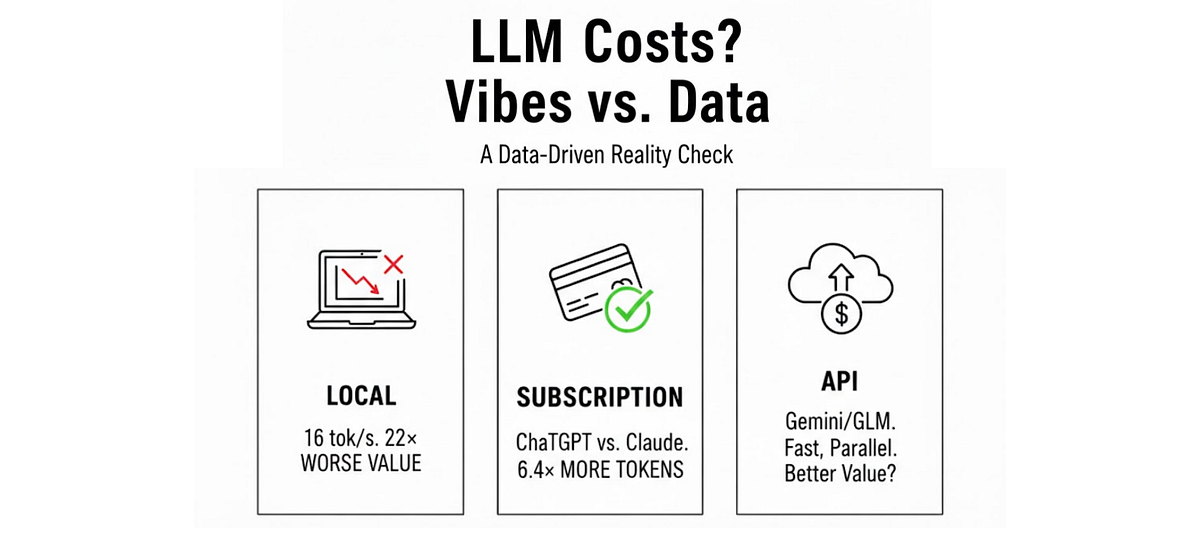
“Local LLMs Are Finally Beating the Cloud!” — But Are They? | by Eduard Ruzga | Jan, 2026 | Medium Added: Feb 19, 2026
“Local LLMs Are Finally Beating the Cloud!” — But Are They?
Site: Medium
An attempt to bring objectivity to the endless local vs API vs subscription debate
-
NUKES WILL FLY
Site: YouTube
SUPPORT THE SHOW BUY CAST BREW COFFEE NOW - https://castbrew.com/Join - https://www.youtube.com/channel/UCLwNTXWEjVd2qIHLcXxQWxA/joinHosts: Tim @Timcast (eve...

-
WAR! US War With Iran FEARED As MASSIVE Deployment Heading To Gulf | Timcast IRL #1452 w/ Amber Duke
Site: YouTube
Try my favorite sleep aid, Beam Dream: https://shopbeam.com/TIMPOOL and use code TIMPOOL for up to 35% off—limited time.SUPPORT THE SHOW BUY CAST BREW COFFEE...

-
 Cells Use ‘Bioelectricity’ To Coordinate and Make Group Decisions | Quanta Magazine
Added: Feb 19, 2026
Cells Use ‘Bioelectricity’ To Coordinate and Make Group Decisions | Quanta Magazine
Added: Feb 19, 2026Cells Use ‘Bioelectricity’ To Coordinate and Make Group Decisions | Quanta Magazine
Site: Quanta Magazine
The discovery that tissues use electricity to expel unhealthy cells is part of a surge of renewed interest in the currents flowing through our bodies.

