Bookmarks 2026-02-11T01:24:17.094Z
by Owen Kibel
29 min read
Bookmarks for 2026-02-11T01:24:17.094Z
-
Discovery of a possible pulsar in the Milky Way's center could enable unprecedented tests of General Relativity Added: Feb 10, 2026
Discovery of a possible pulsar in the Milky Way's center could enable unprecedented tests of General Relativity
Researchers from Columbia University and Breakthrough Listen, a scientific research program aimed at finding evidence of civilizations beyond Earth, have published new results from the Breakthrough Listen Galactic Center Survey, one of the most sensitive radio searches ever conducted for pulsars in the dynamically complex central region of the Milky Way. The study, led by recent Columbia Ph.D. graduate Karen I. Perez, was published in The Astrophysical Journal.

-
Eric Weinstein: xAI, Not SpaceX, Is Musk's Path to the Stars / X Added: Feb 10, 2026
Site: X (formerly Twitter)

-
Site: X (formerly Twitter)
-
Site: X (formerly Twitter)
-
 On The Dueling 2026 Super Bowl Halftime Shows - Saving Country Music
Added: Feb 10, 2026
On The Dueling 2026 Super Bowl Halftime Shows - Saving Country Music
Added: Feb 10, 2026On The Dueling 2026 Super Bowl Halftime Shows
Site: Saving Country Music
Just like so much of the packaging and portioning in the American diet, you got twice as much as you needed from the Super Bowl halftime, but only half of the amount of the recommended daily nutrients.

-
Bad Bunny made history at Super Bowl 2026's Halftime show — in all the wrong ways Added: Feb 10, 2026
Bad Bunny’s Super Bowl 2026 halftime show made history — in all the wrong ways
Site: New York Post
For the first time ever, the NFL gave its stage to a performer who sought to put the country in its place.

-
NFL wanted ‘unity’ — instead Bad Bunny drove millions of fed-up fans away | Fox News Added: Feb 10, 2026
NFL wanted ‘unity’ — instead Bad Bunny drove millions of fed-up fans away | Fox News

-
Bad Bunny Super Bowl Halftime Show Not an ‘Issue’ Worth Debating | National Review Added: Feb 10, 2026
Bad Bunny Super Bowl Halftime Show Not an ‘Issue’ Worth Debating | National Review

-
TPUSA Presents: The ALL-AMERICAN HALFTIME SHOW - YouTube Added: Feb 10, 2026
TPUSA Presents: The ALL-AMERICAN HALFTIME SHOW
Site: YouTube
WATCH NOW — The ALL-AMERICAN HALFTIME SHOW 🇺🇸Experience a one-of-a-kind halftime event celebrating American culture, Freedom, and Faith. Streaming right he...

-
NGA cancels White House meeting after Donald Trump invites only GOP governors Added: Feb 10, 2026
Governors won’t hold Trump meeting after only Republicans invited
Site: The Hill
The National Governors Association (NGA) has canceled its annual White House meeting after President Trump only invited Republican governors to the gathering. The yearly meeting is traditiona…
The National Governors Association (NGA) has canceled its annual White House meeting after President Trump only invited Republican governors to the gathering. The yearly meeting is traditionally bipartisan and offers a chance for state leaders to convene with one another and the president. “Because NGA’s mission is to represent all 55 governors, the Association is no longer serving as the facilitator for that event, and it is no longer included in our official program,” Oklahoma Gov. Kevin Stitt (R) wrote in a Monday letter announcing plans to forgo the meeting, according to The Associated Press. Stitt said the Trump administration’s decision to exclude Democratic governors would not divide the association. “We cannot allow one divisive action to achieve its goal of dividing us,” he wrote. “The solution is not to respond in kind, but to rise above and to remain focused on our shared duty to the people we serve. America’s governors have always been models of pragmatic leadership, and that example is most important when Washington grows distracted by politics." The NGA is scheduled to meet in Washington Feb. 19-21. Stitt's letter was followed by a decision from 18 Democratic governors to skip the White House dinner, citing tensions with the current administration. The New York Times first reported Friday that Trump did not invite Maryland Gov. Wes Moore (D), the nation’s sole Black governor and vice chair of the NGA, or Colorado Gov. Jared Polis (D) to the bipartisan dinner for governors and their families. “If the reports are true that not all governors are invited to these events, which have historically been productive and bipartisan opportunities for collaboration, we will not be attending the White House dinner this year,” the group wrote in a statement. “Democratic governors remain united and will never stop fighting to protect and make life better for people in our states,” the Democratic governors added. Moore also raised concerns over the partisan exclusion. “My peers, both Democrats and Republicans, selected me to serve as the Vice Chair of the NGA, another reason why it’s hard not to see this decision as another example of blatant disrespect and a snub to the spirit of bipartisan federal-state partnership,” the Maryland governor wrote in a statement. “As the nation’s only Black governor, I can’t ignore that being singled out for exclusion from this bipartisan tradition carries an added weight — whether that was the intent or not,” he added. Moore continued, “What makes it especially confounding is that just weeks ago I was at the White House with a bipartisan group of governors, working with the administration on reforms to lower energy costs and strengthen grid reliability. We proved in that moment what’s possible when we stay focused on outcomes over politics.” White House press secretary Karoline Leavitt defended Trump's move to not invite Democratic governors to the meeting during Tuesday's briefing. "I just spoke with the president about this," Leavitt told reporters. "It is a dinner at the White House. It's the 'People's House.' It's also the president's home, and he can invite whomever he wants to dinners and events here at the White House." Leavitt noted Moore did not attend the dinner last year. Updated at 4:49 p.m. EST

-
 AI Doesn’t Reduce Work—It Intensifies It
Added: Feb 10, 2026
AI Doesn’t Reduce Work—It Intensifies It
Added: Feb 10, 2026AI Doesn’t Reduce Work—It Intensifies It
Site: Harvard Business Review
One of the promises of AI is that it can reduce workloads so employees can focus more on higher-value and more engaging tasks. But according to new research, AI tools don’t reduce work, they consistently intensify it: In the study, employees worked at a faster pace, took on a broader scope of tasks, and extended work into more hours of the day, often without being asked to do so. That may sound like a win, but it’s not quite so simple. These changes can be unsustainable, leading to workload creep, cognitive fatigue, burnout, and weakened decision-making. The productivity surge enjoyed at the beginning can give way to lower quality work, turnover, and other problems. To correct for this, companies need to adopt an “AI practice,” or a set of norms and standards around AI use that can include intentional pauses, sequencing work, and adding more human grounding.
Right now, many companies are worried about how to get more employees to use AI. After all, the promise of AI reducing the burden of some work—drafting routine documents, summarizing information, and debugging code—and allowing workers more time for high-value tasks is tantalizing. But are they ready for what might happen if they succeed? While leaders are focused on promised productivity gains, they may find themselves surprised by the complex reality, and may not see what these gains are costing them until it’s too late. In our in-progress research, we discovered that AI tools didn’t reduce work, they consistently intensified it. In an eight-month study of how generative AI changed work habits at a U.S.-based technology company with about 200 employees, we found that employees worked at a faster pace, took on a broader scope of tasks, and extended work into more hours of the day, often without being asked to do so. Importantly, the company did not mandate AI use (though it did offer enterprise subscriptions to commercially available AI tools). On their own initiative workers did more because AI made “doing more” feel possible, accessible, and in many cases intrinsically rewarding. While this may sound like a dream come true for leaders, the changes brought about by enthusiastic AI adoption can be unsustainable, causing problems down the line. Once the excitement of experimenting fades, workers can find that their workload has quietly grown and feel stretched from juggling everything that’s suddenly on their plate. That workload creep can in turn lead to cognitive fatigue, burnout, and weakened decision-making. The productivity surge enjoyed at the beginning can give way to lower quality work, turnover, and other problems. This puts leaders in a bind. What should they do? Asking employees to self-regulate isn’t a winning strategy. Rather, companies need to develop a set of norms and standards around AI use—what we call an “AI practice.” Here’s what leaders need to know, and what they can do to set their employees up for success. How Generative AI Intensifies Work From April to December last year, we studied how generative AI tools changed work habits at the tech company. We did this through in-person observation two days a week, tracking internal communication channels, and more than 40 in-depth interviews across engineering, product, design, research, and operations. We identified three main forms of intensification. Task expansion. Because AI can fill in gaps in knowledge, workers increasingly stepped into responsibilities that previously belonged to others. Product managers and designers began writing code; researchers took on engineering tasks; and individuals across the organization attempted work they would have outsourced, deferred, or avoided entirely in the past. Generative AI made those tasks feel newly accessible. These tools provided what many experienced as an empowering cognitive boost: They reduced dependence on others, and offered immediate feedback and correction along the way. Workers described this as “just trying things” with the AI, but these experiments accumulated into a meaningful widening of job scope. In fact, workers increasingly absorbed work that might previously have justified additional help or headcount. There were knock-on effects of people expanding their remits. For instance, engineers, in turn, spent more time reviewing, correcting, and guiding AI-generated or AI-assisted work produced by colleagues. These demands extended beyond formal code review. Engineers increasingly found themselves coaching colleagues who were “vibe-coding” and finishing partially complete pull requests. This oversight often surfaced informally—in Slack threads or quick desk-side consultations—adding to engineers’ workloads. Blurred boundaries between work and non-work. Because AI made beginning a task so easy—it reduced the friction of facing a blank page or unknown starting point—workers slipped small amounts of work into moments that had previously been breaks. Many prompted AI during lunch, in meetings, or while waiting for a file to load. Some described sending a “quick last prompt” right before leaving their desk so that the AI could work while they stepped away. These actions rarely felt like doing more work, yet over time they produced a workday with fewer natural pauses and a more continuous involvement with work. The conversational style of prompting further softened the experience; typing a line to an AI system felt closer to chatting than to undertaking a formal task, making it easy for work to spill into evenings or early mornings without deliberate intention. Some workers described realizing, often in hindsight, that as prompting during breaks became habitual, downtime no longer provided the same sense of recovery. As a result, work felt less bounded and more ambient—something that could always be advanced a little further. The boundary between work and non-work did not disappear, but it became easier to cross. More multitasking. AI introduced a new rhythm in which workers managed several active threads at once: manually writing code while AI generated an alternative version, running multiple agents in parallel, or reviving long-deferred tasks because AI could “handle them” in the background. They did this, in part, because they felt they had a “partner” that could help them move through their workload. While this sense of having a “partner” enabled a feeling of momentum, the reality was a continual switching of attention, frequent checking of AI outputs, and a growing number of open tasks. This created cognitive load and a sense of always juggling, even as the work felt productive. Over time, this rhythm raised expectations for speed—not necessarily through explicit demands, but through what became visible and normalized in everyday work. Many workers noted that they were doing more at once—and feeling more pressure—than before they used AI, even though the time savings from automation had ostensibly been meant to reduce such pressure. What This Means for Organizations—and How an “AI Practice” Can Help All of this produced a self-reinforcing cycle. AI accelerated certain tasks, which raised expectations for speed; higher speed made workers more reliant on AI. Increased reliance widened the scope of what workers attempted, and a wider scope further expanded the quantity and density of work. Several participants noted that although they felt more productive, they did not feel less busy, and in some cases felt busier than before. As one engineer summarized, “You had thought that maybe, oh, because you could be more productive with AI, then you save some time, you can work less. But then really, you don’t work less. You just work the same amount or even more.” Organizations might see this voluntary expansion of work as a clear win. After all, if workers are doing this of their own initiative, why would that be bad? Isn’t this the productivity explosion we’ve been promised? But our research reveals the risks of letting work informally expand and accelerate: What looks like higher productivity in the short run can mask silent workload creep and growing cognitive strain as employees juggle multiple AI-enabled workflows. Because the extra effort is voluntary and often framed as enjoyable experimentation, it is easy for leaders to overlook how much additional load workers are carrying. Over time, overwork can impair judgment, increase the likelihood of errors, and make it harder for organizations to distinguish genuine productivity gains from unsustainable intensity. For workers, the cumulative effect is fatigue, burnout, and a growing sense that work is harder to step away from, especially as organizational expectations for speed and responsiveness rise. Instead of responding passively to how AI tools reshape workplaces, both individuals and companies should adopt an “AI practice”: a set of intentional norms and routines that structure how AI is used, when it is appropriate to stop, and how work should and should not expand in response to newfound capability. Without such practices, the natural tendency of AI-assisted work is not contraction but intensification, with implications for burnout, decision quality, and long-term sustainability. As organizations work to build their AI practice, they should consider adopting: Intentional pauses. As tasks speed up and boundaries blur, workers could benefit from brief, structured moments that regulate tempo: protected intervals to assess alignment, reconsider assumptions, or absorb information before moving forward. These pauses would not slow work overall; they would simply prevent the quiet accumulation of overload that emerges when acceleration goes unchecked. For example, a decision pause could require, before a major decision is finalized, one counterargument and one explicit link to organizational goals—widening the attention field just enough to protect against drift. Incorporating such pauses into everyday workflow is one way organizations can support better decisions, healthier boundaries, and more sustainable forms of productivity in AI-augmented environments. Sequencing. As AI enables constant activity in the background, organizations can benefit from norms that deliberately shape when work moves forward, not just how fast. This includes batching non-urgent notifications, holding updates until natural breakpoints, and protecting focus windows in which workers are shielded from interruptions. Rather than reacting to every AI-generated output as it appears, sequencing encourages work to advance in coherent phases. When coordination is paced in this way, workers experience less fragmentation and fewer costly context switches, while teams maintain overall throughput. By regulating the order and timing of work—rather than demanding continuous responsiveness—sequencing can help organizations preserve attention, reduce cognitive overload, and support more thoughtful decision-making in AI-forward workplaces. Human grounding. As AI enables more solo, self-contained work, organizations can benefit from protecting time and space for listening and human connection. Short opportunities to connect with others—whether through brief check-ins, shared reflection moments, or structured dialogue—interrupt continuous solo engagement with AI tools and help restore perspective. Beyond perspective, social exchange supports creativity. AI provides a single, synthesized perspective, but creative insight depends on exposure to multiple human viewpoints. By institutionalizing time and space for listening and dialogue, organizations re-anchor work in social context and help counter the depleting, individualizing effects of fast, AI-mediated work. . . . The promise of generative AI lies not only in what it can do for work, but in how thoughtfully it is integrated into the daily rhythm. Our findings suggest that without intention, AI makes it easier to do more—but harder to stop. An AI practice offers a counterbalance: a way to preserve moments for recovery and reflection even as work accelerates. The question facing organizations is not whether AI will change work, but whether they will actively shape that change—or let it quietly shape them.

-
How Ancient Philosophy Lost Its Mind—Twice | Psychology Today Canada Added: Feb 10, 2026
How Ancient Philosophy Lost Its Mind—Twice
Site: Psychology Today
The sophisticated language Plato wrote in gave way to a simplified "common" Greek—and with it, a simplified psychology. We inherited a twice-flattened concept of mind.

-
 Common Sweetener May Damage Critical Brain Barrier, Risking Stroke : ScienceAlert
Added: Feb 10, 2026
Common Sweetener May Damage Critical Brain Barrier, Risking Stroke : ScienceAlert
Added: Feb 10, 2026Common Sweetener May Damage Critical Brain Barrier, Risking Stroke
Site: ScienceAlert
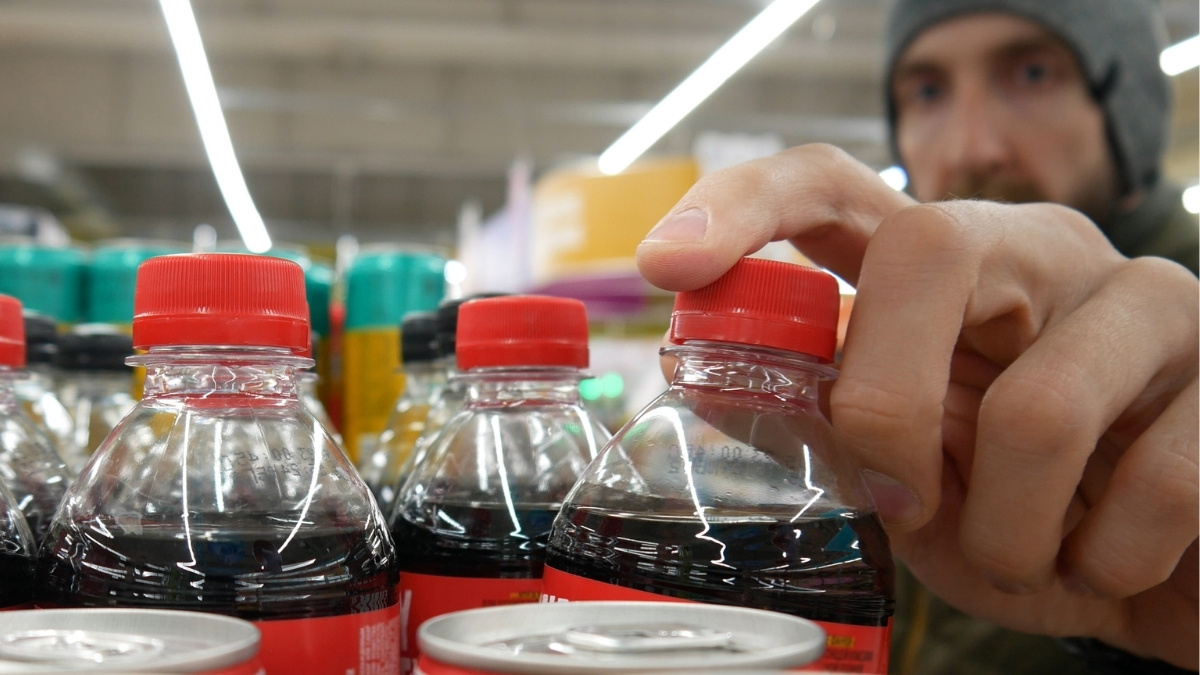
Found in everything from protein bars to energy drinks, erythritol has long been considered a safe alternative to sugar.
-
Facing Medicaid Fraud Allegations, California Changes The Subject Added: Feb 10, 2026
-
Site: X (formerly Twitter)
-
Site: X (formerly Twitter)
-
Site: X (formerly Twitter)
-
Joe Rogan Experience #2448 - Andrew Doyle
Site: YouTube
Andrew Doyle is a writer, broadcaster, and comedian. He is the author of several books, including his most recent, “The End of Woke: How the Culture War Went...

-
Disturbing NEW Video and Photos Show Armed Mystery Man at Guthrie's House, w/ Phil Holloway and More
Site: YouTube
Megyn Kelly begins the show laying out all the evidence for why she believes Nancy Guthrie wasn't actually kidnapped and was instead killed, Savannah Guthrie...

-
 Researchers Studied What Happens When Workplaces Seriously Embrace AI, and the Results May Make You Nervous
Added: Feb 10, 2026
Researchers Studied What Happens When Workplaces Seriously Embrace AI, and the Results May Make You Nervous
Added: Feb 10, 2026Researchers Studied What Happens When Workplaces Seriously Embrace AI, and the Results May Make You Nervous
Site: Futurism
Introducing AI in the workplace can create a vicious cycle that leaves employees overburdened and burned out.

-
Vibe coding is passé. Karpathy has a new name for the future of software. - The New Stack Added: Feb 10, 2026
-
Victor Davis Hanson: Minnesota Officials Are Following in the Footsteps of Insurrectionists Past
Site: YouTube
Minnesota’s top officials are fanning the flames of unrest in their state. When are we going to call it like we see it? This is an insurrection.From Gov. Tim...

-
Cancer Is Healthy - Cancerism is Dangerous (THE SAAD TRUTH_1990)
Site: YouTube
My forthcoming book Suicidal Empathy: Dying to Be Kind is now available for pre-order: https://www.harpercollins.com/products/suicidal-empathy-gad-saad?varia...

-
Do We Have the Necessary Evidence Against Open Borders? (THE SAAD TRUTH_1991)
Site: YouTube
My forthcoming book Suicidal Empathy: Dying to Be Kind is now available for pre-order: https://www.harpercollins.com/products/suicidal-empathy-gad-saad?varia...

-
Flow: AI Filmmaking for creatives. Powered by Veo. Try today at no cost (16x9) 30 secs
Site: YouTube
Subscribe to our Channel: https://www.youtube.com/googleFind us on X: https://x.com/googleWatch us on TikTok: https://tiktok.com/@googleFollow us on Instagra...

-
Joe & Tayler Lonsdale on Tech Investments, Life in Texas, & Homeschooling | KMP Ep. 26
Site: YouTube
From intern to billionaire, leaving California for Texas, homeschooling, mass deportations and feminism, I sat down with Joe and Tayler Lonsdale for a wide-r...

-
Checking in on Polymarket: Bets on Christ's Return Jump on Bets That Bets on Christ's Return Will Jump Added: Feb 10, 2026
Checking in on Polymarket: Bets on Christ's Return Jump on Bets That Bets on Christ's Return Will Jump
Site: Gizmodo
Here's a prediction: this ends poorly.

-
Anthropic AI's safety lead quits with epic vaguepost claiming 'the world is in peril', and so he's off to become 'invisible' and study poetry | PC Gamer Added: Feb 10, 2026
Anthropic AI's safety lead quits with epic vaguepost claiming 'the world is in peril', and so he's off to become 'invisible' and study poetry
Site: PC Gamer
Come find out about CosmoErotic Humanism.

-
Donald Trump gets the last laugh over Mark Carney as Team USA thrash Canada in Winter Olympics ice hockey Added: Feb 10, 2026
Trump gets the last laugh over Carney as USA thrash Canada at Olympics
Site: Mail Online
The victory follows shortly after a spat over border infrastructure where Canadian Prime Minister Mark Carney taunted Donald Trump regarding the high-stakes Winter Olympics match.

-
A Shimmering Liquid Metal Could Unlock the Future of Green Hydrogen Added: Feb 10, 2026
A Shimmering Liquid Metal Could Unlock the Future of Green Hydrogen
Site: SciTechDaily
A new liquid-metal process powered by light could reshape how hydrogen is produced.

-
Prosecutors fail to secure indictment against 6 Dem lawmakers - POLITICO Added: Feb 10, 2026
-
Carney responds to Trump’s bridge burn Added: Feb 10, 2026
Carney responds to Trump’s bridge burn
Site: The Hill
Welcome to The Hill’s Business & Economy newsletter{beacon} Business & Economy Business & Economy The Big Story Carney says he had ‘positive’ conversa…

-
Quote of the day by Nelson Mandela: “Do not judge me by my success, judge me by how many...” - The Economic Times Added: Feb 10, 2026
Quote of the day by Nelson Mandela: “Do not judge me by my success, judge me by how many...”
Site: The Economic Times
Nelson Mandela's powerful quote emphasizes that true strength lies in resilience, not just success. In a world fixated on achievements, this message reminds us that failure is a crucial part of growth. It encourages persistence and the courage to rise after setbacks, defining character more than victories.
This quote highlights that true strength is not measured by achievements, but by resilience. Success may be visible, but the courage to rise after failure shows real character. It reminds us that persistence and determination define a person more than victories do.Quote of the day by Nelson Mandela“Do not judge me by my success, judge me by how many times I fell down and got back up again.”Why this quote matters todayThis quote matters today because we live in a world that often highlights only success and achievements, especially on social media. It reminds us that failure is not weakness but part of growth. In competitive careers, academics, and personal life, resilience and the ability to bounce back are more important than never failing. It encourages people to keep going despite setbacks.A revolutionary leader and a global icon in the fight for human rights, Nelson Mandela is regarded as one of the most inspiring and transformative leaders in modern history. Mandela served as South Africa's first black president after spending 27 years in prison. He was also awarded the 1993 Nobel Peace Prize in recognition of his efforts toward the peaceful end of apartheid and for laying the foundations for a new democratic South Africa. How can we apply this quote in our daily lives?Accept Failure as Part of Growth: Understand that setbacks are normal. Instead of feeling defeated, treat mistakes as lessons that help you improve.Stay Consistent Despite Challenges: Keep showing up even when things don’t go as planned. Progress often comes from persistence, not perfection.Build Mental Strength: Train your mind to handle criticism, rejection, and disappointment without giving up on your goals.Focus on Effort, Not Just Results: Celebrate your hard work and dedication, not only achievements. Effort builds character.Learn, Adapt, and Move Forward: Reflect on what went wrong, adjust your approach, and try again with better strategy.

-
Elon Musk Going Through It After Putting Mars City on Ice
Added: Feb 10, 2026
Elon Musk Going Through It After Putting Mars City on Ice
Site: Futurism
Elon Musk appeared to have had a major change of heart, putting a Mars city on hold. He's been going through it ever since.

-
Elon Musk Just Completely Reversed a Core Tenet of SpaceX
Added: Feb 10, 2026
Elon Musk Announces Huge Change: Self-Growing City on Moon Now Top Priority at SpaceX
Site: Futurism
Elon Musk said "SpaceX has already shifted focus to building a self-growing city on the Moon," despite Mars being his top priority until now.

-
Sorry, Bad Bunny — the USA Is Indeed ‘America’ | National Review

-
Uranus' moon "Miranda" likely has an ocean and possibly life - Earth.com Added: Feb 10, 2026
Moon named 'Miranda' orbiting Uranus seems to have an ocean and possibly life
Site: Earth.com
A recent study points to an exciting possibility: that Uranus's moon Miranda, located in the far reaches of our solar system, may harbor a hidden ocean and life.

-
Life-sparking energy source found on Enceladus hints at alien life on Saturn's moon
Site: Earth.com
NASA's Cassini mission has revealed the presence of vital components for life on Saturn’s icy moon, Enceladus

-
Earth’s interactions with Mars influence deep ocean circulation
Site: Earth.com
The team examined the intricate relationship between climate change (on a geological timescale) and the dynamics of ocean circulation

-
Trump reportedly snubs Democratic governors from White House meeting | Fox News

-
Smoking Cannabis Linked To Larger Brain Volume And Better Cognitive Function Later In Life | IFLScience Added: Feb 10, 2026
-
Researchers ‘surprised’ by the brain benefits of cannabis usage in adults over 40
Site: New York Post
Pass the pot to Grandma — her brain might thank you.

-
The singularity won't be gentle - by Nate Silver Added: Feb 10, 2026
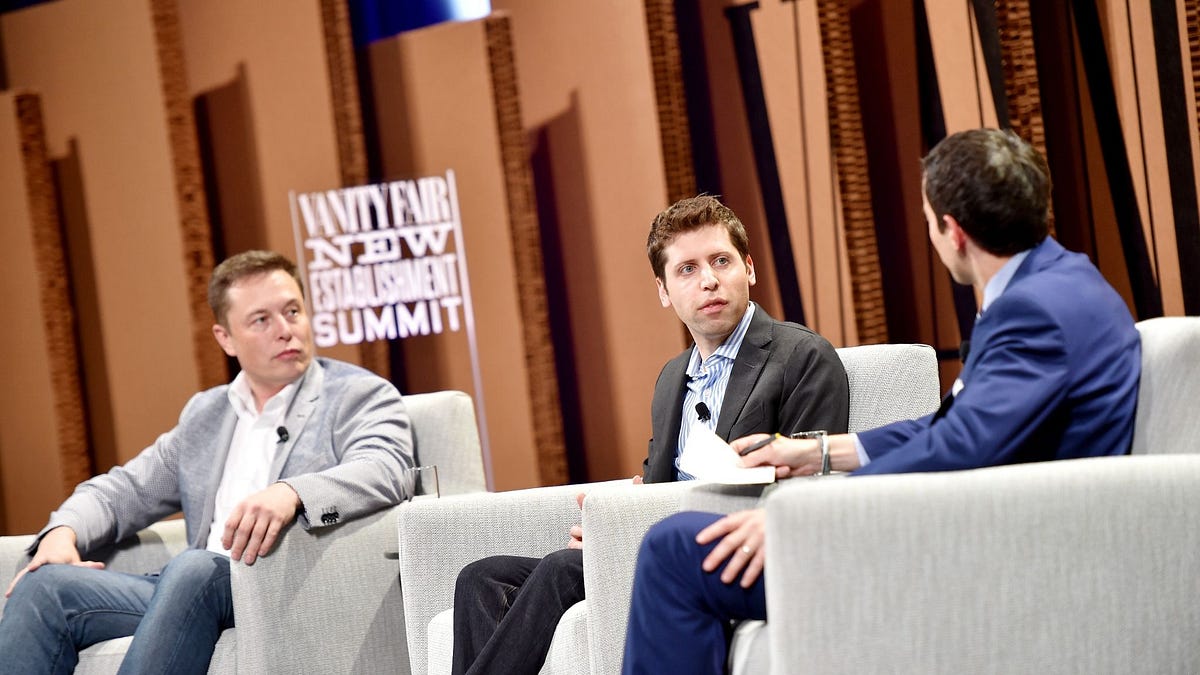
The singularity won't be gentle
If AI is even half as transformational as Silicon Valley assumes, politics will never be the same again.
-
The ‘New York Times’ Changes Its Tune on Marijuana, at Last | National Review Added: Feb 10, 2026
The New York Times Changes Its Tune on Marijuana, at Last | National Review
Site: National Review
Today’s newsletter looks at the consequences of the marijuana legalization movement across the country.

-
New York Times admits marijuana legalization has caused serious problems | Fox News

-
New York Times editorial board calls for guardrails for marijuana after backing legalization - POLITICO Added: Feb 10, 2026
-
Requiem for Communist Cuba’s Apologists | National Review

-
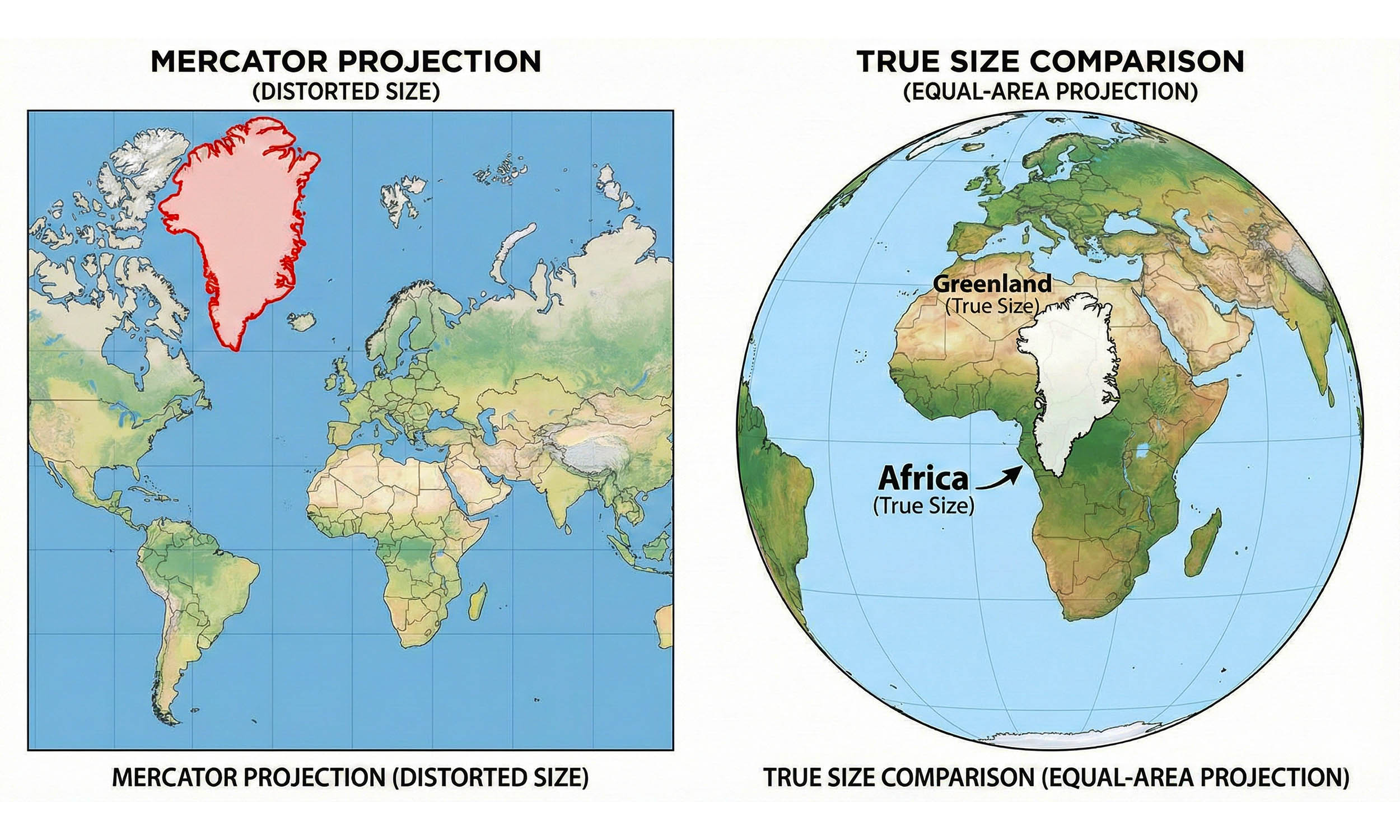
Greenland appears bigger on most world maps than it actually is in real life
Site: Earth.com
Common world maps exaggerate Greenland’s size, shaping how people understand the Arctic and global geography.
-
Football-sized fossil creature may have been one of the first land animals to eat plants
Life on Earth started in the oceans. Sometime around 475 million years ago, plants began making their way from the water onto the land, and it took another 100 million years for the first animals with backbones to join them. But for tens of millions of years, these early land-dwelling creatures only ate their fellow animals, rather than grazing on greenery.

-
 Which of the 5 philosophical archetypes best describes you? - Big Think
Added: Feb 10, 2026
Which of the 5 philosophical archetypes best describes you? - Big Think
Added: Feb 10, 2026Which of the 5 philosophical archetypes best describes you?
Site: Big Think
The Sphinx, the Leviathan, the Minotaur, the Kitsune, and the Garuda. We are all philosophers, but what kind of philosopher are you?

