Bookmarks 2026-01-05T22:09:36.405Z
by Owen Kibel
31 min read
Bookmarks for 2026-01-05T22:09:36.405Z
-
Gad Saad on X: "The Prescience of "A Few Good Men" and Suicidal Empathy (THE SAAD TRUTH_1977): https://t.co/a6l4f2tjj2" / X Added: Jan 5, 2026
Site: X (formerly Twitter)

-
Site: X (formerly Twitter)
-
Site: X (formerly Twitter)
-
How Diversity Can Be Truly Profitable - The Atlantic Added: Jan 5, 2026
What Social Science Knows About the Value of Diversity
Site: The Atlantic
The discipline points to constructive ways to celebrate differences in the workplace.

-
Rob Henderson (@robkhenderson)
Site: Substack
Sex differences in “Pluribus.”
When the alien hive collective temporarily abandons her, Carol spends 40 days entirely alone. She’s portrayed as a misanthrope, and for much of that stretch she seems unwilling to acknowledge that she needs other people—even after the grenade incident and after she injects Zosia with the chemical to force a confession.
But after being abandoned for those forty days, she paints the message in the cul-de-sac—essentially an invitation to come back. Despite everything, she longs for human reconnection.
What’s interesting is that Manousos has spent just as much time alone, if not more, and shows no comparable desire for human contact. He appears perfectly content to remain isolated and focused on his mission.
That contrast raises the question of whether this reflects a broader sex difference. Even a misanthropic woman, the show seems to suggest, eventually wants to reconnect with people. Manousos, by contrast, embodies a more stereotypically self-sufficient male orientation—happier alone, absorbed in a task, without a strong need for interpersonal contact.
Carol’s approach is almost entirely interpersonal: talking, probing, reading people, and using social means to get information. Manousos operates in the opposite mode—alone with his device and his radio, relying on systems rather than relationships. It maps neatly onto the classic “people versus things” dimension in psychology.

-
The Witcher : The Fields Of Ard Skellige - YouTube Music Added: Jan 5, 2026
The Witcher : The Fields Of Ard Skellige - YouTube Music
Site: YouTube Music
FULL VIDEO : https://www.youtube.com/watch?v=INjo63hrqx4 #erhu #music #musician #witcher #witcher3 🎧 My Music is Available Here 🎧 ► Spotify: https://spoti...

-
Endless Summer Love - YouTube Music
Site: YouTube Music
Provided to YouTube by ONErpm Endless Summer Love · Mona Slowly Endless Summer Love ℗ PLP Music Group Released on: 2025-12-26 Composer Lyricist: Mona Sl...
-
Aprire - YouTube Music
Site: YouTube Music
Provided to YouTube by The state51 Conspiracy Aprire · Atom Music Audio Beyond ℗ 2025 Atom Music Audio Released on: 2026-01-02 Producer: Atom Music Audi...
-
Ein deutsches Requiem, Op. 45: I. Selig sind die da Leid tragen - YouTube Music
Site: YouTube Music
Provided to YouTube by Warner Classics Ein deutsches Requiem, Op. 45: I. Selig sind die da Leid tragen · Herbert von Karajan · Singverein der Gesellschaft d...
-
Big revelation on comet 3I/ATLAS leaves scientists stunned: Interstellar object could be 14 billion years old, older than our Sun? What we know - The Economic Times Added: Jan 5, 2026
Big revelation on comet 3I/ATLAS leaves scientists stunned: Interstellar object could be 14 billion years old, older than our Sun? What we know - The Economic Times
Interstellar comet 3I/ATLAS, only the third known object confirmed to have entered the solar system from interstellar space, is throwing new surprises about its journey. The comet 3I/ATLAS has sparked debate among astronomers and early data hints that it could be a remnant from the early universe. Unlike most comets, which originate in our solar system, this object appears to have come from another galaxy with some researchers even speculating that this could be artificial but this remains controversial. Michele Bannister, an associate professor at the University of Canterbury in New Zealand, is leading a thorough investigation into it, has estimated that the comet 3I/ATLAS could be between eight and 14 billion years old, according to a report in International Business Times UK. The mysterious object is the third confirmed interstellar visitor to our solar system, after 1I/'Oumuamua and 2I/Borisov.All about the ancient origin of comet 3I/ATLASAccording to estimates, the interstellar comet 3I/ATLAS could be around 14 billion old. This means the comet was already ancient when the Sun was just a cloud of dust. 'The UC team, in partnership with Professor Chris Lintott at the University of Oxford, was the first to provide the theoretical study that showed how old the comet was based on its velocity, just days after it was first identified,' Bannister told Astrobiology.ALSO READ: Flight rule change: Use of power banks for in-flight charging barred by DGCA amid lithium battery fire fearsThe discovery has sent shockwaves through the scientific community because the chemistry of the object is fundamentally different from anything we have seen before. As it entered our skies, researchers detected unusually rich atomic nickel and iron emissions, marking it as a true outsider. 'The chemistry of 3I/ATLAS is distinctive relative to our solar system comets, which is one of the things that will tell us what its home environment was like,' Bannister explained. Observations from the James Webb Space Telescope (JWST) have also confirmed the comet is unusually rich in carbon dioxide, indicating it formed in a frigid environment far from its original parent star.Astronomers discover wobbling jetsScientists have observed unusual, wobbling jet-like features in its sun-facing anti-tail, suggesting a rotation period of about 15.5 hours. Astronomers identified these changes after monitoring 3I/ATLAS over 37 nights from early July to early September 2025, using the Two-Meter Twin Telescope at the Teide Observatory in Tenerife. Over this period, they observed a noticeable evolution in the comet’s coma. Prior to August, it appeared as a fan-shaped cloud of dust oriented toward the Sun.ALSO READ: Microsoft CEO Satya Nadella calls for a big AI reset in 2026, says we need to move beyond...As the comet drew closer to its October perihelion, a more distinct tail pointing away from the Sun emerged. Within the Sun-facing structure, jets were detected on seven separate nights. By tracking their motion, researchers uncovered a consistent pattern: the jets shifted approximately every seven hours and forty-five minutes, indicating a slow, systematic precession rather than random activity.On December 19, 2025, the comet came the closest to Earth, and since then it has been drifting away. It is projected to leave the solar system completely, just like other visitors from other stars.

-
We Wish You a Merry Christmas - YouTube Music
Site: YouTube Music
Provided to YouTube by Warner Classics We Wish You a Merry Christmas · Barbara Hendricks · Eric Ericson Chamber Choir Christmas Classics 2025 ℗ A Warner C...
-
Site: X (formerly Twitter)
-
Site: X (formerly Twitter)
-
Site: X (formerly Twitter)
-
Trans Democrat Arrested Over ATTACK On JD Vance's Home | Timcast IRL - YouTube Added: Jan 5, 2026
Trans Democrat Arrested Over ATTACK On JD Vance's Home | Timcast IRL
Site: YouTube
Join CrowdHealth to get started today for $99 for your first three months using code TIM at http://joincrowdhealth.com - CrowdHealth is not insurance. Opt ou...

-
 NASA Selects Tech Proposals to Advance Search-for-Life Mission - NASA
Added: Jan 5, 2026
NASA Selects Tech Proposals to Advance Search-for-Life Mission - NASA
Added: Jan 5, 2026NASA Selects Tech Proposals to Advance Search-for-Life Mission - NASA
Site: NASA
NASA announced Monday the selection of industry proposals to advance technologies for the agency’s Habitable Worlds Observatory concept – the first mission

-
92-year-old judge handling Maduro case ‘doesn’t give a s--t what anyone thinks about him’ - POLITICO Added: Jan 5, 2026
92-year-old judge handling Maduro case ‘doesn’t give a s--t what anyone thinks about him’
Site: POLITICO
Lawyers who have practiced before the Clinton appointee say he’s known to operate a bit differently.

-
Site: X (formerly Twitter)
-
Site: X (formerly Twitter)
-
The creator of Claude Code just revealed his workflow, and developers are losing their minds | VentureBeat Added: Jan 5, 2026
-
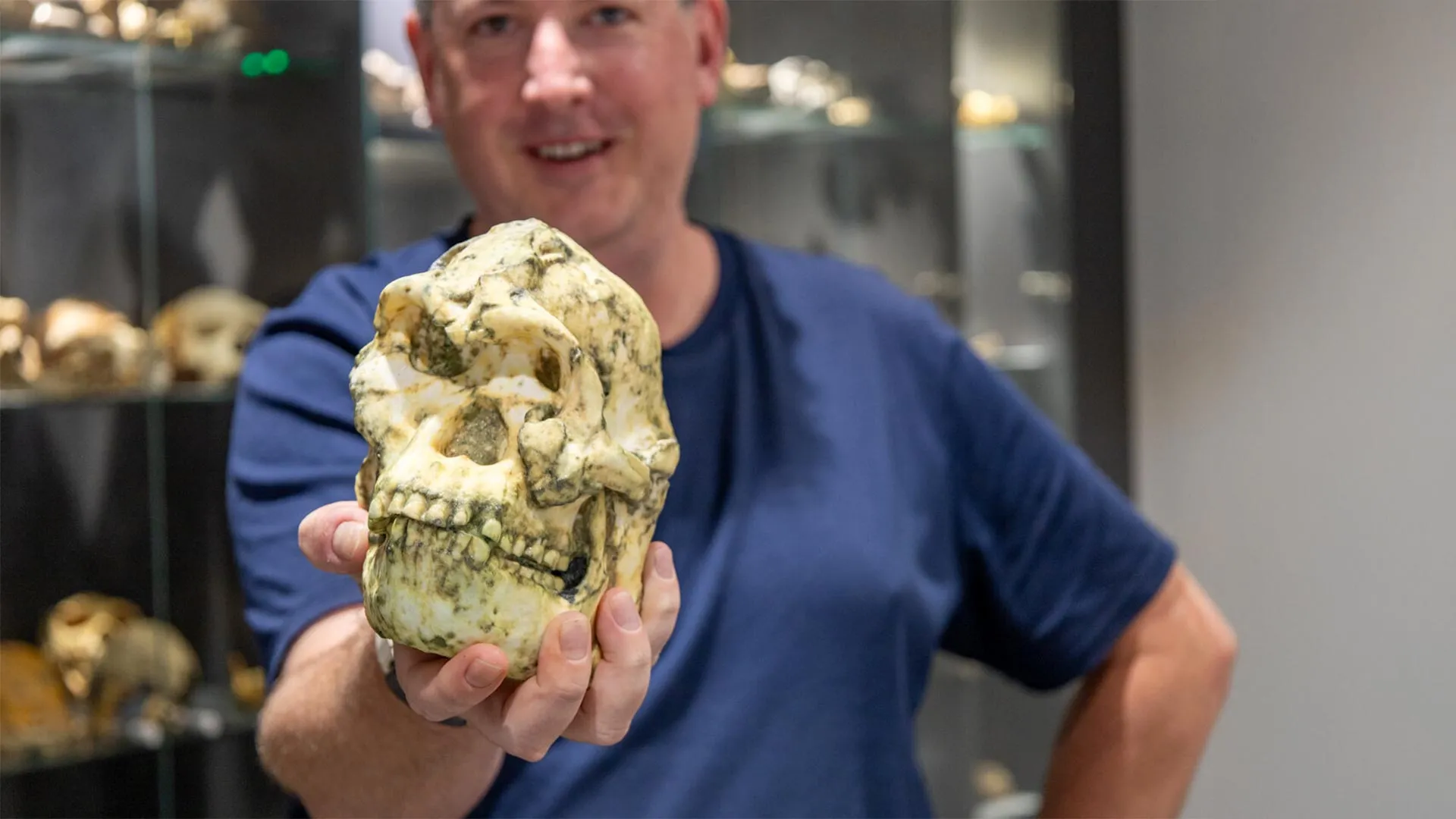
A legendary fossil is forcing scientists to rethink human origins | ScienceDaily Added: Jan 5, 2026
A legendary fossil is forcing scientists to rethink human origins
Site: ScienceDaily
One of the most complete human ancestor fossils ever found may belong to an entirely new species, according to an international research team. The famous “Little Foot” skeleton from South Africa has long been debated, but new analysis suggests it doesn’t truly match any known Australopithecus species. Instead, researchers say its unique mix of features points to a previously unidentified human relative, reshaping ideas about early human diversity.
-
'More Neanderthal than human': How DNA from our long-lost ancestors affects our health today | Live Science Added: Jan 5, 2026
'More Neanderthal than human': How DNA from our long-lost ancestors affects our health today
Site: Live Science
Neanderthals and humans mated millennia ago, and their legacy lives on in us today. Here's how.

-
Site: X (formerly Twitter)
-
We Have Never Been Woke | Princeton University Press Added: Jan 5, 2026
We Have Never Been Woke
How a new “woke” elite uses the language of social justice to gain more power and status—without helping the marginalized and disadvantaged

-
Site: X (formerly Twitter)
-
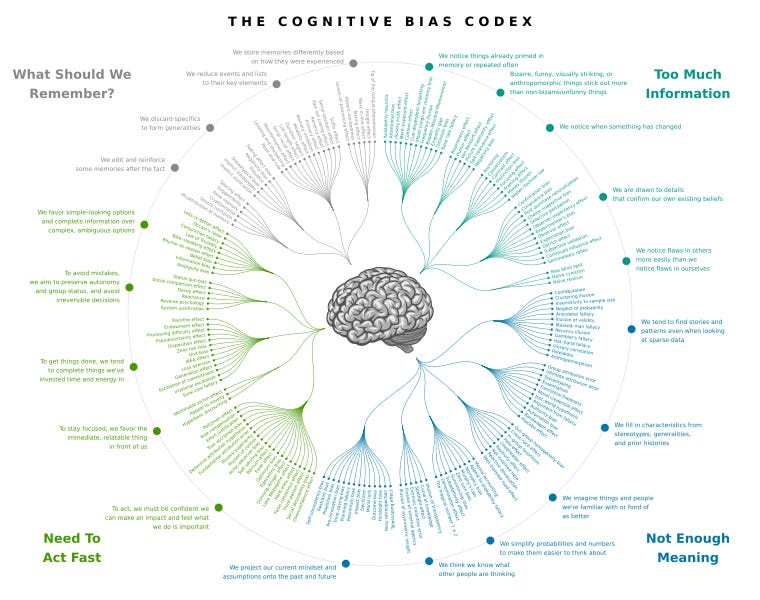
Smart People Are Especially Prone to Tribalism, Dogmatism and Virtue Signaling Added: Jan 5, 2026
Smart People Are Especially Prone to Tribalism, Dogmatism and Virtue Signaling
The symbolic professions aggressively select for those who are highly educated and cognitively sophisticated. This is a key source of their dysfunction.
-
Site: X (formerly Twitter)
-
We Have Never Been Woke - Google Books Added: Jan 5, 2026
We Have Never Been Woke
Site: Google Books
How a new “woke” elite uses the language of social justice to gain more power and status—without helping the marginalized and disadvantagedSociety has never been more egalitarian—in theory. Prejudice is taboo, and diversity is strongly valued. At the same time, social and economic inequality have exploded. In We Have Never Been Woke, Musa al-Gharbi argues that these trends are closely related, each tied to the rise of a new elite—the symbolic capitalists. In education, media, nonprofits, and beyond, members of this elite work primarily with words, ideas, images, and data, and are very likely to identify as allies of antiracist, feminist, LGBTQ, and other progressive causes. Their dominant ideology is “wokeness” and, while their commitment to equality is sincere, they actively benefit from and perpetuate the inequalities they decry. Indeed, their egalitarian credentials help them gain more power and status, often at the expense of the marginalized and disadvantaged.We Have Never Been Woke details how the language of social justice is increasingly used to justify this elite—and to portray the losers in the knowledge economy as deserving their lot because they think or say the “wrong” things about race, gender, and sexuality. Al-Gharbi’s point is not to accuse symbolic capitalists of hypocrisy or cynicism. Rather, he examines how their genuine beliefs prevent them from recognizing how they contribute to social problems—or how their actions regularly provoke backlash against the social justice causes they champion.A powerful critique, We Have Never Been Woke reveals that only by challenging this elite’s self-serving narratives can we hope to address social and economic inequality effectively.
-
House Republicans move to override Trump vetoes in rare show of defiance Added: Jan 5, 2026
House Republicans move to override Trump vetoes in rare show of defiance
Site: Axios
The measures are expected to pass the House with bipartisan support.

-
Site: X (formerly Twitter)
-
Site: X (formerly Twitter)
-
Site: X (formerly Twitter)
-
Site: X (formerly Twitter)
-
 The Case for Sharpening Your Math Skills in the Age of AI
Added: Jan 5, 2026
The Case for Sharpening Your Math Skills in the Age of AI
Added: Jan 5, 2026The Case for Sharpening Your Math Skills in the Age of AI
Site: Harvard Business Review
Business leaders can’t outsource mathematical thinking to AI without sacrificing judgment, because real-world business problems demand practical, approximate reasoning rather than pristine textbook solutions. Drawing on examples from tech, finance, and decision science, the article shows why leaders must learn to sanity-check models, think probabilistically, and distinguish sound decisions from noisy outcomes. It also explains how non-linear dynamics and smart “bet sizing” shape long-term results—making math fluency a core leadership skill in the AI era.
With the rise of AI, business leaders may be wondering: Is it time to outsource math to machines, freeing managers to do more managerial things? The answer: Absolutely not. Math is the core language of business. And it’s more important than ever for business leaders to speak it fluently. This is true across virtually all functions and levels, from CxOs to warehouse managers. Paraphrasing Charlie Munger: Making business decisions without knowing the numbers is like fighting with one leg tied behind your back. It’s not going to end well. It is true that AI has some impressive capabilities in math. Large language models (LLMs) have achieved elite status at math competitions, while we humans seem headed in the opposite direction. At first glance, that looks like a gross mismatch, “game-over” for us. But it’s not the full story. AI is particularly good at finding exact answers to exactly stated questions, an ability Sanjoy Mahajan calls “academic” math. Business math, however, is different. It requires practical, approximate, adaptable solutions to the fuzzy, fluid, squishy problems real-life actually hands out. Such problems expose AI’s weak points, and reveal the strength of human reasoning, creativity, and common-sense. You don’t need to be able to compose Shakespearean verse to speak good conversational English. Similarly, you don’t need to be able to precisely solve differential equations to speak useful business math. What you absolutely must be able to do is this: Structure and solve real-world problems in practical and flexible ways. This is the kind of math fluency managers need. Like any language, it’s a learnable, “use it or lose it” skill. And mastering it can even help unleash the full power of AI, guided by humans who know exactly what they want from it. I have a math degree from the University of Cambridge, home of legends like Isaac Newton, Srinivasa Ramanujan, and Alan Turing. I am a longtime member of Mensa, a group known for solving crafty logic puzzles. And I have two decades worth of apprenticeship-style learning in the numbers-driven fields of data analytics, strategy consulting, and investing. These experiences have helped me hone a set of business-focused math tools which are both timeless in their utility and timely for the AI era. They relate to sanity-checking computational models, thinking probabilistically, and being aware of multiplicative dynamics. I will outline these below as: TRY, DO, and WIN. TRY = Think and Reason for Yourself Inattentional blindness, a psychology concept, says we are sometimes so super focused on irrelevant details that we completely miss the big picture which matters. Maybe you’ve seen the famous “gorilla in the room” video. The above is a real danger when it comes to business math. For example: In the dot-com boom of the late 1990s, managers became hyper-obsessed with measuring “eyeballs” and lost sight of the gorilla in the room: that cash flow is necessary to create business value. Simple calculations showed that the cash flow math didn’t come close to adding up. Unsurprisingly, many dot-com companies went bust. Scott McNealy, then CEO of Sun Microsystems, used elementary reasoning to show that many widely-accepted core assumptions in that era were, in fact, ridiculous. His post-mortem assessment: “What were you thinking?” In the Great Financial Crisis of 2008–09, experienced analysts built detailed financial models which assessed U.S. banks like Lehman Brothers as “buy” rated stocks and “A” grade credit risks mere weeks before Lehman and others collapsed. While this was happening, some relative outsiders like Michael Burry looked at home-loan securitization by these banks, did basic math, and concluded: This makes no sense. They were correct. “How to miss by a mile” is a 2014 memo by venture capitalist Bill Gurley. It makes the case that experts appraising the value of Uber may have had the world’s best financial model, but its core assumptions were “off by a factor of 25 times.” History has validated Gurley’s reasoning. His point: Business analysts engrossed in building complex spreadsheets can miss fundamentally re-scaling key inputs like market size. Especially so for disruptive businesses that have no existing comparables. These are high profile examples, but the issue they highlight applies at every level: It’s easy to “blindly” trust detailed numbers coming out of a fancy model. That may be fine. But it’s no replacement for thinking and reasoning for oneself. The antidote to the above is to always do your own simple, common-sense, sanity-check math. To borrow from a famous saying: It is better to be approximately right (using your own mind) than precisely wrong (using flawed model outputs). Here are three skills one can learn and practice to proficiently do the above: Build numerical intuition: I use an unusual calculator which “thinks only if you think too.” When you enter a calculation, the calculator first asks for your rough, best-guess answer. If your guesstimate is in the approximately right ballpark, it will oblige with the exact solution. Otherwise: Think harder, try again. (Find it here.) Use a problem-solving framework: I was trained in the legendary McKinsey method. It works by iteratively building, testing, and refining simple hypotheses using relevant facts and approximate math. And it applies to virtually any problem. (It’s taught here.) Learn mental-math tricks: Mahajan teaches six practical strategies I use to simplify the hairiest of problems: Dimensional analysis, easy cases, lumping, picture proofs, successive approximation, and reasoning by analogy. (See here.) DO = Decisions vs. Outcomes Perhaps the most powerful math lesson I have learned in my career is this: We make decisions. The world observes outcomes. These two things are related. But they are not the same. While pursuing my MBA, I took a finance class in which we were assigned a simple Oil Baron game for homework. It’s a computer simulation with basic inputs: the cost of drilling for oil, the probability of hitting oil if you choose to drill, and the profit you make if you do hit oil. (If you drill and don’t hit oil, your loss equals the drilling cost). Everyone in the class played this game 100 or so times. The cost, probability, and profit above would change each time. But the decision remained: Drill or no drill? Each round was independent (prior outcomes didn’t change future inputs). But the software kept a running tally of wealth across rounds by adding or subtracting profits and losses. The next day, our finance professor made two points based on the results of the above: Decisions: Every instance of the above game had a precisely correct answer: One can figure out whether to drill or not drill by using probabilistic decision trees to calculate expected values. And yet, only 20% or so of the class had made the correct decision every time. The rest either didn’t know how to do the math or deliberately chose to roll the dice and gamble. (MBA students are busy, and gambling is faster than calculating.) Outcomes: The folks who made the mathematically correct decision every time—the best you can do with factors under your control—were clustered around the top 10%–15% of final cumulative wealth. They did excellently. But here’s the thing: At least 10% of the class had more wealth than them simply by gambling. Indeed, the top 1% ended up with 10x more wealth than the best-decision cohort. Decisions aren’t outcomes. Does this mean gambling is better than trying to make the mathematically best decision? No. Gambling may create a few outlier winners, but it mostly creates a lot of busts. As the professor concluded: Unlike classroom games, real-life information is never perfect. But using probabilistic logic, like decision-trees, with the best inputs possible remains the best way to make good decisions. Indeed, if you do this consistently, you will do well. But there will almost certainly be some gamblers who will do better, maybe much better, than you—through sheer chance. There’s nothing to be gained from envying, glorifying, copying, or studying such outcomes. Business dynamics are probabilistic, and outcomes are subject to randomness. That’s the reality of how things work. Hard as it may be to stomach. Though its tools may look simple, probabilistic thinking is an incredibly powerful concept, central to nearly every aspect of business reasoning and managerial decision making. WIN = When It’s Non-Linear Sometimes you may think you have the right probabilistic framework. But that turns out to be dangerously wrong. This happens when one tries to apply “linear” thinking to “non-linear” problems. The math concepts in this section may seem confusing (they were for me too). But they lead to a simple takeaway: If your work involves capital or resource allocation decisions—such as project or venture financing, M&A, marketing channel spend, etc.—it’s worth getting intuitively familiar with the Kelly Criterion. Read below for why. Say I offered you this deal: – You start with $100. – We toss a coin. – Heads, your wealth grows by 50%. $100 multiplied by 1.5x = $150. – Tails, your wealth declines by 40%. $100 multiplied by 0.6x = $60. – Now we do it again: Same setup, but starting with either $150 or $60 based on the outcome of the first round. And repeat a million times. Each time using the value at the end of the prior round as the starting point for the next. Do you like this offer? At first glance, it looks good. Take a simple unit $1. There are equal 50% chances of getting to $1.50 and $0.60. So, the expected value = 50% * $1.50 + 50% * $0.60 = $1.05. A 5% expected gain. That looks like an edge in your favor. And if you keep playing, this edge should deliver a nice long-term return. Right? Wrong. Physics Nobel laureate Murray Gell-Mann and his colleague Ole Peters showed that while the average outcome for millions of theoretical players playing this game is indeed positive, any individual single player goes bust with near 100% certainty. What looks good for the theoretical average population will bankrupt you personally. If you don’t believe it, watch Peters’s demonstration here. The above illustrates a powerful practical result: In some situations, the theoretical average outcome over a hypothetical population (an “ensemble”), may be very different than the actual expected outcome for any individual person in that same population. This can feel uncomfortably counterintuitive. That’s because our natural instincts tend to be trained on arithmetic problems, like the simple Oil Baron game above, where the score at the next round is the current score plus or minus something. But many real-life problems are multiplicative in nature, like this coin toss game where the score at the next round is actually the current score multiplied or divided by something. Using arithmetic analysis tools for multiplicative processes is dangerously wrong. Unlike their arithmetic counterparts, multiplicative outcomes are subject to the “wildness” of exponential compounding or decay. (E.g., our game above is governed by a concept called its geometric mean, which is less than one, predicting decay.) Practitioners in areas like signal processing, information theory, operations management, and capital allocation are familiar with the above dynamic. And they have a powerful math tool in their arsenal to deal with it: the aforementioned Kelly Criterion. Perhaps the best simple introduction to it is Fortune’s Formula, which tells the story of mathematicians like John Kelly, Claude Shannon, and Ed Thorp. Their work helped transform decision-heuristics in industries ranging from information-technology to investment-management (not to mention blackjack and poker). Kelly-thinking is this: To maximize long-term growth rates, one must smartly size bets. Kelly’s math optimally sizes them to avoid the risk of game-over strikeouts, while still swinging for home-runs on the juicy pitches in which you have a big edge over the odds. . . . Statistician Hans Rosling had an important message for us all: Our beautifully complex world cannot be understood by words alone, numbers must always be in the mix. The business world is no exception. However great their words may be, business leaders must also speak fluent math. Working with our powerful AI companions makes this skill more important than ever. Hopefully these simple “math words,” and the tools they represent, can help: TRY, DO, WIN.

-
Forget Transistors: This New “Intelligent” Material Computes Like a Human Brain Added: Jan 5, 2026
Forget Transistors: This New “Intelligent” Material Computes Like a Human Brain
Site: SciTechDaily
Tiny molecules that can think, remember, and learn may be the missing link between electronics and the brain. For more than half a century, researchers have looked for ways to move past silicon by building electronics from molecules. The idea sounded simple and beautiful, but real devices turned

-
Landslide, but it's about landslides (Fleetwood Mac)
Site: YouTube
Guest songwriters: @griefcat Full MP3 download and many more: https://www.patreon.com/c/ThereIRuinedIt

-
 Imagine - Grok
Added: Jan 5, 2026
Imagine - Grok
Added: Jan 5, 2026Make your own video with Grok Imagine
Site: Grok
Video generated by Grok.
-
Imagine - Grok
Added: Jan 5, 2026
Make your own video with Grok Imagine
Site: Grok
Video generated by Grok.
-
New York Gets What It Asked For: Democratic Socialism Comes to City Hall | National Review Added: Jan 5, 2026
New York Gets What It Asked For: Democratic Socialism Comes to City Hall | National Review

-
Trump has a list of demands for Venezuela’s new leader
Site: POLITICO
Delcy Rodriguez appears to be the linchpin in any US strategy that may emerge.

-
 Jurassic Park Was Right: Mosquitoes Really Can Carry Libraries of Animal DNA : ScienceAlert
Added: Jan 5, 2026
Jurassic Park Was Right: Mosquitoes Really Can Carry Libraries of Animal DNA : ScienceAlert
Added: Jan 5, 2026Jurassic Park Was Right: Mosquitoes Really Can Carry Libraries of Animal DNA
Site: ScienceAlert
From missing dinosaur feathers to fictitious pack-hunting behaviors, many details of the Jurassic Park movie franchise belong firmly in fantasy.

-
If 3I/ATLAS is a Comet, Why Would the CIA “Neither Deny, Nor Confirm” the Existence of Records on It? | by Avi Loeb | Jan, 2026 | Medium Added: Jan 5, 2026
If 3I/ATLAS is a Comet, Why Would the CIA “Neither Deny, Nor Confirm” the Existence of Records on…
Site: Medium
So far, 3I/ATLAS displayed a number of unexplained features relative to familiar comets — as I listed here. One could have hoped that…

-
 A Newly-Published Work By J.R.R. Tolkien Reveals He Really Seemed To Have Hated Cars - The Autopian
Added: Jan 5, 2026
A Newly-Published Work By J.R.R. Tolkien Reveals He Really Seemed To Have Hated Cars - The Autopian
Added: Jan 5, 2026A Newly-Published Work By J.R.R. Tolkien Reveals He Really Seemed To Have Hated Cars - The Autopian
Site: The Autopian
Like so many people, I’ve read The Lord of the Rings and watched the movies and appreciated the elaborate world-building of J.R.R. Tolkien with its dragons and people even shorter than me and fake languages and second breakfasts and grotesque orcs and all that. I don’t think I’d count myself as a huge fan, necessarily – […]

-
 Gigantic “hidden ocean” discovered 700 kilometers beneath Earth’s surface
Added: Jan 5, 2026
Gigantic “hidden ocean” discovered 700 kilometers beneath Earth’s surface
Added: Jan 5, 2026Gigantic “hidden ocean” discovered 700 kilometers beneath Earth’s surface
Site: ECOticias.com
Scientists detect a vast “hidden ocean” 700 km down—water locked in mantle rock that could dwarf all surface seas.

-
Suavemente
Site: Medium
I imagine that a certain cohort of the Venezuelan diaspora is letting it rip right now in the narco-finance capital of the Western…

-
Site: X (formerly Twitter)
-
Site: X (formerly Twitter)
-
Site: X (formerly Twitter)
-
Site: X (formerly Twitter)
-
Site: X (formerly Twitter)


