Bookmarks 2026-01-05T02:21:41.231Z
by Owen Kibel
41 min read
Bookmarks for 2026-01-05T02:21:41.231Z
-
Somaliland statehood: Israel's bold recognition step Added: Jan 4, 2026
Somaliland is a functioning state. Treat it that way.
Site: The Hill
Israel has recognized Somaliland as an independent nation, prompting criticism from some countries and an emergency meeting of the Security Council, while Somaliland has made significant progress i…
Israeli Prime Minister Benjamin Netanyahu announced on Dec. 26 that Israel would recognize the Republic of Somaliland as a sovereign nation, a few months short of the 35th anniversary of its declaration of independence from Somalia in May 1991. Israel is the first United Nations member state to take such a step. It has caused a furor and prompted an emergency meeting of the Security Council. Some countries, including China, Turkey and Saudi Arabia strongly criticized Israel’s decision, as did the African Union. Hassan Sheikh Mohamud, the president of the Federal Republic of Somalia, called it “an existential threat” and cited his country’s “non-negotiable” sovereignty and territorial integrity. By any rational measure this is a flimsy case. I previously made the case for Somaliland’s statehood, arguing that it had achieved “astonishing economic and political progress over the past 30 years.” It has a functioning if imperfect democracy, an executive, legislature and judiciary, armed forces, a central bank and its own currency: it is already an independent state in many practical terms. The slavish invocation of Somalia’s interests ignores the context and has an inverted moral core: Somalia has been embroiled in civil war for decades, is the most corrupt country in the world with the exception of South Sudan, regularly carries out human rights abuses, has no popular direct elections and has proven powerless to prevent the Islamic terrorist group al-Shabaab from establishing an autonomous “Islamic Emirate of Somalia” in the south of the country. Somalia has received tens of billions of dollars in humanitarian and development aid from the United Nations, the European Union, the World Bank, the International Monetary Fund, the African Development Bank and, on a bilateral basis, from the U.S., Britain, Germany and others. These funds may well have prevented more severe humanitarian crises than Somalia has so far experienced, but it is hard to show any meaningful progress towards establishing stability, prosperity, democratic institutions or the rule of law. By contrast, international support for Somaliland, because it is an unrecognized polity, has been much smaller; in 2024, it amounted to $221 million, from humanitarian organizations, the UN, the Somaliland Development Fund, the World Bank and Germany’s development agency. The question is not whether Somalia and its weak federal government need or deserve international support. The stance of the international community, including the African Union, the EU and the Arab League, has defined this as a zero-sum game, by holding to the position that the unity, sovereignty and territorial integrity of Somalia must be paramount. International law protects sovereignty and territorial integrity, and there is no right of secession from existing states. Article 2(4) of the United Nations Charter requires that member states refrain from “the threat or use of force against the territorial integrity or political independence of any state.” But that does not fit the existing geopolitical circumstances of Somaliland. Moreover, Article 1(2) promotes “respect for the principle of equal rights and self-determination of peoples.” Currently, the “equal rights and self-determination” of Somalilanders is being treated as a dead letter. In August, it seemed as if the U.S. might be changing its position. President Trump was asked if recognition was being considered. “We’re looking into that right now,” he told reporters. “We’re working on that right now — Somaliland.” In November, Somali-born writer Ayaan Hirsi Ali pressed Somaliland’s case on Sen. Ted Cruz’s (R-Texas) Verdict podcast. “Somaliland has built a cohesive, self-governing society with a common language, a shared history, and a vision rooted in stability and progress. It should no longer be tethered to the turmoil of Mogadishu.” Cruz agreed: “Recognizing Somaliland isn’t charity — it’s strategy. It aligns with America’s security interests and the ‘America First’ doctrine by strengthening an ally that shares our values in a region vital to global trade and counterterrorism.” They are correct. MAGA loyalists may doubt whether Somaliland “shares our values,” since its constitution declares “Islam is the religion of the Somaliland state, and the promotion of any religion...other than Islam, is prohibited,” and “the laws of the nation shall be grounded on… Islamic Sharia.” But it has shown commitment to democracy and economic freedom, and would be a steadfast ally in the region. President Trump has denied that the U.S. will join Israel in recognizing Somaliland. But Trump can be flexible, to put it mildly, and the jury remains out. International law is not like domestic law: There are few if any formal enforcement mechanisms. Its writ does not run universally, and to some degree it applies only to those who opt in to it. It is heavily influenced by politics and diplomacy. Fully 157 UN members now recognize the “State of Palestine,” despite there being no universally accepted borders, no single government and virtually no state or economic apparatus. Nor was the “territorial integrity” of Israel given much weight. Equally, despite its fragile nature, South Sudan was recognized by the international community and admitted to the UN in 2011 after a referendum on self-determination. The arguments against recognizing Somaliland are beginning to sound stale and ritualistic. They should now bear the burden of proof. Any logical or moral analysis would suggest that Somaliland wants to be independent, is capable of sustaining itself, would benefit from international recognition and is being unfairly held back for the interests of Somalia, a semi-failed and barely functioning state. Netanyahu has made the first move. His motivation is irrelevant: it should prompt others to reexamine the issue. For countries like the United States and the United Kingdom (where there is a small but influential pro-Somaliland lobby), maintaining their existing policy resembles Einstein’s apocryphal dictum: “The definition of insanity is doing the same thing over and over again and expecting a different result.” Financial and diplomatic support has not made Somalia stable or prosperous, but a fraction of what has been expended could transform Somaliland. Recognition would be fair, just, effective and in almost everyone’s interests, so what is holding us back? Eliot Wilson is a writer and historian, a Senior Fellow for National Security at the Coalition for Global Prosperity and contributing editor for Defence on the Brink.

-
 Can I start using Wayland in 2026? | Hacker News
Added: Jan 4, 2026
Can I start using Wayland in 2026? | Hacker News
Added: Jan 4, 2026Can I start using Wayland in 2026? | Hacker News
-
 Can I finally start using Wayland in 2026? - Michael Stapelberg
Added: Jan 4, 2026
Can I finally start using Wayland in 2026? - Michael Stapelberg
Added: Jan 4, 2026Can I finally start using Wayland in 2026?
Site: Michael Stapelberg
Wayland is the successor to the X server (X11, Xorg) to implement the graphics stack on Linux. The Wayland project was actually started in 2008, a year before I created the i3 tiling window manager for X11 in 2009 — but for the last 18 years (!), Wayland was never usable on my computers. I don’t want to be stuck on deprecated software, so I try to start using Wayland each year, and this articles outlines what keeps me from migrating to Wayland in 2026.

-
Quote of the day by Albert Einstein: “In the middle of difficulty......” - The Economic Times Added: Jan 4, 2026
Quote of the day by Albert Einstein: “In the middle of difficulty......” - The Economic Times
This quote reminds us that challenges often carry hidden possibilities. Difficult situations push us to think differently, adapt, and grow—turning obstacles into chances for learning, innovation, and progress.Quote of the day by Albert Einstein“In the middle of difficulty lies opportunity.”Albert Einstein was a German-born theoretical physicist, widely regarded as one of the greatest scientific minds in history. He revolutionised modern physics with his theory of relativity, won the Nobel Prize in Physics, and became a global symbol of intelligence, curiosity, and creativity. Why this quote still matters todayAlbert Einstein’s quote, “In the middle of difficulty lies opportunity,” remains highly relevant in today’s fast-paced and uncertain world. From career setbacks and academic pressure to global challenges and personal struggles, difficulties are a constant part of modern life. The quote encourages resilience and a problem-solving mindset, reminding us that setbacks can spark innovation, personal growth, and new directions when approached with courage and adaptability rather than fear.Albert Einstein’s principlesAlbert Einstein believed in curiosity, independent thinking, and lifelong learning. He valued imagination as much as knowledge and encouraged questioning accepted ideas instead of blindly following tradition. His principles centred on intellectual freedom, humility, perseverance, and the belief that progress comes from creativity, ethical responsibility, and a deep sense of wonder about the universe.How can we apply this in our daily livesStay flexible and adapt when plans don’t work out, instead of resisting change.Use setbacks as motivation to improve skills, knowledge, or strategies.Practice problem-solving rather than dwelling on the problem itself.Build resilience by accepting failure as a natural part of growth.Take initiative during tough times to explore new paths or opportunities.

-
 Mark Zuckerberg's Former Top AI Scientist Reveals Exactly Why He Quit
Added: Jan 4, 2026
Mark Zuckerberg's Former Top AI Scientist Reveals Exactly Why He Quit
Added: Jan 4, 2026Mark Zuckerberg's Former Top AI Scientist Reveals Exactly Why He Quit
Site: Futurism
Yann LeCun, Meta's former chief AI scientists dishes on why he made a shock exit from Mark Zuckerberg's company.

-
Valuable helium-3 has been found in usable amounts in Minnesota- Earth.com Added: Jan 4, 2026
Northern Minnesota harbors a 'fuel of tomorrow,' researchers reveal
Site: Earth.com
Drilling at the Topaz Project near Babbitt detected helium-3 around 14.5 ppb—comparable to Apollo lunar samples—within deep underground gas.

-
Elon Musk on X: "Very important" / X Added: Jan 4, 2026
Site: X (formerly Twitter)

-
 Europe Braces for Major Winter Impact: Deep Snow and Severe Cold Through Mid-January
Added: Jan 4, 2026
Europe Braces for Major Winter Impact: Deep Snow and Severe Cold Through Mid-January
Added: Jan 4, 2026Europe Braces for Major Winter Impact: Deep Snow and Severe Cold Through Mid-January
Site: Severe Weather Europe
The Polar Vortex is bringing Arctic cold weather and a significant winter period to Europe. Deep snow, blizzard, and extreme cold will follow.

-
Trump warns acting Venezuelan leader will ‘pay a big price’ if she doesn’t cooperate - POLITICO Added: Jan 4, 2026
Trump warns acting Venezuelan leader will ‘pay a big price’ if she doesn’t cooperate
Site: POLITICO
The president’s comments to The Atlantic come after Delcy Rodriguez signaled she’ll resist U.S. involvement in the country.

-
 Einstein Was Right: New Discovery Shows Black Hole Twisting the Universe
Added: Jan 4, 2026
Einstein Was Right: New Discovery Shows Black Hole Twisting the Universe
Added: Jan 4, 2026Einstein Was Right: New Discovery Shows Black Hole Twisting the Universe
Site: The Daily Galaxy - Great Discoveries Channel
Astronomers have captured the first direct evidence of spacetime twisting near a spinning black hole, confirming a long-standing prediction from Einstein’s theory of relativity.

-
Democrats fume at party response to Maduro capture: "It looks weak" Added: Jan 4, 2026
"It looks weak": Some Democrats want their party to shut up and clap for Maduro's capture
Site: Axios
"Everything Trump touches must be bad according to the base," fumed one House Democrat.

-
Site: X (formerly Twitter)
-
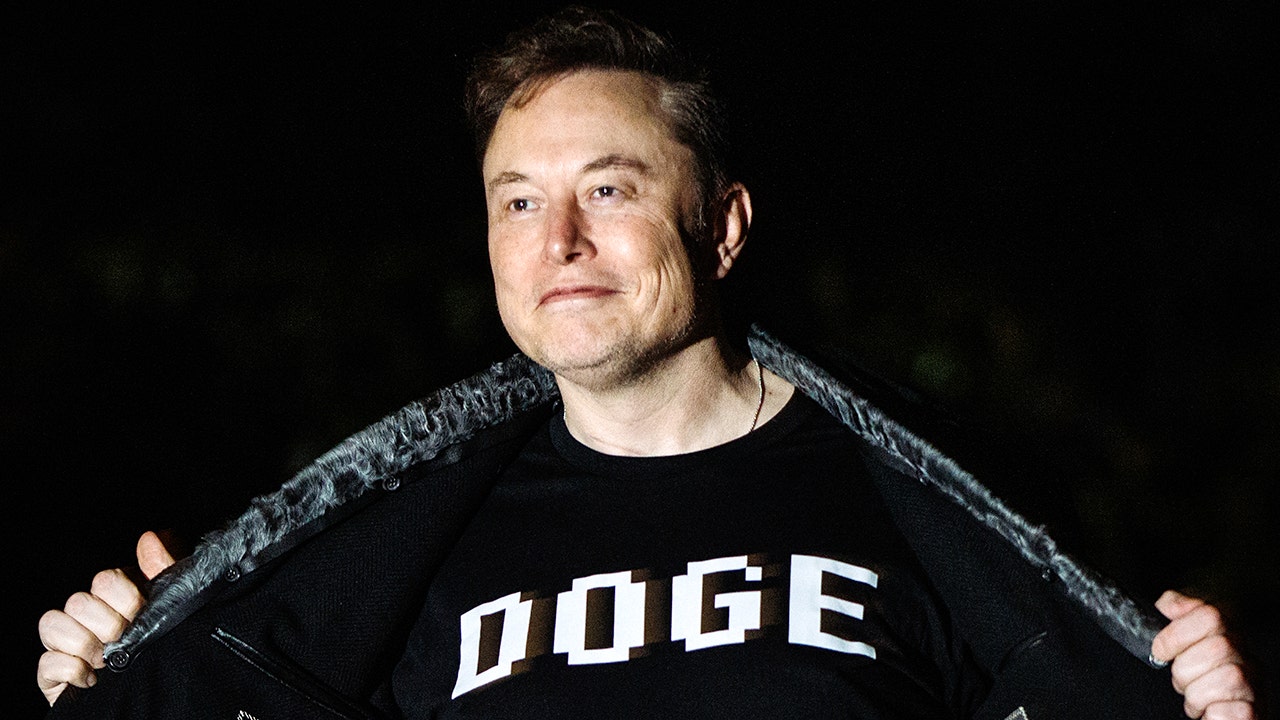
DOGE says it terminated 55 federal contracts worth $1.6 billion in 3 days | Fox News Added: Jan 4, 2026
DOGE says agencies cut $1.6B in federal contracts, flags spending on Somalia, HHS web services
Site: Fox News
Federal agencies axed contracts including $47M Somalia military support and $19.5M health website as DOGE pushes government efficiency under President Trump.
-
Scientists Say a Space Explosion Wiped Out the Mammoths, and Humans Too
Added: Jan 4, 2026
Scientists Say a Space Explosion Wiped Out the Mammoths, and Humans Too
Site: The Daily Galaxy - Great Discoveries Channel
Something catastrophic happened nearly 13,000 years ago, an explosion so powerful its traces are still buried beneath our feet.

-
quote of the day january 4: Quote of the day by Vincent Van Gogh: 'The heart of man is very much like the sea, it has its storms, it has its tides and in its depths it has its pearls too' - The Economic Times
Quote of the day by Vincent Van Gogh explains todays quote about the human heart and the sea, showing emotions, struggle, change, and inner value. It also explains what quote of the day today means, while linking Vincent Van Goghs life, faith, art career, achievements, struggles, and lasting influence on modern art and culture.
Quote of the day by Vincent Van Gogh brings attention to a saying that reflects human emotions, struggle, and inner value. The quote compares the human heart to the sea, showing storms, tides, and hidden pearls. Quote of the day today is shared to help readers reflect on daily life and personal experience. Vincent Van Gogh’s words carry meaning because they come from his own life of hardship, faith, and creative work. His journey from religious service to art shaped his thoughts and expressions. Through quote of the day by Vincent Van Gogh, readers can connect his life story with the message of understanding human nature and perseverance.Quote of the day today Quote of the day by Vincent Van Gogh is shared today with the words: “The heart of man is very much like the sea, it has its storms, it has its tides and in its depths it has its pearls too.” The quote of the day today reflects human emotions, change, struggle, and inner value. This quote links personal life, mental health, and creative work, which were central to Vincent Van Gogh’s life. 126308668Quote of the day today by Vincent Van Gogh and its meaningQuote of the day by Vincent Van Gogh explains how human feelings rise and fall like the sea. Storms show pain and conflict. Tides show change and time. Pearls show value found after hardship. The quote of the day today encourages reflection. It suggests that hardship can exist with inner worth. Many people read quote of the day content to find guidance, focus, and calm in daily life.What does quote of the day means?Quote of the day by Vincent Van Gogh means a selected saying shared daily to inspire thought. Quote of the day today often comes from artists, leaders, and writers. It offers a short message for reflection. Quote of the day content is used in schools, media, and digital platforms. It helps readers connect ideas to daily events and personal experience. 126253050Vincent Van Gogh early life Quote of the day by Vincent Van Gogh gains meaning through his early life. Vincent Willem van Gogh was born on March 30, 1853, in Zundert, Netherlands. He was the eldest of six children. His father was a Protestant pastor. Van Gogh was quiet and spent time observing nature. At 16, he joined Goupil and Co., an art dealer, through family connections.Vincent Van Gogh work, faith and personal struggleQuote of the day by Vincent Van Gogh reflects his years of struggle. He worked in London and Paris as an art dealer. He disliked the business. Personal rejection affected him deeply. He worked as a teacher and lay preacher. He studied theology but left formal training. He served as a missionary in the Borinage region of Belgium. He lived among poor miners and gave away his belongings. Church authorities dismissed him. This period led to despair and isolation. 126239621Vincent Van Gogh turning point toward artQuote of the day by Vincent Van Gogh connects with his decision to become an artist. In 1880, he began drawing seriously. He believed art could serve humanity. He wanted to give comfort through art. He signed his work as “Vincent” to stand with ordinary people. This choice restored his sense of purpose.Vincent Van Gogh artistic career and achievementsQuote of the day by Vincent Van Gogh reflects his intense creative output. He began his art career at age 27. In ten years, he created about 900 paintings and 1,100 drawings. His style included strong brushwork, clear forms, and color use. His major works include The Starry Night, The Potato Eaters, Portrait of Dr. Gachet, and Starry Night over the Rhône. He sold little art during his life. 126210529Vincent Van Gogh influence on art movementsQuote of the day by Vincent Van Gogh aligns with his influence on modern art. His work influenced the Expressionist movement. Artists connected with his emotional approach. His letters to his brother Theo explained his thoughts, poverty, and mental health struggles. These letters shaped public understanding of his life.Vincent Van Gogh death and legacyQuote of the day by Vincent Van Gogh remains relevant after his death. He died on July 29, 1890, in Auvers-sur-Oise, near Paris, at age 37. His work became widely known after his death. Museums, books, and studies continue to explore his life. Quote of the day by Vincent Van Gogh remains a tool to understand his ideas and human experience. 126267404Quote of the day by Vincent Van Gogh and its relevance todayQuote of the day by Vincent Van Gogh remains relevant today because it explains human emotions in a simple way. The quote compares the heart to the sea, showing struggle, change, and hidden value. Quote of the day today helps readers pause and reflect on daily experiences. Vincent Van Gogh’s life of hardship, faith, and art gives depth to these words. The quote connects personal struggle with hope and understanding.Quote of the day by Vincent Van Gogh linked to his life and workQuote of the day by Vincent Van Gogh reflects his own life journey. He faced rejection, poverty, and mental health struggles. He continued to create art with purpose. His paintings and letters show the same ideas found in the quote of the day today. The words explain how struggle and value exist together. 126340020How People Use Quote of the Day?People read a quote of the day to start or end their day with a clear thought. Some use it for learning. Some share it on social platforms. Others use it for reflection, writing, or discussion in classrooms and groups.Quote of the day by Vincent Van Gogh and daily reflectionQuote of the day by Vincent Van Gogh is often used for daily reflection. The quote helps readers think about emotions, patience, and personal growth. Quote of the day today encourages people to accept change and difficulty. Vincent Van Gogh’s words support calm thought and self-understanding in daily life.Timeless quotes by Dutch painterQuote of the day by Vincent Van Gogh joins other famous lines.“Conscience is a man's compass.”“Great things are done by a series of small things brought together.”“Normality is a paved road: It’s comfortable to walk, but no flowers grow on it.”“I am always doing what I cannot do yet, in order to learn how to do it.”“Success is sometimes the outcome of a whole string of failures.”“I dream my painting and I paint my dream.”“Be clearly aware of the stars and infinity on high. Then life seems almost enchanted after all.”“There is nothing more truly artistic than to love people.”“A great fire burns within me, but no one stops to warm themselves at it, and passers-by only see a wisp of smoke”“I don't know anything with certainty, but seeing the stars makes me dream.”“I put my heart and soul into my work, and I have lost my mind in the process.”“I often think that the night is more alive and more richly colored than the day.”“What would life be if we had no courage to attempt anything?”“Art is to console those who are broken by life.”“I try more and more to be myself, caring relatively little whether people approve or disapprove.”
-
 5 open-source Android apps that put Google's defaults to shame
Added: Jan 4, 2026
5 open-source Android apps that put Google's defaults to shame
Added: Jan 4, 20265 open-source Android apps that put Google's defaults to shame
Site: MUO
These alternatives to Google's default on Android are feature-rich and privacy-focused

-
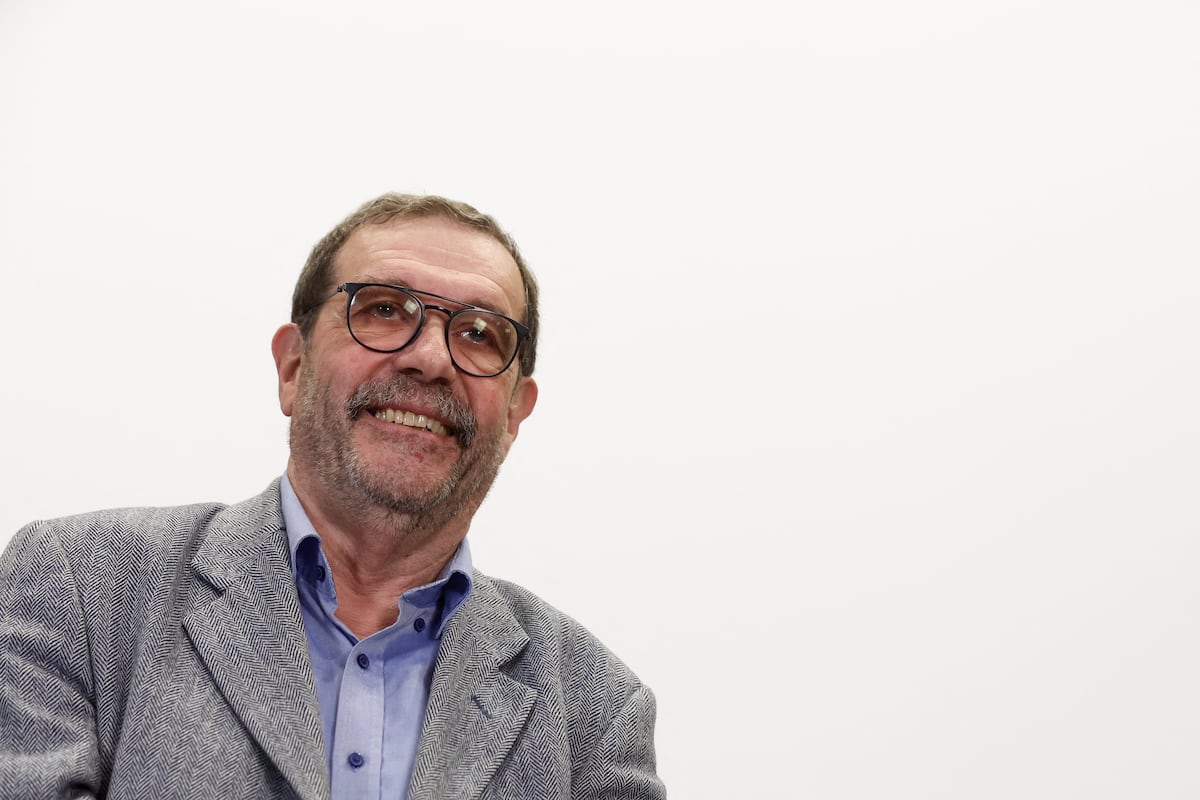
Alain Aspect, Nobel laureate in physics: ‘Einstein was so smart that he would have had to recognize quantum entanglement’ | Science | EL PAÍS English Added: Jan 4, 2026
Alain Aspect, Nobel laureate in physics: ‘Einstein was so smart that he would have had to recognize quantum entanglement’
Site: EL PAÍS English
The pioneer of quantum computing talks about how Albert Einstein would have reacted to his experiments, the hype around the technology, and the parallels between physics and his new hobby: magic
Alain Aspect, 78, learned “the real” quantum physics in Cameroon. Not at the École Normale Supérieure in Paris, but during his civil service in Africa, reading a book by Claude Cohen-Tannoudji while teaching physics. That work — which “revolutionized the teaching of quantum physics,” he explains — changed his life. Decades later, Aspect experimentally demonstrated something that most physicists considered science fiction: quantum entanglement, the phenomenon Albert Einstein called “spooky action” and that few believed in. It is so counterintuitive that even today it is hard to grasp: two particles are connected in a way that classical physics cannot explain, and what happens to one instantaneously affects the other, even when they are separated by miles. Aspect’s experiments in 1982 settled a half-century-long debate between two of the most important physicists in history, Albert Einstein and Niels Bohr, and opened the door to the second quantum revolution — computers, cryptography, and technologies that today generate billions of dollars. On October 4, 2022, the Royal Swedish Academy of Sciences awarded Aspect the Nobel Prize in Physics alongside John Clauser and Anton Zeilinger for “pioneering quantum information science.” Aspect, born in Agen, France, has just published Si Einstein avait su (If Einstein Had Known), a historical journey through the fascinating debate in quantum physics from Max Planck to the 2022 Nobel Prize for Physics, including the disputes between Einstein and Bohr and the “important” work of John Stewart Bell in the 1960s. In this conversation with EL PAÍS via videoconference, which takes place a few days after Aspect returned from Stockholm following the Nobel celebrations, he talks about physics and physicists, the genius of Albert Einstein, the limits of quantum technology — and his new hobby: magic. “It’s like physics,” he explains. “I do something that is really unbelievable, but there is an explanation for it.” Question. The title of your book is provocative: If Einstein Had Known. What would have changed in 20th-century physics if Einstein had lived to see your 1982 experiments? Answer. Nothing would have changed in the world. But it would have been interesting to know Einstein’s reaction; he was so smart that he would have had to acknowledge the results and react. So I try to imagine how he would have reacted. Q. And how would he have reacted? A. I think he would have realized that he had to abandon [one of his positions]: realism or locality [either particles have no defined properties until we observe them, or there are instantaneous connections between them regardless of distance]. And I think he was so committed to realism that he would have kept realism and abandoned locality. Q. You say that Bohr wins from a certain point of view, but Einstein detected “something extraordinary.” Can you explain in what sense they were both right? A. It’s interesting from the historical point of view that there were two debates. Einstein was wrong in 1927, at the Solvay meeting. But in 1935, as you say, Bohr’s point of view can be defended. It all depends on your epistemological position regarding what is physical reality. If you take Bohr’s view that the physical reality of an object cannot be defined without saying how you observe that reality, then you are convinced by Bohr. But if you agree with Einstein’s point of view, that physical reality is intrinsic to the object, you don’t need to define how you observe it. Thirty years later, John Bell showed that if you take Einstein’s viewpoint seriously, you have a contradiction with quantum physics. Q. In 1982 you experimentally demonstrated quantum entanglement, but you say that many physicists weren’t interested in it. Why? A. Physicists had heard that there had been a debate between Einstein and Bohr and thought it had been settled with Bohr being right. Even someone like Richard Feynman, one of the greatest physicists of the second half of the 20th century, ended up acknowledging: “Oops, maybe I underestimated entanglement.” And then they began with the first ideas about quantum computing. Q. You spent eight years working on your experiments. What was it like when you finally got the results? A. We had prepared for this for a long time. Every detail and every little point had to be solved before we did the final experiment. And once everything was in place, it worked, and I got a result, I thought, “Wow, I did it.” Q. Did you realize then that your discovery would be recognized with a Nobel Prize? A. No, no, absolutely not. When I stopped thinking about it and stopped accepting invitations on the subject, I switched to something else. When I started, in 1974, everyone told me that what I was doing was of no interest whatsoever. Then I did my experiment, and they were saying, “Oh, that’s very interesting; you finally settled the Bohr-Einstein debate.” Well, I settled the Bohr-Einstein debate, period. I had no idea that it could be useful for something. The first hint that it could be came around 1990, when Arthur Ekert, a young student, came to me and said, “Did you know that you can do quantum cryptography with entangled photons?” I said, “Wow.” But up until that point, for me, it was finished. I had settled the Bohr-Einstein debate, and that was it. I absolutely never envisioned that it could lead me to the Nobel Prize. Q. You mention Richard Feynman. Did you ever meet him? A. Yes. In 1984, I gave a talk at Caltech, and Feynman was sitting in the front row. There were people in the room expecting Feynman to attack me [laughs]. And no, not at all. He was extremely friendly. Because at that time, he had understood that entanglement was interesting. He made extremely positive comments. He took me to his office, we talked for an hour, and then he sent me a letter. I still have it. Q. Spanish physicist Juan Ignacio Cirac, who wrote the foreword to the Spanish edition of your book, spoke with EL PAÍS a few days ago and argued there is a bubble in quantum computing. Do you agree? A. Yes, there’s too much hype. That doesn’t mean it’s not interesting. But the problem is the press releases from companies and universities. Scientists are usually reasonable. But the communications teams exaggerate. Q. What will a quantum computer be able to do that a classical computer will never be able to do? A. It’s very difficult to say. I’m sure there are some applications that will be used. For example, quantum cryptography. We also have quantum computers that are producing some interesting initial results, but we’re not yet at a stage where we can say, “It’s a totally new world.” Will they change society? I have no idea. But I’m deeply convinced that we’ll have an answer in the coming years. I hope so, because I’m not such a young man, and I’d like to see it. Q. Cirac mentions in the prologue of your book that you are also a magician… A. Oh, well, this is just for fun. But in a sense, it is like physics. I do something that is really unbelievable, but there is an explanation for it. It’s the same in physics. There’s something in nature that’s incredible, but there’s an explanation. And I can push the comparison a little further. In natural physics, the people who have access to the explanation are experts, people who already know the theory and everything. The general public doesn’t really have access to the explanation. It’s the same with magicians. That’s why I like it. It’s fun. Q. What is your opinion on the problem in some countries, such as the United States, that are facing major attacks on science from different pressure groups and politicians? A. It’s terrible. But my point of view when I give talks is that if some people think the Earth is flat, that’s fine, they’re allowed to have that opinion. But they’re not the ones I’m interested in; I can’t convince them. And then there are the people who love science and are happy to come to my talk because it reinforces their pleasure. And in between are all the people who sometimes may hesitate. They are the ones I try to keep on the right side. They’re the ones I make the effort for. Q. After settling one of the biggest debates in physics, and winning a Nobel Prize, are there still unanswered questions that keep you up at night? A. Yes, yes, of course. My biggest question is how big an object can be and still be quantum. There are quantum computers with thousands of qubits now. But can we have millions? Can we have billions and still control for errors? I joke about this. If at some point we discover that we can’t have a quantum computer that size, I’ll be very happy because I’m a physicist and we’ll have learned something. And if there’s no limit, if we can build a quantum computer, I’ll be happy too because I’m a co-founder of a quantum computing startup [Pascal]. So in both options I win. I’m an optimist. Sign up for our weekly newsletter to get more English-language news coverage from EL PAÍS USA Edition
-
Site: X (formerly Twitter)
-
 Patricia Fernández de Lis: Polarization continues at Bluesky - Dailymotion video
Added: Jan 4, 2026
Patricia Fernández de Lis: Polarization continues at Bluesky - Dailymotion video
Added: Jan 4, 2026Dailymotion
-
Site: X (formerly Twitter)
-
Site: X (formerly Twitter)
-
Before toppling Maduro, the US spent decades pressuring Venezuelan leaders over its oil wealth Added: Jan 4, 2026
Before toppling Maduro, the US spent decades pressuring Venezuelan leaders over its oil wealth
Site: The Conversation
Hugo Chavez and Nicolas Maduro long resisted US attempts to influence Venezuelan politics and exert control over its oil reserves.

-
Site: X (formerly Twitter)
-
3 reasons why you shouldn't use Dolby Atmos
Added: Jan 4, 2026
3 reasons why you shouldn't use Dolby Atmos
Site: MUO
Dolby Atmos is an excellent spatial audio format, but it shouldn't be used as the default for most listeners.

-
For 100 Years, These Giant Desert Rocks Moved on Their Own… Now We Finally Know Why
Added: Jan 4, 2026
For 100 Years, These Giant Desert Rocks Moved on Their Own… Now We Finally Know Why
Site: The Daily Galaxy - Great Discoveries Channel
Scientists finally catch mysterious desert rocks moving, and the truth is unreal.

-
Painting ‘Animal Farm’ Red - WSJ Added: Jan 4, 2026
-
7 things that must happen for Linux to overtake Windows in 2026
Added: Jan 4, 2026
7 things that must happen for Linux to overtake Windows in 2026
Site: How-To Geek
Could 2026, finally, really, positively, be the Year of the Linux Desktop?

-
Web development is fun again | Hacker News
Added: Jan 4, 2026
Web development is fun again | Hacker News
-
Web development is fun again Added: Jan 4, 2026
Web development is fun again
AI tools brought me back to levels of productivity I haven't felt in years. Web development is fun again.

-
Trump on return trip to Washington predicts demise of Cuba, warns Colombia, threatens Greenland
Site: POLITICO
The comments came less than 48 hours after the American military conducted a brazen raid inside Caracas to arrest Venezuelan leader Nicolás Maduro.
-
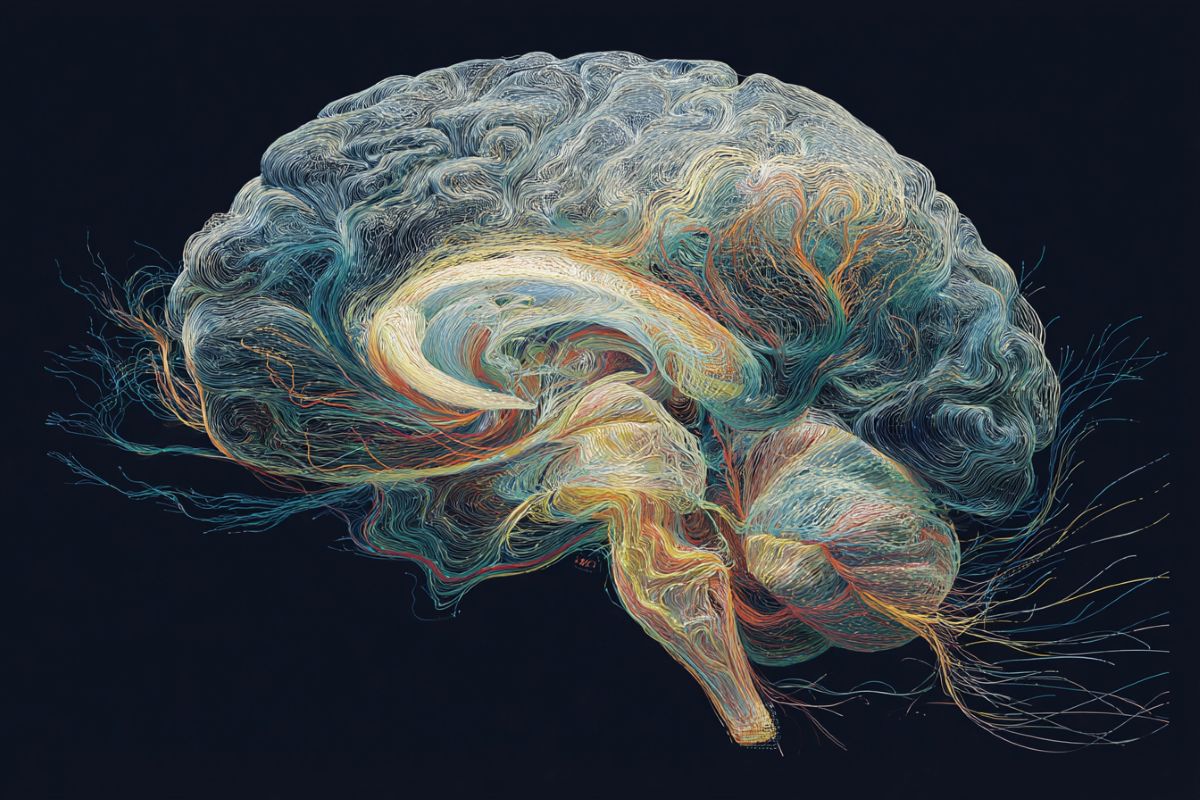
 Brain Blends Fast and Slow Signals to Shape Human Thought - Neuroscience News
Added: Jan 4, 2026
Brain Blends Fast and Slow Signals to Shape Human Thought - Neuroscience News
Added: Jan 4, 2026Brain Blends Fast and Slow Signals to Shape Human Thought - Neuroscience News
Site: Neuroscience News
Researchers mapped the brain connectivity of 960 individuals to uncover how fast and slow neural processes unite to support complex behavior.
-
Gilles Lipovetsky: ‘If you want to live better and fall in love, take Prozac, don’t look to philosophy’ | Culture | EL PAÍS English Added: Jan 5, 2026
Gilles Lipovetsky: ‘If you want to live better and fall in love, take Prozac, don’t look to philosophy’
Site: EL PAÍS English
The French philosopher takes phenomena such as mass consumption, aesthetics, leisure and the kitsch to examine our world and insists that while his field can play a role in understanding it, taking antidepressants might be more effective in dealing with it than reading Socrates
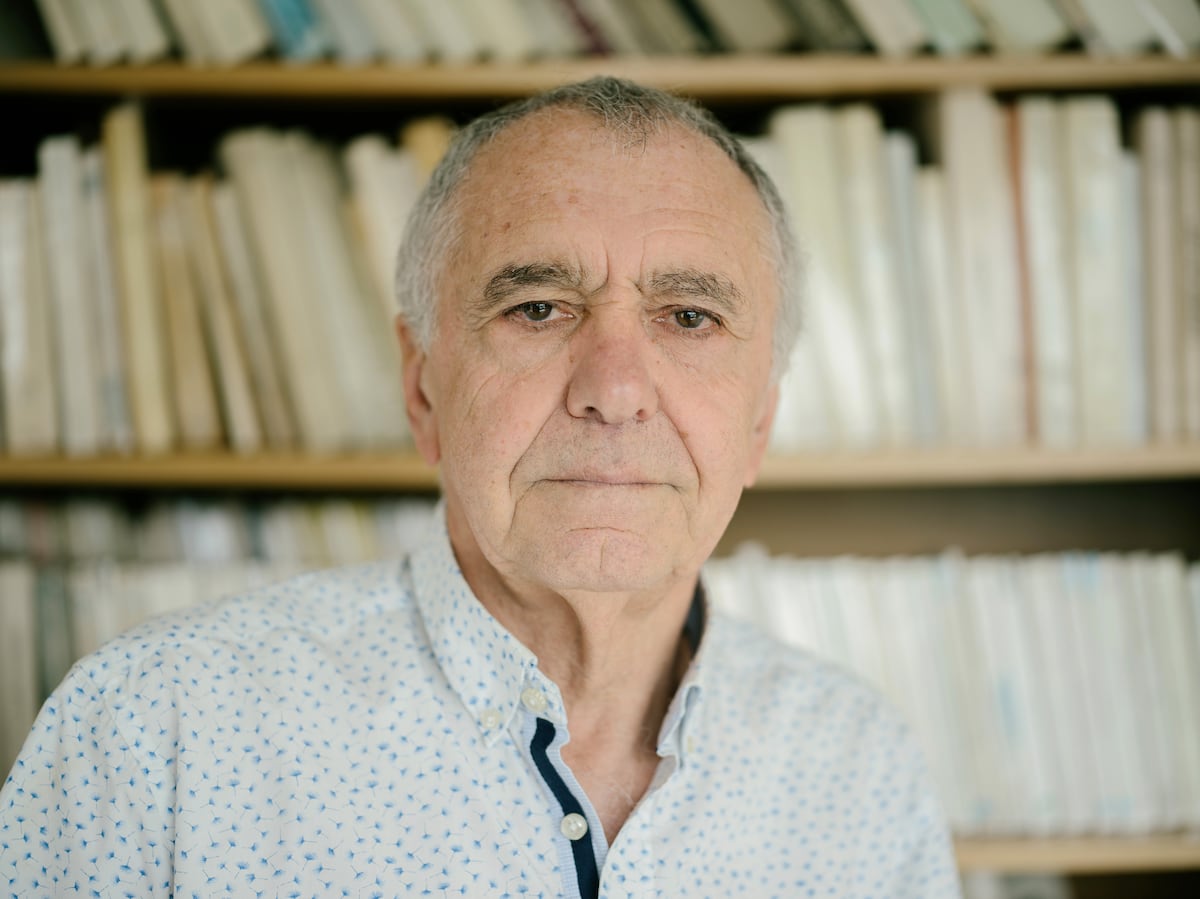
There was a time when the philosopher Gilles Lipovetsky would examine the contents of our homes, rummage through the kitchen drawers, listened to our records, put on our clothes and even examine what we threw away. Everything that had no apparent importance, or at least for the intellectual class of the time, was held up as a mirror. Through fashion, mass consumption, aesthetics and leisure, the philosopher and sociologist drew a precise, entertaining and vibrant portrait of our time. Or, rather, of what he calls hypermodernity, an era marked by aesthetics, consumption and excess. The result? A score of groundbreaking books such as The Age of Emptiness, The Empire of Fashion and Hypermodern Times. This time, however, it is our turn to enter his home. Lipovetsky opens the door of his penthouse in Grenoble, where he lives surrounded by the Alps. “Look, there’s the Belledonne, the Chartreuse, the Oisans, the Vercors and the Trièves,” he explains, as we walk around the large terrace. On the shelves of the living room, he has stacks of DVDs and books and some apparently useless mementos. The thinker has always managed to turn phenomena that intellectuals despised into valuable devices with which to measure the contemporary. Lipovetsky not only describes social transformations, he interprets them, assigns them a name and, in doing so, designs tools to dissect them. And he does so, almost always, in that poetic tone that runs through his books, and that elevates them to literature. His latest publication is Le nouvel âge du kitsch: Essai sur la civilisation du «trop» (The New Era of Kitsch: An Essay on the Civilization of Excess, not yet available in English), written together with the film critic Jean Serroy. It is a portrait of the journey taken by what is vulgar and showy to the center of our lives. Kitsch, from this new perspective, ceases to be a cultural defect and becomes a revealing portal to the way we live, consume and think about beauty. The 80-year-old thinker is in good physical shape. The photographer even goes so far as to convince him to do a topless photo. “Look, I’m not Picasso,” he argues in a successful bid to have that particular shot omitted from the final selection. Today he writes, travels and lectures all over the world. Question. What role does a philosopher play in today’s society? I get the impression that they are increasingly seen as business consultants or coaches. Answer. The role they once had has gone. Philosophical thought does not possess the collective and social power that it had in previous centuries. Today artificial intelligence has much more impact than philosophy. But philosophy is still necessary, precisely because it is a different way of thinking from that of experts or consultants. In a world where everyone knows everything, where we are inundated with information, there is a muddle and that’s where philosophy can intervene. What I try to do in a transversal way is a global x-ray to put a degree of order into things. Q. Do we still need those mind maps in such a fragmented world, where so many things happen at once? A. Homo sapiens are not satisfied with eating, living and waging war. The spirit has an important role, and we cannot live without a certain number of pillars that talk to us about what we do, what we’re like and the world we live in. Before, these were religious systems; what were considered in the past to be the great ideologies. But today, things are much more chaotic. Philosophy allows us to understand the world we live in. But I don’t think that it’s therapeutic, that it’s better to read Socrates than take Prozac. If you want to live better, fall in love, take Prozac or do whatever you want, but don’t turn to philosophy. Q. Do you use AI apps? A. I’m an admirer of artificial intelligence. The results provided by ChatGPT are incredible. Q. Do you talk to it? A. Yes, of course. We have exchanges. And it’s very accurate. I am surprised by its reflections, also about me. Q. Do you think it might think better than you? A. No, it still makes mistakes. And I don’t believe in that idea of the obsolescence of man. People who use AI are also creative; this technology can be very inspiring. We are the ones who ask, and that is fundamental. It is an assistant, I don’t think it will deprive man of the pre-eminence of his thought. Take war. AI plays a very important role in some operations. But who has unleashed it in Ukraine? It is a deliberate decision by a dictator to invade a neighboring country. Decisions do not come from automatisms; they come from paranoia or human megalomania. We are a long way from that idea in which algorithms take power and eliminate man. I don’t see AI rivaling Plato’s Dialogues, or the Critique of Impure Reason — with what Kant termed genius. Q. Yes, but with AI there will be just one genius in every 10,000. The others will have been eliminated. A. That is debatable, it will depend on jobs: education, health. It is not desirable. AI can make novels, movies. Basic creativity. But great artistic or philosophical creativity is not on the agenda. The genius is in those who invent. Q. You have been analyzing society for 40 years through the lens of consumption and taste. Won’t it be more difficult to draw interesting, original conclusions with the homogenization caused by the algorithm? A. That’s true, but it’s not something new; it goes hand in hand with the consumer society. Thinkers such as Guy Debord already told us in the seventies that advertising created artificial needs, that it alienated. The algorithm is useful in recommending things, it gets it more or less right, that is true. Studies also show that the consumer does not obey in a servile way, that there is still agency. Q. But the surprise, the ability to discover other worlds, is lost. If you listen to jazz, you won’t be recommended a punk album. A. That is why training is essential, educating in that space, in the digital. It is the key to not letting the machine do what it wants. You know, you have to compare, use the information and mix it with your own. That is why we have to educate in that direction, to verify and explore other fields. But AI is a huge evolution that pushes back the limits of Homo sapiens and introduces us to extraordinary adventures. It’s the biggest transformation I’ve ever seen. There is nothing that has had this impact before, not even a great book. Also, do you want surprises? Q. Yes, of course. A. I don’t think things happen because consumption is handed over to the algorithm. What does consumption mean in human existence? Nothing. What difference does it make if you drink Coca-Cola or Pepsi? Or if you listen to Céline Dion or Jennifer Lopez? Q. It alters part of our identity, no? A. No, because identity is not consumption, it is only one aspect of our life. At least until AI tells me that I must divorce or change my religion. The predictive power of AI will increasingly guide consumption, but that doesn’t matter. If you watch a western tonight or a comedy, does that change your existence? Q. It depends on the western. A. Existence can be found in work, in creation, in our personal emotional lives, in political decisions. Will AI tell a woman if she should have an abortion? That’s the fundamental thing, not whether I go on holiday to Huelva or Barcelona. [René] Descartes says in Discourse on Method that the most basic degree of freedom is to choose between indifferent things. Your well-being does not depend on it. The important thing is to do things that you love in your work, to invent, to create, to live fully with your children — if you have them — to live according to your own political vision, to live in a society where people don’t hate each other too much. And algorithms won’t change that. Q. Consumption, however, dominates sexual relationships, affective relationships, work... Think about dating apps, job search apps. A. Sure, but before we were confined to our town looking for a partner and when we found one, we got married and had to put up with them for the rest of our lives. And besides, after the algorithm, comes the truth — the disappointments, the doubts, the human choices begin. Technology should not be demonized. But now the big trend is sobriety. Q. What do you mean? A. Not taking planes, consuming organic products, not buying clothes... Greta Thunberg. Great, why not? But even imagining the planet converted into that ethos of rigor and sobriety, we would not solve the problem of nine billion people who will have to be educated, transported, cured. I do not believe that humanity’s wellbeing is in the hands of a supposedly responsible, austere, sober consumer. These are crusades, rhetoric. Look, after the Covid-19 crisis, we all had staycations and rode bikes. But there have never been so many people flying as there are now. Q. How do you define our time? A. As two great poles. On the one hand, the dynamics of the techno-capitalist superpower: the conquest of space, AI, robotics, genetic modification. Sciences that pulverize the limits. And on the other, a generalized insecurity across the board. People are gripped by fear – fear of climate change, of the erosion of biodiversity, of war on European territory, of AI in the professional sphere, fear of intimate life, fear of food. There is total vulnerability, precisely at a time when there has never been so much power. Q. In your latest book, you use kitsch as a symbol of this era of excess. A. The word first appeared in 1860, used to refer to something small. An industrial reproduction of prestigious products. Furniture, small domestic objects. Something secondary criticized by artists, because it was a poor quality, a cheap copy. It was an overloaded reality to put on show. And it remained that way for a century. But now we have a neo-kitsch, a hyper-kitsch. Q. An evolution? A. The consumer society made the cheap conquer all spheres. It is no longer the copy that is at the center. Hyper-kitsch means the throw away culture. It involves a worthless product that today has invaded every aspect of our daily lives. It is no longer an aesthetic form, but a structural one, which organizes the contemporary world. There are shopping malls, Disneylands, cities copied from others, such as Dubai, the epitome of a kitsch city. The size, the excess, the monumental matter. Q. And politics? Is Trump one of those kitsch snowballs placed on the shelf of global democracy? A. He is the quintessence of kitsch, in every aspect. Trump Tower, gold, ostentatious luxury. Even his MAGA discourse is kitsch, because according to his definition, it is a beautifying mirror of the world, something that aestheticizes, that deceives. [Milan] Kundera said that kitsch was the denial of shit. All detestable aspects are excluded, a cheesy, ideal world. And that’s what Trump’s take on the United States is. But we see this in totalitarian regimes, in the regimes of autocrats. Or when Putin appears petting dogs, next to children, while massacring Ukraine’s civilian population. Kundera also said that the great ideologies are kitsch, because they place a veil over defects. Q. Does kitsch hide the truth? A. Yes, it deceives. But it does so through the religion of the supposedly beautiful, to show a false reality. Q. You wrote a lot about authenticity in your previous book. What is the difference between authenticity and truth? A. If a person is authentic, they are true to themselves. You are true because you act according to what you love, and not because religion, your parents, or anyone tells you to. Truth has a broader dimension; it is conforming to external facts. It has nothing to do with personal existence. It is an agreement of judgment regarding the facts. Q. What place does truth have in a society where lies have become mainstream? A. Keep to the scientific adventure. Although science is at the service of economic forces, it still serves to better understand the world. The media also has a very important role, and is threatened by social networks, now the main vehicle of information. I am in favor of banning social networks until the age of 15. And in schools, which should not fall prey to the fetishism of the digital and should nurture critical thinking. Q. There is a very strong current that maintains that the truth is dead, that everyone has their own truth. Trump himself has a social network that claims be in possession of the truth — Truth Social. A. I believe that truth is not dead. That is an old philosophical proposition. [Friedrich] Nietzsche said in the mid-19th century that there were no facts, only interpretations. But the facts do exist. We can discuss the number of demonstrators, but not the demonstration. And the media has a very important role to play in establishing the facts. That’s not to say they should not be interpreted, especially in a post-religious world like ours. The important thing, however, is that this interpretation does not lead to extreme polarization and that we stop talking to each other. Sign up for our weekly newsletter to get more English-language news coverage from EL PAÍS USA Edition
-
Site: X (formerly Twitter)
-
Trump’s embrace of pot has Republicans in Congress fuming
Site: POLITICO
In moving to reduce marijuana regulation, the president has defied the party’s old guard.

-
Site: X (formerly Twitter)
-
TIM WALZ DROPS OUT - YouTube Added: Jan 5, 2026
Democrat Tim Walz DROPS OUT OF RACE Amid Somali Daycare Fraud Scandal | Tim Pool
Site: YouTube
Become A Memberhttp://youtube.com/timcastnews/joinThe Green Room - https://rumble.com/playlists/aa56qw_g-j0BUY CAST BREW COFFEE TO FIGHT BACK - https://castb...

-
The Mission to Capture and Arrest Maduro, Somali Fraud Fallout, Mayor Mamdani Begins: AM Update 1/5
Site: YouTube
In a dramatic overnight operation, U.S. forces capture and arrest Venezuelan leader Nicolás Maduro inside a heavily fortified Caracas compound, flying him to...

-
Maduro In COURT, Democrats SLAMMED For Hypocrisy Over Intervention In Venezuela | Tim Pool
Site: YouTube
First they support it, then they oppose it. The reality is whatever Trump is for they are against and have no real world viewBecome A Memberhttp://youtube.co...

-
Don’t Settle for Maduro 2.0 - WSJ Added: Jan 5, 2026
-
Nicolas Maduro pleads 'innocent' in NYC as judge sets next court date | Live Updates from Fox News Digital Added: Jan 5, 2026
-
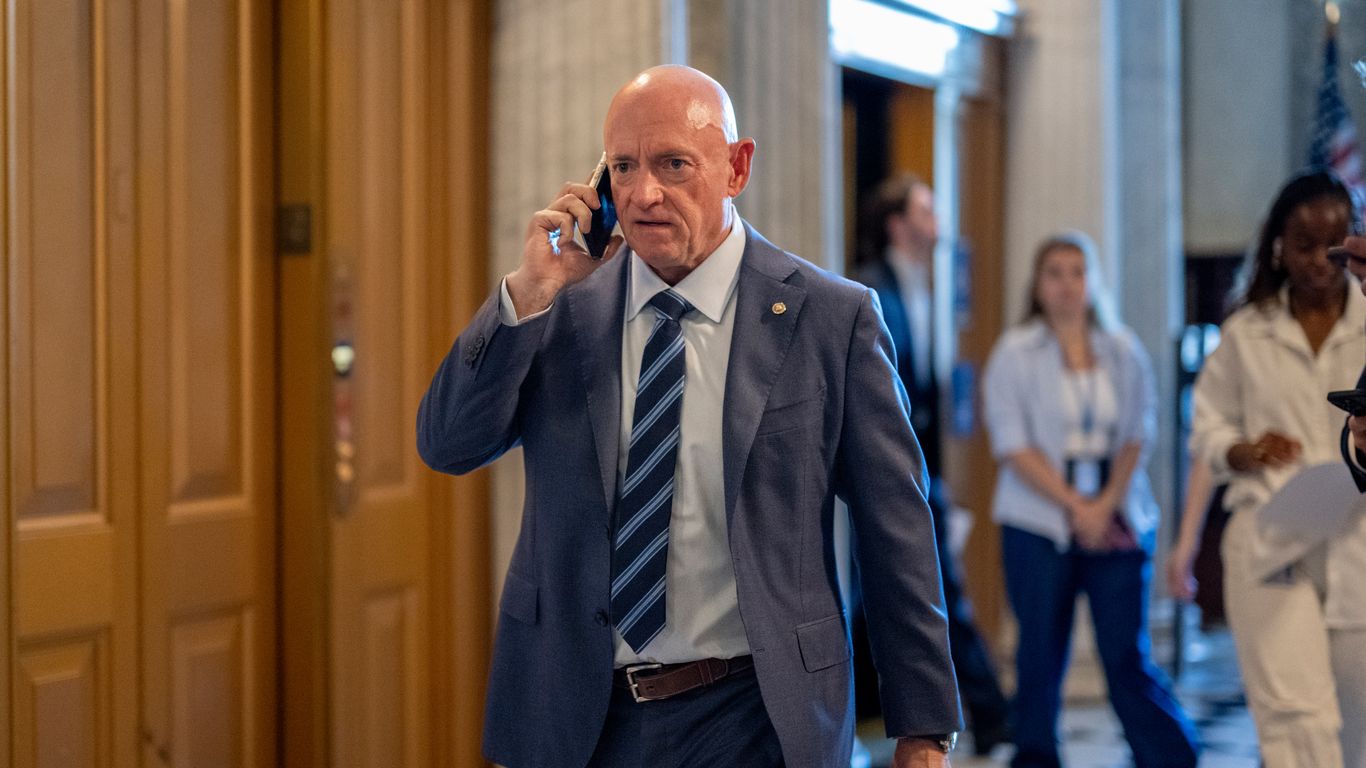
Hegseth goes after Mark Kelly's rank over "seditious" video
Site: Axios
The potential demotion is a serious escalation, typically reserved for significant misconduct, and could drastically affect Kelly's pension.
-
9 signs Google’s Gemini just ended ChatGPT’s dominance | Tom's Guide Added: Jan 5, 2026
9 signs Google’s Gemini just ended ChatGPT’s dominance
Site: Tom's Guide
Forget ChatGPT, here's why Gemini is already winning the AI war

-
Trump declares US will run Venezuela operations after Maduro capture | Fox News Added: Jan 5, 2026
Trump declares US will run Venezuela operations after Maduro capture | Fox News

-
Is the Whole "Narco-Terrorist" Argument Against Maduro Actually Pretext For Regime Change?
Site: YouTube
Is the whole “narco-terrorist” argument against Maduro actually pretext for regime change?LIKE & SUBSCRIBE for new videos everyday: https://bit.ly/3Aw93ywWat...

-
Megyn Kelly Explains Why She's a Skeptical "Yellow Light" on Trump's Capture and Arrest of Maduro
Site: YouTube
Megyn Kelly explains why she’s a skeptical “yellow light” on Trump’s capture and arrest of Maduro.LIKE & SUBSCRIBE for new videos everyday: https://bit.ly/3A...

-
Plants can’t absorb as much CO2 as climate models predicted | ScienceDaily Added: Jan 5, 2026
Plants can’t absorb as much CO2 as climate models predicted
Site: ScienceDaily
CO2 can stimulate plant growth, but only when enough nitrogen is available—and that key ingredient has been seriously miscalculated. A new study finds that natural nitrogen fixation has been overestimated by about 50 percent in major climate models. This means the climate-cooling benefits of plant growth under high CO2 are smaller than expected. The result: a reduced buffer against climate change and more uncertainty in future projections.

-
Site: X (formerly Twitter)
-
Site: X (formerly Twitter)
-
Site: X (formerly Twitter)
-
Site: X (formerly Twitter)


