Bookmarks 2025-12-10T03:55:34.488Z
by Owen Kibel
39 min read
Bookmarks for 2025-12-10T03:55:34.488Z
-
Musk talks Trump, DOGE, AI, space with Miller: Key takeaways from interview Added: Dec 9, 2025
Musk says DOGE was only "somewhat successful," wouldn't do it again
Site: Axios
Musk spearheaded mass cuts in federal spending and government jobs at DOGE before leaving the Trump administration in May.

-
Katie Miller podcast: Speaker Mike Johnson warns on antisemitism
Site: Axios
A furious debate over Israel, antisemitism and hate speech has engulfed MAGA this fall.

-
Elon Musk wouldn't do DOGE again, doubts effort to chainsaw government was successful | New York Post Added: Dec 9, 2025
Elon Musk reveals he wouldn’t do DOGE again — doubts that effort to chainsaw government was successful
Site: New York Post
“We’re a little bit successful. We’re somewhat successful,” the Tesla founder said when asked if DOGE achieved what he’d hoped.

-
The Two Sides of Nick Fuentes - by Coleman Hughes Added: Dec 9, 2025
The Two Sides of Nick Fuentes
Nick Fuentes has two personas—Podcast Nick Fuentes and Rumble Nick Fuentes—that promote opposing world views. That’s by design.

-
The End of Race Politics: Arguments for a Colorblind America: Hughes, Coleman: 9780593332450: Amazon.com: Books Added: Dec 9, 2025
The End of Race Politics: Arguments for a Colorblind America: Hughes, Coleman: 9780593332450: Amazon.com: Books
The End of Race Politics: Arguments for a Colorblind America [Hughes, Coleman] on Amazon.com. *FREE* shipping on qualifying offers. The End of Race Politics: Arguments for a Colorblind America

-
Mystery deepens as to why it took FBI nearly 5 years to finally bust the suspected J6 pipe bomber
Site: New York Post
The arrest of the alleged J6 pipe bomber just lumps mystery on top of mystery.

-
There’s a special place in hell for women like Olivia Nuzzi — whose career as a journalist is over
Site: New York Post
There’s a reason that women like Olivia Nuzzi used to be shunned by polite society in more orderly times.

-
This Discovery Might Change What We Know About Life! - YouTube Added: Dec 9, 2025
This Discovery Might Change What We Know About Life!
Site: YouTube
Learn faster and retain more with Recall. Use my code "Sabine25" and go to https://www.getrecall.ai/?t=sabine for 25% off a Recall subscription that is valid...

-
 You're missing out on magic if you haven't tried out Google's latest experiment
Added: Dec 9, 2025
You're missing out on magic if you haven't tried out Google's latest experiment
Added: Dec 9, 2025You're missing out on magic if you haven't tried out Google's latest experiment
Site: MUO
Now that Google Opal exists, you have no excuse for not building custom AI mini-apps of your own.

-
Mysterious interstellar object spreading life-creating particles throughout the solar system as it nears Earth Added: Dec 9, 2025
Interstellar object spreads life-creating particles as it nears Earth
Site: Mail Online
The mysterious interstellar object 3I/ATLAS may be seeding the worlds of this solar system with the early stages of life, new scans reveal.

-
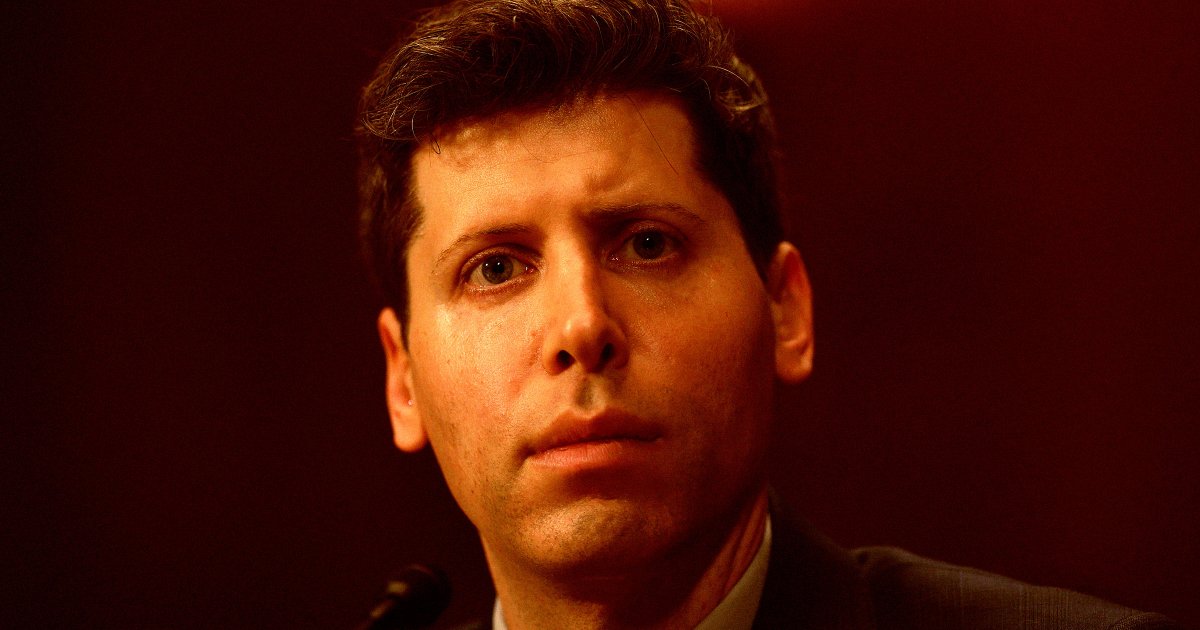
 Details Emerge on Sam Altman's Panic Sweats
Added: Dec 9, 2025
Details Emerge on Sam Altman's Panic Sweats
Added: Dec 9, 2025Details Emerge on Sam Altman's Panic Sweats
Site: Futurism
OpenAI CEO Sam Altman is reportedly setting aside AGI in an effort to stop the company from succumbing to its steep competition.
-
Most normal matter in the universe isn't found in planets, stars or galaxies: An astronomer explains Added: Dec 9, 2025
Most normal matter in the universe isn't found in planets, stars or galaxies: An astronomer explains
If you look across space with a telescope, you'll see countless galaxies, most of which host large central black holes, billions of stars and their attendant planets. The universe teems with huge, spectacular objects, and it might seem like these massive objects should hold most of the universe's matter.

-
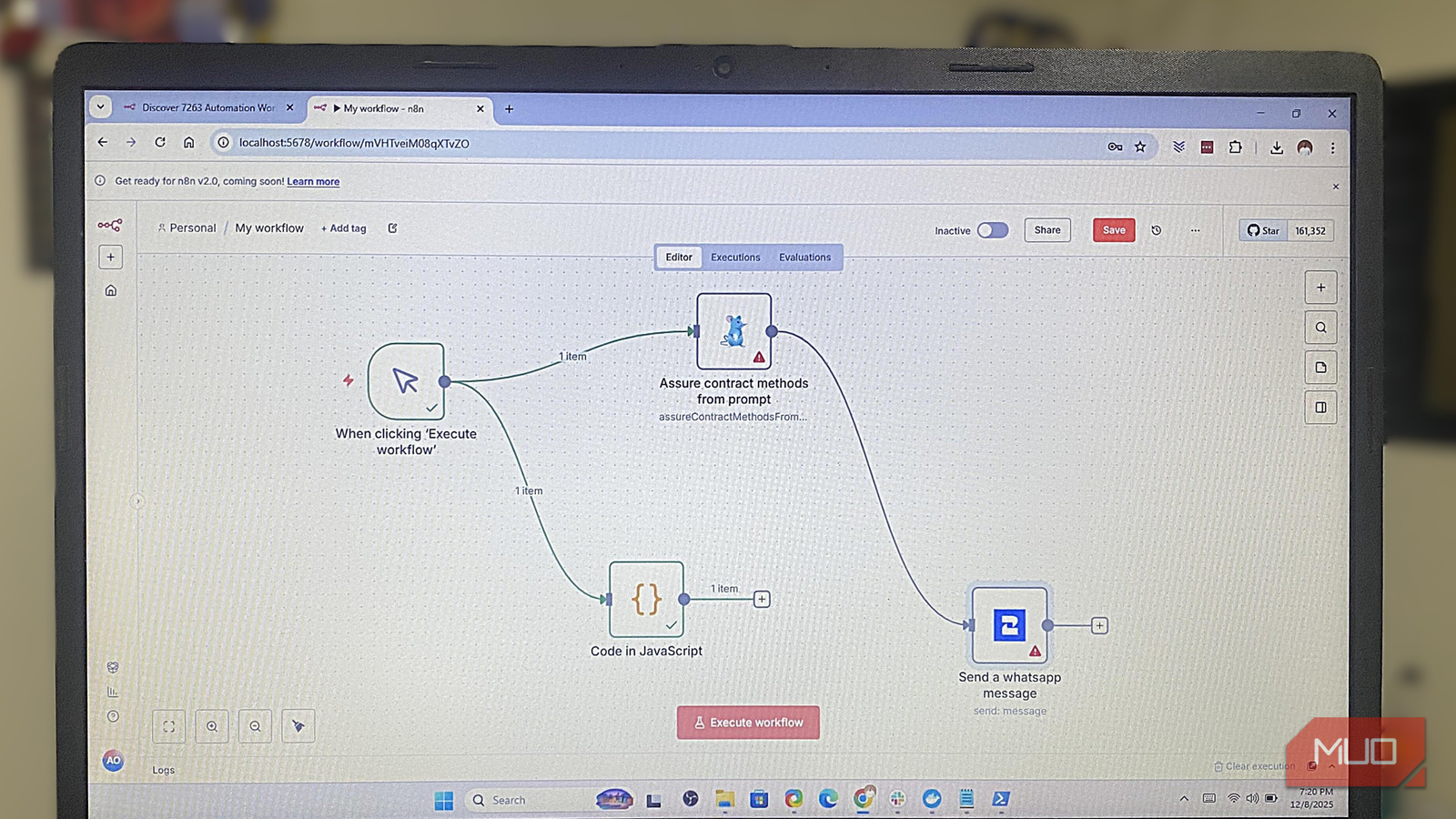
I thought automation needed big paid tools — until I tried this open-source one
Added: Dec 9, 2025
I thought automation needed big paid tools — until I tried this open-source one
Site: MUO
This tool completely changes how you view automation.
-
 After Tucker Carlson, Piers Morgan interviews antisemite and Holocaust denier Nick Fuentes | The Times of Israel
Added: Dec 9, 2025
After Tucker Carlson, Piers Morgan interviews antisemite and Holocaust denier Nick Fuentes | The Times of Israel
Added: Dec 9, 2025After Tucker Carlson, Piers Morgan interviews antisemite and Holocaust denier Nick Fuentes | The Times of Israel

-
Jimmy Kimmel's Reprieve | National Review Added: Dec 9, 2025
Jimmy Kimmel's Reprieve | National Review

-
Blood and Progress: A Century of Left-Wing Violence in America: Rothman, Noah: 9781546011415: Amazon.com: Books Added: Dec 9, 2025
Blood and Progress: A Century of Left-Wing Violence in America: Rothman, Noah: 9781546011415: Amazon.com: Books
Blood and Progress: A Century of Left-Wing Violence in America [Rothman, Noah] on Amazon.com. *FREE* shipping on qualifying offers. Blood and Progress: A Century of Left-Wing Violence in America
-
NotebookLM's New Infographics Feature Is Great for Visual Learners | Lifehacker Added: Dec 9, 2025
NotebookLM Has a New Feature for Visual Learners
Site: Lifehacker
The latest update to Google's NotebookLM is for visual learners: You can turn your source materials into helpful infographics.
Another day, another update to Google's NotebookLM, the versatile AI tool that functions like a personal assistant focused only on you and your needs. The latest update is for visual learners: You can turn your source materials into helpful infographics that give you a clear picture—literally—of what the PDFs, websites, videos, or other materials you're studying or organizing are about. How to use the new NotebookLM infographics featureTo use the new feature, open any of your NotebookLM Notebooks (the name given to folders full of specific materials you've uploaded) and navigate to the panel on the right side. It's the same panel where you find the other offerings like the video creator and flashcard maker.As with those tools, you just tap the associated button to generate the corresponding product, making sure the sources from your left panel that you want to include are all checked off. I tried it out this morning, first using the NotebookLM account associated with my personal Chrome profile and what I'm studying in my private life, then using the one I have set up for work, which has a tester notebook full of materials about how to study for the SAT. (I am strict about using different Chrome profiles for various parts of my life and am now up to seven.) In my personal account, the button was labeled BETA—and it acted like it. After two failed attempts, NotebookLM could not produce an infographic based on my materials. In my work account, though, the beta label was missing and it performed the function just fine, spitting this out:
Credit: Google
This is rolling out in full functionality to accounts at different times, obviously, but I was glad to see one of mine had easy access because I thought the infographic was solid.Who the infographics feature is helpful forI don't consider myself a visual learner and primarily use NotebookLM to refine ideas or generate educational audio clips I can listen to while I clean the house, so I wasn't expecting to like this. I don't like the mind map creator within NotebookLM at all, for instance; flowcharts just aren't how I learn best, and that's fine. But the infographic was concise, engaging, and just detailed enough to keep me interested and looking at it. It's unlikely I'll use this to study or refine my work often, but I can absolutely see how it would be useful to someone who learns more visually, especially if all the lines and boxes of a mind map can get too convoluted to be useful.

-
The ‘no prompt’ rule makes ChatGPT give expert-level writing advice — here’s how it works | Tom's Guide Added: Dec 9, 2025
The ‘no prompt’ rule makes ChatGPT give expert-level writing advice — here’s how it works
Site: Tom's Guide
I get the answers I need without typing a single prompt

-
Trump National Security Strategy: A Retreat from U.S. Power and Global Leadership | National Review

-
 Will WebAssembly Kill JavaScript? Let’s Find Out (+ Live Demo) 🚀 - DEV Community
Added: Dec 9, 2025
Will WebAssembly Kill JavaScript? Let’s Find Out (+ Live Demo) 🚀 - DEV Community
Added: Dec 9, 2025Will WebAssembly Kill JavaScript? Let’s Find Out (+ Live Demo) 🚀
Site: DEV Community
For at least 8 years now, I’ve been hearing about the imminent death of frontend - or at least...

-
Candace Owens Claims Tim Pool’s Brother Tried To Shoot Him, Tim Responds
Site: YouTube
PRE ORDER SILENT NIGHT: https://trashhousechristmas.com/SUPPORT THE SHOW BUY CAST BREW COFFEE NOW - https://castbrew.com/Join - https://www.youtube.com/chann...

-
Candace Owens Says MILITARY INVOLVED In Kirk Killing, Says Tim Pool's Brother Tried To SHOOT HIM
Site: YouTube
Get 25% off your entire order, just head to http://CowboyColostrum.com and use code TIM at checkout.You’re 30 seconds away from being debt free with PDS Debt...

-
CANDACE OWENS IS EVIL
Site: YouTube
Shes a charlatan and a vile demon dancing on the grave of Charlie KirkBecome A Memberhttp://youtube.com/timcastnews/joinThe Green Room - https://rumble.com/p...

-
X receiving ‘record-breaking’ downloads in Europe after calling out European Union
Site: YouTube
Strelmark President and founder Hilary Fordwich reacts to the “record-breaking downloads” in X users after the European Union fined Elon Musk $140 million. “...

-
America's Top Hate Crime Prosecutor Talks Battling Antifa, Anti-Semitism, and the Deep State
Site: YouTube
Harmeet Dhillon, the Justice Department’s top civil rights lawyer, joins Miranda Devine for a candid conversation about rooting out liberal entrenchment in ...

-
Trump Hits Back at MTG, Wind Farm Freeze Blocked, Court Backs Trans Military Ban: AM Update 12/10
Site: YouTube
President Trump and Congresswoman Marjorie Taylor Greene escalate their public feud as the President defends his foreign policy focus in a new Politico inter...

-
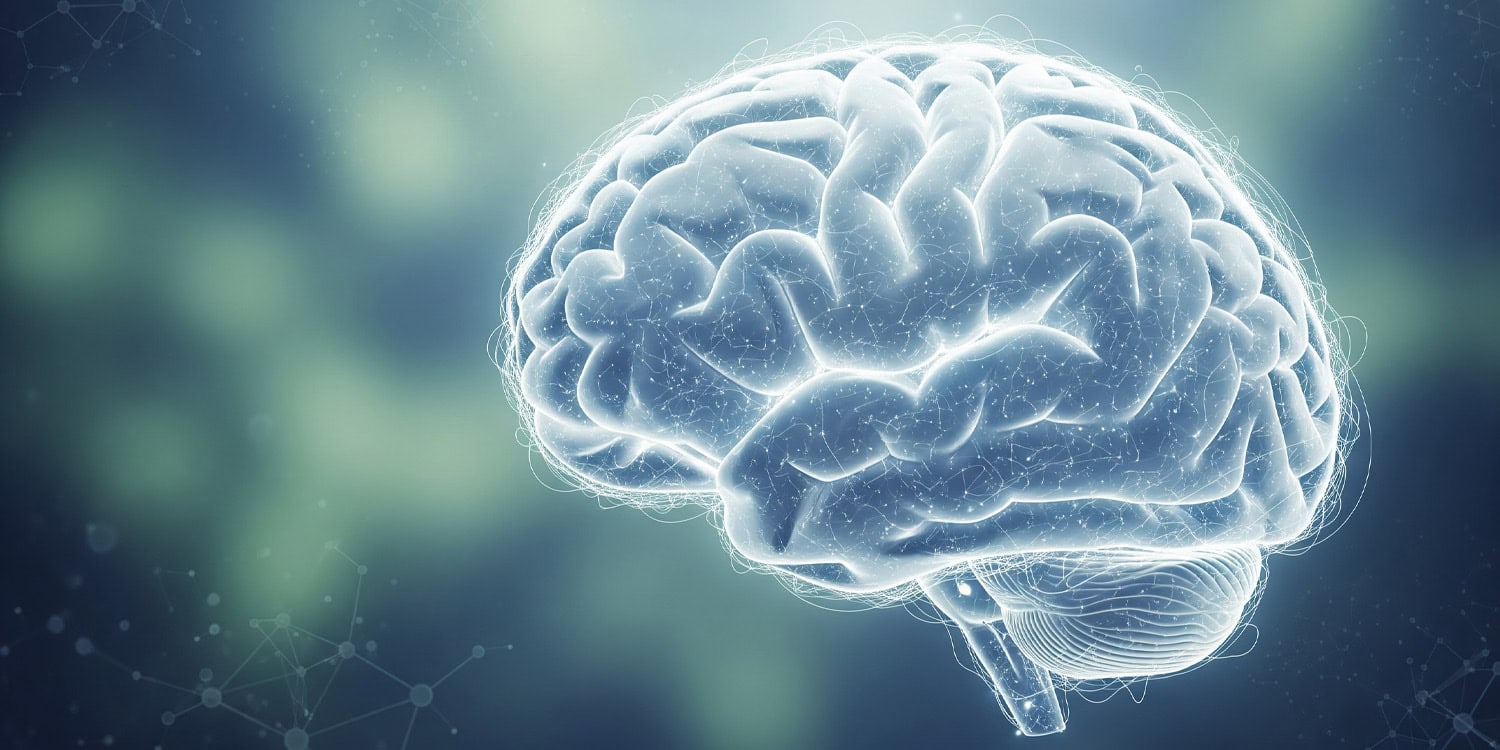
 Neuroscience study reveals surprising link between beauty and brain energy
Added: Dec 10, 2025
Neuroscience study reveals surprising link between beauty and brain energy
Added: Dec 10, 2025New neuroscience research reveals surprising biological link between beauty and brain energy
Site: PsyPost - Psychology News
Beauty may be a biological strategy for saving energy. Scientists found that the human brain and AI models expend less metabolic effort processing images perceived as attractive, suggesting our visual preferences help conserve bodily resources.
New research suggests that the human appreciation for beauty may be rooted in biological frugality. A study published in <em><a href="https://doi.org/10.1093/pnasnexus/pgaf347" target="_blank">PNAS Nexus</a></em> indicates that images requiring less energy for the brain to process are perceived as more aesthetically pleasing. These findings imply that our visual preferences may serve as an evolutionary mechanism to conserve metabolic resources.
The human brain is an exceptionally expensive organ to maintain. It accounts for only a small fraction of total body mass. Yet, it consumes roughly 20 percent of the body’s daily energy reserves. This metabolic demand places a constant pressure on the organism to manage its resources.
A massive portion of this fuel is dedicated to a single sense. The visual system alone is responsible for approximately 44 percent of the brain’s energy expenditure. Consequently, simply looking at the world is a metabolically heavy task. Every scene we view triggers cascades of electrical and chemical activity that require glucose and oxygen to sustain.
Evolutionary theory suggests that organisms adapt to avoid wasting energy. It is logical that biological systems would develop strategies to encourage efficiency. One proposed solution is the use of affective heuristics. These are mental shortcuts that use feelings, such as pleasure, to guide decision-making.
If a specific action saves energy, the brain might reward the individual with a positive feeling. This reward encourages the organism to repeat the efficient behavior. Researchers have hypothesized that this principle applies to vision. They proposed that we might find certain images beautiful simply because they are easy to process.
Yikai Tang, William A. Cunningham, and Dirk B. Walther from the University of Toronto sought to test this idea. They investigated whether the idiom "easy on the eyes" reflects a physiological reality. Their central hypothesis was that aesthetic liking is inversely related to the metabolic cost of neural representations. In other words, if an image costs less to see, we should like it more.
To test this hypothesis, the authors employed a two-pronged approach. They first utilized a computational model to simulate the mechanics of the visual system. Computer simulations allow researchers to isolate specific processes without the noise of human psychology. They utilized a deep convolutional neural network known as VGG-19.
This artificial intelligence program was trained to categorize objects and scenes. Its architecture is designed to mimic the hierarchical layers of the human visual cortex. The researchers presented the model with nearly 5,000 distinct images of real-world objects and scenes. These images varied widely in content.
For every image, the team calculated a specific "metabolic cost" for the computer model. They defined this cost based on the activity of the artificial neurons. A unit within the network was considered active if its output value was greater than zero.
The researchers counted the total number of active neurons required to represent each image. They also calculated the sum of the activation intensities. An image that triggered a large number of neurons was deemed expensive. An image that triggered fewer units was considered efficient.
The authors then compared these machine-generated cost estimates to human opinions. They utilized a dataset of aesthetic ratings collected from over 1,000 participants. These individuals had rated how much they enjoyed looking at the same images used in the computer simulation.
A distinct pattern emerged from the comparison. The researchers found a negative correlation between the model’s energy cost and human enjoyment. Images that required fewer active neurons in the artificial network received higher aesthetic ratings from people. As the processing cost decreased, the reported pleasure increased.
To ensure this result was not a coincidence, the team ran the same test on untrained neural networks. These were models with the same structure but no experience in recognizing objects. These random networks did not show the same pattern. This difference suggests that the preference for efficiency arises from the specific way a system learns to structure visual information.
While the computer model provided a strong proof of concept, it remained a simulation. The authors needed to verify that biological brains operate under the same principles. To do this, they analyzed brain imaging data from four human participants. These individuals viewed the large set of images while inside an MRI scanner.
The researchers utilized functional magnetic resonance imaging. This technology tracks changes in blood oxygen levels in the brain. When neurons in a specific region fire, they deplete local oxygen supplies. Fresh, oxygenated blood then rushes in to replenish the area.
This distinct signal, known as the BOLD signal, serves as a proxy for metabolic energy use. A stronger signal indicates that the brain is working harder and burning more fuel. The researchers focused their analysis on specific regions of the brain dedicated to visual processing.
They examined the early visual cortex, which handles basic features like edges and contrast. They also looked at higher-level areas responsible for recognizing complete scenes, faces, and objects. The results from the human scans aligned with the findings from the artificial intelligence model.
In nearly all the visual areas examined, higher metabolic activity correlated with lower aesthetic ratings. When the visual cortex had to work harder to encode an image, the participant reported enjoying it less. This relationship was notably stronger in the high-level regions that process complex scene information.
The authors interpret these findings as evidence of an energy-conservation heuristic. The visual system seems to aim for a "sweet spot." It requires enough stimulation to be interesting, but it penalizes excessive cost. The images we perceive as most attractive appear to be those that provide rich information without demanding a heavy metabolic toll.
This concept aligns with the "processing fluency" theory in psychology. This theory posits that information that is processed faster and more easily elicits a positive emotional response. The current study grounds this psychological concept in the physical reality of energy consumption.
The researchers also noted a distinction in other brain areas. While visual processing areas preferred efficiency, the Default Mode Network showed a different pattern. This network is often associated with self-reflection and daydreaming. In these regions, higher activity sometimes correlated with higher enjoyment.
This suggests that while the visual machinery prefers ease, the cognitive parts of the brain may enjoy engagement. However, the study emphasizes that the primary visual intake favors low-energy states. The "beauty" detected by our eyes is largely a signal of efficiency.
There are limitations to how broadly these findings can be applied. The study focused on rapid visual processing. Participants gave quick ratings of their initial impressions. This setup does not capture the deeper appreciation that comes from contemplating complex art.
Looking at a blank white wall is extremely energy-efficient. Yet, most people would find it boring rather than beautiful. The authors acknowledge that a stimulus must meet a baseline level of interest. The efficiency principle likely operates only after that baseline of necessary stimulation is met.
Furthermore, the "boredom" factor was not the primary variable manipulated in this study. The researchers focused on the positive-habituation component of aesthetic preference. Future work would need to disentangle the effects of simplicity versus boredom.
The authors also point out that context matters. In a museum, a viewer might expend effort to understand a difficult painting. In that specific context, the cognitive reward of understanding might outweigh the visual cost. The current study captured a more automatic, default mode of viewing.
Directions for future research include testing for causality. The current study establishes a correlation. The researchers suggest manipulating images to specifically alter their metabolic cost. Observing if this manipulation directly changes aesthetic ratings would strengthen the causal link.
They also propose investigating other sensory modalities. It is possible that the auditory system operates on a similar budget. If so, "easy listening" might be the auditory equivalent of the visual efficiency observed here.
In summary, this research provides physical evidence for a biological basis of beauty. It suggests that our aesthetic sense is not merely a product of culture or personal taste. It is also a practical mechanism for energy management. We are drawn to visual experiences that are kind to our metabolic budget.
The study, “<a href="https://doi.org/10.1093/pnasnexus/pgaf347" target="_blank">Less is more: Aesthetic liking is inversely related to metabolic expense by the visual system</a>,” was authored by Yikai Tang, William A. Cunningham, and Dirk B. Walther.
-
This week’s atmospheric river could be among longest on record | The Seattle Times Added: Dec 10, 2025
Why the atmospheric river's deluge won't pull WA out of drought
Site: The Seattle Times
The storm’s strength and expected duration put it within the top 2% for the region dating back to 1959.

-
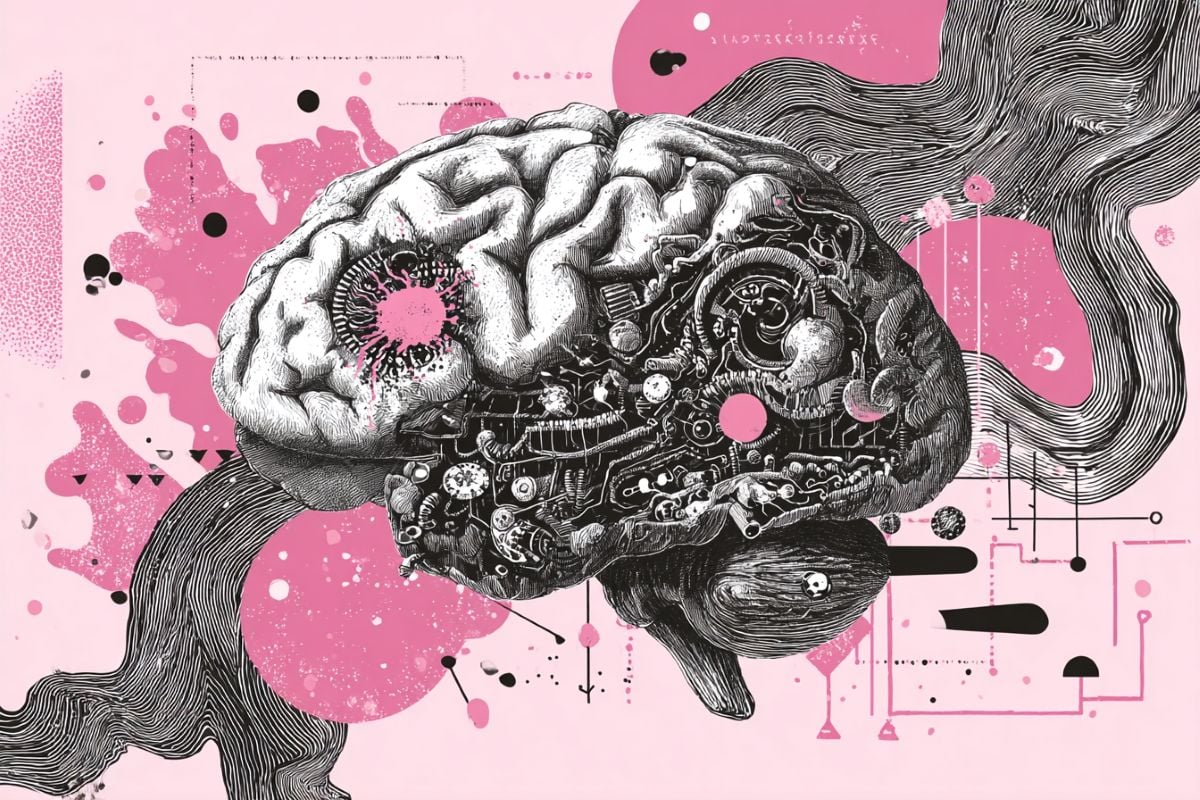
 Brain Uses AI-Like Computations for Language - Neuroscience News
Added: Dec 10, 2025
Brain Uses AI-Like Computations for Language - Neuroscience News
Added: Dec 10, 2025Brain Uses AI-Like Computations for Language - Neuroscience News
Site: Neuroscience News
The human brain processes spoken language in a step-by-step sequence that closely matches how large language models transform text.
-
Britain distances itself from Australia’s social media ban for kids – POLITICO Added: Dec 10, 2025
Britain distances itself from Australia’s social media ban for kids
Site: POLITICO
A No. 10 spokesperson said there’s “no current plans to implement a smartphone or social media ban for children.”

-
Exclusive | Elon Musk’s SpaceX and Jeff Bezos’ Blue Origin Race To Bring Data Centers to Space - WSJ Added: Dec 10, 2025
-
 Advent Poetry - Breakpoint
Added: Dec 10, 2025
Advent Poetry - Breakpoint
Added: Dec 10, 2025Advent Poetry - Breakpoint
Site: Breakpoint
Cutting through familiarity to a heart of worship this season.

-
Conservatives are more prone to slippery slope thinking
Added: Dec 10, 2025
Conservatives are more prone to slippery slope thinking
Site: PsyPost - Psychology News
A new study links conservatism to a greater acceptance of slippery slope reasoning. The evidence suggests this association relies on intuitive thinking and predicts support for harsher criminal sentencing.
New research suggests that individuals who identify as politically conservative are more likely than their liberal counterparts to find "slippery slope" arguments logically sound. This tendency appears to stem from a greater reliance on intuitive thinking styles rather than deliberate processing. The findings were published in the <em><a href="https://doi.org/10.1177/01461672251391893" target="_blank" rel="noopener">Personality and Social Psychology Bulletin</a></em>.
Slippery slope arguments are a staple of rhetoric in law, ethics, and politics. These arguments suggest that a minor, seemingly harmless initial action will trigger a chain reaction leading to a catastrophic final outcome.
A classic example is the idea that eating one cookie will lead to eating ten, which will eventually result in significant weight gain. Despite the prevalence of this argumentative structure, psychological research has historically lacked a clear understanding of who finds these arguments persuasive.
"The most immediate motivation for this research was an observation that, despite being relatively common in everyday discussions and well-researched in philosophy and law, there is simply not much psychological research on slippery slope thinking and arguments," explained study author <a href="https://www.rajenanderson.net/" target="_blank" rel="noopener">Rajen A. Anderson</a>, an assistant professor at Leeds University Business School.
"We thus started with some relatively basic questions: Why do people engage in this kind of thinking and are certain people more likely to agree with these kinds of arguments? We then focused on political ideology for two reasons: Politics is rife with slippery slope arguments, and existing psychological theories would suggest multiple possibilities for how political ideology relates to slippery slope thinking."
Some theoretical models suggested that political extremists on both sides would favor these arguments due to cognitive rigidity and a preference for simplistic causal explanations. Other theories pointed toward liberals, citing their tendency to expand concept definitions to include a wider range of harms. A third perspective posited that conservatives might be most susceptible due to a general preference for intuition and a psychological aversion to uncertainty or change.
To investigate these competing hypotheses, the researchers conducted 15 separate studies involving diverse methodologies. The project included survey data, experimental manipulations, and natural language processing of social media content. The total sample size across these investigations included thousands of participants. The researchers recruited subjects from the United States, the Netherlands, Finland, and Chile to test whether the findings would generalize across different cultures and languages.
In the initial set of studies, the research team presented participants with a series of non-political slippery slope arguments. These vignettes described everyday scenarios, such as a person showing up late to work or breaking a diet. For instance, one scenario suggested that if a person skips washing dishes today, they will eventually stop cleaning their house entirely. Participants rated how logical they perceived these arguments to be. They also reported their political ideology on a scale ranging from liberal to conservative.
The results from these initial surveys revealed a consistent pattern. Individuals who identified as more conservative rated the slippery slope arguments as significantly more logical than those who identified as liberal. This association remained statistically significant even when the researchers controlled for demographic factors such as age and gender. The pattern held true in the international samples as well, indicating that the link between conservatism and slippery slope thinking is not unique to the political climate of the United States.
To assess how these cognitive tendencies manifest in real-world communication, the researchers analyzed over 57,000 comments from political subreddits. They collected data from communities dedicated to both Democratic and Republican viewpoints. The team utilized ChatGPT to code the comments for the presence of slippery slope reasoning.
This analysis showed that comments posted in conservative communities were more likely to exhibit slippery slope structures than those in liberal communities. Additionally, comments that utilized this style of argumentation tended to receive more approval, in the form of "upvotes," from other users.
The researchers then sought to understand the psychological mechanism driving this effect. They hypothesized that the difference was rooted in how individuals process information. Conservative ideology has been linked in past research to "intuitive" thinking, which involves relying on gut feelings and immediate responses. Liberal ideology has been associated with "deliberative" thinking, which involves slower, more analytical processing.
To test this mechanism, the researchers measured participants’ tendencies toward intuitive versus deliberative thought. They found that intuitive thinking statistically mediated the relationship between conservatism and the endorsement of slippery slope arguments. This means that conservatives were more likely to accept these arguments largely because they were more likely to process the information intuitively.
In a subsequent experiment, the researchers manipulated how participants processed the arguments. They assigned one group of participants to a "deliberation" condition. In this condition, participants were instructed to think carefully about their answers. They were also forced to wait ten seconds before they could rate the logic of the argument. The control group received no such instructions and faced no time delay.
The data from this experiment provided evidence for the intuition hypothesis. When conservative participants were prompted to think deliberately and forced to slow down, their endorsement of slippery slope arguments decreased significantly. In fact, the gap between conservative and liberal ratings narrowed substantially in the deliberation condition. This suggests that the ideological difference is not necessarily a fixed trait but is influenced by the mode of thinking a person employs at the moment.
Another study investigated whether the structure of the argument itself mattered. The researchers presented some participants with a full slippery slope argument, including the intermediate steps between the initial action and the final disaster. Other participants viewed a "skipped step" version, where the initial action led immediately to the disaster without explanation.
The results showed that conservatives only rated the arguments as more logical when the intermediate steps were present. This indicates that the intuitive appeal of the argument relies on the plausibility of the causal chain.
Finally, the researchers examined the potential social consequences of this cognitive style. They asked participants about their support for punitive criminal justice policies, such as "three strikes" laws or mandatory minimum sentences.
The analysis revealed that slippery slope thinking was a significant predictor of support for harsher sentencing. Individuals who believed that small negative actions lead to larger disasters were more likely to support severe punishment for offenders. This helps explain, in part, why conservatives often favor stricter criminal justice measures.
"Slippery slope thinking describes a particular kind of prediction: If a minor negative event occurs, do I think that worse events will follow? Our findings suggest that being more politically conservative is associated with engaging in more slippery slope thinking, based on a greater reliance on intuition: Slippery slope arguments are often intuitively appealing, and this intuitive appeal brings people in," Anderson told PsyPost.
"If we change this reliance on intuition (e.g., encouraging people to think deliberately about the argument), then there's less of an effect of politics. This political difference in slippery slope thinking has consequences for the kinds of arguments that people use on social media, and in how much they support harsher criminal sentencing policies."
Most of the arguments used in the surveys were non-political in nature. This was a deliberate design choice to measure underlying cognitive styles without the interference of partisan bias regarding specific issues.
"We wanted to measure baseline tendencies to engage in slippery slope thinking in general, setting aside potential bias just from participants agreeing with the political message of an argument," Anderson explained. "What this means is that, all else being equal, our results suggest that being more politically conservative corresponds to more slippery slope thinking."
"What this does not mean is that conservatives will always endorse every slippery slope argument more than liberals will: It is very easy to create an argument that liberals will endorse more than conservatives, because the argument supports a conclusion that liberals will agree with."
Future research could explore how these cognitive tendencies interact with specific political issues. Researchers might also examine whether interventions designed to reduce reliance on intuition could alter support for specific policies rooted in slippery slope logic.
The current work provides a baseline for understanding how differing cognitive styles contribute to political disagreements. It suggests that political polarization is not merely a disagreement over facts but also a divergence in how groups intuitively predict the consequences of human behavior.
"One potential misinterpretation is that readers may think that slippery slope thinking is illogical or irrational (since that's often how slippery slope thinking is talked about), and thus we are saying that conservatives are more illogical or irrational than liberals," Anderson added. "To be direct, we are not saying that."
"How logical or illogical a slippery slope argument is depends on the specific steps of the argument: If A happens, what's the probability that B will follow? If B happens, what's the probability that C will follow? etc. If the probabilities are high, then slippery slope thinking is more "logical"; If the probabilities are low, then slippery slope thinking is less "logical". In fact, there <a href="https://psycnet.apa.org/doi/10.1037/a0036950" target="_blank" rel="noopener">is some research</a> to suggest that dishonest behavior sometimes does look like a slippery slope."
The study, "<a href="https://doi.org/10.1177/01461672251391893" target="_blank" rel="noopener">'And the Next Thing You Know . . .': Ideological Differences in Slippery Slope Thinking</a>," was authored by Rajen A. Anderson, Daan Scheepers, and Benjamin C. Ruisch.

-
Why Google built its own VS Code fork in the first place
Added: Dec 10, 2025
Why Google built its own VS Code fork in the first place
Site: How-To Geek
Google Antigravity may be one of the smartest decisions from the company.

-
Visual Studio Code vs VSCodium: What is the real difference
Added: Dec 10, 2025
VS Code vs. VSCodium: How different is the open source version?
Site: How-To Geek
There's a lot more to these two than just a name change.

-
The Hidden Cost of Passing as "Normal" | Psychology Today Added: Dec 10, 2025
The Hidden Cost of Passing as "Normal"
Site: Psychology Today
Some people burn out because they work too hard. Neurodivergent people often burn out because they have been performing too hard.
-
Site: X (formerly Twitter)

-
 10 Most Beautiful Birds That Look Too Cool to Be Real | HowStuffWorks
Added: Dec 10, 2025
10 Most Beautiful Birds That Look Too Cool to Be Real | HowStuffWorks
Added: Dec 10, 202510 Most Beautiful Birds That Look Too Cool to Be Real
Site: HowStuffWorks
Some birds look like they flew straight out of a crayon box. With bold colors, long tail feathers, and shimmering plumes, they put even the most flamboyant fashion shows to shame.
-
Is 3I/ATLAS a friendly visitor or ‘serial killer’ sent to poison us?: Harvard scientist
Site: New York Post
With 3I/ATLAS set to fly by Earth in two weeks, professor Avi Loeb is debating whether our interstellar visitor is friend or foe — an answer that potentially lies in its chemical makeup.

-
Tim Pool Addresses Reports He May Quit Over Political Violence
Site: YouTube
A lot of questions, a lot of disarray, violence, fear, civil war, assassinations, shootings, and liesBecome A Memberhttp://youtube.com/timcastnews/joinThe Gr...

-
AI companies want a new internet — and they think they’ve found the key | The Verge Added: Dec 10, 2025
AI companies want a new internet — and they think they’ve found the key
Site: The Verge
“I’ve never seen anything like this,” says the Linux Foundation’s Jim Zemlin.
Over the past 18 months, the largest AI companies in the world have quietly settled on an approach to building the next generation of apps and services — an approach that would allow AI agents from any company to easily access information and tools across the internet in a standardized way. It’s a key step toward building a usable ecosystem of AI agents that might actually pay off some of the enormous investments these companies have made, and it all starts with three letters: MCP. MCP, or Model Context Protocol, began as a passion project from two Anthropic employees, but since its creation in mid-2024, it’s been widely adopted by companies like OpenAI, Google, Microsoft, and Cursor. There are even hints that Apple will use MCP in its forthcoming AI-enabled version of Siri. There have been competitors to MCP, but so far it’s been a standards war without any real battle — MCP has quickly taken over the industry. And now it’s official: This week, Anthropic is donating MCP to the Linux Foundation — and joining OpenAI, Google, Microsoft, AWS, Block, Bloomberg, and Cloudflare in establishing a new fund called the Agentic AI Foundation (AAIF), whose goal is to “advance open-source agentic AI.” The donation, and assigning a neutral body to govern MCP, will likely help supercharge its growth. It’s also a move that should change up how AI systems operate as we know it. For AI companies, MCP is the new standard for how these systems should access apps, tools, and information — and by extension, how people use the internet. MCP essentially tells AI models which external tools, data sources, and workflows they’re able to access, then allows them to connect and perform tasks. When someone uses Claude to perform tasks in Slack, for example, MCP is what authorizes and establishes the connection between services. It’s what lets Claude redirect you to Slack and get notified once you’ve logged in. And it lets Slack tell Claude which tools, resources, and features it can access — “essentially a ‘show me what you’ve got,’” Conor Kelly, a product marketing manager for MCP at Anthropic, says. From the user’s side, this simply means Slack and Claude can easily work together — a “ping-pong of intelligence,” as Anthropic CPO Mike Krieger puts the impact of MCP. When somebody prompts Claude to send a Slack message to a colleague, Claude knows that the Slack MCP server is connected, that a tool exists for sending messages, and that it can access that tool. Once it’s all set, Slack tells Claude that it happened successfully, then Claude tells the user. Message sent. If you’re familiar with how computers generally worked before AI, this might all sound like a bunch of APIs — and you might recall that web apps and services opening their APIs to one another was the underpinning of the Web 2.0 era, and eventually the enormously lucrative explosion of mobile apps in the app store era. Moving users (and their money) from apps and websites to AI agents is one of the few ways AI companies can even begin to pay off their enormous investments. But AI agents need new kinds of APIs, and MCP seems like the standard those APIs will take. MCP’s webpage, aspirationally, likens it to the ubiquitous USB-C. MCP started as a pet project by two Anthropic engineers, David Soria Parra and Justin Spahr-Summers. The initial goal wasn’t to build an industry-wide standard. The pair simply wanted Anthropic’s staff base to use Claude more in everyday work. They felt like something was missing in the chatbot: the ability, Soria Parra tells The Verge, to connect “to the outer world that you actually deeply care about, the things you interact with.” His initial name for the service was Claude Connect. Other Anthropic employees, it turned out, agreed with them. In an October 2024 hackathon, virtually everyone used the protocol to build their projects — “It was this moment in the company when everybody was like, ‘Oh, there’s really something to this,’” Soria Parra says. He and Spahr-Summers got Krieger’s approval to develop a full-fledged open source project. They released it just before Thanksgiving — somewhat deliberately, Soria Parra says, so that people could take a break from family to check it out. Krieger says that initially, his “dream case” for MCP was getting just one other frontier lab to adopt it. But widespread adoption came fast. On March 19th, Microsoft announced it would support MCP in its Copilot Studio. One week later, OpenAI CEO Sam Altman posted that “people love MCP and we are excited to add support across our products.” Four days after that, Google CEO Sundar Pichai took a poll approach, posting, “To MCP or not to MCP, that’s the question. Lmk in comments.” The protocol has gotten top billing on a San Francisco billboard, and there are even hints of MCP support in beta versions of iOS, suggesting Apple’s false start on agentic Siri might be turned around by adopting the nascent standard. MCP has caught on partly because its creators have spent so much time watching and learning what developers actually wanted from AI systems. It “encapsulated patterns that already existed at the time,” says Soria Parra. OpenAI uses MCP to underpin the ChatGPT apps it introduced earlier this year, such as Booking.com, Canva, Coursera, Expedia, Figma, Spotify, and Zillow, as well as to connect to services like Notion and HubSpot. Anthropic uses it to enable connections with Slack, Asana, Box, Square, Stripe, and many others. At this point, MCP has effectively become a multi-company project. A group of “core maintainers” have an ongoing discussion on Discord and GitHub, and representatives from Google, Microsoft, OpenAI, and others periodically meet face-to-face, discussing ways to fix problems and improve the protocol, OpenAI’s Nick Cooper, technical lead for the company’s approach to MCP, tells The Verge. But MCP’s links with Anthropic have also potentially held the standard back. Anthropic has always made the protocol open source, but until now, any improvements by other companies could potentially contribute to their competitor’s intellectual property — and in theory, Anthropic could still one day choose to lock it down. Giving it to the Linux Foundation removes those concerns. Anthropic isn’t the only company handing over something to the Linux Foundation. Block is donating Goose, its open-source AI agent, and OpenAI is donating Agents.md, which describes codebases to agents. Put the donations from Block, OpenAI, and Anthropic together, and the story is “about more than just MCP,” says Jackie Brosamer, head of data and AI at Block. “Protocols are essentially ways for systems to talk to each other, and that’s the most important thing to standardize.” Jim Zemlin, CEO of the Linux Foundation — the largest organization for open source and standards in the world — has been in the industry for more than two decades and has personally overseen the creation or expansion of a handful of new standards and platforms. But even he has been shocked by MCP’s grassroots growth. “I’ve never seen anything like this,” Zemlin tells The Verge. “I can barely keep up with the number of inbound calls from organizations who want to be a part of this. Usually I’m trying to convince someone, or scratching and clawing. This is really the reverse.” Josh Blyskal, who leads strategy and research for AEO (think: essentially SEO for AI) at Profound, believes MCP will “absolutely become a standard, especially in commerce,” and he says in a year, the way AI companies currently scrape websites will look “antiquated.” Krieger says that although he thinks there is still a future for people accessing services directly in apps and browsers, “there’s something very powerful” about an internet where most interactions run through MCP. “These things can operate kind of at the speed of LLMs versus at the speed of people,” he says. “You can issue 10 queries in parallel, you can do a data deep dive, versus navigating the web as was built for humans.” MCP is also gaining traction as the industry faces a major problem: Although agents are an almost necessary step to making AI profitable, most of them simply don’t work very well right now. There are valuable enterprise uses, because enterprise environments can be more tightly controlled and made predictable for the agents to operate in. But for a range of consumer tasks, they’re still slower and less reliable than simply using the web yourself. And part of the reason is that they’re often surfing a web made for humans, not machines, to pull information from. MCP may have improved agents somewhat already, but AI companies hope if it’s adopted more widely, it could dramatically mitigate the hangups frustrating users: that agents lag, that they require too much coaxing in order to complete a task, that they sometimes fail to perform a task at all. The protocol allows systems to talk directly between each other, ideally making them faster, more accurate, and more successful. Instead of an “app store,” the dream is to one day create a marketplace of tools for agents to use MCP to connect with — and when it comes to e-commerce, some of those tools will allow agents to “shop” on a user’s behalf, picking between price and performance based on a user’s budget. Users wouldn’t even need to learn MCP’s name; they’d just realize one day that agents can do something like plan a full trip — from booking flights and hotels to adding calendar reminders — faster than they can. That might be the vision, but jumping feet-first into a specific standard like MCP is still a big bet. Meta CEO Mark Zuckerberg has publicly said it was a mistake for the company to invest so much in HTML5 at the dawn of the mobile era instead of native apps, for example. And HTTP won out in the early days of the internet over other protocols, like Gopher, which was developed at the University of Minnesota in the early 1990s. “Anytime you pick technology, it’s an implicit futures contract, because you want that technology to have a big ecosystem, lots of support, tons of developers,” Zemlin says. “Standards can come and go,” Soria Parra says. “I don’t know what the AI industry will look like five years from now, and I think nobody’s able to predict this. Of course I would hope that MCP is still around.” Whatever happens, though, he says, “at least we have set the [stage] for more open standards in the field.” “If you’re an end user and you don’t know much about technology, you should never have to hear about MCP,” says Soria Parra. “It should just work … For you, the model just does its magic and solves the task at hand.” The move could also help mitigate the security nightmares that agentic AI poses, like prompt injection. Now that Anthropic won’t have ownership over MCP, other companies especially well versed in security can make improvements to the protocol that they may have shied away from making before. “One thing I think is really important about having this be more of an open project is that there are aspects that we as Anthropic don’t hit first, but other enterprises do — so authentication and security are two,” Krieger says. “When everybody is working collectively on a standard, to help improve the technology so that it’s more secure, so that it can do effective trusted payments, so that it has a better way of communicating in a secure fashion, that’s when the market really gets made,” Zemlin says.

-
Linux 6.19 Gets Rid Of The Kernel's "Genocide" Function - Phoronix Added: Dec 10, 2025
Linux 6.19 Gets Rid Of The Kernel's "Genocide" Function
-
Site: X (formerly Twitter)
-
Pete Raf on X: "@GadSaad I did https://t.co/eWoMrFjKMt" / X Added: Dec 10, 2025
Site: X (formerly Twitter)
-
What is the Model Context Protocol (MCP)? - Model Context Protocol Added: Dec 10, 2025
What is the Model Context Protocol (MCP)? - Model Context Protocol
Site: Model Context Protocol

-
MCP joins the Linux Foundation: What this means for developers building the next era of AI tools and agents - The GitHub Blog Added: Dec 10, 2025
MCP joins the Linux Foundation: What this means for developers building the next era of AI tools and agents
Site: The GitHub Blog
MCP is moving to the Linux Foundation. Here's how that will affect developers.

-
Model Context Protocol(MCP) with Google Gemini 2.5 Pro - Deep Dive , Google Cloud Gen AI | Google Cloud - Community Added: Dec 10, 2025
Model Context Protocol(MCP) with Google Gemini LLM — A Deep Dive (Full Code)
Site: Medium
A step-by-step guide with code, architecture, and real-world use case

-
What is Model Context Protocol (MCP)? A guide | Google Cloud Added: Dec 10, 2025
What is Model Context Protocol (MCP)? A guide
Site: Google Cloud
Learn how the Model Context Protocol (MCP) standard allows LLMs to safely access external data and use tools, making AI more powerful and reliable.

-
A Precarious Position - YouTube Music Added: Dec 10, 2025
A Precarious Position - YouTube Music
Site: YouTube Music
Provided to YouTube by The state51 Conspiracy A Precarious Position · Atom Music Audio Distorted Dreams ℗ 2025 Atom Music Audio Released on: 2025-12-09 ...
-
Triosonate F-Dur TWV 42, F7: I. Affettuoso - YouTube Music
Site: YouTube Music
Provided to YouTube by The Orchard Enterprises Triosonate F-Dur TWV 42, F7: I. Affettuoso · Barock_Plus · Georg Philipp Telemann Kaleidosonic ℗ 2025 Perfe...