Bookmarks 2025-11-26T06:32:53.980Z
by Owen Kibel
30 min read
Bookmarks for 2025-11-26T06:32:53.980Z
-
Chinse open source AI models are eating the world—the U.S. is the exception | Fortune Added: Nov 25, 2025
Why China's open source AI models are eating the world | Fortune
Site: Fortune
U.S. and European execs emphasis performance. But cost and data control are top concerns in much of the world.

-
Military Veterans Call Out Trump, Hegseth and Pentagon in New Video | Military.com Added: Nov 25, 2025
Military Veterans Call Out Trump, Hegseth and Pentagon in New Video
Site: Military.com
“We've never been at this kind of crossroads in our country before," Kenneth Harbaugh, a U.S. Navy veteran, told Military.com about the situation surrounding Sen. Mark Kelly.

-
Site: X (formerly Twitter)

-
Site: X (formerly Twitter)
-
 How I finally unlocked Linux’s find command
Added: Nov 25, 2025
How I finally unlocked Linux’s find command
Added: Nov 25, 2025How I finally unlocked Linux’s find command
Site: How-To Geek
The key is mastering find’s tests, actions, and operators.

-
A Meaningless Mamdani Meeting | National Review Added: Nov 25, 2025
A Meaningless Mamdani Meeting | National Review

-
Diffusers welcomes FLUX-2 Added: Nov 25, 2025
Diffusers welcomes FLUX-2
We’re on a journey to advance and democratize artificial intelligence through open source and open science.

-
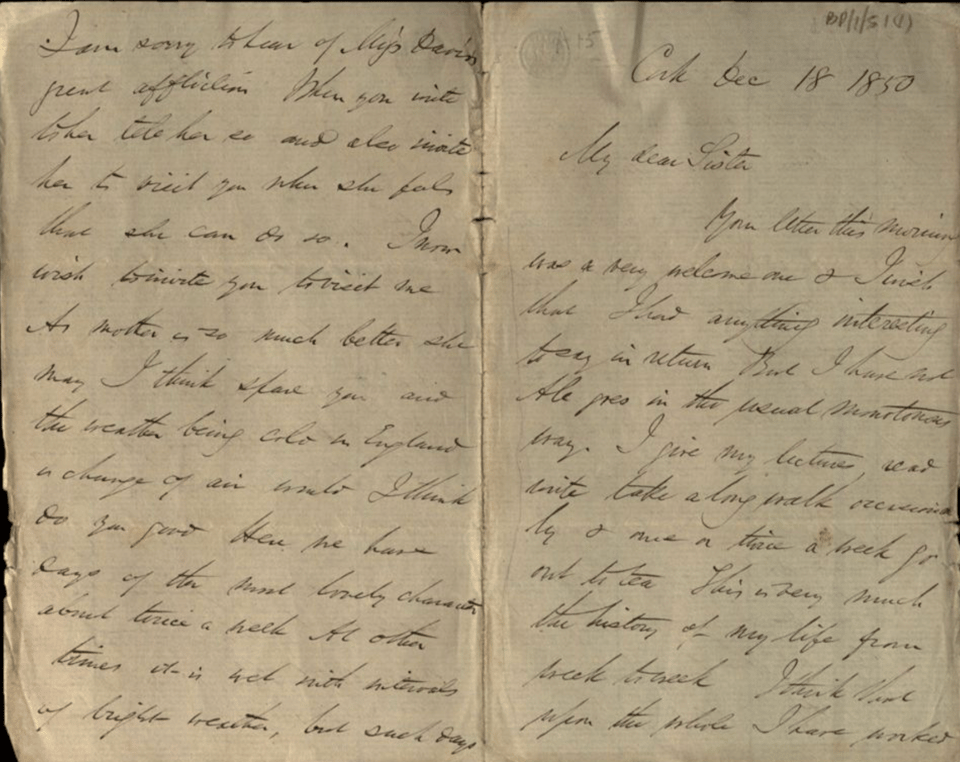
 The Writing Is on the Wall for Handwriting Recognition
Added: Nov 25, 2025
The Writing Is on the Wall for Handwriting Recognition
Added: Nov 25, 2025The Writing Is on the Wall for Handwriting Recognition
One of the hardest problems in digital humanities has finally been solved
-
Site: X (formerly Twitter)
-
 Interstellar Comet 3I/ATLAS May Be Headed For A Close Encounter Before It Heads Towards Gemini | IFLScience
Added: Nov 25, 2025
Interstellar Comet 3I/ATLAS May Be Headed For A Close Encounter Before It Heads Towards Gemini | IFLScience
Added: Nov 25, 2025Interstellar Comet 3I/ATLAS May Have A Course-Altering Encounter Before It Heads Towards The Gemini Constellation
Site: IFLScience
According to the team, the object likely came from the direction of Sagittarius, and will depart our Solar System towards Gemini. Before it leaves, it may have a course-altering encounter with our largest gas giant.
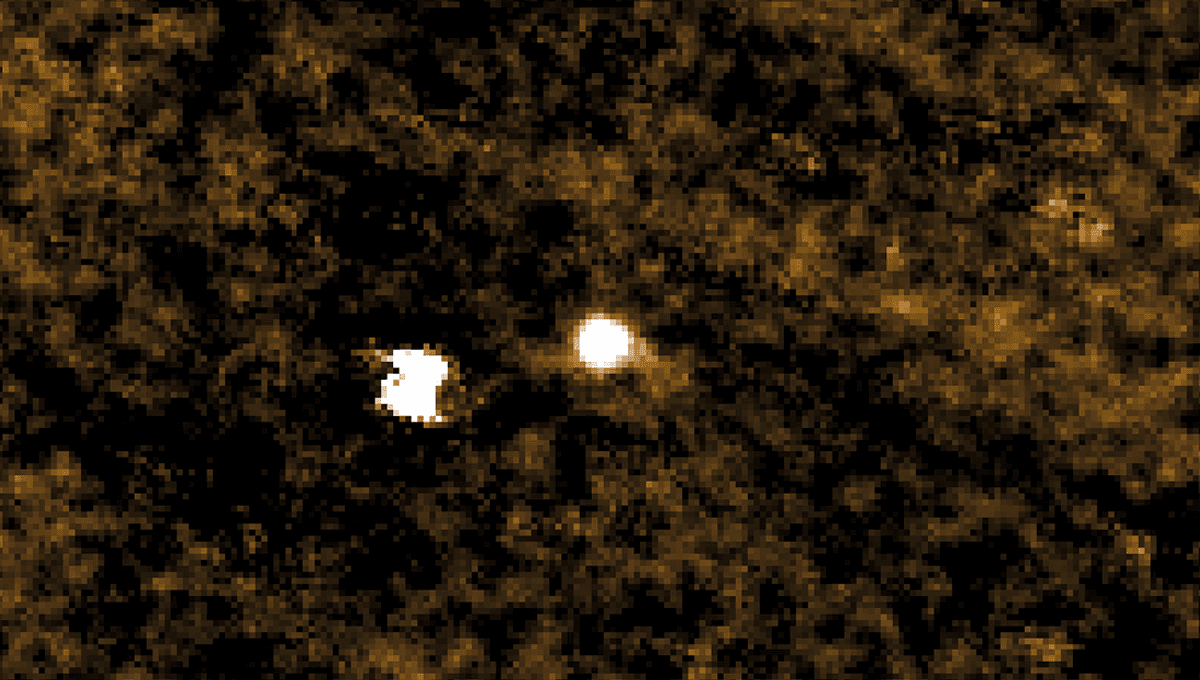
A new pre-print paper suggests that our latest interstellar visitor, comet 3I/ATLAS, may be headed for one final close encounter before it departs our Solar System in 2026. The paper, which focuses on dynamical simulations of the object, also attempts to look at the course 3I/ATLAS will take on departure, and the path that brought it to us. If you're up to speed with science news, you likely know the story of our third confirmed interstellar object. But mention "the interstellar visitor" to anybody else, and you'll likely be met with a baffled expression and a soothing tone. Trust us. So those of you who aren't aware, let's (briefly, this time) recap. On July 1, 2025, the Asteroid Terrestrial-impact Last Alert System spotted an object hurtling through our Solar System at an unusually high velocity (around 58 kilometers per second, or 36 miles per second) and eccentricity. Looking at the object, it was soon confirmed to be an interstellar object, the third we have confirmed so far, after 1I/'Oumuamua and 2I/Borisov. While much has been made of (highly dubious and unnecessary) claims that 3I/ATLAS is an interstellar spacecraft, that is not the case. But that doesn't make it uninteresting; we are still talking about a visitor from another star, which could give us clues about the environment in another part of the Milky Way. In the new paper, which has not yet been peer reviewed, the team attempts to model the path of our fastest interstellar visitor so far, both into the past and the future. Let's do this, as is traditional, in chronological order. As yet, astronomers are not entirely sure what part of our galaxy the object came from. There have been suggestions that it may have come from the Milky Way's "thick disk". “This thing's coming in much faster than the other two, but it is actually within the range of velocities that we would predict in objects. So we don't think that's notable, but it's moving fast up and down relative to the plane of the galaxy in a vertical velocity, so it gives us a clue about where it's from,” Chris Lintott, Professor of Astrophysics and Citizen Science Lead at the University of Oxford, explained to IFLScience. “Our model predicts that it's from a star in the thick disc of the galaxy.” "[Comet 3I/ATLAS] is probably from an old star in the thick disc, and we think that it's likely that this thing's been out there for longer than the age of the Solar System," he added. However, these things are pretty uncertain given the complexity of the task at hand. Another study that attempted to identify its origin found that it had likely not had a close encounter in 10 million years before it reached our Solar System, and may have even traveled alone for 10 billion years before we spotted it in our neighborhood. "Together, all data indicate that while 3I/ATLAS follows a thin-disk orbit in the solar neighborhood, it may nonetheless be an old object, consistent with ejection from a primordial planetesimal disk in an early-formed system, or from an exo-Oort cloud, and is most likely associated with the transition region between the thin and thick disk, although its origin remains undisclosed," that team concluded. The new paper attempted to model the direction that 3I/ATLAS came from and where it is headed. Though the team stresses there are uncertainties involved in the model (welcome to astrophysics), they suggest a rough path. "The long-term orbital integration of 500 statistical clones of comet 3I for hundred years in the past and future shows that the comet is coming from the Sagittarius constellation with a mean radial velocity of -57.995 ± 0.011 kms −1 and leaving towards the Gemini constellation with a mean radial velocity of 58.01 ± 0.01 kms −1," the team writes in their paper, adding. "The possible location of the comet 3I is found to be in the transition zone from the thin to the thick disk. [But] it is uncertain to confirm the region of origin using kinematic information." The team looked at close encounters that the interstellar object will have before it heads out of our Solar System. "The comet 3I will definitely suffer the perturbation from both Mars and Jupiter at their respective close approach epochs. The effect of Jupiter will be larger due to the fact that the comet is passing very close to the Hill radius of Jupiter," the team writes, adding: "The distance of the comet 3I from Jupiter is very close to the Hill radius (0.355 au) of Jupiter. Therefore, there could be a stronger perturbation from Jupiter compared to Mars." In short, on March 16, 2026, 3I/ATLAS could have a course-altering encounter with our largest gas giant, Jupiter. However, the non-gravitational acceleration of the object (or the acceleration it is undergoing, which is not due to gravity alone, but other factors like outgassing and radiation pressure from our Sun) is still uncertain. Modeling the effects of outgassing, the team found that accelerations below 10 −7 auday −2 would have "negligible" effect on its path, while accelerations of order 10 −6 to 10 −5 au day −2 could significantly alter the object's future trajectory. We will have to wait for more observations to know more about the acceleration of the object. Though more observations are needed, the team suggests the best time to look at the object is as it gets close to Jupiter. "Taking the maximum distance from Juno to be 0.4 au for optimal observation, and the time at which the distance between comet 3I and the Juno spacecraft is less than the distance between comet 3I and Jupiter, we suggest that the optimal period for observation is from 09th to 22nd March 2026," the team concludes. The study is posted to the pre-print server arXiv.
-
You'll NEVER unsee see this #cgi #starwars #lordoftherings #vfx - YouTube Added: Nov 26, 2025
You'll NEVER unsee see this #cgi #starwars #lordoftherings #vfx
Site: YouTube
Enjoy the videos and music you love, upload original content, and share it all with friends, family, and the world on YouTube.

-
An Autistically Deep Dive Into The VFX Of Gollum
Site: YouTube
Take your personal data back with Incogni! Use code CGY at the link below and get 60% off an annual plan: http://incogni.com/CGY—----------------------------...

-
Civil War Fears Reach Fever Pitch, Realize Where We Are
Site: YouTube
BUY CAST BREW COFFEE TO SUPPORT THE SHOW - https://castbrew.com/Become A Member And Protect Our Work at http://www.timcast.comFULL EPISODE HERE: https://yout...

-
Ilya Sutskever: AI's bottleneck is ideas, not compute | Ctech Added: Nov 26, 2025
Ilya Sutskever: AI's bottleneck is ideas, not compute | CTech
Site: ctech
The co-founder of OpenAI explains why AI’s reliance on bigger models and more compute has stalled progress and why new ideas, human-like generalization, and integrated value functions are now essential.
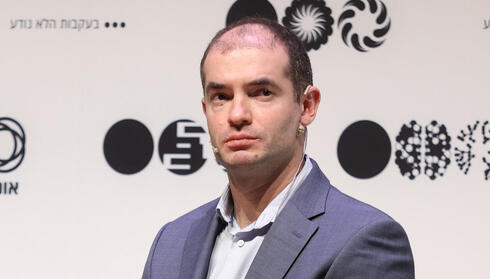
Ilya Sutskever, the elusive scientist who co-founded OpenAI and helped build ChatGPT, has spoken publicly for the first time in months. In a rare interview with Dwarkesh Patel’s podcast, he laid out his sharp critique of the AI industry, and hinted at the focus of his new startup, Safe Superintelligence (SSI), now valued at $32 billion. Sutskever argues that the industry’s reliance on brute-force “scaling” has hit a wall. Today’s AI models may be brilliant on tests, but they are fragile in real-world applications. He says the pursuit of general intelligence must now shift from simply gathering more data to discovering a new, more efficient scientific principle. In the current AI gold rush, success is measured by scale: bigger models, more data, and massive multi-billion-dollar compute budgets. Yet Sutskever, a foundational scientist in the field, says this focus has created a deep inconsistency that is slowing AI’s real-world impact. “You know what’s crazy? That all of this is real,” he said, reflecting on the almost fantastical nature of the moment. But he quickly turned to what he sees as the biggest weakness in today’s most powerful systems. Sutskever highlighted a puzzling gap between the excellent performance of large language models (LLMs) on tests and their relatively limited economic impact. “This is one of the very confusing things about the models right now,” he said. “How to reconcile the fact that they are doing so well on evals? You look at the evals and you go, ‘Those are pretty hard evals.’ They are doing so well. But the economic impact seems to be dramatically behind.” He calls this problem “jaggedness.” A highly competent model can inexplicably get stuck in basic error loops. Sutskever explained it with a vibe coding example: “You go to some place and then you get a bug. Then you tell the model, ‘Can you please fix the bug?’ And the model says, ‘Oh my God, you’re so right. I have a bug. Let me go fix that.’ And it introduces a second bug. Then you tell it, ‘You have this new second bug,’ and it tells you, ‘Oh my God, how could I have done it? You’re so right again,’ and brings back the first bug, and you can alternate between those. How is that possible? I’m not sure, but it does suggest that something strange is going on.” He attributes this fragility to two connected issues: RL Tunnel Vision: Reinforcement learning (RL), now widely used, “makes the models a little too single-minded and narrowly focused, a little bit too unaware.” Evaluation-Driven Training: With high-quality pre-training data running out, companies carefully define RL training environments. This can lead to models being optimized to ace tests rather than master general skills. Sutskever likened it to a student who “will practice 10,000 hours” for competitive programming, excelling narrowly but failing to generalize. The Human Advantage: Emotion as the Value Function At the core of the problem is generalization. “These models somehow just generalize dramatically worse than people. It’s super obvious,” Sutskever said. Humans, he argues, demonstrate “better machine learning, period.” We are far more sample-efficient and robust, even in areas like coding and math, which we did not evolve for. The difference lies in the human value function, a system that evaluates whether an intermediate step is good or bad, making learning more efficient. In humans, this value function is shaped by emotions. It is “modulated by emotions in some important way that’s hardcoded by evolution.” Sutskever illustrated this with a neurological example: “I read about this person who had some kind of brain damage… that took out his emotional processing… He still remained very articulate… but he felt no emotion… He became somehow extremely bad at making any decisions at all. It would take him hours to decide on which socks to wear.” Even simple emotions, while imperfect, provide critical guidance. AI systems, currently lacking this integrated system, struggle to self-correct and learn efficiently. Sutskever says the “age of scaling,” roughly 2020 to 2025, is ending. That period, when big data and compute almost guaranteed progress, is giving way to the “age of research,” where new fundamental ideas are needed. “The big breakthrough of pre-training is the realization that this recipe is good... Companies love this because it gives you a very low-risk way of investing your resources,” he said. But now pre-training data is finite, and reinforcement learning, while resource-intensive, does not provide the same low-risk path. “Is the belief that if you just 100x the scale, everything would be transformed? I don’t think that’s true. So it’s back to the age of research again, just with big computers.” Sutskever says the bigger problem is ideas, not compute. “One consequence of the age of scaling is that scaling sucked out all the air in the room. Because scaling sucked out all the air in the room, everyone started to do the same thing.” He believes the solution lies in discovering a fundamental machine learning principle that makes models more productive. “The thing which I think is the most fundamental is that these models somehow just generalize dramatically worse than people.” This, he says, is the big question for the next cycle of AI, and it cannot be solved simply by adding more data or bigger computers. In regards to SSI, Sutskever said the company has raised $3 billion and has “sufficient compute to prove, to convince ourselves and anyone else, that what we are doing is correct.” When asked how SSI will make money, he answered: “Right now, we just focus on the research, and then the answer to that question will reveal itself. I think there will be lots of possible answers.”
-
The Housewife Who Invented AI...in 1843!
Site: YouTube
Ada Lovelace is known as the first computer scientist. This is her incredible story.I have a Substack where I post (occasionally!) about insights and thought...

-
Pro Life Man SHOOTS Pro Abortion Man In Self Defense GETS ARRESTED | Tim Pool
Site: YouTube
Insane, the pro life man tried to flee and was struck twice in the head before choosing to shoot in self defenseBecome A Memberhttp://youtube.com/timcastnews...

-
TRUMP JUST WON
Site: YouTube
Join CrowdHealth to get started today for $99 for your first three months using code TIM at http://joincrowdhealth.com - CrowdHealth is not insurance. Opt ou...

-
Where Is The Quietest Place On Earth? | IFLScience
Added: Nov 26, 2025
The Disconcerting Noises Lurking In The Quietest Place On Earth
Site: IFLScience
At minus decibels, visitors have reported being able to hear the blood pumping through their veins and arteries.
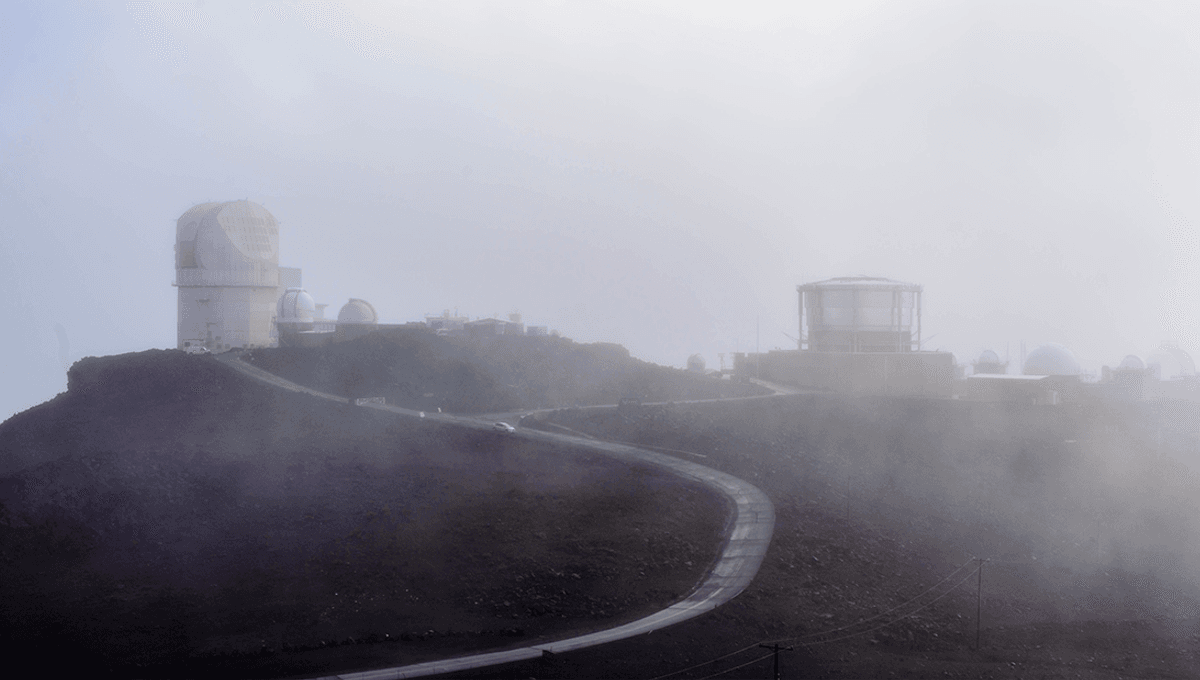
There are a number of candidates for the title of the quietest natural place on Earth. It's difficult to pinpoint the absolute quietest natural location, as it is highly variable due to the influence of, for example, noise produced by wind, wildlife, rustling vegetation, tourists and those goddamn aircraft flying overhead. But a good candidate, thought to be the quietest National Park in the US at the very least, is the Haleakalā Crater found 3055 meters (10,023 feet) above the Pacific Ocean on the East Maui volcano, itself on the Hawaiian Island of Maui. "Natural sounds, panoramic views, and dark night skies greatly contribute to Haleakalā’s unique sense of place," the National Parks Service explains. "Ambient sound levels in the Haleakalā Crater are so low that they approach the threshold of human hearing." Here, the deep crater helps to keep the wind out, while the lack of vegetation in this arid landscape prevents the rustling of plants, and keeps animals from setting up home here. There, it can get very quiet indeed. "Haleakalā’s natural soundscape is a fundamental resource of the Park as the Park’s low ambient sounds play a vital role in the health of Park natural ecosystems (NPS, 2015a). Both natural and existing acoustic conditions in the Park were measured in 2003 (Lee et al., 2016)," the National Parks Service explains in a separate document. Median daytime natural ambient sound levels ranged from 21 dBA, A-weighted (dBA) in backcountry areas to 45 decibels (dBA) along the shoreline. The Haleakalā Crater is one of the quietest areas measured in the National Park System, with sound levels, at times, approaching the threshold of human hearing and as low as 10 dBA. The median daytime existing ambient (L50) sound levels exhibit similar variability as natural ambient conditions, ranging from 23 dBA in the backcountry to 46 dBA in the front country where visitors are more prevalent." While the noise levels vary, that's very quiet, with visitors to the crater claiming that they are able to hear their own heartbeat. But in the quietest place on Earth, designed specifically to have low sound levels, has an ambient sound level measured at minus 24.9 decibels. The anechoic test chamber at Orfield Laboratories in Minneapolis, Minnesota, takes the title for the quietest place on Earth overall. In fact, it has taken that title three times in its history. "An Anechoic Chamber is defined as a room with high levels of sound absorption, absorbing 99.99% of sound. Located in Orfield’s NVLAP-Accredited Acoustic Laboratory, this anechoic chamber may be used fully anechoic, or with the addition of a reflecting plane on the floor. The approximate nominal dimensions of the chamber are as follows: 12’ x 10’ x 7-4," Orfield Laboratories explains. "Following Orfield’s initial accreditation (Lab Code 200248) in 1997, the lab submitted to Guinness for the low levels of sound recorded in the chamber (-9.4dB, -13.4dB, -24.9dB), resulting in three Guinness Records for being 'The Quietest Place on Earth' (2004, 2012, 2021). Since, the lab has operated as both a testing facility and an attraction for visitors interested in sensory deprivation." The chamber is designed to absorb as much sound as possible, using fiberglass and foam wedges to dissipate sound energy and prevent standing waves, as well as being built on vibrational dampeners to minimize sound seeping in from the outside. There have been a number of legends which have sprung up around the chamber, without merit, for example stating that nobody has "survived" remaining inside the chamber for longer than 45 minutes. One New York Times reporter stayed inside the chamber for 3 hours to show that this wasn't the case. While those rumors are not true, it can still be a disconcerting experience. Visitors have reported nausea and disorientation, as well as being able to hear their own blood move around their bodies through their veins and arteries, and even hearing themselves blink. So, how can a sound be negative? Well, the answer is it can't, but decibels, the unit we measure sound in, can be. "Decibels are different from other familiar scales of measurement. While many standard measuring devices, such as rulers, are linear, the decibel scale is logarithmic. This kind of scale better represents how changes in sound intensity actually feel to our ears," the National Institute on Deafness and Other Communication Disorders explains. "To understand this, think of a building that is 80 feet tall. If we build up another 10 feet, the building will be 12.5 percent taller, which would seem just slightly taller to us; this is a linear measurement. Using the logarithmic decibel scale, if a sound is 80 decibels, and we add another 10 decibels, the sound will be ten times more intense, and will seem about twice as loud to our ears." Zero decibels was set at the threshold of human hearing, or the quietest sound that humans can hear. In one of these anechoic chambers, the ambient sound is even lower than that.
-
AI Accelerates the Zombification of Academia - WSJ Added: Nov 26, 2025
-
Universities Need More AI, Not Less - WSJ Added: Nov 26, 2025
-
Bari Weiss Rejects Tucker, Fuentes & Hasan, Says They Don’t Represent Americans
Site: YouTube
FULL EPISODE HERE: https://youtube.com/live/Wdi2DD7i61MSUPPORT THE SHOW BUY CAST BREW COFFEE NOW - https://castbrew.com/Join - https://www.youtube.com/channe...

-
Joe Rogan IS RIGHT, Culture War GRIFTERS & BOTS Driving Us INSANE
Site: YouTube
Join CrowdHealth to get started today for $99 for your first three months using code TIM at http://joincrowdhealth.com - CrowdHealth is not insurance. Opt ou...

-
Install WSL | Microsoft Learn Added: Nov 26, 2025
Install WSL
Install Windows Subsystem for Linux with the command, wsl --install. Use a Bash terminal on your Windows machine run by your preferred Linux distribution - Ubuntu, Debian, SUSE, Kali, Fedora, Pengwin, Alpine, and more are available.

-
Basic commands for WSL | Microsoft Learn Added: Nov 26, 2025
Basic commands for WSL
Reference for the basic commands included with Windows Subsystem for Linux (WSL).
-
An Extraterrestrial Wager. In the long tradition of scientific… | by Avi Loeb | Nov, 2025 | Medium Added: Nov 26, 2025
An Extraterrestrial Wager
Site: Medium
In the long tradition of scientific wagers, Skeptic magazine publisher and historian of science Dr. Michael Shermer has issued a $1000 bet…

-
William Shakespeare: The Complete Works - NotebookLM Added: Nov 26, 2025
Sign in - Google Accounts
-
Sonata No. 1 for Violin and Obbligato in B-Minor, BWV 1014: I. Adagio (Arr. for 2 Cellos & Organ by Vito Paternoster) - YouTube Music Added: Nov 26, 2025
Sonata No. 1 for Violin and Obbligato in B-Minor, BWV 1014: I. Adagio (Arr. for 2 Cellos &... - YouTube Music
Site: YouTube Music
Provided to YouTube by Farelive Sonata No. 1 for Violin and Obbligato in B-Minor, BWV 1014: I. Adagio (Arr. for 2 Cellos & Organ by Vito Paternoster) · Vito...
-
Victor Davis Hanson: The Civilizational Crisis No One Expects
Site: YouTube
Subscribe to the YouTube channel:https://www.youtube.com/@JillianMichaelsWorld-class historian and Hoover Institution senior fellow Victor Davis Hanson joins...

-
Today's Anti-Semitism Language Was Created By Communists
Site: YouTube
Subscribe to the YouTube channel:https://www.youtube.com/@JillianMichaelsWatch full episodes of Keeping it Real here: https://www.youtube.com/playlist?list=P...

-
Linus Torvalds — Talks about AI Hype, GPU Power, and Linux’s Future
Site: YouTube
Linus Torvalds Speaks on the the AI and how it affects the Linux kernel development and open source. We also discuss how new Linux kernel hardware like GPUs ...

-
Lume, the static site generator for Deno – Static Feedback #12
Site: YouTube
Oscar Otero joins Mike Neumegen to discuss Lume, the static site generator for Deno. Lume: https://lume.land/CMS for Lume: https://cloudcannon.com/lume-cms/O...

-
MTG Quits, Fake Markle, and Woke Remnants, w/ Maureen Callahan, Jillian Michaels, & The Fifth Column
Site: YouTube
Megyn Kelly kicks off the Anaheim tour stop of "Megyn Kelly Live" with The Fifth Column hosts to talk about Marjorie Taylor Greene's abrupt resignation amid ...

-
Vice President JD Vance Celebrates Thanksgiving with Servicemembers and Delivers Remarks
Site: YouTube
Fort Campbell, KY

-
The Internet is broken and the inventor of the World Wide Web wants to fix it Added: Nov 26, 2025
The Internet is broken and the inventor of the World Wide Web wants to fix it
Tim Berners-Lee is calling for a return to a decentralized Internet and stronger data privacy, but his arguments could be more inspiring.

-
What Did Dodo Meat Taste Like? This 1601 Account Appears To Contradict A Common Myth | IFLScience
Added: Nov 26, 2025
What Did Dodo Meat Taste Like? This 1601 Account Appears To Contradict A Common Myth
Site: IFLScience
“They were very tough to eat, although the breast and the stomach were very good.”
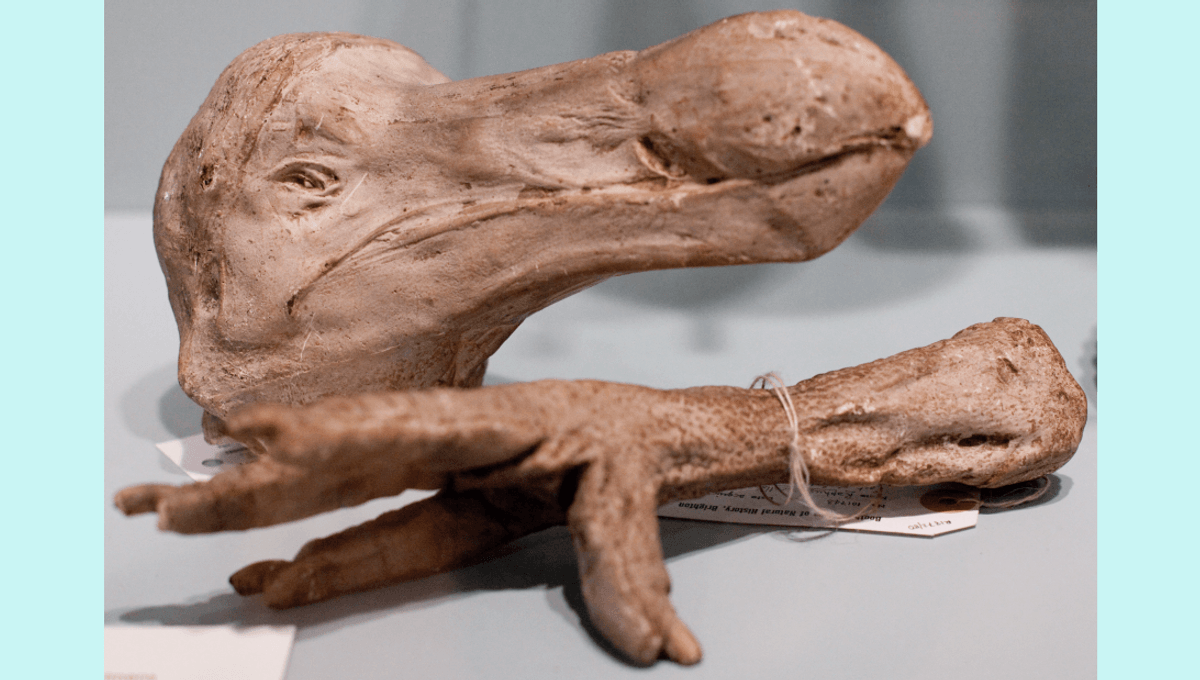
Have you heard that dodo meat tasted foul? Loathsome, even. You’re not alone. It’s a strangely prevalent rumor, given that nobody alive today has ever eaten one. However, it’s quite possible that this “fact” is one that got lost in translation. Known to science as Raphus cucullatus, dodos also went by the nickname “wallowbird”, said to have been inspired by the way their meat made people sick. But as Jan den Hengst, author of The Dodo: The Bird That Drew the Short Straw, wrote in a 2009 study, this dodo meat review may have been misunderstood. In “ The Dodo And Scientific Fantasies: Durable Myths Of A Tough Bird ”, Hengst explores primary Dutch sources dating from 1598 to 1602 to see how people were really reviewing dodo meat. The accounts encompass sailors, merchants, and captains who encountered dodos when visiting their native home of Mauritius. The terms “lothsome” and “fulsome” have historically been used as evidence that dodo meat tasted unpleasant, but as Hengst uncovers, these trace back to an English translation – not the original source. It was inspired by the Dutch phrase de walgch (“the heaves”), which Hengst says more accurately reflects nausea from either eating too much of something, or something that’s tough. Not because it was disgusting. A translation included in the study that supports this comes from a 1601 second edition of Admiral Jacob Corneliszoon van Neck’s report, A true report of the gainefull, prosperous and speedy voiage to lava…. In it, he writes: “These birds we called Wallowbirds, on the one hand because, even though we cooked them for a long time, they were very tough to eat, although the breast and the stomach were very good and, on the other, we were able to catch large numbers of turtle doves, which we found to be much more pleasant in taste. The crew became sick from eating the dodo.” If dodo meat really were so disgusting, it seems unlikely the crews would be going to much effort to catch and kill them. The reports also chronicle how sailors would salt down leftover dodo meat so it could be consumed in transit. Again, not something you’re likely to do with a foodstuff that’s gross. It could be that the mixed reviews surrounding dodo meat come down to a catch that arises when eating many kinds of poultry: the older the bird, the tougher the meat. Dodos enjoyed no predators until humans came along, so there were birds marching around that would’ve been very old. It’s possible, then, that the negative reviews were coming from people eating dodos that were past their prime. “Thus although later writers made no mention of an unpleasant taste, this culinary quality still took on a life of its own, particularly because of the addition of the two English words 'lothsome' and 'fulsome',” wrote Hengst. “In fact, if anyone had had an unpleasant experience when consuming a dodo drumstick, the bird would subsequently have been freed from the dangers of the hunt.” Chance would be a fine thing for our poor extinct dodo. Today, it's known from just a handful of specimens, most of which are just pieces. Still, we may see a dodo-like bird in the years to come as de-extinction marches on, but is de-extinction possible ? It’s an interesting question.
-
I started using a monospace font for all my reading and writing—here's why you should, too
Added: Nov 26, 2025
I started using a monospace font for all my reading and writing—here's why you should, too
Site: How-To Geek
What a difference a font makes.

-
President Trump Delivers Remarks, Nov. 26, 2025
Site: YouTube
West Palm Beach, FL

-
Ilya Sutskever – We're moving from the age of scaling to the age of research
Site: YouTube
Ilya & I discuss SSI’s strategy, the problems with pre-training, how to improve the generalization of AI models, and how to ensure AGI goes well.𝐄𝐏𝐈𝐒𝐎𝐃...

-
 5 Linux desktop environments that make ditching Windows 10 easy - including my top pick | ZDNET
Added: Nov 26, 2025
5 Linux desktop environments that make ditching Windows 10 easy - including my top pick | ZDNET
Added: Nov 26, 20255 Linux desktop environments that make ditching Windows 10 easy - including my top pick
Site: ZDNET
If you're looking to migrate from Windows 10 or 11 and Linux is in your sights, you might want to try one of these desktop environments to ease the transition.

-
Nvidia says it’s ‘delighted’ with Google’s success, but backhanded compliment says it is ‘the only platform that runs every AI model’ — statement comes soon after Meta announces proposed deal to acquire Google Cloud TPUs
Site: Tom's Hardware
Is Google's TPU a threat to Nvidia's dominance?

-
SciShow Is Hyping up AI. Here are the receipts.
Site: YouTube
#ai #scishow #hankgreen #artificialintelligence #factcheck #aihype #OpenAI #AnthropicIn this video, I debunk the recent SciShow episode hosted by Hank Green ...

-
Scientists discover ancient magnetic fossils of unknown creature with internal GPS | Space Added: Nov 26, 2025
Scientists discover ancient magnetic fossils of unknown creature with internal GPS
Site: Space
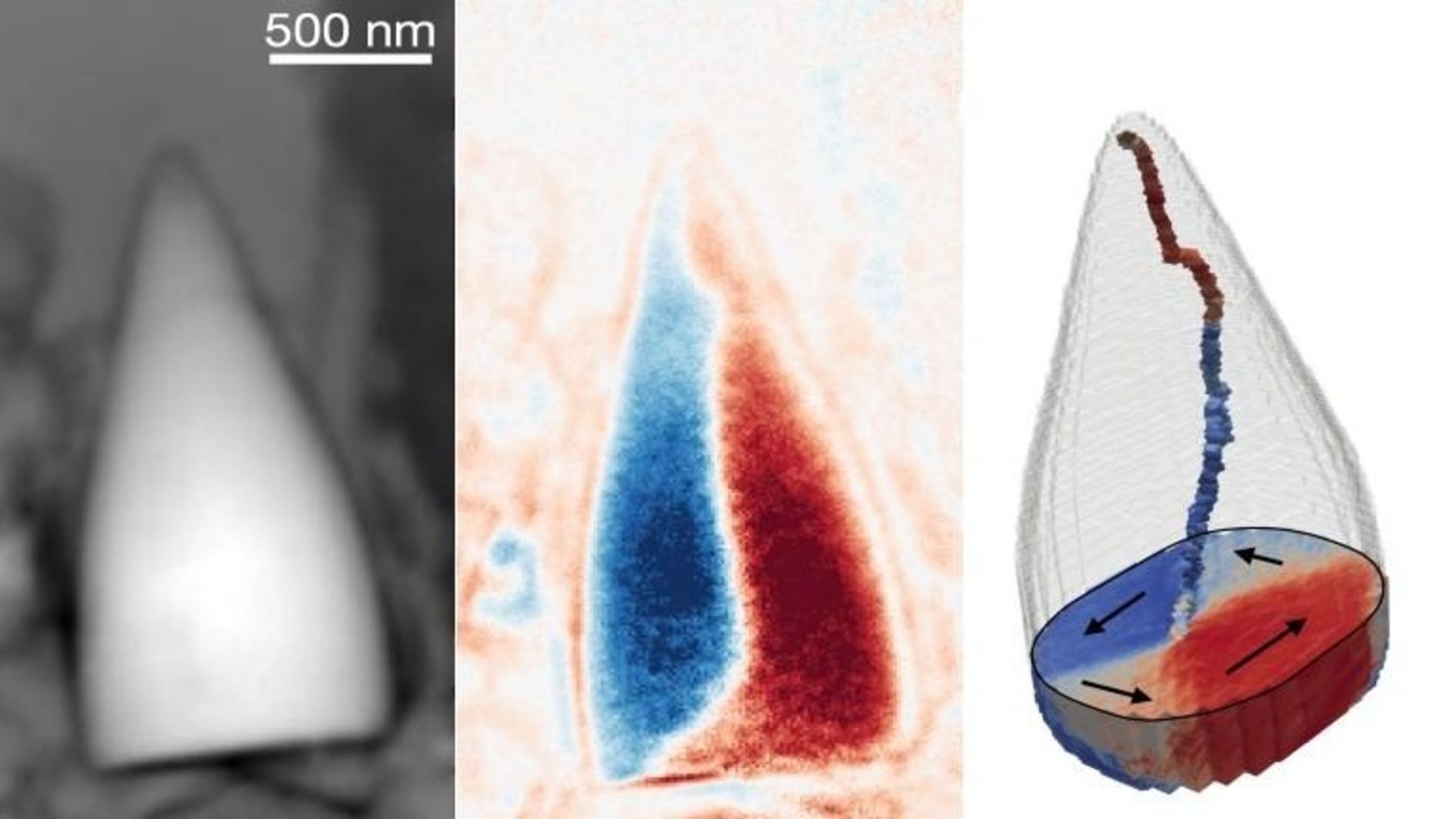
"Whatever creature made these magnetofossils, we now know it was most likely capable of accurate navigation."
-
These 4 Linux distros are a bad idea — avoid them at all costs
Added: Nov 26, 2025
These 4 Linux distros are a bad idea — avoid them at all costs
Site: MUO
Install them only if you hate yourself.

-
Popular Information | Judd Legum | Substack Added: Nov 26, 2025
Popular Information | Judd Legum | Substack
Independent accountability journalism. Click to read Popular Information, a Substack publication with hundreds of thousands of subscribers.

-
 Popular Information (@popular.info) — Bluesky
Added: Nov 26, 2025
Popular Information (@popular.info) — Bluesky
Added: Nov 26, 2025Popular Information (@popular.info)
Site: Bluesky Social
popular.info
-
Gemini 3 Guide, from Coding to 3D Visuals with AI Studio - Geeky Gadgets Added: Nov 26, 2025
Google Gemini 3 Gives You Superpowers : Here’s How to Unlock Them
Site: Geeky Gadgets
Ship projects sooner. Gemini 3 handles code, 3D, and visuals, with AI Studio and Cursor support to move ideas into working demos.

-
 Mars discovery
Added: Nov 26, 2025
Mars discovery
Added: Nov 26, 2025Mars discovery
Site: LAist
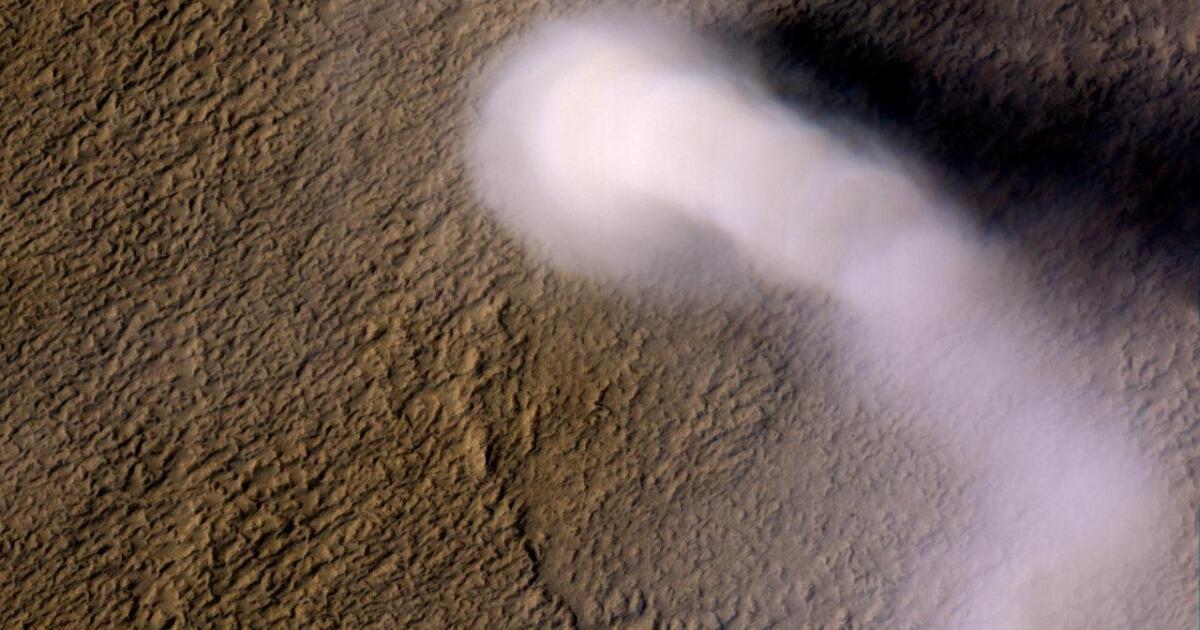
Sound of lightning picked up by rover microphone
-
Google’s Nano Banana Pro AI Model Further Erodes Trust in Photos | PetaPixel Added: Nov 26, 2025
Google’s Nano Banana Pro AI Model Further Erodes Trust in Photos
Site: PetaPixel
'You will be fooled by an AI photo.'

-
Democrats SEDITION, Call On Military To DEFY TRUMP, Civil War Is Coming
Site: YouTube
If this is allowed to stand then the Union will fallBecome A Memberhttp://youtube.com/timcastnews/joinThe Green Room - https://rumble.com/playlists/aa56qw_g-...

-
Tim Pool SLAMS James Lindsay After Calling Tim A MARXIST, He's Lost It
Site: YouTube
BUY CAST BREW COFFEE TO SUPPORT THE SHOW - https://castbrew.com/Become A Member And Protect Our Work at http://www.timcast.comFULL EPISODE HERE: https://yout...