Bookmarks 2025-10-30T03:24:10.858Z
by Owen Kibel
63 min read
Bookmarks for 2025-10-30T03:24:10.858Z
-
Newsom Backtracks on Grace For Charlie Kirk, and Dangers of ChatGPT, with Rich Lowry and The Raines - YouTube Added: Oct 29, 2025
Shocking Reality of Illegal Immigration, Newsom Backtracks on Grace For Charlie, Dangers of ChatGPT
Site: YouTube
Megyn Kelly is joined by Rich Lowry, editor-in-chief of National Review, to discuss the attack by an illegal Afghan man on an innocent person in the UK, the ...

-
Avi Loeb accuses NASA of withholding 3I/ATLAS evidence Added: Oct 29, 2025
Harvard scientist accuses NASA of ‘hiding’ critical evidence about Manhattan-sized comet 3I/ATLAS
Site: New York Post
The Harvard astrophysicist made these allegations during a recent appearance on “The Joe Rogan Experience.”

-
Joe Rogan Experience #2401 - Avi Loeb
Site: YouTube
Avi Loeb, PhD, is a theoretical physicist and Frank B. Baird, Jr., Professor of Science at Harvard University. He is the author of several books, the most re...

-
Erika Kirk makes first campus appearance at Ole Miss since Charlie's death | Fox News Added: Oct 29, 2025
Erika Kirk makes first campus appearance at Ole Miss since Charlie's death | Fox News

-
JD Vance spars with college students at Turning Point USA event Added: Oct 29, 2025
Vance spars with college students at Turning Point USA event
Site: The Hill
Vice President Vance went toe-to-toe with college students at the University of Mississippi on Wednesday in a nod to his friend, the late conservative activist Charlie Kirk. Vance and Erika Kirk, C…
Vice President Vance went toe-to-toe with college students at the University of Mississippi on Wednesday in a nod to his friend, the late conservative activist Charlie Kirk. Vance and Erika Kirk, Charlie Kirk's widow, addressed thousands of students at an arena on the university’s campus as part of a Turning Point USA tour. Vance fielded questions from attendees, just as Charlie Kirk did at numerous “Prove Me Wrong” events during Turning Point USA college events. "Please don’t be nervous if you need to work through a question. Think through it, speak it," Vance said. "We’re all here to have a nice conversation, and we’re all supportive of it." In one of the evening's more contentious exchanges, a student pressed Vance on several issues. They asked Vance how he balances his intercultural marriage, about restrictive immigration policies, and whether they are fair to those who went through the process to enter the country. “I don’t mean to cause a scene here,” she said at one point. “We’re not close to causing a scene, don’t worry,” Vance responded. Vance later drew applause when he told the questioner his job as vice president “is not to look out for the interests of the world; it’s to look out for the people of the United States.” One student asked Vance whether President Trump had a conflict of interest in setting policy toward Israel because one of his top donors, Miriam Adelson, was a staunch advocate of pro-Israel policies. Vance said he did not see a conflict of interest, noting Adelson is open about her views. One attendee asked Vance about the issue of requiring Christianity in public schools, while another asked the vice president how he planned to extend an olive branch to Democrats to close the social and political divide in the country. Vance noted he had areas of agreement with Democrats on policy, including on breaking up corporate monopolies. At one point, those in attendance chanted “48” at Vance, a nod to a potential 2028 run to serve as the 48th president. "Let's not get ahead of ourselves, ladies and gentlemen,” Vance said. The event at the University of Mississippi marked the only stop on the Turning Point USA tour attended by Erika Kirk. Other conservatives, such as Megyn Kelly and Tucker Carlson, have attended other campus stops in recent weeks. Vance was a close personal friend of Charlie Kirk, the Turning Point USA founder who was shot and killed in September during a campus event at Utah Valley University. Erika Kirk has since taken over as head of Turning Point USA. Charlie Kirk built a sizable following in part by traveling to college campuses to hold events where he would debate students on various issues. Vance said his intention in attending Wednesday’s event was to keep Kirk’s memory and mission alive.

-
 Google Maps adds a brilliant new button to help you find your way faster - Talk Android
Added: Oct 29, 2025
Google Maps adds a brilliant new button to help you find your way faster - Talk Android
Added: Oct 29, 2025Google Maps adds a brilliant new button to help you find your way faster - Talk Android
Site: Talk Android
Google Maps is getting a serious upgrade, and it's all thanks to Gemini, Google’s latest AI assistant. Replacing the older Google Assistant, Gemini is set to

-
Sorghum’s Science-Backed Benefits for Gut Health and Immunity Added: Oct 29, 2025
The Ancient, Drought-Resistant Grain Linked to Better Gut Health, Blood Sugar, and Immunity
Site: Food & Wine
Sorghum may not be on your radar, but it’s been a dietary staple for centuries across Asia and Africa. New research shows it’s rich in phytonutrients that can boost satiety, balance blood sugar, and support gut health. Plus, it’s gluten-free and eco-friendly, using 36% less water than other grains.
:max_bytes(150000):strip_icc()/Sorghum-Could-be-the-Next-Superfood-FT-BLOG0725-02-79daddd67f6c46c4929f48b472bcafc5.jpg)
-
A Self-Reflection Question That Can Lead to an Epiphany | Psychology Today Added: Oct 29, 2025
A Self-Reflection Question That Can Lead to an Epiphany
Site: Psychology Today
Use this simple framework to unblock yourself.

-
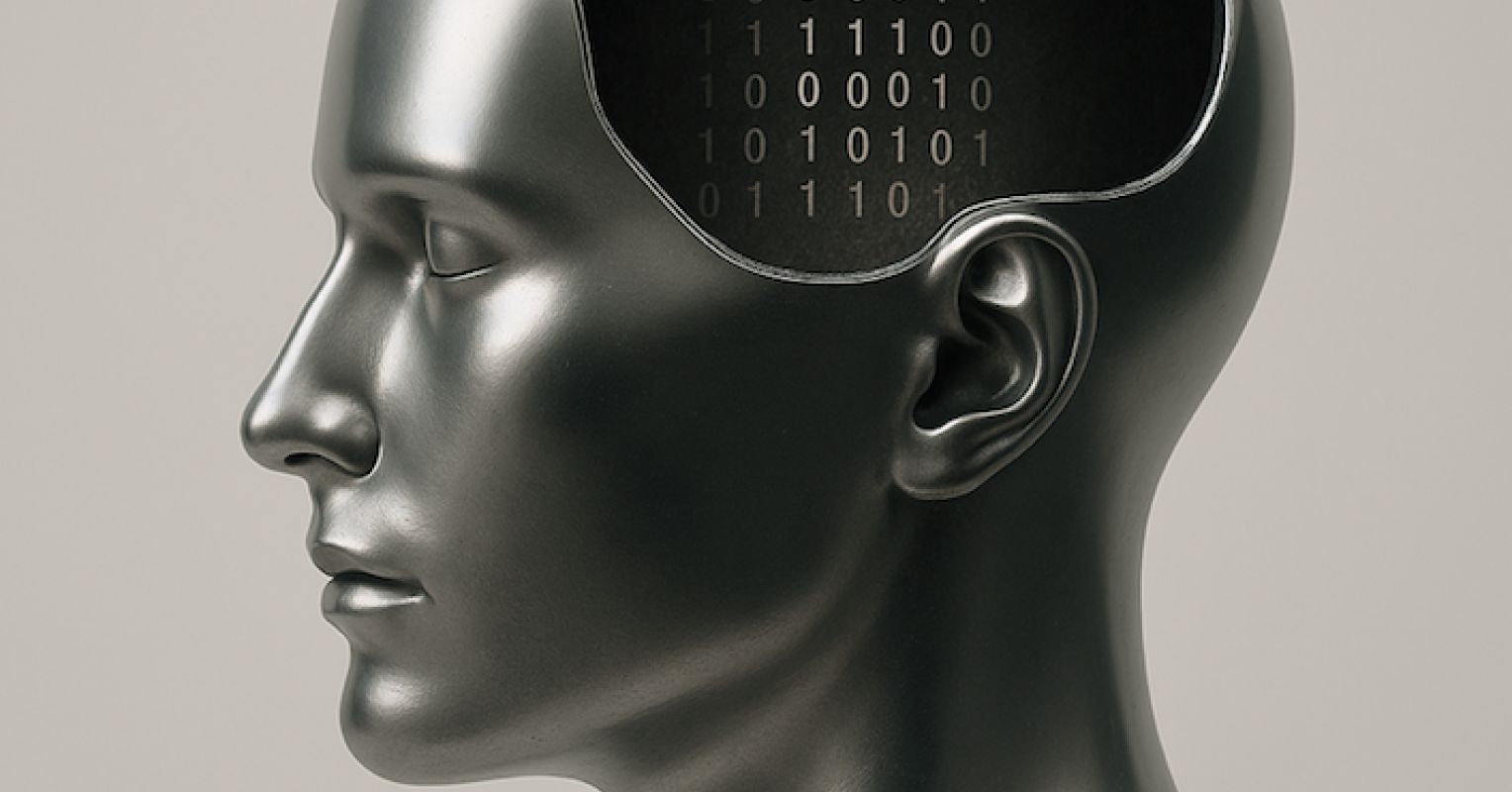
The Perfect Emptiness of AI
Site: Psychology Today
We’ve built a technology that speaks like a sage but thinks like a spreadsheet.
-
 Why Artificial Intelligence Is Neither Artificial, Nor Intelligent
Added: Oct 29, 2025
Why Artificial Intelligence Is Neither Artificial, Nor Intelligent
Added: Oct 29, 2025Why Artificial Intelligence Is Neither Artificial, Nor Intelligent
Site: Forbes
Ethical leadership is the missing piece in the AI revolution.

-
 The Global Advocate for Justice – Meriam Nazih Alrashid: Bridging International Law, Human Rights, and Narrative to Transform Global Justice - insightssuccessmagazine.com
Added: Oct 29, 2025
The Global Advocate for Justice – Meriam Nazih Alrashid: Bridging International Law, Human Rights, and Narrative to Transform Global Justice - insightssuccessmagazine.com
Added: Oct 29, 2025The Global Advocate for Justice – Meriam Nazih Alrashid: Bridging International Law, Human Rights, and Narrative to Transform Global Justice - insightssuccessmagazine.com
Site: Insights Success Magazine
Few legal minds operate with the scope, strategic vision, and moral authority of Meriam Nazih Alrashid. As a Globally Ranked International Disputes Counsel

-
Site: X (formerly Twitter)

-
The brain power behind sustainable AI | MIT News | Massachusetts Institute of Technology Added: Oct 29, 2025
The brain power behind sustainable AI
Site: MIT News | Massachusetts Institute of Technology
Miranda Schwacke, a PhD student at MIT, develops electrochemical devices for brain-inspired computing to enable sustainable AI. She combines cutting-edge research with community involvement and science communication, inspiring others while addressing energy-efficient technology challenges.

-
AI and the New Rhythm of Thought
Site: Psychology Today
Personal Perspective: How AI and human thought share a curious rhythm of cognitive collapse and expansion.

-
Victor Davis Hanson: No, Jen Psaki. Joe Biden Was the Real Manchurian Candidate
Site: YouTube
On Thursday’s episode of “Victor Davis Hanson: In His Own Words,” Hanson and Jack Fowler pick apart former White House press secretary Jen Psaki’s “silly” at...

-
Trump Orders Nuclear Buildup, DoW To Begin Nuclear Tests Immediately
Site: YouTube
SUPPORT THE SHOW BUY CAST BREW COFFEE NOW - https://castbrew.com/Join - https://www.youtube.com/channel/UCLwNTXWEjVd2qIHLcXxQWxA/joinHosts: Tim @Timcast (eve...

-
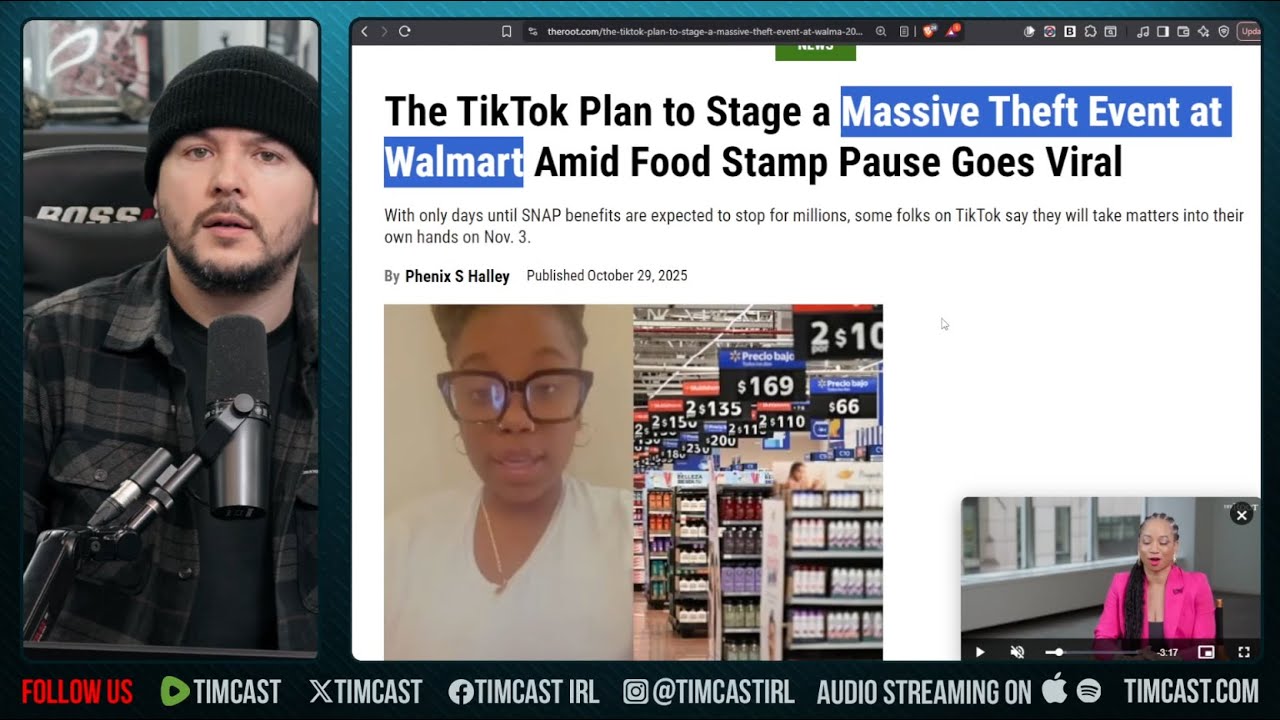
Black Women Call For MASS RIOTS If Food Stamps End, Social Order IS BREAKING | Tim Pool
Site: YouTube
This is not sustainable. Our socila order is breaking downBecome A Memberhttp://youtube.com/timcastnews/joinThe Green Room - https://rumble.com/playlists/aa5...
-
Generative AI Hype Check: Can It Really Transform SDLC? - KDnuggets Added: Oct 30, 2025
Generative AI Hype Check: Can It Really Transform SDLC?
Site: KDnuggets
Gen AI is reshaping the software development lifecycle (SDLC). Faster coding, texting, and documentation. But the fundamental transformation happens when it's combined with human expertise.

-
CBS Just FIRED Woke Staff In MASS PURGE After Bari Weiss Takes Over | Tim Pool
Site: YouTube
BUY BEAM AND SLEEP CLEAN - https://shopbeam.com/TIMCASTBecome A Memberhttp://youtube.com/timcastnews/joinThe Green Room - https://rumble.com/playlists/aa56qw...

-
President Trump Visits Japan
Site: YouTube
Enjoy the videos and music you love, upload original content, and share it all with friends, family, and the world on YouTube.

-
President Trump Participates in Bilateral Meeting with the President of the Republic of Korea
Site: YouTube
Gyeongju, South Korea

-
Trump Restarts NUCLEAR TESTING, Russia Warns This IS MADNESS, New Arms Race Begins | Tim Pool
Site: YouTube
People do not understand the true power of nuclear weapons.Become A Memberhttp://youtube.com/timcastnews/joinThe Green Room - https://rumble.com/playlists/aa...

-
Interstellar visitor reappears from the sun's shadow with baffling glow unlike natural comets | Daily Mail Online Added: Oct 30, 2025
Interstellar visitor reappears from sun's shadow with baffling glow
Site: Mail Online
Scientists have released images of the interstellar visitor as it reemerged from behind the sun, revealing that the comet looks very different from when it was first seen.

-
 Farewell to the quantum mystery - Argentine physicist assures that quantum mechanics can be understood with geometric logic and common sense
Added: Oct 30, 2025
Farewell to the quantum mystery - Argentine physicist assures that quantum mechanics can be understood with geometric logic and common sense
Added: Oct 30, 2025Farewell to the quantum mystery - Argentine physicist assures that quantum mechanics can be understood with geometric logic and common sense
Site: El Adelantado EN
For decades, quantum mechanics (QM) has been synonymous with something “strange,” “magical,” or fundamentally “incomprehensible.” Most mortals have had to

-
How Silicon Valley enshittified the internet | The Verge Added: Oct 30, 2025
How Silicon Valley enshittified the internet
Site: The Verge
Author Cory Doctorow on platform decay and why everything on the internet feels like it’s getting worse.
Hello, and welcome to Decoder. This is Sarah Jeong, features editor at The Verge. I’m standing in for Nilay for one final Thursday episode here as he settles back into full-time hosting duties. Today, we’ve got a fun one. I’m talking to Cory Doctorow, prolific author, internet activist, and arguably one of the fiercest tech critics writing today. He has a new book out called Enshittification: Why Everything Suddenly Got Worse and What to Do About It. If you want to know what happened to the tech industry, and why the products and platforms you use every day feel like they’ve gotten meaningfully more terrible, this is the book that explains it.
[Image: https://platform.theverge.com/wp-content/uploads/sites/2/chorus/uploads/chorus_asset/file/24792604/The_Verge_Decoder_Tileart.jpg?quality=90&strip=all] Verge subscribers, don’t forget you get exclusive access to ad-free Decoder wherever you get your podcasts. Head here. Not a subscriber? You can sign up here.
Enshittification as a term is relatively new — Cory only coined it a few years ago to explain a phenomenon you’ll hear him call platform decay, or the experience of a piece of software or a website becoming worse and worse over time. But the term has since become a kind of rallying cry among creatives, tech theorists, and others trying to make sense of where, exactly, the internet went so wrong. Now, with generative AI, it feels like everything in our digital lives is becoming enshittified in ways that are plainly obvious to even the most casual user of technology. So you’ll also hear Cory and I delve into that intersection between the rise of so-called AI slop and enshittification — and why it’s important that these two themes have so much overlap. I’ve known Cory for a long time. We’ve traveled in a lot of the same circles on the internet for years, writing and debating copyright, Section 230, and a lot of the other major forces in U.S. law that have shaped the tech industry. And all of that comes up in this conversation, too — because central to the narrative around enshittification is how tech companies became so big and so powerful that they were able to start abusing their market dominance with little to no consequences. So enshittification, in Cory’s eyes, is as much a legal and regulatory story as it is a product one — but which laws and regulations have what kind of effects over time? What kind of effects will they have in the future? What’s the best way to curb monopoly power? This was a really fascinating conversation that touches on a lot of Decoder themes that come up again and again on the show. And in true Cory fashion, he really does not hold back. I think you’re going to like it. Okay, Enshittification author Cory Doctorow, here we go. This interview has been lightly edited for length and clarity. Cory Doctorow, you are the author of the new book Enshittification: Why Everything Suddenly Got Worse and What to Do About It, and many, many other books. Welcome back to Decoder. Thank you very much. It’s great to be talking with you again, Sarah. So let’s start at the beginning. What is enshittification? Why and how did you coin it, and what do you think that now means in broader internet culture? You and I have done some similar work over the years with organizations like the Electronic Frontier Foundation, and you know that a big part of that job is just trying to raise the salience and urgency of questions that are really very abstract and complex and technical. They will eventually become very important to people when everything’s on fire, but ideally you’d like people to care about it beforehand. So a lot of that job is just coming up with metaphors and similes and funny words and framing devices and parables and just all kinds of ways to try and talk about this stuff and bring it home for. And enshittification was just one of those. I had been working through a way of talking about platform decay, one day I needed a word for it. I’d used the word a year before in a bad-tempered tweet when TripAdvisor wasn’t working for me when I was on a holiday with my family. I was like, “Has anyone at TripAdvisor ever been on a trip? This is the most enshittified website I’ve ever used.” It had 78 trackers and all that was happening when I tried to load up web pages was I would get 20 of the trackers loaded and then the pipe would break and I couldn’t get any information. And so I knew people liked the word, and so I thought, “Well, people laughed when I used that word on Twitter last year or whenever it was. I will use it in this article.” The fusion of a complex technical analysis that chimed with people and this minor license to vulgarity turned out to be a very winning combination. And as to what it means, its kind of most superficial level is a way of describing platform decay, but its most important part is the causal narrative it brings together. Why is this happening now? Observationally, we can see that platforms go through this pattern where first, they’re good to their end users. They find a way to lock those users in at stage one. When they are certain that it’s hard for those users to leave, they make things worse for those users in order to make things better for business customers. That’s stage two. And then once the business customers are locked in, then they make things worse for those business customers too. They harvest all the available surplus. They take everything for themselves, for their shareholders and executives. They leave just the mingiest kind of most homeopathic residue behind of value that will keep us all stuck into the platform. And then the platform is a pile of shit. That pattern, I think, chimes with a lot of people, and I go through case studies in the book, but as I say, I think the most important thing is the part where I explain why it’s happening now. How taking away all the forces of discipline, all the sources of punishment that companies would have faced if they had been bad to us before, meant that today they are bad to us, not because they’re worse people than they used to be, but because they’re less frightened about what will happen if they make things worse for us to make things better for them. And by grounding this in the policy realm instead of the iron laws of economics, the great forces of history, it takes it out of the realm of things that happened to us and into the realm of things that we can do something about. This process of platform decay, how long has this been apparent to you? I think that for a lot of people just tuning in, they’re coming to realize this in the last three, five years. At what point did you peg this as an issue and would you say that there’s an origin point for all of this beginning to happen? I have noticed a steady decline in the discipline imposed by different external factors on companies and a concomitant rise in their bad behavior. And if there was a turning point where I really saw one of the most important sources of discipline collapse, it was in 2017. And it was when this standards body called the Worldwide Web Consortium, or W3C, was pressured by the big movie studios and the big tech companies to fundamentally change how browsers work to add something called digital rights management to browsers. That’s the thing that is supposed to stop you from recording videos. Basically Netflix and a few of the other big streaming companies, they said, “Look, if you don’t put digital rights management into browsers, then we will no longer allow streaming video in browsers and everyone will have to use apps and the web will die.” And the W3C believed them and they really pushed hard to do this. And the problem here is not just that there are a lot of unfair ways in which this limits how we use video. The problem is that the laws that protect digital rights management are so onerous and overreaching that they prevent you from doing lawful things with your browser once there’s DRM in there. For example, now it’s illegal to change how your browser works so that if you have epilepsy, it checks to see whether there’s a strobe effect in the video and dampens that before it can induce a seizure. If you’re a security researcher trying to figure out whether this video module allows attackers to harm the 3 billion people who use browsers, you can’t investigate that security module. And the penalties for this are a five-year prison sentence and a $500,000 fine. We try very hard to get the W3C to extract a promise from its members to say, “We are going to put this in browsers nominally to stop piracy, and we are going to exempt people who modify their browsers to improve accessibility or to discover security defects.” And they just refused outright. And the W3C thumbed the scales and did it. I looked at this and I was like, “Wow, this public interest internet institution that has been such a staunch guardian of the idea that technology should serve its users and its owners has been cornered to the point where they’re taking the other side because they feel that if they don’t give this away, the web will die altogether. And that was such a turning point. It was very demoralizing too. I’m still really sad about it. So your book is chock-full of specific case studies, examples. What would you describe as the most iconic example of enshittification? I think the reference case here has to be Facebook, not least because Facebook addresses some of the common objections, which is that, maybe we used to have these heroic founders of these companies who kept the flame, but then when they passed it on to these bloodless, ex-McKinseyites like [Microsoft CEO] Satya Nadella or [Google CEO] Sundar Pichai, they’re the ones who enshittified everything. But Facebook has had the same leadership since Mark Zuckerberg decided he needed a primitive text interface to non-consensually rate the fuckability of Harvard undergraduates. He controls the majority of the voting shares, no one can tell him no, and he presided over its enshittification. And it’s not like he got worse, right? He was always a terrible person. If you’ve read Sarah Wynn-Williams’ amazing memoir of being Facebook’s first international relations person, Careless People, which Facebook has tried to halt the publication of and is going to bankrupt her for publishing, you find out all kinds of things about Mark Zuckerberg that are very unflattering. But I was really struck by the fact that he cheats at settlers of Catan and he’s always been a creep, right? So you have this company that’s been run by the same guy since the beginning. He’s always been a rotten guy, and yet he used to make it better and now he makes it worse. Can you break down how Facebook got enshittified in a multi-stage process? Sure. Facebook in 2006 opened up to the general public. You no longer needed a .edu address from an American college to sign up. And they had a problem, which was that everyone who might become a Facebook user at that moment was already a MySpace user. And so they made a pitch to those MySpace users. They were like, “Sure, we know you like MySpace, but did you know it’s owned by an evil crapulent, senescent, Australian billionaire, immortal vampire named Rupert Murdoch? And that guy spies on you all the time. We’re not run by an evil billionaire and we will never spy on you. Come to Facebook, tell us who matters to you. We’ll show you the things they post.” So you just piled in and they got locked in. And Facebook plays lock-in on the easy setting. Unlike a company like Uber say, which has to light $31 billion on fire over 13 years, losing 41 cents on every dollar they bring in until all the other cab companies have gone under and we’ve had a lost decade in transit investment before they can start raising prices and abusing their users and their drivers, Facebook can rely on us to lock ourselves in through something economists call the collective action problem, which is more easily understood as you love your friends, but they’re a giant pain in the ass. And if the six people in your group chat can’t agree on what movie you’re going to see this Friday, there’s no way you’re going to agree on when it’s time to leave Facebook. So long as you love those people more than you hate Mark Zuckerberg, Mark Zuckerberg can make things worse for you. And that’s when we get to stage two when he goes to business customers and he gives the advertisers surveillance data on you that he promised he would never collect, and he promises them that he’s going to take very small amounts of money, spend all that and more policing ad fraud and target ads to you with exquisite fidelity. And he goes to publishers and he offers them the ability to promote their material to people who never asked to see it, to have it crammed into the eyeballs of people who don’t subscribe to their feeds and says, “Just put excerpts from your own website here on Facebook, link back to your own website. We’ll give you the free traffic funnel.” Those business customers, they get locked into Facebook too. And I think unless you’re an economist or unless you run a small business, it’s really hard to understand intuitively how easy it is for a supplier to be locked into a purchaser, how easy monopsony, which is the buy side version of Monopoly is. But if you have a coffee shop and the office next door is 20 percent of your business, this tower next door, and then they go out of business and you lose 20 percent of your receipts overnight. Your coffee shop may not survive the month, right? You’re going to have to do layoffs. You’re going to have to get another loan to carry the coupon on your espresso machines. You’re going to have to maybe get rent relief from your landlord, and you could be out of business in a couple of weeks, even though 20 percent isn’t a lot. It’s nowhere near a majority. And certainly as a purchaser of coffee, if there’s five coffee shops on the block and one of them goes under, you have a 20 percent reduction. It doesn’t even really register. You can just get your coffee somewhere else. Monopoly is a lot harder to establish than monopsony. And so these business customers, they get locked in and the advertisers start to find, “Well, now our ads cost way more. Our ad targeting fidelity is way down.” And ad fraud is so bad that when Procter & Gamble zeroed out its $200 million dollars a year surveillance ad spend, they saw a 0 percent drop in sales because all the ads were disappearing into the fraud hole. And publishers, they have to put the full text of their articles on Facebook now and no links back to their website. Otherwise, they won’t be shown to anyone, much less their subscribers, and they’re now fully substitutive, right? And the only way they can monetize that is with Facebook’s rigged ad market and users find that the amount of stuff that they ask to see in their feed is dwindled to basically nothing, so that these voids can be filled with stuff people will pay to show them, and those people are getting ripped off. This is the equilibrium Mark Zuckerberg wants, right? Where all the available value has been withdrawn. But he has to contend with the fact that this is a very brittle equilibrium. The difference between, “I hate Facebook, but I can’t seem to stop using it,” and “I hate Facebook and I’m not going to use it anymore,” is so brittle that if you get a live stream mass shooting or a whistleblower or a privacy scandal like Cambridge Analytica, people will flee. And then the market gets cold feet because they’re like, “Well maybe this is the end of the ride for Facebook.” Facebook sees big stock drops and then they panic. But being tech bros, they call it pivoting. And so one day, Mark Zuckerberg arises from his sarcophagus and says, “Hearken to me, brothers and sisters, I know I told you that the future was arguing with your most racist uncle using this text interface, but actually I’m going to transform you and everyone you love into a legless, sexless, low polygon, heavily surveilled cartoon character so I can imprison you in a virtual world I stole from a 25-year-old cyberpunk novel. I call it the Metaverse.” Right? And that’s end stage enshittification, the giant pile of shit. I mean, in many ways when you describe enshittification, it can feel just like we’re describing a form of unchecked capitalism, right? Things start out good and cheap or even free, then they have to make money so they get worse. I remember this being how Walmart’s ascendancy was being described in the early 2000s. In your view, is enshittification, the idea of enshittification specific to tech? So unchecked is an important word there. You called it unchecked capitalism. And that is key here that when you take away the discipline, the firms act in undisciplined ways. They go hog wild on you. And I think that tech had different sources of discipline to a company like Walmart. Brick-and-mortar businesses have two sources of common discipline. One is markets and the other is regulators. So the discipline of commerce and the discipline of government, and they’re pretty closely related. When you allow a sector to dwindle to a bare handful of firms or even just one company, they don’t have to worry about competitors anymore. When Mark Zuckerberg bought Instagram, his CFO asked him, “Why are we giving this 12 person company a billion dollars?” And he put it in writing. He sent his CFO an email saying, “Well, people leave Facebook, they go to Instagram, they like Instagram better. So to reduce competition, we’ll buy Instagram. So those people will remain users of Facebook even if they’re not on the Facebook platform.” That’s like a confession of guilt. The only thing that even the antitrust skeptics who’ve been running the show on antitrust for 40 years think you should be able to punish is the deliberate reduction of competition, which is hard to prove because someone would need to tell you that the reason they’re buying a company is to reduce competition. But Mark Zuckerberg has never had a bad idea he didn’t put in writing. He’s the guy who’s like, “Hey, Bob, that guy we were thinking about killing. I think we should do it. And definitely it should be a murder. And now that I think about it, I’m really premeditating it.” And yet the Obama DOJ waived that through just all of the Bush DOJs and FTCs waived through all of their mergers. And just like Trump one did with a couple of exceptions, and like everyone did, except for Biden, who for four years did more on antitrust than we’d seen in 40 years. When you lose the competition, you also lose the regulation because when there’s 100 companies in a sector, they’re a rabble, they can’t agree on anything. They can’t agree what they’re going to tell their regulators. They don’t have the excess profits that you get from avoiding what Peter Thiel calls wasteful competition to spend on regulatory adventures. But when the sector is just a handful of companies, they find it very easy to agree, they don’t have a collective action problem. And they have so much money because they have divided up the market like the Pope dividing up the new world. Think of Google giving $20 billion a year to Apple not to make a search engine. And then both of them get to reap super normal profits from not competing on that line of business. And so they can totally transform the policy environment to suit them. And so that’s the Walmart story. But tech had two other sources of discipline that are distinct to the tech sector as we understood it for the last 25 years. One was interoperability. The only kind of computer we know how to make is that wonderful Turing-complete universal Von Neumann machine. It can run every program. If some tech boss puts a 10-foot pile of shit in something you use, some programmer can give you an 11-foot code ladder to go over top of it. Everything that stops you from installing a third-party app or using generic ink to protecting your privacy while you use a website has a piece of software that could undo that mischief and shift the balance towards you. But the unchecked growth of IP law over the last 40 years, particularly the laws that protect digital rights management, which we were talking about before, these anti-circumvention laws in America, it’s Section 1201 of the Digital Millennium Copyright Act. Those laws have taken that interoperability off the table and now there’s no reason not to go nuts, right? In the old days, if you were thinking about making the ad load on your website more invasive, you also had to contend with the possibility that users would install an ad blocker. You don’t have to worry about that for apps because apps are basically websites skinned in the right kind of IP to make it a felony to install an ad blocker. And so, the fact that your app is more invasive doesn’t spur people to install an ad blocker. They can search, how do I block ads in this app all they want. The answer they’re going to get is we can’t. To give you a really clear example of this, there’s a company called Chamberlain that makes garage doors. It got some private equity money. It bought all the other companies that make garage doors. If you have a garage door opener, it doesn’t matter what the maker’s mark on it is, it’s a Chamberlain. The company discontinued support for something called HomeKit, which is a standard way for apps to talk to devices in your home. So you could have lots of different apps that let you open your garage door. So now you have to use the Chamberlain app and the Chamberlain app shows you seven ads before it lets you open your garage door. That’s why they’re so horny to make you stop using the web, right? It’s because apps let them abuse you and leave you helpless. So we lost that source of discipline and we lost one more source of discipline, the last one, the one that held the line until the very end, which was tech workers. And tech workers were incredibly scarce. They were incredibly productive. There’s a National Bureau of Economic research paper that estimates that the average tech worker was adding $1 million dollars a year to their boss’s bottom line. And so, that’s why there was free kombucha and massages and stuff. It wasn’t because they liked programmers. It was because they wanted these people who could walk across the street and get a better job to stay where they were and work every hour that God sent. And so they did. And the problem with relying on a sense of mission from your workers to motivate them is that they feel a sense of mission. So, when you say, “Well, it’s time to enshittify that thing, you missed your mother’s funeral to ship,” they’re like, “Well, no, I’m not going to do that and you can’t make me. And you can’t hire someone else who will do it either because there’s no one else on the job market who can do it.” So fast forward a couple of years, tech workers think that they’re temporarily embarrassed founders, they don’t unionize when they have the chance. We got half a million tech layoffs in three years and now tech bosses don’t have to worry about what their workers have to say. These Tron-pilled workers who fought for the user, they’re suddenly out of juice. And so that’s the tech-specific mechanism. And because it’s tech, they can move value around really quickly because that Turing completeness, that universality, means that a product can have its business logic changed from moment to moment. The prices, the costs, the search rankings, the sorting, they can be different for every user and for every interaction. So, when tech comes into a sector like, say, nursing now, where contract nurses, which are the nurses hospitals like because they’re not union, are hired through an app. There’s four platforms. They all call themselves Uber for nursing. And because we have regulatory capture, there hasn’t been a new privacy law in this country since Ronald Reagan banned the disclosure of your VHS rental histories in 1988. That means that these apps can look up the nurse’s credit history. And depending on how much credit card debt you’re carrying, you get paid a lower wage. Because people who have more debt are willing to work for less money. And so that’s specific to tech, too. But when an industry becomes technological — nursing is not the tech sector — it gains all the enshittificatory potential of tech. You are probably one of the most influential figures in the copyleft movement. We’ve talked a fair bit about DMCA 1201, that’s the DRM provision, but there’s another very famous and highly litigated section of the DMCA, and that would be the thing that in this age of streamers, and YouTube, and so on and so forth, everyone is aware of this one: notice and take down. A lot of the case law that was pioneered in the 2000s, early 2010s has to do with notice and take down, has to do with [the Communications Decency Act], which is different, but related has to do with honestly the underrated one would be Google Books, Perfect 10, the cases that solidified fair use on the internet. These cases along with low interest rates, of course, and a bunch of other societal general environmental things led to the rise of tech and allowed a handful of firms to gain almost monopolistic control over markets. I also think that AI wouldn’t exist without these cases. And we’ve been talking around AI with all of this. The degradation of the power of the tech workers is very much linked to this. I think that with enshittification sort of taking off as a term, a lot of people conflate it with AI slop. I even hear the same wordplay: sloppification, or “the slopocene.” What role does AI play in the history of enshittification? And also, was fair use worth it? That was the flip side of copyleft. I want to dispute the frame there. I do think that what we’re talking about here is limitations on intermediary liability. So actually, let me take a step back here and just talk about intermediation, disintermediation, because that was the thing we were all excited about in the 1990s, disintermediation. Why were we excited about disintermediation? It’s not because intermediaries are per se bad. In the book, I tell the story of this writer I grew up idolizing, this guy called Crad Kilodney, who was a writer in Toronto, kind of an outsider artist. He would write his own stories, he would edit them himself, he would typeset them, he would bind them, he would print them, he would sell them on street corners with a sign around his neck that said, “Very famous Canadian author, buy my books.” And he would use the whole auctorial experience. He secretly recorded the drunks who picked on him and sold cassette tapes of the best drunk nonsense he put up with. You can download them from the Internet Archive: “On The Street With Crad Kilodney.” As much as I love Crad’s works, there are a lot of writers I want to hear from who are never going to do that stuff. It’s fine that we have booksellers, printers, editors, distributors, and marketers; all that stuff is fine. So why were we so keen on disintermediation then? It’s not because intermediaries are a problem. It’s because the user patient of the relationship between the parties that the intermediary is connecting turns what should be a kind of utility function into a gatekeeper. Powerful intermediaries, I think, are a scourge. Powerful intermediaries, if you ever look at what businesses the mafia goes into, it’s usually powerful intermediaries because if you can get in there and start abusing people, that’s your opportunity to really rake in the money from both sides of the two-sided market. That’s why the mafia, we’re in juke boxes because being the intermediary is a really important role. All of the limitations on intermediary liability that you’re talking about. So CDA [Section] 230, which says that for non-copyright, non-criminal matters, unlawful speech acts by parties who use your platform are their problem and not your problem. If someone libels someone else on your platform, that’s between that person and the person they libeled, it’s not your business. You do not have to hold review and then assess all the speech that every user on your platform wants to engage in, in order to host a place where people can talk to each other. Any more than a restaurateur needs to make sure that everyone at every table is talking nice and no one’s talking shit about a friend. It’s just not your business is the person who convenes the speech form. So there’s that. There are copyright intermediary limitations. So notice and take down that says so long as you expeditiously remove things after being informed that they’re infringing, you can’t be held liable if they turn out to infringe. There’s that Perfect 10 case and the other fair use cases, the Google Books case that say that doing things like making a transient copy of a work for the purpose of indexing it are lawful. And the thing about that is all of that makes being an intermediary cheaper and easier. And if you want to have a robust competitive intermediary sector, you do not want being an intermediary to be more expensive and harder. Because what that does is it creates a winner take all, first mover, deepest pockets wins forever market, which is the market we have. So how do we get this market, even though we took such care to protect the ability of new entries into intermediation. And the internet needs intermediaries because compared with publishing, being on the internet is especially hard and esoteric. Running your own file server, running your own web server, running your own mail server, running your own DNS server, running your own content distribution network, running your own anti-DDoS network, your payment processor. That stuff is just so intense that if we said, only people who can do all of that for themselves, like gnawing their own web server out of a whole log with their own teeth are allowed to be on the internet. No one would be on the internet except for the very largest corporations. It wasn’t that we failed to police intermediary conduct. It was that we failed to police intermediary mergers. So how did Amazon get so big? It wasn’t by being the best in every sector. Amazon bought all of its competitors. And they bought them in the dirtiest way possible. So in the book, I tell the story of a startup called Diapers.com. It was doing really well. It was the leading retailer of goods for new parents, and Amazon couldn’t crack that vertical. So they made a purchase offer and they were like, no, you know what? We’ve got a good business here, we won’t sell to you. So Amazon broke antitrust law. It did something called predatory pricing where it sold goods for newborns below cost to the tune of $200 million in a couple of months. And it drove Diapers.com out of business. Amazon bought them for pennies on the dollar. Diapers.com’s investors sold to Amazon even though they had a better offer from Walmart, because they were afraid of what Amazon would do to their other startups if they didn’t sell to Amazon. Amazon then shut down Diapers.com and no one ever said no to Amazon. How did Amazon come to dominate every vertical? It bought all the companies that had good businesses and they were able to buy all the companies that had good businesses because we didn’t stop them when they broke the law. And so, it terrorized everyone who might come close to it. In investing circles, they call it the kill zone, anything adjacent to a big tech company. And they won’t back any company now that is in the kill zone. Google has had one successful consumer product in the previous millennium. They had a great search engine, and then everything they made in-house was just a failure. Like Orkut, and Google Plus, and Google Video, and Reader, all these things they shut down. Meanwhile, all their successful products — Google Maps, video, satellite imagery, documents, document collaboration, cloud servers, server management, customer service, all of this stuff — were bought from someone else except for the Hotmail clone, except for Gmail, which it copied from Hotmail. So Google would not have been a kind of eternally dominant firm if we’d made it innovate in-house. It would have been, to use a little MBA jargon, it would’ve been creatively destroyed, it would’ve been disrupted by someone else. And instead they got to buy all the shelf space for a search engine. They made their own search engine worse. In the DOJ case last year, we saw that in 2019, they deliberately worsened the search engine so that you would have to search more than once so they could show you ads each time you searched so they could make their search results worse and make more money. That’s how we got here, right? It’s not because of fair use. It’s not because of limitations on intermediary liability. There’s a much more proximate causal effect to monopoly than these things like how firms conduct themselves. I think that the claim that the growth of monopolies is related to anything other than the drawdown of anti-monopoly law is an extraordinary claim, and it requires extraordinary evidence. It’s like, we used to not have a rat problem, because we had rat poison. And then these economists said, “Stop putting down rat poison, rats are eating our face off.” And they’re like, “How can you be sure it was taking away the rat poison?” I think our starting point should be the rat poison here. Right? So as to AI, I think you’re right that without the limitations on liability, we wouldn’t have AI, particularly the fair use stuff. But if you think about what you get from the lawfulness of the things that are involved in AI training, so indexing and making transient copies of work for the purposes of analysis. If you ever want to go look up what CBS’s DEI policy used to be before they caved into Trump, you want people to be scraping and retaining copies of works without permission. If you want to have computational linguistics, if you want to have that kid in Austria who scraped all the web prices of the two major grocers and showed that they were moving in lockstep and that they were colluding to rig prices, we need scraping, right? So what about the analysis? What about counting the stuff in the documents, which is stage two of the training run? Well, again, do we really want to say counting things in copyrighted works requires permission? I know Anthropic just settled this giant case, but that was because they pirated the books, not because they counted the words in them, right? If you go to the flea market and buy a pirate CD and then count the number of adverbs, the CD might be illegal, but your tally of the adverbs is not. And then finally, there’s publishing a literary work. That’s what a model is, a piece of software. That’s why software is copyrightable, it’s a literary work. You publish a literary work full of facts about other literary works. Well, if you like dictionaries, encyclopedias, bibliographies, and books of facts about other copyrighted works, you probably want them to be legal. But more importantly, and back to this idea that we allowed monopolies to form, it wasn’t just in tech where we saw those monopolies, also in media. And we, creative workers, you and me, we sell into a market with five publishers, four studios, three labels, two companies that control all the apps and one company that controls all the eBooks and audiobooks. And if we were to get a new copyright that said we can control training, they just changed their standard deals to say, okay, you can control training and to do business with us, you have to let us have training rights. Giving a bullied kid extra lunch money doesn’t buy them lunch. It just transfers the lunch money to the bullies. Meanwhile, for the first time in my 25 years as a digital activist, I’m on the same side as the U.S. Copyright Office, which has said things made by AI don’t have a copyright. Which, great, only things made by humans get a copyright. That’s why the monkey selfie isn’t copyrighted. And you know what? The only thing our bosses hate more than paying us is people taking the stuff we make for them without paying them. And if we tell them, the only way you can stop people from taking the stuff you produce is to pay us to make it, they’re just going to pay us. We actually have an answer to the AI problem. It’s not an answer to the energy problem. It’s not an answer to the fact that $700 billion in CapEx has been spent in an industry that’s bringing in $45 billion gross revenue annually, and the crash is going to kill us all. But it is an answer to the specific issue of creative workers. When was the last time we had a really easy answer where the U.S. Copyright Office was like, here’s the thing that we’re going to do and it’s going to make creators richer? Not in my memory. We should just stand in line behind the Library of Congress and say, “What they said!” We finally got an answer. But let me put it this way, what if there was zero memorization in AI? Would your worries go away? I mean, I don’t know. The reason why I am pushing you on this is because I don’t know. It is a source of eternal stress for me. When I talk to people who I like and respect, who are really worried about AI and make a good case against it, someone like, say, Molly Crabapple. I think if you ask Molly, and I believe when I did ask her this, if the AI didn’t memorize anything, would you still be opposed to it? Her answer was yes. So I don’t think that people in the Anthropic case, I don’t think... I know The New York Times made a big deal out of memorization. I don’t think [Arthur] Salzberger wants to pay writers. I don’t think he’s doing this to pay writers. He’s not on our side. Take another step back. Right now, I don’t think copyright prohibits AI training, but it could. It didn’t come down off a mountain on two stone tablets. So we could write a new copyright. So if we’re going to talk about writing a new law, if we’re going to say we artists are going to go and get Congress to make a new law to benefit us, well, we’ve only seen one group of artists successfully resist AI and ensure that their rights and prerogatives would be preserved, and it was the Writers Guild. And the way that they did it is because they have a carve out to the Taft-Hartley Act that allows them to do sectoral bargaining. And so all of the workers who write screenplays are represented against all of the studios in one union, even though they’re freelancers, they’re all protected under one bargain. And that used to be common, the Taft-Hartley Act outlawed it. So if we’re going to make a new law in order to protect artists, well, we can make a broader copyright law, which our bosses love, and that should make us very suspicious. The thing that your boss wants is never for you. Or, we could do the thing our bosses hate and that every other worker in America wants, which is sectoral bargaining. And so yeah, if we’ve got our bosses on our side, it’d probably be easier to get the law passed than if it was just us. But it’s not just us. It’s us and every other worker briefing for sectoral bargaining. And unlike copyright, which we have expanded monotonically for 40 years, notwithstanding these fair use cases, which are important but are peripheral to the larger story of copyright. Copyright lasts longer, covers more kinds of works, covers more uses, and has done so consistently for 40 years. The size of the entertainment industry is larger than it’s ever been, and the share of money going to creative workers in real terms, and as a proportion of the total pie that’s gotten so much bigger from this has gone down. So maybe this will be the first time we’ve ever passed a copyright law that makes artists richer and corporations poorer. I wouldn’t bet on it. Meanwhile, we do have something that makes workers richer and their bosses poorer, it’s called sectoral bargaining. So if we’re going to do one thing, that should be our one thing. So you were just onstage at the Brooklyn Public Library with former FTC Chair Lina Khan, as part of your book tour. My hero. Everyone loves her for the click through, unsubscribe rule. Click-to-Cancel. Oh, what a hit. Yeah. Click-to-Cancel. A banger. I know. There is not a single person, real person, in this country who hated that rule. And it is an eternal tragedy, like a real marker of where the admin state is, that that got blocked. So with Khan out of office, we are now in the second Trump administration and we have a new FTC chair, and there’s now a lot of questionable things going on at the FTC. [Brendan Carr’s] major project is a snitch line for woke-ness. He scrapped all their enforcement action and replaced it with a snitch line for employees to rat each out for woke-ness. Do you think that we missed an opportunity here to more aggressively regulate the tech industry? Yeah, we definitely missed an opportunity. I mean, they did as much as they could, but the Biden administration was very divided on this. I don’t think Biden went from a career serving corporate interests as a senator and as a congressman into becoming a flaming anti-corporate guy. I think that the party politics of the Democrats dictated that he had to give key appointments to people who came out of the Sanders-Warren wing, and that’s how he got the antitrust. And then they never talked about it. They did all kinds of stuff and they never talked about it. Trump talks about stuff he hasn’t even done, and he’s out there jawboning about it. Biden, they really hid that light under a bushel, and Harris did not campaign on it at all. But I do think there’s a weird silver lining to Trump. He is a very dark cloud to have produced a silver lining. But I was EFF’s European director. I worked in 31 countries in that capacity, and everywhere I went when we talked about making better internet policy and doing things like getting rid of anti-circumvention law and making it legal for the people who lived in that country to fix the products Americans delivered to them so that they didn’t steal their data and they didn’t rip them off, and they were better to use and you could plug other things in them and so on. They would say, well, if we passed a law like that, the US trade representative has made it very clear that we would face tariffs from the United States if we did this. Well, if I threaten to burn your house down if you don’t do what I say and then I burn your house down, you don’t have to keep doing what I say. And Trump’s made it so clear that tech is like an arm of the state, right? Microsoft is cutting off the International Criminal Court’s chief prosecutor’s Outlook, and deleting all is like court files because Trump doesn’t like him. So you have these projects like EuroStack in Europe where they’re putting a lot of money and energy into cloning tech silos, American tech silos in open source. But what they haven’t given any thought to is how you migrate people out of those tech silos. Apple and Google and Oracle and so on. They’re not going to help you move your data. They’re going to do everything they can to lock that data in. So it’s kind of like they’re building housing for people in East Berlin, but they’re building it in West Berlin, and they haven’t figured out what they’re going to do about the wall. And Article Six of the Copyright Directive, which mirrors Section 12.1 of the DMCA, makes it illegal to circumvent and is the primary impediment to this, was passed under threats of tariffs. So now is the time to get rid of that damn law, and I don’t think we’ve ever been closer to it than we are now. All right. Highly, highly specific question, [Verge policy editor] Adi Robertson really wanted me to ask this one. We’re seeing with especially the sort of persona type chatbots where you build your AI girlfriend or whatever, but also these social media networks that they’re starting to launch that are just the AI is built into it, and then you do the AI at other people. You just create slop and then you slop at other people. Where do you think things are going with the framework around the internet, that regulation and copyright and CDA 230 and so on and so forth, they’re all built around the idea that user generated content is going up and users are talking to users? Now we’re looking at slop to slop. You agree that it’s like people are not speaking the slop, people are not themselves the creators of the slop, to a degree. If you modify the slop to a certain degree then you’ve got enough, the Copyright Office says you’ve got enough human intervention where it is now registrable work. Yeah, sure. But let’s just say pure slop to slop, pure “we are modifying bots to talk to each other,” to what extent is that all changing, going to affect how we look at policy, how we look at regulation and so forth? There’s two different things I want to say about this. So one is about the likely outcome of AI and one is about the thing that you fainted at there with, what is the nature of slop, right? How expressive is it? I don’t like AI art. And the reason I don’t like AI art is because I think art is, it starts with someone who has a big irreducible numinous complex emotion, and they try to infuse it into some intermediary medium like a sculpture or dance or a book or a song or an image in the hopes that it causes a facsimile of that emotion to materialize in someone else’s mind when they experience it. AI doesn’t have any of those things. And your prompt is, if you prompt an AI to do something, the prompt, assuming it’s quite short, it could be quite long, you could write a whole book as a prompt that might be very communicative. But if you’re writing two sentences, then those two sentences are diluted across a million pixels or 100,000 words. And basically the communicative intent of the work becomes undetectable. And this is why I think we call it inhuman or eeriness. Mark Fisher says it’s the seeming of intent without an intenter. In some ways, when you look at AI and you see a picture, it’s as though a very realistic image is formed in the clouds. It can be aesthetically striking, but the clouds have nothing to say to you. We are habitual imputers of intent to words and images because our experience of them is that every set of words has a speaker and every image, an image producer, a painter, or a drawer, but it doesn’t have to anymore. And very quickly, I think a lot of that novelty and that striking-ness has worn off, it’s become very hack to make this stuff. And so as to how communicative AI is, I think it depends. It really depends on to what extent the communicative intent of the prompter is visible through it. I don’t want to foreclose on the possibility that AI could be a communicative act. It’s a very fact intensive question, and it’s tied into these questions of aesthetics. In some ways, though, I think it doesn’t matter because I don’t think that the AI bubble is going to last much longer. I think that a lot of these questions, they’re like questions about blockchain governance? What will we do when all of our institutions are run on the blockchain? How does limited liability work for a DAO? Those were questions that people put a lot of energy into and I spent a couple of years kind of wasting my breath trying to explain to people why I thought AI was, or rather, crypto was only ever a way to do speculation and money laundering and had no greater technological significance. And now it’s very clear, even the people who are giant crypto boosters are just like, yes, it’s allowed us to perfect gambling. No one’s talking about using blockchain to keep slave labor out of the cacao supply chain anymore. All that stuff is just gone. And when you look at the foundations of AI right now, its economic foundations. Seven companies are 30 percent of the S&P 500. Their capital outlay is in the $700 billion range. Their gross revenues are $45 billion a year at most. And that includes just the sweatiest god damn accounting tricks you can imagine. So that’s Microsoft saying, “Oh, we gave $10 billion in Azure credits to OpenAI, and then OpenAI gave them back to us. That’s $10 billion in revenue.” That’s like Starbucks giving you a gift certificate for a latte, and then you redeeming it and then booking it as revenue, except it’s $10 billion and it’s $10 billion out of $45 billion [of revenue]. They’re like, “Well, it’s okay because we’ll recoup that investment before these assets depreciate. They say the assets depreciate over five years. Some independent work out of the Princeton group that studies this stuff says it’s two years. So these assets are going to be cooked in two years. They burn out at an incredible rate and the revenue model that they’ve projected for this stuff, it’s not the stuff that we’re worried about here, deepfake porn, slop, election disinformation. It’s displacing wages. So I think if you want to understand the political economy of AI, you always have to ask yourself, what is the total wage bill of everyone who stands to lose their job from this AI application? So while it’s really gross that they took stuff from illustrators in a bid to bankrupt illustrators, and that the CTO of OpenAI went on stage and said some creative jobs never should have existed, it’s not economically significant to anyone except those illustrators because the total wage bill for every illustrator working today rounds to zero against the budgets that they’re using to train these models. So it’s a demo. Deepfake porn, again, all the money being generated by deepfake porn adds up to nothing compared to the AI budgets. Election disinformation, that famously high waged sector that is election disinformation. Zero out all those wage bills, you get nothing back. And so what you have to look at is what AI does in high wage sectors. So can AI be a software engineer? Well, AI can definitely write code. It needs review and so on, and we can argue about how good that code is. But AI can’t be a software engineer. Software engineering requires a very wide and a very long context window because software engineering is not writing modules. It’s assembling modules and thinking through the logical connections between them, how they chain together, how they handle exceptions, where inputs come in, where outputs go out, how they iterate between each other and so on. AI does not scale context. Adding a linear amount of context to AI adds an exponential amount of compute to AI. This is why I kept losing count of how many fingers you have — it’s because by the time it counted all the way to five it had lost count again, and so it just kept adding fingers. This is why you see it being unable to tell you how many states have an R in their name and so on. These are all context window problems. And yes, they’re, quote-unquote, hallucinations, but they’re hallucinations related to this context issue. It’s not a thing that we have a theoretical basis for fixing, using the kind of stuff we’re doing now. Next word guessing programs are not good at holding context. So I don’t think it’s going to replace software engineers. They will fire a lot of software engineers and replace them with chatbots. The chatbots can’t do their jobs. And actually you know it’s worse than firing programmers who do work that we need and replacing them with chatbots that do that work badly, it’s like the foundation model’s going dark and then no one is doing that job. That’s even worse than it being done badly. And the same goes for radiologists. No one’s talking about taking the radiologist who examines 100 x-rays a day and giving them an AI co-pilot that asks them to look again at two of them so that their output falls. They’re saying fire like 90 percent of your radiologists who have a $30 billion per year wage bill in the United States. It’s a good number, right? Find a hundred of those people and you’re cooking. A hundred of those professions you’re cooking. But they’re saying fire 90 percent of your radiologists. Have the ones that remain rubber stamp the radiology reports at a rate that they cannot possibly have examined them and then turn them into the accountability sink when someone dies of cancer, right? So you look at all of those foundational problems with AI and you look at the answers that the AI sector has, like maybe if we keep shoveling words into the word guessing program it will become intelligent. Well, that’s like saying maybe if we keep breeding these horses to run faster, one of them will give birth to a locomotive. Intelligence is not word guessing with more words. They’re unrelated to one another. It is a separate problem to solve. It’s not that word guessing programs can’t do impressive things. It’s just that they can’t do the things that justify a $700 billion CapEx and OpEx that is so high that even if you could zero at the CapEx by taking all these companies through bankruptcy and selling off their assets at 10 cents on the dollar, no one could afford to run those models anyway because no one would pay enough for the things that those models are producing. So, I would not be surprised if the number of foundation models in a couple of years was zero, it might be larger, but I would not be surprised if it was zero. The open source models are going to stay forever, and we’ll do really cool and interesting things with them, including terrible things like slop, but no one’s even started optimizing those except for Chinese hackers who can’t get real GPUs because the U.S. has sanctioned them. They’re the ones who are actually going out and figuring out how to reduce the compute load in programs. And periodically they bust out something like DeepSeek and everyone goes nuts and Nvidia loses $600 billion off its market cap in 24 hours and you love to see it. But we’ll figure out all kinds of cool ways to use those open source models, especially when you can buy GPUs for 10 cents on the dollar and there’s a bunch of newly unemployed applied statisticians looking for work. We’ll find really cool things to do with it, and maybe those questions will become germane then, but they won’t be germane in the sense that they are now because it won’t be like the entire U.S. economy is a bet on what we do about this stuff because the entire U.S. economy will be in ashes at that point. So we’ll have a totally different political economy when we’re considering those questions. So your book’s final third or so is prescriptive: what do we do about this? You give some thoughts on how we might get out of the current situation we’re in, and what it might take to pull it off. What do we do about enshittification? The big question when we’re talking about tech regulation is administrability. It’s been the great defect of tech regulation to date. And when people who understand both regulation and tech argue with people who only understand regulation or who only understand tech, often you end up in an argument about administrability, so like where you have people saying, “Well, I know what we’ll do. We’ll make it illegal to have hate speech on the platform and harassment. We’ll make the platforms responsible for it. We’ll make them go and make them find the hate speech and the harassment and get rid of it.” If you’re thinking about this from a policy perspective, this gets really hard because you have to agree on a definition of hate speech. You have to investigate an accusation of hate speech and agree whether it meets that definition. Then you have to make a technical determination about whether the firm conducted itself in a way that was sufficient or whether this arose out of negligence or malice. And that’s a multi-year process and it’s fine to have multi-year processes for some things like probate because you only die once, but people are harassed on platforms 1000 times a second. And so this is just a bad administration mismatch and it misses the real question, which is why do people who suffer hate speech and harassment stay on platforms? It’s because the only thing worse than being a member of a disfavored minority who faces harassment and hate speech is being a member of a disfavored minority who faces harassment and hate speech and being isolated from the people who matter to you. So what if we just make it easier to leave the platforms, right? We have number portability for our phones. If you want to switch from T-Mobile to Google Fi, you do a little administrative work and three seconds later you’re on a different network. No one’s ever called anyone else up and said, “Hey, you wouldn’t believe whose SIM is in my phone now.” It just doesn’t matter. We have in the legacy networks, they’re all designed as silos: Twitter, Facebook, TikTok. But modern networks, Bluesky, Mastodon, they’re designed for identity portability. On Mastodon, you click a link, you get a little thing that’s like a little text file, it’s got everyone who follows you, everyone you follow, all your blocks and mutes and so on. You put that on a different server, it just all moves over like that. We could make Twitter support that and then give those files to users who want to leave Twitter and want to go somewhere else so that they could talk to the people who they left behind on Twitter and read what those people are saying, but not be under Elon Musk’s jurisdiction anymore. If we have a dispute about this and you come to me and I’m the regulator and you say, “Musk never gave me my little data file,” I don’t have to adjudicate any questions, I just go to Musk and I say, “Look, I know you say you gave Sarah her file. She says you didn’t. Escrow it with me and I’ll give it to her.” And one person could administer a hundred million users’ complaints in real time with delays of minutes. Every time a platform boss did something that was bad to their users, they would lose users. And so maybe they’d get the message, although I wouldn’t bet on it because these guys are very stupid. And so maybe they go out of business finally. Maybe they’d stop shambling around these zombies who’ve got their users locked inside of them who don’t die, even though everybody hates what they’re offering. That, I think, makes for a very good remedy. And I’ll mention one other thing that’s less crisp, but I think very important to this moment, which is labor organizing. So tech workers didn’t organize when they had the chance when they were scarce, and that’s the paradox of scarcity driven worker powers, that workers don’t feel like they need a union when they’re scarce because they’re treated well when they’re scarce and they don’t look ahead far enough to what happens when they’re not scarce. We know what happens to workers for tech companies who aren’t scarce because that’s warehouse workers and Chinese factory workers and delivery drivers. These are the people who have suicide nets at their workplaces, who pee in jars who are injured at three times the national average. That’s what Jeff Bezos will do to his programmers. That’s what Tim Cook will do to his programmers as soon as he’s not afraid of them anymore because that’s what he does to workers he’s not afraid of. So it can be very disheartening to think about forming a union now, even though there are more workers who want to be in a union than at any time since the Carter administration and opinion of unions is higher than it’s been at any time since the Carter administration and the unions have larger cash reserves than they’ve had since the Carter administration. But all of that not withstanding, Trump has fired so much of the National Labor Relations Board that they no longer have a quorum. They can’t act anymore. They can pursue old court cases, which is how we just got this wonderful judgment that says Amazon drivers work for Amazon and not for the contractors they use as cutouts. But unfair labor practices can’t be adjudicated anymore. But Trump has made a really important category error here. He thinks the reason we have unions is that we have labor law and obviously it’s backwards. We had unions for a long time before it was legal to be in a union. They fought these incredibly violent pitched battles in the streets and eventually capital sued for peace, right? They were like, “We need a labor peace here, “ and the National Labor Relations Act is a compromise. Sure, a lot of it is about what bosses can and can’t do to workers, but as much of it is about what workers can and can’t do to bosses. I’ll give you one guess which half of that law has been enforced most vigorously since it was passed. When you fire the referee, you don’t have to end the game, but you certainly don’t have to play by the rules. And we are back where we were in living memory when we were making unions without support of this state, and there’s never been a better time to do it. And there are people alive today, not who are part of that movement, but who are trained by people part of that movement. No one’s being asked to recover the lost praxis of a fallen civilization. You don’t need to figure out how to embalm a Pharaoh, right? You just need to figure out how to do what our forebears did when they unionized a century ago, and we’re going to have to do it again. One more question. What makes you optimistic about our ability to make the internet less shitty? So I have no optimism because I think optimism is a species of fatalism. It’s the belief that things are going to get better no matter what we do. I also have no pessimism because I think things won’t get worse no matter what we do. I have a lot of hope, the belief that if we do something, things might get better. And when I’m being a novelist, which is the other thing I do, I can plot a course from A to Z and show you how we’re going to get all the way to the end state we want. But when I’m an activist, I can never see my way from A to Z. All I can see is maybe the next move and maybe the move after that because I’m down here way below the peak I want to attain. And most of the terrain above me is occluded because of my vantage point. If I can ascend that gradient, even a couple of steps, the amount of terrain that I can now survey grows and I can see other things that I can do. And this moment where people are angrier about tech and about oligarchy than they’ve ever been, this moment where against all received wisdom of political science, countries all over the world are doing antitrust. Political scientists will tell you that things that billionaires don’t want do not happen. It doesn’t matter how popular they are in the public. The policy preferences of economic elites determine policy outcomes. Big empirical studies of thousands of policy outcomes that conclude this. And yet we are getting antitrust action over the last seven or eight years, not just in the U.S. In Canada, the Canadian Competition Bureau had pursued three merger review cases in its history, and it succeeded never. And in 2024, Justin Trudeau whipped his caucus to deliver some of the most expansive powers of any competition bureau in the world and give them a giant budget to use it. In the UK we saw the Competition and Markets Authority doing stuff that just was off the charts in terms of its ambition. And that was under a series of Conservative governments that were each more shambolic than the last, including one that only lasted for 40 days, and yet they were doing it. The EU has done it along with EU member states: Germany, Spain, France. We’ve seen it in South Korea and Japan. Here’s a weird thing, The Marshall Plan involved transposing American antitrust law into the law books of Japan, South Korea, and Europe, which means that all the cases that work in the U.S. work there too and vice versa. And Japan and South Korea took a European case and ran it again in their courts against Apple and won gigantic settlements out of Apple on that basis. So we have this ability to compose these coalitions of the willing now that we couldn’t do before when Germans were angry about John D. Rockefeller and how he was abusing their port system, and Americans were angry about how he was abusing their refineries. They couldn’t share tactics. But Apple, Google, Oracle, Facebook, they do the same thing in every country. And so many countries have the same antitrust laws, so we can do the same thing back to them in every country. We have antitrust enforcement in Singapore and in China where the cyberspace directive bans Chinese tech companies from blocking new market entry because Xi Jinping doesn’t see those companies as his soft power agents abroad. He sees them as his competitors and he wants to take them down several pegs. So something’s changed. The law of political gravity has been repealed, and water has started flowing uphill. We have this big move. We can make this giant move to disincentify the rest of the world’s internet to get away from American imposed tech policies. And we have this incredible willingness to do it, and Donald Trump has poured gasoline on the flames, which is usually a bad thing. I’m all for moving fast and breaking things, so long as those things belong to billionaires. And it looks like we are opposed to break a lot of billionaire’s things. I’m very excited about it. Thank you so much, Cory, for coming on Decoder. That was Cory Doctorow, the author of the book and Enshittification, Why Everything Suddenly Got Worse and What to Do about It. Thank you, Sarah. Questions or comments about this episode? Hit us up at decoder@theverge.com. We really do read every email! Decoder with Nilay Patel A podcast from The Verge about big ideas and other problems. SUBSCRIBE NOW!

-
How Silicon Valley enshittified the internet, with Cory Doctorow | Decoder
Site: YouTube
This is Sarah Jeong, features editor at The Verge. I’m standing in for Nilay for one final Thursday episode here as he settles back into full-time hosting du...

-
Beautiful - YouTube Music Added: Oct 30, 2025
Beautiful - YouTube Music
Site: YouTube Music
Provided to YouTube by CDBaby Beautiful · David Tolk Beautiful ℗ 2025 David Tolk Released on: 2025-10-24 Auto-generated by YouTube.
-
Elon Musk on X: "Grok Imagine https://t.co/AqjaDVBQH4" / X Added: Oct 30, 2025
Site: X (formerly Twitter)
-
VOCES8 & Ringmasters: Det är en ros utsprungen (Michael Praetorius - arr. Jan Sandström) - YouTube Music
Site: YouTube Music
VOCES8 & Ringmasters join forces to sing 'Det är en ros utsprungen'. Originally by Michael Praetorius, this arrangement is by Swedish composer, Jan Sandström...

-
Nature Boy (Arr. for Trumpet & Piano by Roland Pöntinen) - YouTube Music
Site: YouTube Music
Provided to YouTube by PLATOON LTD Nature Boy (Arr. for Trumpet & Piano by Roland Pöntinen) · Håkan Hardenberger · Roland Pöntinen · Eden Ahbez Eden Ahbez:...
-
For Thy Meme - YouTube Music
Site: YouTube Music
Provided to YouTube by Alexander Nakarada For Thy Meme · Alexander Nakarada For Thy Meme ℗ 2025 Alexander Nakarada Released on: 2025-10-27 Main Artist: ...
-
The Longest Journey - YouTube Music
Site: YouTube Music
Provided to YouTube by Alexander Nakarada The Longest Journey · Alexander Nakarada The Longest Journey ℗ 2025 Alexander Nakarada Released on: 2025-10-27 ...
-
These aren't the cute fuzzy trolls you're thinking of | March of the Trolls | Celtic Folklore Ballad - YouTube Music
Site: YouTube Music
#celticmusic #irishmusic #celticsongs #irishsongs - Step into a mystical world beneath the mountains in "The March of the Trolls" — a dark fantasy cinemati...

-
You Have To See What Happens When the Sea Keeps a Secret 🌒 | The Cheeky Celt - YouTube Music
Site: YouTube Music
#celticmusic #irishmusic #celticsongs #irishsongs - The Moon Knows His Name | A Haunting Irish Ballad of Love and Loss at Sea | What happens when the sea ke...

-
When The Heather Bloomed - YouTube Music
Site: YouTube Music
Provided to YouTube by DistroKid When The Heather Bloomed · The Cheeky Celt · Randy Jeffrey · The Cheeky Celt Folk and Flame ℗ The Cheeky Celt Productions...
-
What Makes This HAUNTING Irish Ballad So Unforgettable? - YouTube Music
Site: YouTube Music
O’Malley’s Pride is a hauntingly beautiful Irish ballad that tells the story of pride, heartbreak, and redemption on the rugged western shores of Ireland. In...

-
The Secret of the Lonely Rose Revealed! - YouTube Music
Site: YouTube Music
💚 LOVE WHAT WE CREATE? CONNECT, SUPPORT & STREAM! 🎵 Subscribe for Celtic Music, Celtic Instrumentals & Storytelling Shorts: https://youtube.com/@TheCheekyCel...

-
Harp Of The Lost | Celtic Music Journey - YouTube Music
Site: YouTube Music
Harp Of The Lost | Celtic Music Journey Welcome to Celtic Music Journey – Your Gateway to the Soul of the Celts 🌿🎻 Step into a world of misty moors, ancien...

-
The Siren Of The Oceans - YouTube Music
Site: YouTube Music
Provided to YouTube by DistroKid The Siren Of The Oceans · Novi · Novi The Siren Of The Oceans ℗ vove Released on: 2025-08-14 Auto-generated by YouTube.
-
My Song For You - YouTube Music
Site: YouTube Music
Provided to YouTube by DistroKid My Song For You · Novi · Novi My Song For You ℗ vove Released on: 2025-08-10 Auto-generated by YouTube.
-
Lulla Lullaby - YouTube Music
Site: YouTube Music
Provided to YouTube by The Orchard Enterprises Lulla Lullaby · Mignarda · William Byrd Lulla Lullaby ℗ 2025 Prima Classic Released on: 2025-10-17 Record...
-
The Left’s Disingenuous Pile-On of Karine Jean-Pierre | National Review Added: Oct 30, 2025
The Left’s Disingenuous Pile-On of Karine Jean-Pierre | National Review

-
Karmic Mandala (feat. Alex Ring Gray) - YouTube Music
Site: YouTube Music
Provided to YouTube by DistroKid Karmic Mandala (feat. Alex Ring Gray) · Philip Glass · Tenzin Choegyal · Alex Ring Gray Karmic Mandala (feat. Alex Ring Gr...
-
Trump Orders NATIONWIDE National Guard Riot Plan, SNAPOCALYPSE Riots Feared ft. Sen. Rand Paul
Site: YouTube
BUY CAST BREW COFFEE TO SUPPORT THE SHOW - https://castbrew.com/Become A Member And Protect Our Work at http://www.timcast.comHost:Tim Pool @Timcast (everywh...

-
Site: X (formerly Twitter)
-
Temporal - YouTube Music
Site: YouTube Music
Provided to YouTube by The Orchard Enterprises Temporal · Aukai Temporal ℗ 2024 Aukai Music Released on: 2024-11-01 Music Publisher: Manners McDade/Fab...
-
Travel Child - YouTube Music
Site: YouTube Music
Provided to YouTube by The Orchard Enterprises Travel Child · Aukai Apricity B-Sides & Versions ℗ 2023 Aukai Music Released on: 2023-12-01 Music Publis...
-
Aukai - Temporal - YouTube Music
Site: YouTube Music
Aukai - Temporal Out Now. New Album Temporal Listen: https://orcd.co/d6yjwd6 Aukai Website: https://www.aukaimusic.com Instagram: https://www.instagram.com/...

-
NASA’s Supersonic Jet Finally Takes off for Its First Super Fast, Super Quiet Flight Added: Oct 30, 2025
NASA’s Supersonic Jet Finally Takes off for Its First Super Fast, Super Quiet Flight
Site: Gizmodo
X-59 is designed to usher in a new era of air travel with its quiet supersonic technology.

-
"I wept at Jesus’ Tomb"; Trump’s 2028 dream ticket with "best friend" Rubio; & UFO mysteries
Site: YouTube
Vice President JD Vance invites Miranda Devine inside his new family home at the Naval Observatory to reveal what moved him to tears at Christ’s tomb in Jeru...


![[Image: https://platform.theverge.com/wp-content/uploads/sites/2/chorus/uploads/chorus_asset/file/24792604/The_Verge_Decoder_Tileart.jpg?quality=90&strip=all] Verge subscribers, don’t forget you get exclusive access to ad-free Decoder wherever you get your podcasts. Head here. Not a subscriber? You can sign up here.](#%5Bimage%3A-https%3A%2F%2Fplatform.theverge.com%2Fwp-content%2Fuploads%2Fsites%2F2%2Fchorus%2Fuploads%2Fchorus_asset%2Ffile%2F24792604%2Fthe_verge_decoder_tileart.jpg%3Fquality%3D90%26strip%3Dall%5D-verge-subscribers%2C-don%E2%80%99t-forget-you-get-exclusive-access-to-ad-free-decoder-wherever-you-get-your-podcasts.-head-here.-not-a-subscriber%3F-you-can-sign-up-here.)