Bookmarks 2025-10-28T15:04:28.767Z
by Owen Kibel
24 min read
Bookmarks for 2025-10-28T15:04:28.767Z
-
Fears Ending Food Stamps Will Cause Mass Robberies Targeting Shoppers - YouTube Added: Oct 28, 2025
Fears Ending Food Stamps Will Cause Mass Robberies Targeting Shoppers
Site: YouTube
SUPPORT THE SHOW BUY CAST BREW COFFEE NOW - https://castbrew.com/Join - https://www.youtube.com/channel/UCLwNTXWEjVd2qIHLcXxQWxA/joinHosts: Tim @Timcast (eve...

-
FOOD STAMPS OVER, Ending Nov 1, Food RIOTS May Spark Trump INSURRECTION ACT | Timcast IRL
Site: YouTube
Go to http://covepure.com/tim to get $200 off the Covepure water filtration system!BOONIES BOARDS LIVE NOW - https://shop.boonieshq.com/collections/initial-p...

-
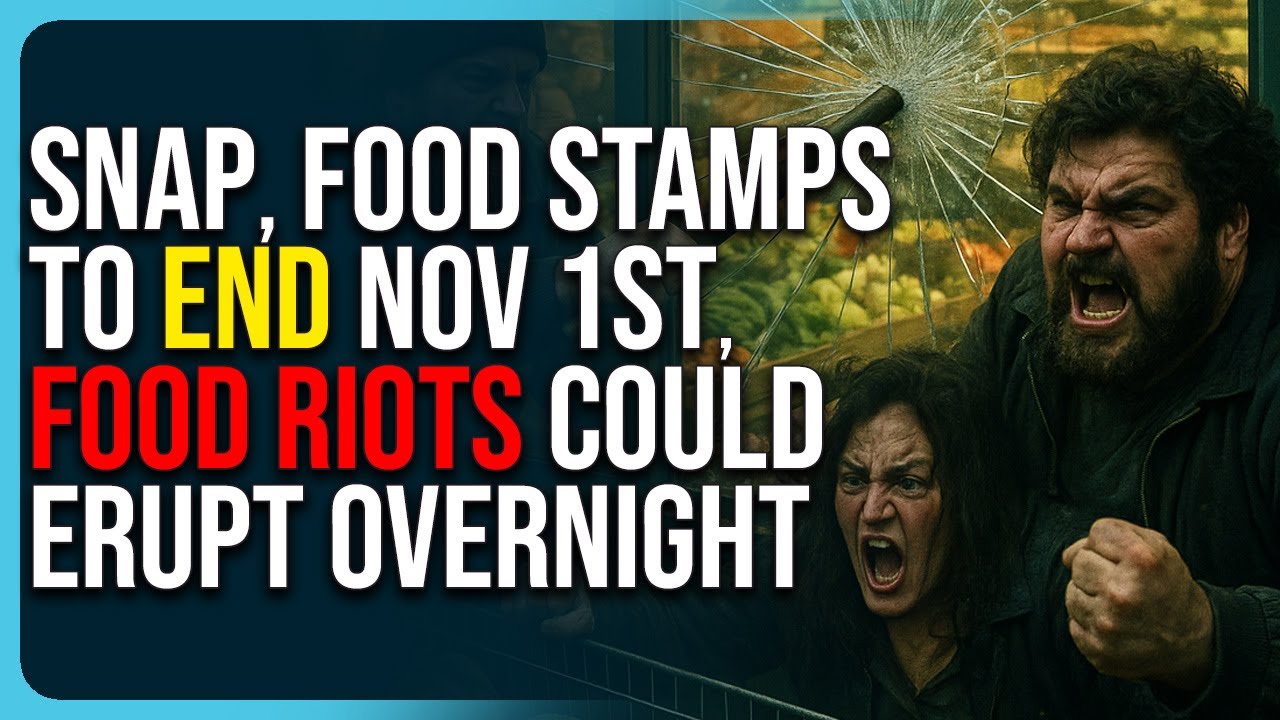
SNAP & Food Stamps To End Nov 1st, Food Riots Could Erupt Overnight
Site: YouTube
Go to http://covepure.com/tim to get $200 off the Covepure water filtration system!SNAP & Food Stamps To End Nov 1st, Food Riots Could Erupt Overnight SUPPOR...
-
Site: X (formerly Twitter)

-
Elon Musk on X: "How to fix mistakes in Grokipedia" / X Added: Oct 28, 2025
Site: X (formerly Twitter)
-
Site: X (formerly Twitter)
-
Site: X (formerly Twitter)
-
Conservatives SLAM Tucker Carlson Nick Fuentes Interview, Say Charlie Kirk Would BE MAD | Tim Pool
Site: YouTube
Tucker Carlson can interview whoever he wants and no one can tell him, Nick, me, or anyone else who to interview and what to sayBecome A Memberhttp://youtube...

-
Site: X (formerly Twitter)
-
New virus-like life forms found in the human body: "It's insane" - Earth.com Added: Oct 28, 2025
New life forms found in the human body described by scientists as 'insane'
Site: Earth.com
Scientists found a virus-like living entity in human bodies named "obelisks" - small loops of RNA, each a thousand genetic “letters” long.

-
Now we know that AI won't take all of our jobs, Silicon Valley has to fix its fundamental mistake: Automation theater has to end | Fortune Added: Oct 28, 2025
Now we know that AI won't take all of our jobs, Silicon Valley has to fix its fundamental mistake: Automation theater has to end | Fortune
Site: Fortune
Silicon Valley wants autonomous AI but professionals need accountable AI. Here's why the next wave of innovation will favor collaboration systems.

-
Site: X (formerly Twitter)
-
Sarsour-backed political network propels NYC mayoral candidate Mamdani | Fox News Added: Oct 28, 2025
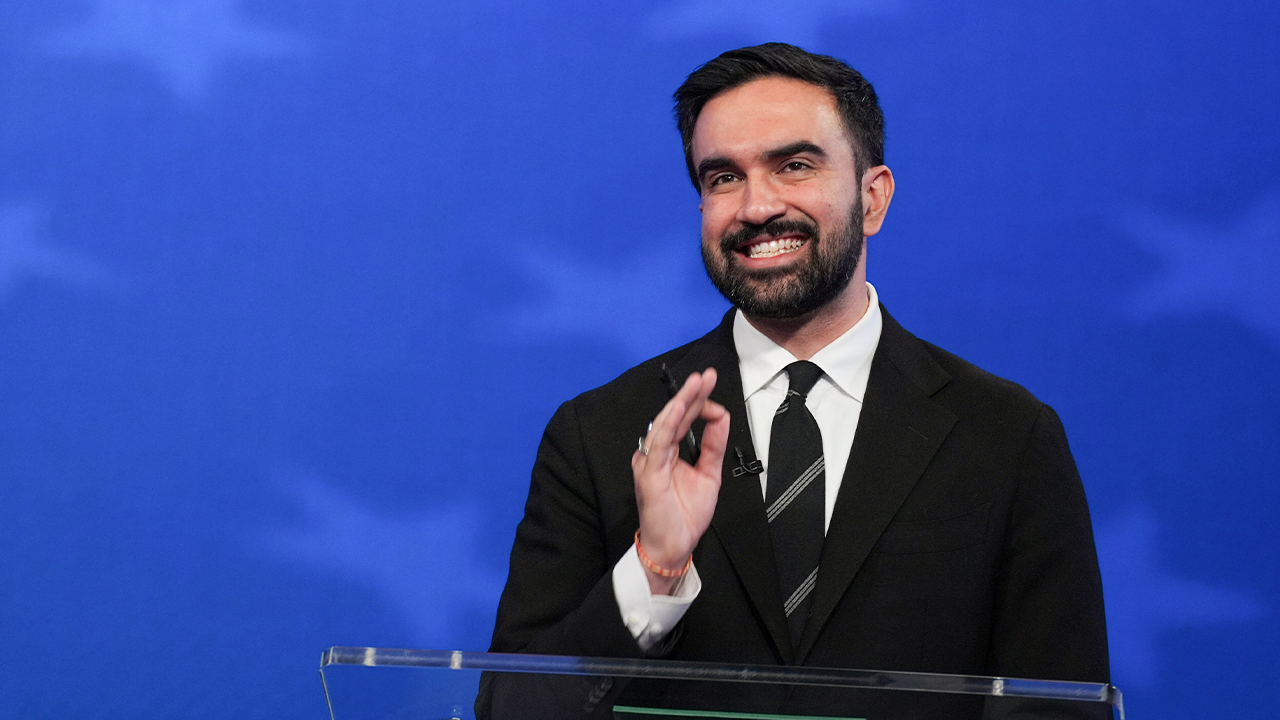
Inside the Mamdani Machine: Soros cash, socialists and radical imams engineered Zohran Mamdani’s path to power
Site: Fox News
A decade of activist money and imam alliances built a 34-year-old socialist into a New York City frontrunner
-
AI Is the Bubble to Burst Them All | WIRED Added: Oct 28, 2025
AI Is the Bubble to Burst Them All
Site: WIRED
I talked to the scholars who literally wrote the book on tech bubbles—and applied their test.
Since ChatGPT’s viral success in late 2022, which drove every company within spitting distance of Silicon Valley (and plenty beyond) to pivot to AI, the sense that a bubble is inflating has loomed large. There were headlines about it as early as May 2023. This fall, it became something like the prevailing wisdom. Financial analysts, independent research firms, tech skeptics, and even AI executives themselves agree: We’re dealing with some kind of AI bubble. But as the bubble talk ratcheted up, I noticed few were analyzing precisely how AI is a bubble, what that really means, and what the implications are. After all, it’s not enough to say that speculation is rampant, which is clear enough, or even that there’s now 17 times as much investment in AI as there was in internet companies before the dotcom bust. Yes, we have unprecedented levels of market concentration; yes, on paper, Nvidia has been, at times, valued at almost as much as Canada’s entire economy. But it could, theoretically, still be the case that the world decides AI is worth all that investment. What I wanted was a reliable, battle-tested means of evaluating and understanding the AI mania. This meant turning to the scholars who literally wrote the book on tech bubbles. In 2019, economists Brent Goldfarb and David A. Kirsch of the University of Maryland published Bubbles and Crashes: The Boom and Bust of Technological Innovation. By examining some 58 historical examples, from electric lighting to aviation to the dotcom boom, Goldfarb and Kirsch develop a framework for determining whether a particular innovation led to a bubble. Plenty of technologies that went on to become major businesses, like lasers, freon, and FM radio, did not create bubbles. Others, like airplanes, transistors, and broadcast radio, very much did. Where many economists view markets as the product of sound decisions made by purely rational actors—to the extent that some posit that bubbles don’t exist at all—Goldfarb and Kirsch contend that the story of what an innovation can do, how useful it will be, and how much money it stands to make creates the conditions for a market bubble. “Our work puts the role of narrative at center stage,” they write. “We cannot understand real economic outcomes without also understanding when the stories that influence decisions emerge.” Goldfarb and Kirsch’s framework for evaluating tech bubbles considers four principal factors: the presence of uncertainty, pure plays, novice investors, and narratives around commercial innovations. The authors identify and evaluate the factors involved, and rank their historical examples on a scale of 0 to 8—8 being the most likely to predict a bubble. As I began to apply the framework to generative AI, I reached out to Goldfarb and asked him to weigh in on where Silicon Valley’s latest craze stands in terms of its bubbledom, though I should note that these are my conclusions, not his, unless stated otherwise. Uncertainty With some technologies, Goldfarb says, the value is obvious from the start. Electric lighting “was so clearly useful, and you could immediately imagine, ‘Oh, I could have this in my house.’” Still, he and Kirsch write in the book, “as marvelous as electric light was, the American economy would spend the following five decades figuring out how to fully exploit electricity.” “Most major technological innovations come into the world like electric arc lighting—wondrous, challenging, sometimes dangerous, always raw and imperfect,” Goldfarb and Kirsch write in Bubbles. “Inventors, entrepreneurs, investors, regulators, and customers struggle to figure out what the technology can do, how to organize its production and distribution and what people are willing to pay for it.” Uncertainty, in other words, is the cornerstone of the tech bubble. Uncertainty over how the stories entrepreneurs tell about an innovation will translate into real business, which parts of a value chain it might replace, how many competitors will flock to the field, and how long it will take to come to fruition. And if uncertainty is the foundational element to a tech bubble, alarm bells are already ringing for AI. From the beginning, OpenAI’s Sam Altman has bet the house on building AGI, or artificial general intelligence—to the point where he once addressed a crowd of industry observers who asked him about OpenAI’s business model, and told them with a straight face that his plan is to build a general intelligence system and simply ask it how to make money. (He has since moved away from that bit, saying AGI is not “a super useful term.”) Meta is aiming for “superintelligence,” whatever that means. The goal posts keep on moving. In the nearly three years since AI took center stage in Silicon Valley, the major players, with the exception of Nvidia, whose chips would likely still be in use post-bust, still haven’t demonstrated what their long-term AI business model will be. OpenAI, Anthropic, and the AI-embracing tech giants are burning through billions, inference costs haven’t fallen (those companies still lose money on nearly every user query), and the long-term viability of their enterprise programs are a big question mark at best. Is the product that will justify hundreds of billions in investment a search engine replacement? A social media substitute? Workplace automation? How will AI companies price in the costs of energy and computing, which are still sky-high? If copyright lawsuits don’t break their way, will they have to license their training data, and will they pass on that additional cost to consumers? A recent MIT study made waves—and helped stoke this most recent wave of bubble fears—with a finding that 95 percent of firms that adopted generative AI did not profit from the technology at all. “Usually over time, uncertainty goes down,” Goldfarb says. People learn what’s working and what’s not. With AI, that hasn’t been the case. “What has happened in the last few months,” he says, “is that we've realized there is a jagged frontier, and some of the earliest claims about the effectiveness of AI have been mixed or not as great as initially claimed.” Goldfarb thinks the market is still underestimating the difficulty of integrating AI into organizations, and he’s not alone. “If we are underestimating this difficulty as a whole,” Goldfarb says, “then we will be more likely to have a bubble.” AI’s closest historical analogue here may be not electric lighting but radio. When RCA started broadcasting in 1919, it was immediately clear that it had a powerful information technology on its hands. But less clear was how that would translate into business. “Would radio be a loss-leading marketing for department stores? A public service for broadcasting Sunday sermons? An ad-supported medium for entertainment?” the authors write. “All were possible. All were subjects of technological narratives.” As a result, radio turned into one of the biggest bubbles in history—peaking in 1929, before losing 97 percent of its value in the crash. This wasn’t an incidental sector; RCA was, along with Ford Motor Company, the most high-traded stock on the market. It was, as The New Yorker recently wrote, “the Nvidia of its day.” Pure Play So far this year, according to Silicon Valley Bank, 58 percent of all VC investment has gone to AI companies. There aren’t a ton of obvious pure-play investments available to retail investors—another criteria for pumping up a bubble—but there are some big ones. Nvidia is at the top of the list, having staked its future on building chips for AI firms, and becoming the first $4 trillion company in history in the process. When a sector is seeing a lot of pure plays, according to Goldfarb and Kirsch’s framework, it’s more likely to overheat and have a bubble. SoftBank has plans to sink tens of billions of dollars into OpenAI, the purest AI play there is, though it’s not yet open to retail investments. (If and when it finally is, analysts speculate that OpenAI may become the first trillion-dollar IPO.) Investors have also backed pure-play companies such as Perplexity (now valued at $20 billion) and CoreWeave ($61 billion market cap). In the case of AI, these pure-play investments are especially worrying, because the biggest companies are increasingly bound up with one another. Nvidia just announced a $100 billion proposed investment in OpenAI, which in turn relies on Nvidia’s chips. OpenAI relies on Microsoft’s computing power, the result of a $10 billion partnership, and Microsoft, in turn, needs on OpenAI’s AI models. “The big question is how much of that is in the private markets, and how much of that is in the public markets?” Goldfarb says. If most of the money is in private markets, then it’s mostly private investors who would lose their shirts in a crash. If it’s mostly in public markets, such as stocks and mutual funds, then the crash would bleed regular people’s pensions and 401(k)s. And guess what: It’s increasingly creeping into public markets. (Many market watchers have also been pointing to the rise of private credit as an increasing source of systemic risk, as more small investors have been able to dump their money into opaque deals over the past year.) Either way, the sums are huge. As of late summer 2025, Nvidia accounts for about 8 percent of the value of the entire stock market. Novice Investors Today, hordes of novice retail investors are pumping money into AI through E-Trade and their Robinhood app. In 2024, Nvidia was the single most-bought equity by retail traders, who plowed nearly $30 billion into the chipmaker that year. And AI-interested retail investors are similarly flocking to other big tech stocks like Microsoft, Meta, and Google. Most of the investment thus far is fueled by institutional investors, but along with Nvidia and the giants, more pure-play—and more risky—AI startups like CoreWeave are going public or preparing to go public. CoreWeave’s March IPO was initially seen as lackluster, but it’s been on the rise since, as another way for retail investors to push money into AI. As Goldfarb points out, everyone is something of a novice investor when it comes to AI, because it’s such a new field and technology, because there’s so much uncertainty, because no one knows how it’s going to play out. What makes today different from 100 years ago, Goldfarb and Kirsch note in the book, is that anyone can get in on the action. A hundred years ago, stocks were simply too expensive for most working people to buy, which sharply limited the capacity to inflate bubbles (though that didn’t stop the Depression from happening). Now there are stocks of every size and stripe available to purchase with a tap on a Robinhood app; and with the casino-ification of the economy, the breakdown of a meaningful regulatory apparatus to rein in all of the above—well, it has all come just in time to give novice investors a vehicle to sink their savings into the vague promise of superintelligence. Coordination or Alignment of Beliefs Through Narratives “Expert investors appreciated correctly the importance of airplanes and air travel,” Goldfarb and Kirsch write, but “the narrative of inevitability largely drowned out their caution. Technological uncertainty was framed as opportunity, not risk. The market overestimated how quickly the industry would achieve technological viability and profitability.” As a result, the bubble burst in 1929—from its peak in May, aviation stocks dropped 96 percent by May 1932. When it comes to AI, this inevitability narrative is probably the easiest and clearest one to mark as a huge affirmative on the bubble matrix. There’s no bigger narrative than the one AI industry leaders have been pushing since before the boom: AGI will soon be able to do just about anything a human can do, and will usher in an age of superpowerful technology the likes of which we can only begin to imagine. Jobs will be automated, industries transformed, cancer cured, climate change solved; AI will do quite literally everything. Add in the industry narrative that we have to “beat” China to AGI, and thus must not regulate AI at any cost, and you have even more fuel on the fire. “Is this a good story?” Goldfarb says. “The answer is profoundly yes.” What aviation would be good at—moving people from one place to another, much more quickly than was possible with cars, trains, or horses—was clear enough early on. This is what elevates AI bubbledom to another level: The promise of AI, to investors, is nearly infinite. It’s beyond uncertain. It’s unknowable. And we should note that AI arrived after much of a decade of near-zero interest rate policy that led Silicon Valley investors to place bets on companies with little to speak of when it came to business models, but boasting big narratives. Uber, the poster child startup of the era, founded in 2009, did not post a profitable year until 2023. And the AI narrative is ‘Uber for X’ on hallucinogenic steroids. Different parts of the AI story, whether it’s, say, ‘AI will cure cancer’ or ‘AI will automate all jobs’, appeal to investors and partners of every stripe, making it uniquely powerful in its bubble-inflating capacities. And so dangerous to the economy. It’s worth reiterating that two of the closest analogs AI seems to have in tech bubble history are aviation and broadcast radio. Both were wrapped in high degrees of uncertainty and both were hyped with incredibly powerful coordinating narratives. Both were seized on by pure play companies seeking to capitalize on the new game-changing tech, and both were accessible to the retail investors of the day. Both helped inflate a bubble so big that when it burst, in 1929, it left us with the Great Depression. So yes, Goldfarb says, AI has all the hallmarks of a bubble. “There’s no question,” he says. “It hits all the right notes.” Uncertainty? Check. Pure plays? Check. Novice investors? Check. A great narrative? Check. On that 0-to-8 scale, Goldfarb says, it’s an 8. Buyer beware. Update 10/27/25 3:45pm ET: Due to an editing error, an earlier version if this story was initially published.

-
Site: X (formerly Twitter)
-
Site: X (formerly Twitter)
-
Site: X (formerly Twitter)
-
Zohran Mamdani’s Islamophobia Speech Callow and Self-Dramatizing | National Review Added: Oct 28, 2025
Zohran Mamdani’s Islamophobia Speech Callow and Self-Dramatizing | National Review

-
Socialist Mamdani clarifies aunt's NYC subway experience amid 9/11 controversy | Fox News Added: Oct 28, 2025
Socialist Mamdani clarifies aunt's NYC subway experience amid 9/11 controversy | Fox News

-
Elon Musk's Version of Wikipedia Is Live. Here's How It's Different Added: Oct 28, 2025
Elon Musk's Version of Wikipedia Is Live. Here's How It's Different
Site: Gizmodo
Grokipedia exists. You can read it if you want.

-
White House Invades Bluesky to Troll, Predictably Gets Mass Blocked
Site: Gizmodo
The platform's immune system kicked in when a large number of accounts associated with Donald Trump sought attention there.

-
Elon Musk Just NUKED Wikipedia FROM ORBIT, Grokipedia Launch Is THE END Of Woke Wiki | Tim Pool
Site: YouTube
Liberal Media are furious over Grokipedia cutting through their liesBecome A Memberhttp://youtube.com/timcastnews/joinThe Green Room - https://rumble.com/pla...

-
ASUS PRIME GeForce RTX 5070 Ti 16GB 256-Bit GDDR7 PCI Express 5.0 DLSS 4.0 Graphics Card PRIME-RTX5070TI-16G - Newegg.com Added: Oct 28, 2025
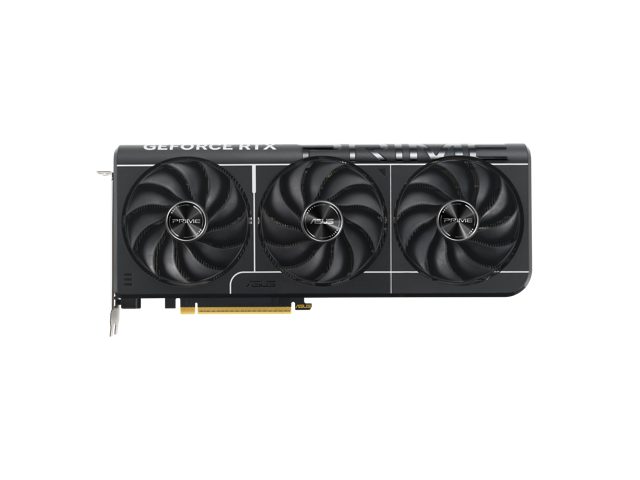
ASUS PRIME GeForce RTX 5070 Ti 16GB 256-Bit GDDR7 PCI Express 5.0 DLSS 4.0 Graphics Card PRIME-RTX5070TI-16G - Newegg.com
Buy ASUS PRIME GeForce RTX 5070 Ti 16GB 256-Bit GDDR7 PCI Express 5.0 DLSS 4.0 Graphics Card PRIME-RTX5070TI-16G with fast shipping and top-rated customer service. Once you know, you Newegg!
-
The Acid Test of 3I/ATLAS at Perihelion | by Avi Loeb | Oct, 2025 | Medium Added: Oct 28, 2025
The Acid Test of 3I/ATLAS at Perihelion
Site: Medium
On October 29, 2025, the interstellar object 3I/ATLAS will get to the closest distance of 203 million kilometers from the Sun, completing…

-
Comet growing a tail could be alien technology, Harvard professor suggests | Fox News Video
Site: Fox News
Harvard Professor Avi Loeb discusses the mystery surrounding the 31/ATLAS comet and explains his argument that it has a 40% chance of being alien technology.

-
"They Don't Have Leadership" - Sen. John Kennedy on the 'Loon Wing'
Site: YouTube
Please remember to subscribe if you enjoyed this episode of Pod Force One: https://www.youtube.com/@PodForce1Watch full clips of Pod Force One with Miranda D...

-
Trump Talks Third Term, Disaffected Young Men, and KJP's Terrible Media Tour, w/ Talcott and Klavan
Site: YouTube
Emily Jashinsky is joined by Semafor White House Correspondent Shelby Talcott to discuss speculation President Trump could seek a third term and the new repo...

-
Site: X (formerly Twitter)
-
 3 reasons I’m ditching Comet (and every other browser) for Opera Neon
Added: Oct 28, 2025
3 reasons I’m ditching Comet (and every other browser) for Opera Neon
Added: Oct 28, 20253 reasons I’m ditching Comet (and every other browser) for Opera Neon
Site: XDA
The AI browser that actually works.

-
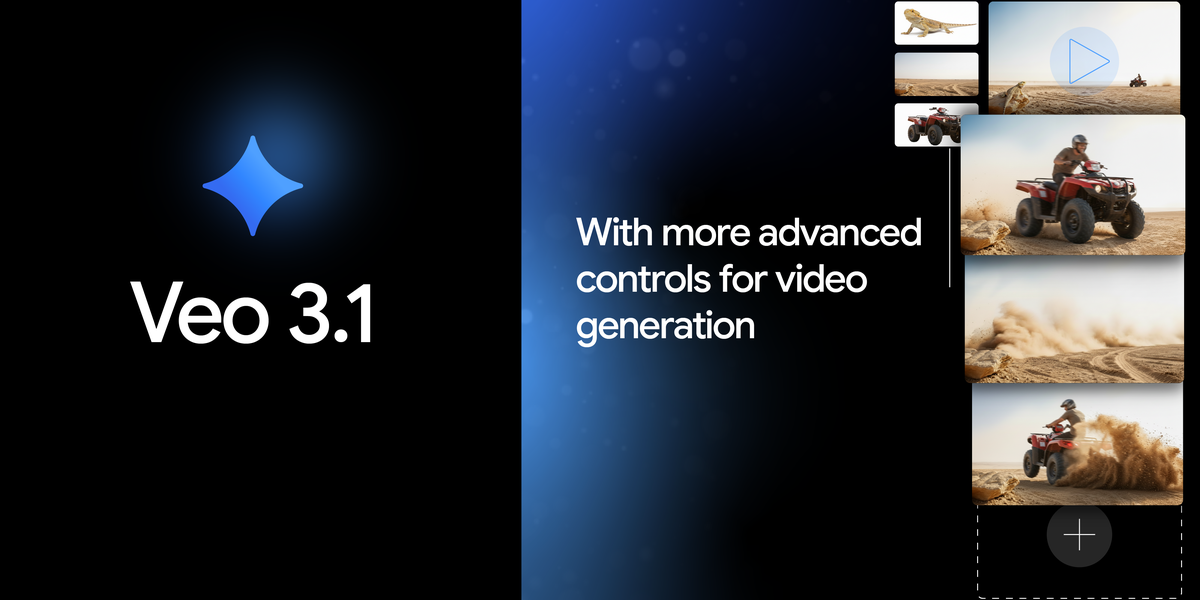
Introducing Veo 3.1 and new creative capabilities in the Gemini API - Google Developers Blog Added: Oct 28, 2025
Introducing Veo 3.1 and new creative capabilities in the Gemini API
Veo 3.1 & 3.1 Fast, new video generation models, are now in paid preview via Gemini API, offering enhanced audio, narrative control & new features.
-
 Generate videos with Veo 3.1 in Gemini API | Google AI for Developers
Added: Oct 28, 2025
Generate videos with Veo 3.1 in Gemini API | Google AI for Developers
Added: Oct 28, 2025Generate videos with Veo 3.1 in Gemini API | Google AI for Developers
Site: Google AI for Developers
Generate high-fidelity videos with native audio using Google's Veo 3.1 API.

-
 “You Be Good. I Love You”: How Alex The Talking Parrot Rewrote Our Understanding Of Animal Intelligence | IFLScience
Added: Oct 28, 2025
“You Be Good. I Love You”: How Alex The Talking Parrot Rewrote Our Understanding Of Animal Intelligence | IFLScience
Added: Oct 28, 2025“You Be Good. I Love You”: How Alex The Talking Parrot Rewrote Our Understanding Of Animal Intelligence
Site: IFLScience
Alex is said to have mastered 100 words and even asked questions – something that’s almost unheard of in non-human animals.
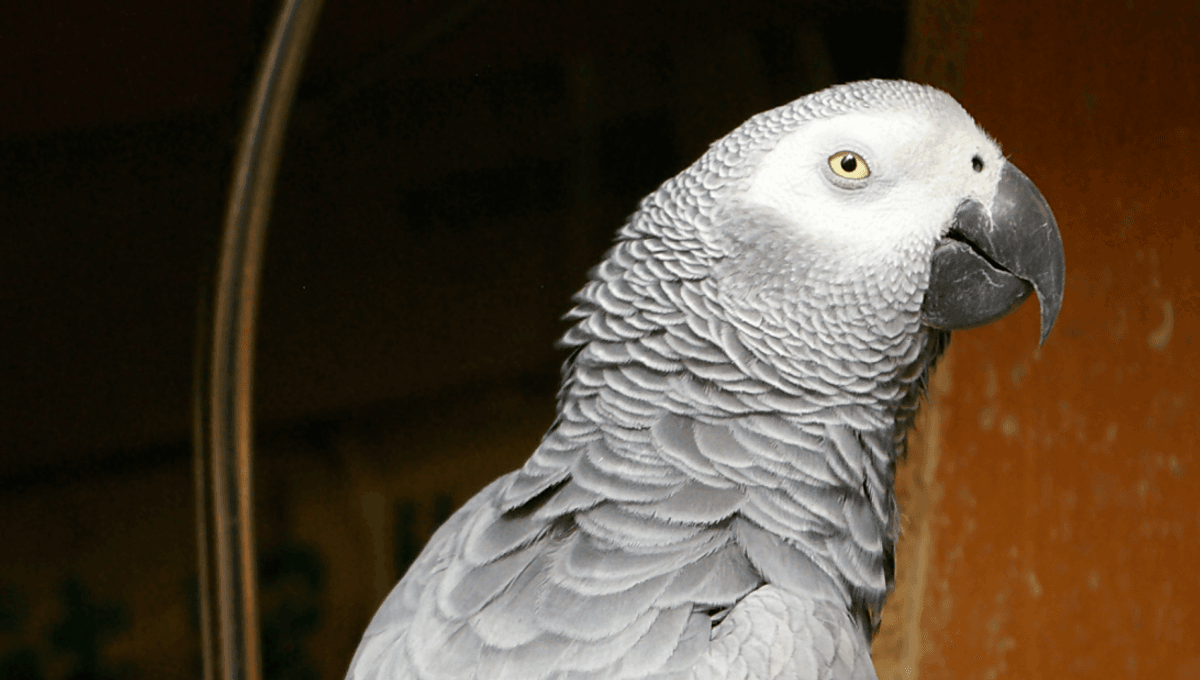
Human intelligence has often been held apart from that of non-human animals, but as time goes by we are increasingly discovering that we’re not all so different. A pivotal moment in our understanding of animal intelligence came in 1976 when something remarkable broke out of an egg. The young bird wasn’t considered remarkable at the time of his birth, but over the next 30 years he would completely change what we thought we knew about animal cognition. His short life (for his species) came to an end in 2007 – fittingly, with the eerily poetic last words, “You be good. I love you. See you tomorrow.” Who was Alex the parrot? Alex the parrot was an African gray parrot. He was purchased from a pet store by animal psychologist Irene Pepperberg while she was finishing her PhD in theoretical chemistry. Her goal: to study his cognitive capabilities and communication – something gray parrots are (in)famous for (highly recommend you read about the parrots that had to be removed from public view for swearing at visitors ). Together, Pepperberg and Alex – a backronym for A-vian L-anguage EX-periment – embarked on decades of training that primarily used the model/rival technique. It involves two trainers demonstrating a behavior they hope the observer – in this case, Alex – will pick up. The roles of the trainers were reversed to demonstrate that these exchanges were interactive, and correct answers were met with an object reward. Mistakes are corrected through a kind of scolding as the object is taken away. Alex started to get the hang of these interactions, building his vocabulary and even practicing his words on his own. Then, one day, while looking in a washroom mirror, he did something almost unheard of in non-human animals. Alex the parrot asks a question Alex was looking into a mirror one day in 1980 when he leaned in closer to his reflection. According to laboratory student Kathy Davidson, Alex asked, "What’s that?" indicating himself in the mirror. "That's you," Davidson replied, adding, "you're a parrot". Looking again, Alex asked, "What color?" to which Davidson informed him, “Gray. You’re a Gray Parrot, Alex.” This was how the bird learned the word "gray", in an interaction that appeared to show plenty of self-awareness. It was a small interaction between a bird and its carer, but it raised big questions about the hidden depths of animal cognition. The Alex Studies Alex's training continued for many years, and by 1999, Pepperberg published The Alex Studies, a book listing his many achievements. As reported by The New York Times, they included – though were not limited to – identifying 50 different objects, distinguishing seven colors and five shapes, knowing the difference between over and under, recognizing quantities up to six, and even identifying materials. In Pepperberg’s eyes, Alex the parrot was capable of understanding a question, thinking about it, and knowing the correct answer. His achievements weren’t celebrated by everybody, however. Many refuted the idea that his responses constituted much in the way of complex thought, instead believing they were more of a kind of performance. There were others, however, who were more open to the idea that we might have had it wrong as to other animals’ capacity to think. “A bird can express his conscious thoughts and feelings is a great advance – we used to think that was impossible,” said Dr Donald Griffin to the NYT. As the author of Animal Thinking, Griffin was no stranger to the widespread resistance to the idea that animals could possess this degree of consciousness. “The intensity of the aversion is incredible. It's a very touchy subject. Scientists don't like to be told that a valid reason for what an animal does is the possibility that it does it with any consciousness.” Alex the parrot’s last words After 31 years of defying expectations, Alex the parrot slipped away quite unceremoniously one night in 2007 from unknown causes. The evening before, when saying goodnight to Pepperberg as he always did, he said, "You be good. I love you. See you tomorrow.” A class act, as ever. Since then, another remarkable gray parrot has made a name for itself: Apollo, who holds the Guinness World Record for the most items identified within a 3-minute window. And if you're still asking yourself, " Do animals think ?" read our deep dive into everything science knows so far about animals' sentience, consciousness, and intelligence.