Bookmarks 2025-10-08T18:37:49.990Z
by Owen Kibel
24 min read
Bookmarks for 2025-10-08T18:37:49.990Z
-
Greta Thunberg Gaza Flotilla Built on Lies and Fantasies | National Review Added: Oct 8, 2025
Greta Thunberg Gaza Flotilla Built on Lies and Fantasies | National Review

-
Elon Musk on X: "Temporary workaround. Direct video generation from text coming soon." / X Added: Oct 8, 2025
Site: X (formerly Twitter)

-
Site: X (formerly Twitter)
-
Have You Ever Seen The Rain - Rachael Schroeder (Acoustic Cover) Creedence Clearwater Revival - YouTube Music Added: Oct 8, 2025
Have You Ever Seen The Rain - Rachael Schroeder (Acoustic Cover) Creedence Clearwater Revival - YouTube Music
Site: YouTube Music
Song is "Have You Ever Seen The Rain" by Savella and Rachael Schroeder (COVER) - Original is by Creedence Clearwater Revival Listen on Spotify: https://open...

-
In My Dreams (Official Lyric Video) Savella - YouTube Music
Site: YouTube Music
Listen on Spotify: https://open.spotify.com/album/6nvwnYcvks62fLrq2qnLP3 Apple Music: https://music.apple.com/album/in-my-dreams-single/1594492029 Deezer: ht...

-
If This Is the End… - YouTube Music
Site: YouTube Music
Provided to YouTube by Universal Music Group If This Is the End… · Sarah McLachlan Better Broken ℗ 2025 Sarah McLachlan Entertainment Corp., Under exclusi...
-
Sarah Jarosz - Up In The Clouds (Official Audio) - YouTube Music
Site: YouTube Music
Originally recorded for NPR Music's Morning Edition Song Project, "Up In The Clouds" is available now: https://found.ee/SJClouds Full length album World On T...

-
Sonata for Flauto traverso and Harpsichord in B-minor , BWV1030: I. Andante - YouTube Music
Site: YouTube Music
Provided to YouTube by The Orchard Enterprises Sonata for Flauto traverso and Harpsichord in B-minor , BWV1030: I. Andante · Barthold Kuijken · Yoshio Watan...
-
Vivaldi: Cessate, omai cessate, RV 684: Ah ch'infelice sempre
Site: YouTube Music
A new music service with official albums, singles, videos, remixes, live performances and more for Android, iOS and desktop. It's all here.
-
The Arrival of the Queen of Sheba (Arr. Recorders) - YouTube Music
Site: YouTube Music
Lucie’s new album ‘Origins’ will be released on 23rd September 2022 Pre-order now on CD and vinyl: https://LucieHorsch.lnk.to/OriginsID Sign up to Lucie’s m...

-
Is Gravity Just a Trick of Entropy? - YouTube Added: Oct 8, 2025
Is Gravity Just an Illusion Caused by Entropy? New Theory Explains How.
Site: YouTube
Go to https://ground.news/sabine to get 40% off the Vantage plan and see through sensationalized reporting. Stay fully informed on events around the world wi...

-
President Trump Delivers Remarks, Oct. 6, 2025
Site: YouTube
The White House

-
Press Secretary Karoline Leavitt Briefs Members of the Media, Oct. 6, 2025
Site: YouTube
The White House

-
President Trump Participates in a Bilateral Meeting with the Prime Minister of Canada
Site: YouTube
The White House

-
President Trump Participates in a Roundtable on ANTIFA
Site: YouTube
The White House

-
Megyn Kelly on "Race Hustler" Joy Reid, "Sleazy" Meghan Markle and her Bootstrap Success
Site: YouTube
Award-winning journalist and conservative star Megyn Kelly joins Miranda to talk about success after failure, the frightening aftermath of Charlie Kirk's mur...

-
ULTIMATE NANO BANANA TUTORIAL: 15 PROMPT TECHNIQUES
Site: YouTube
The first 50 people get 30% off on VEED with my code AIMASTER30 off https://bit.ly/aimasterxveed🚀 Become an AI Master – All-in-one AI Learning https://aimas...

-
Trump says Israel and Hamas finalize Gaza peace deal - POLITICO Added: Oct 8, 2025
Trump says Israel and Hamas finalize Gaza peace deal
Site: POLITICO
The president said Israel and Hamas have “signed off on the first phase” of a deal to end the two-year conflict in Gaza.

-
California Gubernatorial Candidate Katie Porter Melts Down in Interview | National Review

-
 Technology, Tactics, Or Just Toughing It Out: How Exactly Did Neanderthals Take Down Mammoths, Anyway? | IFLScience
Added: Oct 8, 2025
Technology, Tactics, Or Just Toughing It Out: How Exactly Did Neanderthals Take Down Mammoths, Anyway? | IFLScience
Added: Oct 8, 2025Technology, Tactics, Or Just Toughing It Out: How Exactly Did Neanderthals Take Down Mammoths, Anyway?
Site: IFLScience
You're 5' 5" tall, you're armed with a glorified stick, and you're facing an angry elephant. What do you do?
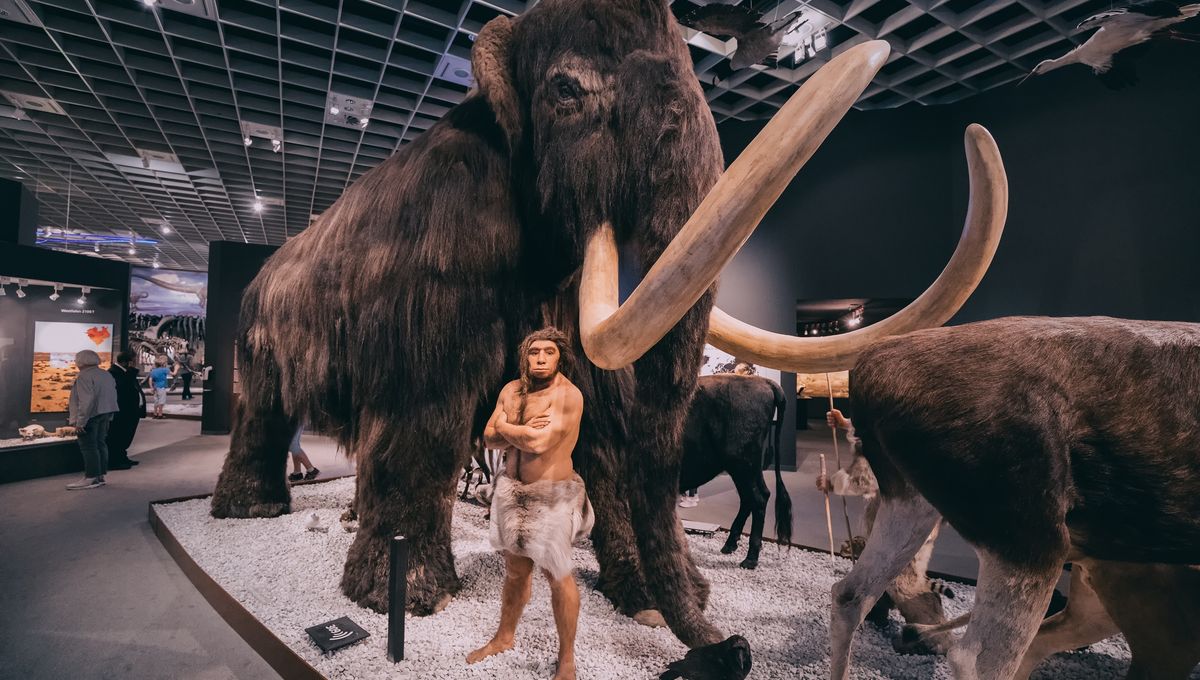
Consider taking on a mammoth – an animal easily more than twice your height and perhaps 150 times your weight, which roamed in herds and came armed, or rather, toothed, with 3 or 4 meters (10-13 feet) of heavy facial weaponry with which to defend themselves – and you’d be forgiven for thinking twice about the whole endeavor. And yet, hundreds of thousands of years ago, we managed it. Not just early humans, but our Neanderthal cousins too – a species long stereotyped as brutish scavengers, who were in fact capable of organizing successful hunts of the many terrifying fauna that shared their landscape. Or, at least, we’re pretty sure they did. “It's quite difficult to prove that mammoths were hunted,” points out Matt Pope, an archaeologist specializing in early prehistory and geoarchaeology and Associate Professor at the UCL Institute of Archaeology. “If you're looking for that smoking gun, you're looking for, you know, cut marks, [or] impact damage from a spear point, within a bone,” he tells IFLScience. “But with big animals, you can do a lot of damage without leaving that trail.” Even the presence of mammoth remains at Neanderthal sites isn’t necessarily a slam-dunk. “There [would] be a lot of mammoth bones in landscapes,” Pope points out. “They would provide usable fuel. They might contain marrow.” They would, in short, be attractive targets for scavenging. But “we're talking about hunting,” Pope says. “Sometimes it's hard to find that evidence.” Hunting the mammoths So, before we get onto how Neanderthals hunted mammoths, perhaps we should make sure that they really did. And, luckily, the evidence for this does exist – you just have to know how to look. They don't just fall over and die. They only die when they're being targeted. Matt Pope “We're actually often looking for it indirectly,” Pope explains. “Like, the mammoth bones that we're finding at a site – they tend to be just adults, not the children. Not newborn, or you know, the ones that you'd expect to be dying [more often].” “We have sites where it's just prime age adults,” he tells IFLScience. “They don't just fall over and die. They only die when they're being targeted. They're quite formidable.” But here’s the thing: asking whether they hunted mammoths is… kind of underestimating the Neanderthals. Our cousin species survived for almost 400,000 years, witnessing the demise of the steppe mammoth and the emergence of its woolly successor; larger than both were the straight-tusked elephants that Neanderthals “definitely” hunted, Pope points out. “We have, at the site of Lehringen, a spear in the skeleton of one of these straight tusked elephants,” he tells IFLScience. “That's about as ‘smoking gun’ as it gets.” It also handily answers another question about the Neanderthals’ hunting ventures: their tools. Despite a reputation for low intelligence, the truth seems to be that for most of their existence, Neanderthals were just as smart as their H omo sapiens peers. As early as 300,000 years ago, we have evidence of long wooden spears being made and used – modern reconstructions have found that they could have given the paleolithic hunters a range of up to 20 or 30 meters (66-100 feet). That may not sound like much, but it’s easily the difference between coming home with dinner and getting stomped to death by an angry pachyderm. And, like all humans, Neanderthals built on their technology. “Neanderthals at the beginning of their existence, by around 400,000 years ago, and those at the end, around 40,000 years ago, appear to have had a variety of developing capabilities,” points out Rick Potts, Director of the Human Origins Program at the Smithsonian Institution’s National Museum of Natural History. “They changed over time […] and by 50,000 years ago, some groups made stone and bone points, thought to have been attached at the ends of wooden spears.” Built for speed There’s a bit of a balancing act involved with understanding Neanderthals. There’s a temptation – one that generations of popular culture has given in to – to oversimplify them; to reduce them entirely to their shorter, stockier anatomy, and to therefore characterize them as unintelligent brutes. That’s unfair – but so is ignoring their physiological differences entirely. “We can tell from the muscle markings on their bones that Neanderthals were stronger than we Homo sapiens are,” Potts tells IFLScience, “which almost certainly would have helped in their capacity to hunt animals, including elephants – if they decided that’s what they wanted or needed to do for some reason.” The entire human story has been, for at least two and a half million years, developing technologies that give us abilities to access wider resources, more diverse resources, at different times of the year. Matt Pope The precise physiological details are difficult to know for sure, he cautions – but compared to modern humans, they were likely heavier, more powerful, and very strong. They were sprinters, rather than long distance runners. And, to pay for all that, they probably had huge dietary loads, and may have struggled to survive in environments that couldn’t easily provide the nutrients they needed. Would all of that have made the difference in hunting? It certainly wouldn’t have hurt – but “these differences, I think, ultimately have been relatively overplayed,” Pope tells IFLScience. “We're still dealing with basic human body shapes, basic human body types.” “And these differences need to be considered in light of their technology,” he adds. “The entire human story has been, for at least two and a half million years, developing technologies that give us abilities to access wider resources, more diverse resources, at different times of the year. So to rest, at a relatively late stage in evolution – you know, in the last 100,000 years – on differences in anatomy, I think probably sells Neanderthals short in terms of their cultural solutions to acquiring food.” The lie of the land Like H omo sapiens, then, the most important part of the Neanderthal anatomy was found between the ears. “They lived in highly social and interdependent groups of hunter-gatherers, knowledgeable of making sophisticated stone technology and maintaining control of fire for cooking and defense – and useful in hunting,” Potts says. “All of these behaviors – social and technological – are considered intelligent from any perspective.” But it’s perhaps most clear how smart these ancient hunters were when we consider their tactics – and they really were tactics, planned out in advance among the group, using communal knowledge passed down perhaps through generations. “Neanderthal people were using places in the landscape as home bases, and coming back to those places year after year,” explains Pope. “They understood their landscapes.” While no place would necessarily be a year-round home for a group – it simply wouldn’t make sense to stay in one location while seasons changed and animals migrated away – there are sites, like La Cotte de St Brelade in Jersey, where we find Neanderthals returning year-on-year for millennia. “Places may have had names. Places may have had stories associated with them,” Pope tells IFLScience. “Because, of course, if you're going to the same place year after year, stories are going to accumulate on those places. It's going to be places where people are born, where people die, and where things happened, and so places develop meaning.” It’s yet more evidence of a sophisticated intelligence – but it’s not just that. It means “they would be able to communicate, you know, ‘now we are going to go to this place’,” Pope points out – and it’s a big clue to the Neanderthals’ biggest advantage in hunting: knowing, and exploiting, their environment. “When we look at some of the places where we're seeing evidence of Neanderthal hunting, including hunting of rhinoceros and elephants, they're using the landscape,” Pope tells IFLScience. “That’s key,” he says. “Understanding the landscape; understanding how animals will move through that landscape and will react to being ambushed; [knowing] where they might run away to and being able to trap them, corral them, get them against a hard rock area or into a depression or into boggy ground; making sure the landscape really works for you.” And as big, scary, and powerful as a mammoth or elephant may be, that’s the kind of planning and execution that’s hard to out-tusk. “If you put yourself at an advantage, and you've got weapon systems that can keep you 10 or 20 meters [33-66 feet] away, then suddenly [taking on a mammoth] is not quite such a scary – well, it's not quite such a risky process,” Pope says. The measure of success So, how did Neanderthals take down mammoths? The answer is simple – just so long as you don’t underestimate them. They were intelligent, social beings, who could plan tactical attacks and work in teams using (literally) cutting-edge technology to hunt their prey. They had (relatively) long-range weapons, and, when all else failed, they were fast and strong. And, to put it bluntly, they were pretty darn motivated, too. Neanderthals would have needed a ton of calories to power them through the Ice Age, and a mammoth or elephant would represent a boon to the entire group if successfully brought home. It makes sense, then, that they would get good at it over the few hundred thousand years that they inhabited the planet. “It’s impossible to know how successful they were at hunting any particular kind of animal, especially mammoths,” Potts tells IFLScience. “Yet the Neanderthals as a species were successful.” “They persisted for as long as about 400,000 years. From what we know so far from the fossil record, our own species has been around for about 300,000 years,” he points out. “Success is a difficult thing to judge.”
-
Some naked mole rats are designated toilet cleaners, study suggests | Live Science Added: Oct 8, 2025
Some naked mole rats are designated toilet cleaners, study suggests
Site: Live Science
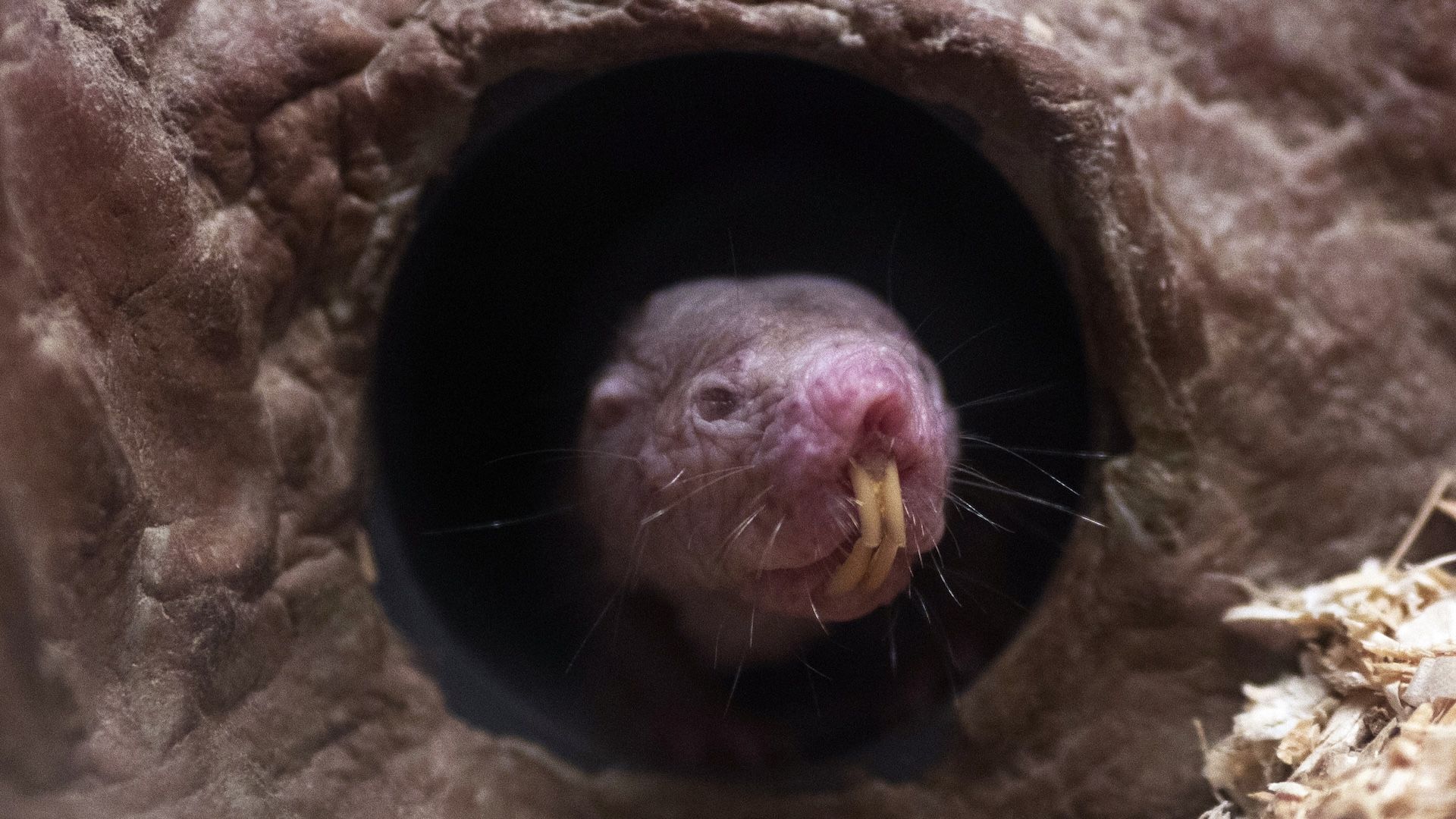
Naked mole rats may have specific roles, such as cleaning the toilet chamber or transporting waste, rather than being generalist helpers. The findings suggest naked-mole-rat colonies are even more complex than we thought.
-
Trump: Gaza hostage, ceasefire deal with Israel, Hamas reached Added: Oct 8, 2025
Gaza peace deal reached, hostages to be freed
Site: Axios
The announcement comes two years after Oct. 7, with 67,000 Palestinians killed.

-
Missa in C Major, Hob. XXII:5 "Cellensis in Honorem Beatissimae Virginis Mariae": I. Kyrie: No.... - YouTube Music
Site: YouTube Music
Provided to YouTube by IDOL Missa in C Major, Hob. XXII:5 "Cellensis in Honorem Beatissimae Virginis Mariae": I. Kyrie: No. 1, Kyrie Eleison I · Zürcher Sin...
-
Bohemian Rhapsody - YouTube Music
Site: YouTube Music
Provided to YouTube by Virgin Music Group Bohemian Rhapsody · Ndlovu Youth Choir From Limpopo To The World ℗ 2025 Ndlovu Youth Choir Pty Ltd Released on:...
-
12 Contradictions In Life That Only Make Sense With Age | YourTango Added: Oct 8, 2025
12 Contradictions In Life That Only Make Sense With Age
Site: YourTango
Even Albert Einstein agreed with the fifth one.
Age takes away many things: taut skin, white teeth, clear vision, ease of movement, suppleness, and the need to be polite. However, it does provide two important things: experience and wisdom. So, although you can’t give an 80-year-old a teenager's body, you also can’t put an old head on young shoulders. So there are many good things that come with age, even if it doesn’t include the body. Carl Jung knew this, and it’s why he said: “Only the paradox comes anywhere near to comprehending the fullness of life.” Life is one big walking contradiction. According to physics, life is made up of 0.00001% matter and 99.9999% energy. However, if you hit me over the head with a piece of wood, it will bloody hurt. No amount of your telling me it’s energy will soothe my headache. There are many other contradictions like this, too. And most can only be learned with age. Here are 12 contradictions in life that only make sense with age: 1. Growth happens slowly, then all at once The way the Chinese bamboo tree grows is one of the best examples of this. The Chinese bamboo tree can barely be seen for the first five years of its life as it builds extensive root systems underground. Then it explodes ninety feet into the air within six weeks. Our own personal and professional growth can follow a similar trajectory. This reminds me to be patient. RELATED: The Art Of Being A Happy, Healthy Person: 6 Simple Habits Of Naturally Happy And Healthy People 2. It’s very hard to get things done with force Cat Box / Shutterstock Have you noticed how the most argumentative people rarely persuade anyone to do anything meaningful? Persuasive people don’t argue — they observe, listen, and ask thoughtful questions instead. They inspire others by living a life of curiosity and authenticity. This allows them to show people how to be instead of telling them. “Persuasion is an art that requires a paintbrush, not a sledgehammer” — Sahil Bloom 3. Working longer hours doesn’t get more done Often, it’s the opposite, although it takes years to master. Sam Ewing said it best: “It’s not the hours you put in your work that count, it’s the work you put in the hours.” 4. The things we fear the most are the things we need to face the most Until I confronted my fear of being seen and heard, I lived with twenty years of anxiety . It was only when I started to look within, ask questions about my past, and seek help did things begin to change. Now, I see it as one of the biggest teachers in my life because it’s helped me understand parts of myself that I may never have known. But I had to run towards it before it stopped running my life. RELATED: The Art Of Being A Happy Person: 8 Simple Habits Of Naturally Happy People 5. Oftentimes, the wisest response to a question is 'I don’t know' The older I get and the more knowledge I obtain, the less I feel like I understand the world. Life is full of so much mystery, magic, and complexity that it’s hard to ever say that I know what’s going on. Accepting that I will never know helps me cultivate curiosity and wonder, and both are wonderful allies in living a happy life . Even Albert Einstein said, “The more I learn, the more I realize how much I don’t know.” 6. Turning down opportunities is the best way to create them This one is paradoxical, but it’s all about discernment. Before I committed fully to becoming a full-time writer, I said yes to every opportunity that came my way. But this meant my energy was split between many different things that took me away from writing. Once I got focused, however, I started to become much more consistent, and then I started to see real results. With this, I started getting invited onto podcasts, I started writing for other writers, and I published a book . This only happened after I committed to one path and didn’t distract myself with other opportunities. Discernment is the key to success. “People think focus means saying yes to the thing you’ve got to focus on. But that’s not what it means at all. It means saying no to the hundred other good ideas that there are. You have to pick carefully.” — Steve Jobs 7. Some of the best ideas come from boredom Some of my best writing ideas have come when I’ve been bored out of my mind or have been so far away from my laptop that inspiration strikes. During these times, my mind wanders and starts to create. As a result, my thoughts become more interesting and clear. This then improves my writing. Now, I schedule boredom into my week as much as possible. Doing nothing is a luxury these days. But it’s also a great source of inspiration. 8. Failing is the best way to succeed Michael Jordan summed this up best when he said, “I’ve missed more than 9,000 shots in my career. I’ve lost almost 300 games. Twenty-six times I’ve been trusted to take the game-winning shot and missed. I’ve failed over and over and over again in my life. And that is why I succeed.” All successful people know that to succeed, they must fail a bunch of times . There’s just no getting around this simple truth. RELATED: 100-Year-Olds Share What Keeps Them Young — And What Doesn't: 'Let Go Of The Petty Grudges' 9. Talking less often means there’s more to say The opposite of talking is listening. And listening allows us to take in information, craft our thoughts in an ocean of curiosity and intrigue, and then respond with interesting new insights. Don’t be afraid to talk less to say more. “We have two ears and one mouth so that we can listen twice as much as we speak” — Epictetus 10. Going slow is often the quickest way PintoArt / Shutterstock The Navy SEALs know this best, which is why they say: “Slow is smooth, smooth is fast.” Whenever I’m rushing too much, I often miss important things or don’t do them properly. So I miss things, and I’m not present while I miss them. It took me a long time to realise that slowing down is often the fastest route. Even if it’s paradoxical. 11. The best way to make money is to spend money The whole money game changed for me when I realised that money can either work for me (through investments) or not at all (if it sits in a bank). Since then, I’ve changed my approach to money and acquired several financial assets. My net worth has grown as a result. 12. Accepting death is the best way to live Our mortality acts as a nagging reminder that no one’s getting out of here alive, and it comes a lot sooner than we care to admit. The paradox of death reminds me to live before it’s too late. RELATED: If You Constantly Overthink, These 8 Daily Habits Will Finally Bring You Peace And Sanity Andy Murphy is a full-time writer and breathwork facilitator. His articles have received over half a million views across the internet. His mission is simple: to write and breathe a better world into existence.

-
Rain Fall - YouTube Music
Site: YouTube Music
Provided to YouTube by Routenote Rain Fall · Evan Alam · Evan Alam Rain Fall ℗ Sens Entertainment Released on: 2025-08-02 Auto-generated by YouTube.
-
Candy Rain (Instrumental) - YouTube Music
Site: YouTube Music
Provided to YouTube by CC Entertainment Candy Rain (Instrumental) · Smooth Jazz All Stars Smooth Jazz All Stars Cover Soul For Real ℗ 2025 CC Entertainmen...
-
Angel Eyes - YouTube Music
Site: YouTube Music
Provided to YouTube by The Orchard Enterprises Angel Eyes · Gary Smith · Matt Dennis Angel Eyes ℗ 2025 GRS WEST MUSIC Released on: 2025-09-29 Producer: ...
-
This “Truly Exceptional” Fossil Of A Two-Headed Reptile Is 125 Million Years Old | IFLScience
Added: Oct 8, 2025
What Is This Prehistoric Animal With Two Heads? We Asked A Dinosaur Expert
Site: IFLScience
And yes, it's real.
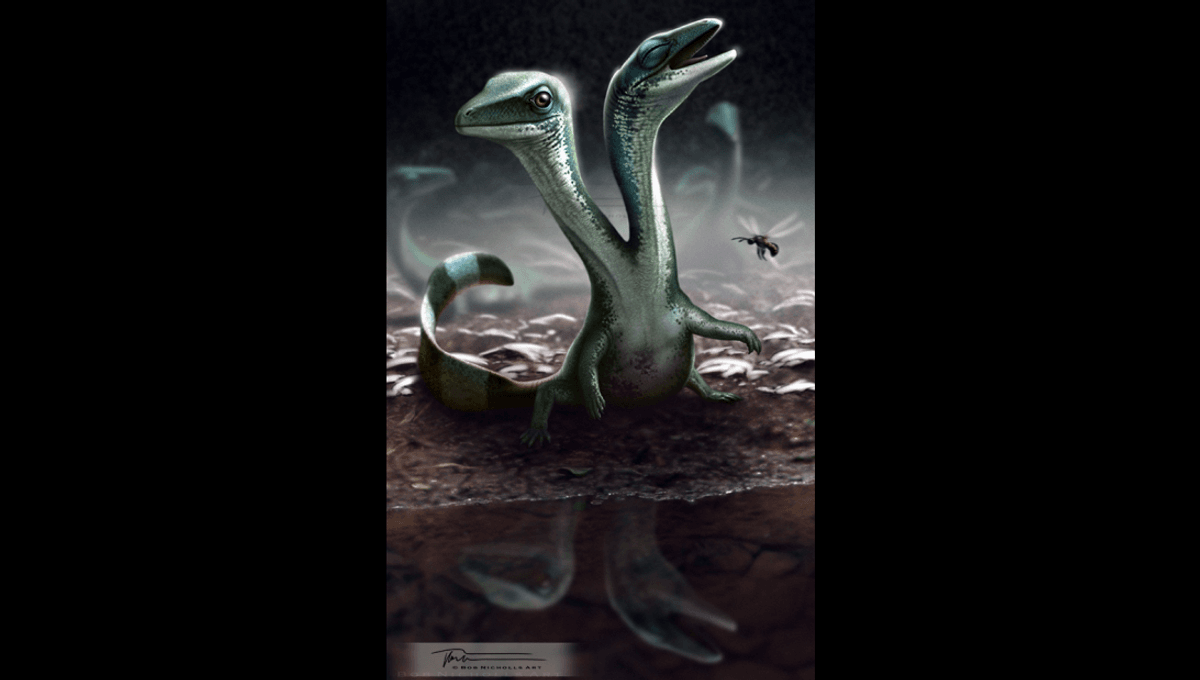
In 2006, a study published in the journal Biology Letters described a fossil unlike any ever seen before. It captured a prehistoric reptile that lived around 125 million years ago. That, in itself, wasn’t terribly surprising, but the fact that it had two heads really, really was. Bicephalism describes a quirk in animal development that results in an individual with two heads. We’ve seen remarkable examples of it in wild animals, such as this southern black racer snake that was found to have independent brains that disagreed with each other. To think just how rare bicephalism is in the world today, combined with the fact that fossilisation is incredibly rare, this fossil is truly exceptional. Dr Dean Lomax As we know, fossilization is a treatment only granted to a select few of the animals that have ever lived on Earth. You’ve got to die in just the right way to become a good fossil, meaning the animals we retrieve from the rock today represent only a snapshot of their ecosystem. It’s rare, then, to end up being a gorgeously preserved fossil. Even rarer still to become one that captures a physiological quirk like bicephalism. This bicephalic tortoise was known as "Janus". Image credit: Philippe Wagneur, Natural History Museum of Geneva (MHNG) via Wikimedia Commons ( CC BY-SA 4.0 ) Palaeontologist, author, and science communicator Dr Dean Lomax was particularly taken with the fossil, which he explains in his new book The Secret Lives Of Dinosaurs is a prehistoric reptile called Hyphalosaurus lingyuanensis. So taken by it, in fact, that it became the cover star of that book (catch a “Giant T. rex Penis” snippet of it in our September issue of CURIOUS ). So, we asked him how it felt laying eyes on it for the first time. “In one word, mesmerised,” said Lomax. “I have seen a living two-headed snake before, and am fully aware of other, often rare examples of bicephalous animals, but having an actual fossil is next level.” “It is extraordinary. To think just how rare bicephalism is in the world today, combined with the fact that fossilisation is incredibly rare, this fossil is truly exceptional.” The hyphalosaur was retrieved from Early Cretaceous rock in the Jehol Biota fossil beds of Liaoning Province, China, that is estimated to be between 120- to 125-million-years-old (and you can see photos of it here ). The region is famous for churning out remarkably preserved specimens, some complete with feathers and soft tissues, but a two-headed reptile really takes the biscuit. Incredible to imagine this lil' guy scampering around 125 million years ago. Image courtesy of Bob Nicholls If you’re scoffing at this obvious “ fake ”, it may interest you to know that its authenticity has already been questioned and investigated, and to date, nobody’s found any evidence to suggest it isn’t real. The mineralized remains clearly show two heads and two necks that are attached to the body. If I really had to narrow it down, I’d have to go for something cliché like a Tyrannosaurus or a Spinosaurus, because the two giant heads would look incredible. Dr Dean Lomax As for the fate of our very special hyphalosaur? It’s possible that it lived for a short while before its death and subsequent fossilization, as it was about 7 centimeters (2.8 inches) long and wasn’t found near an adult. So, it just goes to show that although exquisite fossilization is rare, it does happen, and sometimes it captures some truly remarkable animals. It’s also possible, then, that we could find more two-headed animals in the fossil record, which got us wondering: If you could choose any dinosaur to see with two heads, what would it be? “Oooooh, that is a question!” said Lomax. “There are just so many choices. If I really had to narrow it down, I’d have to go for something cliché like a Tyrannosaurus or a Spinosaurus, because the two giant heads would look incredible (of course, if they reached adulthood!).” “However, part of me also ponders what something like Diplodocus or Brachiosaurus might look like with two heads. Would they grow to the same length, I wonder. Given the giant, intimidating size of these dinosaurs in general, seeing one with two heads would be pretty terrifying.” The Secret Lives Of Dinosaurs is published by Columbia University Press and is available now.
-
Republicans could draw 19 more House seats after an upcoming Supreme Court ruling
Site: POLITICO
Many experts are forecasting the end of a key provision of election law — enabling Republicans to shore up their advantage in the House, according to a new report.

-
 The Strange Science Behind Ghostly Lights That Have Haunted Us For Centuries : ScienceAlert
Added: Oct 8, 2025
The Strange Science Behind Ghostly Lights That Have Haunted Us For Centuries : ScienceAlert
Added: Oct 8, 2025The Strange Science Behind Ghostly Lights That Have Haunted Us For Centuries
Site: ScienceAlert
Ghostly lights dancing in midair in swamps, forests, and even graveyards have been reported by cultures all over the world, for centuries.

-
Unveiling ignis fatuus: Microlightning between microbubbles | PNAS Added: Oct 8, 2025
PNAS
Site: PNAS
Proceedings of the National Academy of Sciences (PNAS), a peer reviewed journal of the National Academy of Sciences (NAS) - an authoritative source of high-impact, original research that broadly spans the biological, physical, and social sciences.