Bookmarks 2025-09-26T16:41:31.086Z
by Owen Kibel
32 min read
Bookmarks for 2025-09-26T16:41:31.086Z
-
Turkey State Visit - YouTube Added: Sep 26, 2025
Turkey State Visit
Site: YouTube
Enjoy the videos and music you love, upload original content, and share it all with friends, family, and the world on YouTube.

-
Cheering Comey indictment, Trump predicts ‘there will be others’ - POLITICO Added: Sep 26, 2025
Cheering Comey indictment, Trump predicts ‘there will be others’
Site: POLITICO
The president ripped his former FBI director as a liar while suggesting more of his political opponents could face charges.

-
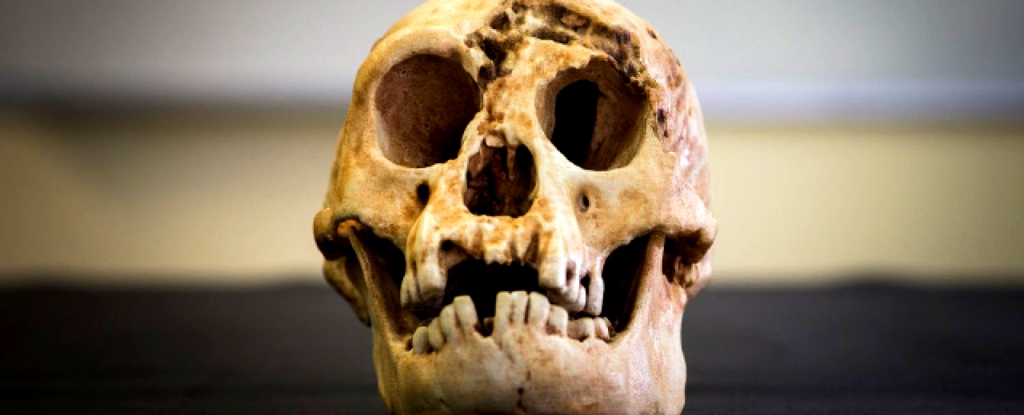
 Scientists Finally Reveal Why 'Hobbits' Were So Small : ScienceAlert
Added: Sep 26, 2025
Scientists Finally Reveal Why 'Hobbits' Were So Small : ScienceAlert
Added: Sep 26, 2025Scientists Finally Reveal Why 'Hobbits' Were So Small
Site: ScienceAlert
Until Homo floresiensis was discovered, scientists assumed that the evolution of the human lineage was defined by bigger and bigger brains.
-
 I replaced all my bash scripts with Python, and here’s what happened
Added: Sep 26, 2025
I replaced all my bash scripts with Python, and here’s what happened
Added: Sep 26, 2025** I replaced all my bash scripts with Python, and here’s what happened**
Site: XDA
I replaced all my bash scripts with Python. Here’s what improved, what broke, and why the switch changed my workflow.

-
Could humans and AI become a new kind of evolutionary individual? Added: Sep 26, 2025
Could humans and AI become a new kind of evolutionary individual?
In a recent op-ed published in Proceedings of the National Academy of Sciences, SFI External Professor Michael Hochberg and co-author Paul Rainey explore whether deepening interdependence between humans and AI could lead to a new form of evolutionary individuality.

-
'We are ready for every scenario.' NASA's Artemis 2 astronauts say they're all set for historic flight to the moon | Space Added: Sep 26, 2025
'We are ready for every scenario.' NASA's Artemis 2 astronauts say they're all set for historic flight to the moon
Site: Space
"We are ready for every scenario as we ride this amazing Space Launch System on the Orion spacecraft, 250,000 miles away."

-
Could humans and AI become a new evolutionary individual? | PNAS Added: Sep 26, 2025
PNAS
Site: PNAS
Proceedings of the National Academy of Sciences (PNAS), a peer reviewed journal of the National Academy of Sciences (NAS) - an authoritative source of high-impact, original research that broadly spans the biological, physical, and social sciences.

-
Site: X (formerly Twitter)

-
Site: X (formerly Twitter)
-
One of the Most Interesting Things from Trump's Presidency — Vivek Ramaswamy
Site: YouTube
#uspoliticsPlease remember to subscribe if you enjoyed this episode of Pod Force One: https://www.youtube.com/@PodForce1Watch full clips of Pod Force One wit...

-
Trump Signs Order To Crack Down On Leftist Violence, Will Use Full Weight of US Government
Site: YouTube
SUPPORT THE SHOW BUY CAST BREW COFFEE NOW - https://castbrew.com/Join - https://www.youtube.com/channel/UCLwNTXWEjVd2qIHLcXxQWxA/joinHosts: Tim @Timcast (eve...

-
Trump DOJ Indicts James Comey, The ARRESTS Have BEGUN | Timcast IRL
Site: YouTube
Try my favorite sleep aid, Beam Dream. Visit https://shopbeam.com/TIMPOOL and use code TIMPOOL to get up to 35% off — limited time only!Head to https://crypt...

-
Trump Signs Order To Crack Down On Leftist Violence, Will Use Full Weight of US Government
Site: YouTube
SUPPORT THE SHOW BUY CAST BREW COFFEE NOW - https://castbrew.com/Join - https://www.youtube.com/channel/UCLwNTXWEjVd2qIHLcXxQWxA/joinHosts: Tim @Timcast (eve...
-
Dormi, Jesu! (A Lullaby) - YouTube Music Added: Sep 26, 2025
Dormi, Jesu! (A Lullaby) - YouTube Music
Site: YouTube Music
Provided to YouTube by The Orchard Enterprises Dormi, Jesu! (A Lullaby) · The Sixteen · Alexandra Kidgell · Harry Christophers · Jeremy Dibble Jeremy Dibbl...
-
Seraphim - YouTube Music
Site: YouTube Music
Provided to YouTube by Dirk Maassen Music Seraphim · Dirk Maassen Seraphim ℗ 2025 Dirk Maassen Music Released on: 2025-09-26 Main Artist: Dirk Maassen C...
-
To the Summit - YouTube Music
Site: YouTube Music
Provided to YouTube by CDBaby To the Summit · David Tolk To the Summit ℗ 2025 David Tolk Released on: 2025-07-18 Auto-generated by YouTube.
-
Soul Tricycle - YouTube Music
Site: YouTube Music
Provided to YouTube by FLUXUS Soul Tricycle · BROWN EYED SOUL Soul Tricycle ℗ Long Play Music, under license to Dreamus Released on: 2025-09-23 Composer...
-
Brandenburg Concerto No. 1 in F Major, BWV 1046: I. — - YouTube Music
Site: YouTube Music
Provided to YouTube by Warner Classics Brandenburg Concerto No. 1 in F Major, BWV 1046: I. — · Sir Adrian Boult · London Philharmonic Orchestra · Roger Winf...
-
P. Smith: Karitas - YouTube Music
Site: YouTube Music
Provided to YouTube by Universal Music Group P. Smith: Karitas · VOCES8 · Daniela Mars · Paul Smith Revolutions ℗ 2025 VOCES8 Records, under exclusive lic...
-
Hidden prompt injection: The black hat trick AI outgrew Added: Sep 26, 2025
Hidden prompt injection: The black hat trick AI outgrew
Site: Search Engine Land
Invisible prompts once tricked AI like old SEO hacks. Here’s how LLMs filter hidden commands and protect against manipulation.

-
VentureBeat | Transformative tech coverage that matters Added: Sep 26, 2025
-
Russ Vought’s Secret Shutdown Weapon - WSJ Added: Sep 26, 2025
-
Man singet mit Freuden vom Sieg, BWV 149: No. 1, Man singet mit Freuden Vom Sieg (Live) - YouTube Music
Site: YouTube Music
Provided to YouTube by Naxos Digital Services Man singet mit Freuden vom Sieg, BWV 149: No. 1, Man singet mit Freuden Vom Sieg (Live) · Chor der J.S. Bach-S...
-
Es erhub sich ein Streit, BWV 19: No. 1, Es erhub sich ein Streit (Live) - YouTube Music
Site: YouTube Music
Provided to YouTube by Naxos Digital Services Es erhub sich ein Streit, BWV 19: No. 1, Es erhub sich ein Streit (Live) · Chor der J.S. Bach-Stiftung · Orche...
-
In dulci jubilo (Arr. for Lute by Esaias Reusner [the elder]) - YouTube Music
Site: YouTube Music
Provided to YouTube by The Orchard Enterprises In dulci jubilo (Arr. for Lute by Esaias Reusner [the elder]) · Mignarda · Anonymous · Anonymous, 17th Centur...
-
The Mad Lover: V. Aire. Ground (Arr. Diluka for Piano) - YouTube Music
Site: YouTube Music
Provided to YouTube by Warner Classics The Mad Lover: V. Aire. Ground (Arr. Diluka for Piano) · Shani Diluka Renaissance ℗ A Warner Classics/Erato release...
-
 Get cookies.txt LOCALLY - Chrome Web Store
Added: Sep 26, 2025
Get cookies.txt LOCALLY - Chrome Web Store
Added: Sep 26, 2025Get cookies.txt LOCALLY - Chrome Web Store
Get cookies.txt, NEVER send information outside with open-source
-
Dear YouTube...
Site: YouTube
For more content follow me here:X - @VivekGRamaswamyInstagram - @vivekgramaswamyFacebook - facebook.com/VivekGRamaswamyTruth Social - @VivekRamaswamyRumble -...

-
Белые медведи, которые живут на полярной базе на острове Колючин
Site: YouTube
Один день из жизни белых медведей на острове Колючин.Посчитали, сколько медведей живёт в домике?Полярные медведи здесь живут на заброшенной метеостанции. Неп...

-
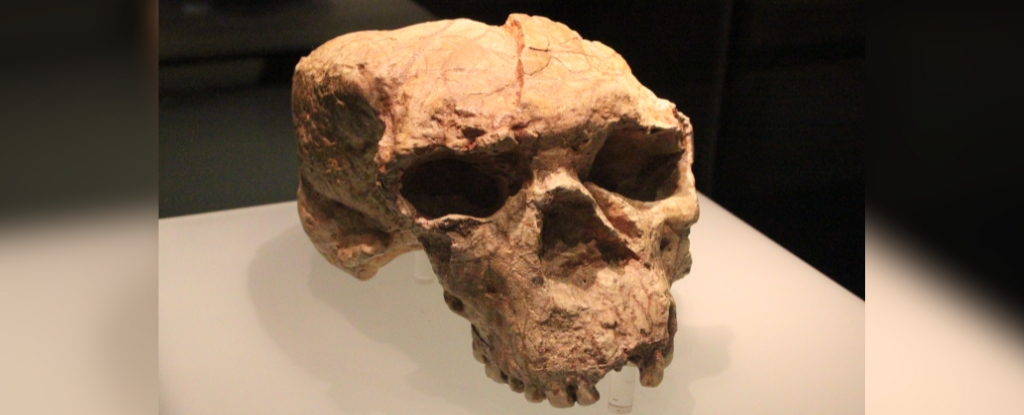
A Million-Year-Old Skull Just Rewrote The Origin Story of Humanity : ScienceAlert
Added: Sep 26, 2025
A Million-Year-Old Skull Just Rewrote The Origin Story of Humanity
Site: ScienceAlert
An ancient skull, warped and damaged by the ravages of time and degradation, may have just altered our understanding of the history of modern humans.
-
FORGET Nano Banana! This is BETTER (And Lower Censorship)
Site: YouTube
Lovart + Seedream = Design insanity. Try it now!https://www.lovart.ai/?sourceId=900211Using Seedream 4 and Nano Banana is easiest on @lovart_ai.Download my c...

-
The Indictment Against Comey Should Be Dismissed | National Review Added: Sep 26, 2025
The Indictment Against Comey Should Be Dismissed | National Review

-
Joseph and His Brethren, HWV 59, Pt. 1: Ouverture - YouTube Music
Site: YouTube Music
Provided to YouTube by NAXOS of America Joseph and His Brethren, HWV 59, Pt. 1: Ouverture · James Miller Handel: Joseph and His Brethren, HWV 59 ℗ 2019 Ph...
-
Baobab - YouTube Music
Site: YouTube Music
Provided to YouTube by ONErpm Baobab · Classical Hits · 5th Av. Band · Frank Scholes Baobab ℗ Global Art Music Released on: 2025-09-26 Producer: Frank S...
-
 yt-dlp will soon require a full JS runtime to overcome YouTube’s JS challenges – OSnews
Added: Sep 26, 2025
yt-dlp will soon require a full JS runtime to overcome YouTube’s JS challenges – OSnews
Added: Sep 26, 2025yt-dlp will soon require a full JS runtime to overcome YouTube’s JS challenges – OSnews
-
How Humans Can Escape the Simulation, According to Scientists Added: Sep 26, 2025
A Scientist Reveals How to Escape Our Simulation
Site: Popular Mechanics
Hack your way out of the wrong reality.
-
Can we hack our way out of the universe? | Roman V. Yampolskiy » IAI TV Added: Sep 26, 2025
** Can we hack our way out of the universe? | Roman V. Yampolskiy **
Site: IAI TV - Changing how the world thinks
In this speculative, long read, Roman Yampolskiy argues if we are living inside a simulation, we should be able to hack our way out of it. Elon Musk thinks it is >99.9999999% that we are in a simulation. Using examples from video games, to exploring quantum mechanics, Yampolskiy leaves no stone unturned as to how we might be able to hack our way out of it.

-
**Hacking our way out of the universe **
From Descartes to The Matrix, the idea that reality might be a simulation has long fascinated and terrified humanity. Elon Musk recently argued that the simulation hypothesis is most likely true. But if that's the case, might there be a way to escape back to the real world? Join leading computer scientist Roman Yampolskiy as he argues that if we are living in a simulation, we can also hack our way out of it.

-
Rumors Erupt FBI Is Lying About Charlie Kirk Assassination, Covering Up Evidence
Site: YouTube
BUY CAST BREW COFFEE TO SUPPORT THE SHOW - https://castbrew.com/Become A Member And Protect Our Work at http://www.timcast.comHost:Tim Pool @Timcast (everywh...

-
Who Really Killed Charlie Kirk? Truth Behind Kirk Assassination | The Culture War with Tim Pool
Site: YouTube
Text TIM to 36912 to get 60% off the BAERSkin Hoodie today! Or click: https://baer.skin/timBUY CAST BREW COFFEE TO SUPPORT THE SHOW - https://castbrew.com/Be...

-
Comedian Dunks On Leftist Heckler After She Defends Illegal Immigrants
Site: YouTube
SUPPORT THE SHOW BUY CAST BREW COFFEE NOW - https://castbrew.com/Join - https://www.youtube.com/channel/UCLwNTXWEjVd2qIHLcXxQWxA/joinHosts: Tim @Timcast (eve...

-
RIOTS Leftist ATTACK ICE, Tear Gas Deployed, Feds Ordered To IGNORE CA Law, CIVIL WAR! | Timcast IRL
Site: YouTube
Try my favorite sleep aid, Beam Dream. Visit https://shopbeam.com/TIMCAST and use code TIMCAST to get up to 35% off — limited time only!SUPPORT THE SHOW BUY ...

-
 Philosopher Wins Open Access Award - Daily Nous
Added: Sep 27, 2025
Philosopher Wins Open Access Award - Daily Nous
Added: Sep 27, 2025Philosopher Wins Open Access Award - Daily Nous
Site: Daily Nous
Adrian Kind, a postdoctoral researcher in philosophy and psychology at Charité – Universitätsmedizin Berlin, is one of the winners of the 2025 Open Access Award. The award is given by Open Library of Humanities, the diamond open access publisher of Free & Equal, Political Philosophy, and other journals. This year, three researchers were recognized for “exceptional commitment to open access,” and provided with support for their open-access related projects. Dr. Kind received the award for his project, “Open Philosophy.” The award announcement states: The project Open Philosophy aims to inform about, promote, and encourage open access in academic philosophy. The field is experiencing a growing number of open access journals hosted by university libraries, independent scholars, and organisations such as the Open Library of Humanities… For these journals to thrive, they require increased recognition within academia through greater awareness, support from scholars who see open access as a public good, and high-quality submissions that boost their credibility and impact. Funding from the Open Library of Humanities will enable Open Philosophy to support the open access philosophy community through a sustained initiative to build a collaborative network. Planned activities include the development of a homepage listing open access philosophy journals, a search engine dedicated to these journals, a series of podcast interviews, a blog, and an annual “Open Philosophy Prize.” Dr. Kind writes: The first steps I’m taking at the moment are to reach out to Diamond OE journals that want to be listed in the project and would support the prize committee next year. A homepage will be developed over the rest of this year. Next year, once the homepage is up, I also want to start interviewing editors of OE journals about their publishing models, experiences, and thoughts on publishing philosophy. The other two prizes were awarded for creating a series of workshops in Malaysia, Pakistan, and Singapore focused on diamond open access publishing in the humanities, and for curating an exhibition at Liverpool John Moores University (LJMU) aimed at raising awareness of humanities research data and the importance of making it openly available.

-
From a 20-Foot Poop Pile, Scientists Uncover the Secrets of Giant Sloths Added: Sep 27, 2025
From a 20-Foot Poop Pile, Scientists Uncover the Secrets of Giant Sloths
Site: SciTechDaily
Sloths may seem like quirky tree-dwellers today, but their past reveals a dynasty of giants that once roamed the Americas. Most people know sloths as slow-moving, bear-like creatures that dangle from trees, take nearly a month to digest a single meal, and defecate only once a week. Their closest

-
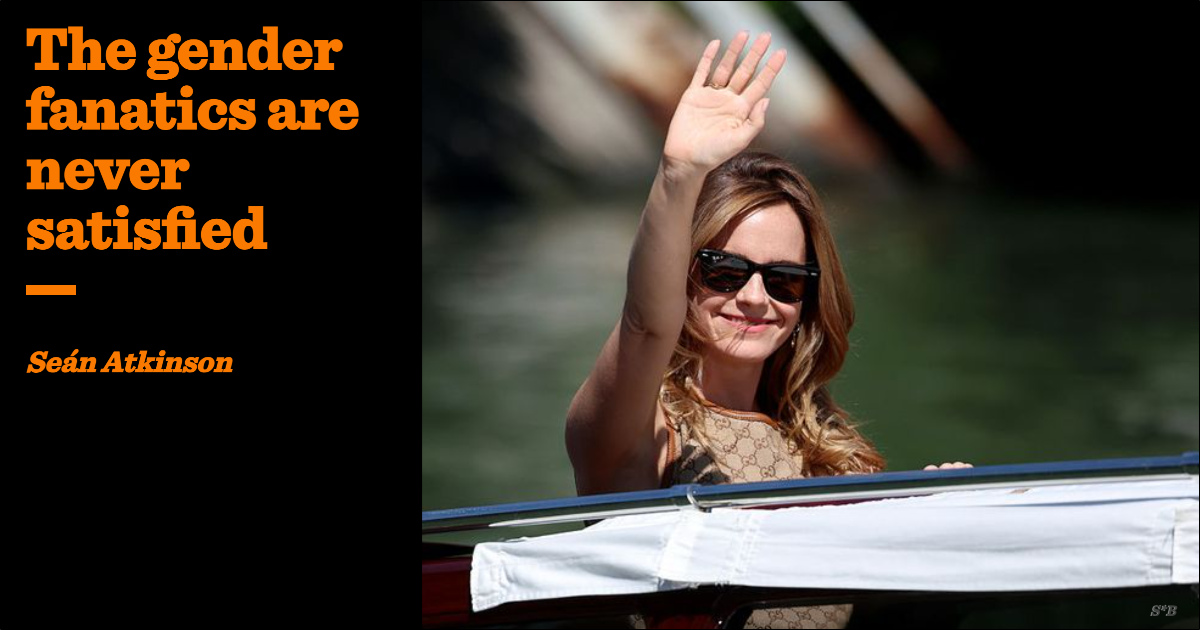
The gender fanatics are never satisfied | Seán Atkinson | The Critic Magazine Added: Sep 27, 2025
The gender fanatics are never satisfied | Seán Atkinson | The Critic Magazine
Site: The Critic Magazine
They showed up acting like they wanted peace, but one could swear that they want total domination. That’s trans activism in a nutshell — “comply fully or else.” On Wednesday the 24th of September…
-
Site: X (formerly Twitter)
-
Myron Gaines Says FBI Must Release More Evidence To Debunk Insane Charlie Kirk Conspiracies
Site: YouTube
BUY CAST BREW COFFEE TO SUPPORT THE SHOW - https://castbrew.com/Become A Member And Protect Our Work at http://www.timcast.comHost:Tim Pool @Timcast (everywh...

-
Scientists say Twitter has lost its edge and Bluesky is taking its place Added: Sep 27, 2025
Scientists say X (formerly Twitter) has lost its professional edge — and Bluesky is taking its place
Site: PsyPost - Psychology News
After Elon Musk's acquisition of Twitter, many scientists report the platform is no longer suitable for professional use. A recent survey indicates that researchers are increasingly turning to Bluesky, which they view as more useful, welcoming, and aligned with their goals.
A new study published in <em><a href="https://doi.org/10.1093/icb/icaf127" target="_blank" rel="noopener">Integrative and Comparative Biology</a></em> suggests that scientists are leaving X (formerly known as Twitter) in significant numbers due to its declining professional value. The survey of over 800 researchers and science communicators indicates that many now find Bluesky to be a more effective platform for networking, outreach, and staying updated on research. The findings suggest a significant shift in how scientists interact online, with Bluesky emerging as a preferred space for professional engagement.
Twitter, once considered the central gathering place for scientists on social media, has changed dramatically in recent years. The platform, now officially called “X,” was purchased by Elon Musk in late 2022. Since then, changes to how the platform is moderated and how content appears in users’ feeds have raised concerns among many users, especially academics.
Reports have pointed to a rise in misinformation, conspiracy theories, and harassment, particularly directed at minority groups. These shifts appear to have made the platform less welcoming and less useful for professional tasks. As Twitter’s character evolved, so too did the willingness of researchers to remain active on the platform.
In its place, Bluesky has gained attention as a new space for academic interaction. Although other platforms like Threads and Mastodon have also positioned themselves as alternatives, Bluesky appears to be the primary destination for scientists migrating from X. Against this backdrop, researchers set out to document whether scientists were truly abandoning X and whether Bluesky was filling the gap.
"I am a scholar of public understanding (and misunderstanding) of science and the environment, and have long been fascinated by where people learn things about nature. Social media has become one of the leading sources of information about the world, but the social media landscape is changing, and I wanted to see how my professional colleagues were adapting," said study author David Shiffman, a marine biologist and public science engagement specialist based in Washington, D.C, and author of <em><a href="https://www.press.jhu.edu/books/title/12267/why-sharks-matter" target="_blank" rel="noopener">Why Sharks Matter</a></em>.
To investigate these questions, researchers distributed a survey to professional scientists, science communicators, and educators who had used both X and Bluesky for work-related purposes. In total, 813 individuals participated. The survey asked when participants joined each platform, how they used them, and how their experiences had changed over time.
The responses showed that X had once served a wide range of professional purposes. Nearly all respondents had used it to learn about developments in their fields, and most had relied on it for networking and public outreach. Many also used it for job postings, research promotion, and casual professional conversation.
However, those same users reported a sharp decline in the usefulness of X. Roughly three-quarters said the platform was now “much less useful” for networking and science communication. Two-thirds said it was less helpful for keeping up with developments in their field.
The vast majority described their experience on Twitter as increasingly unpleasant, citing irrelevant content, ads, spam, extremist posts, and a loss of meaningful engagement. Some described ethical discomfort with continuing to use a platform that appeared to tolerate, or even amplify, harassment and misinformation.
In terms of actual usage patterns, only 11 percent of respondents said they still actively use X. Nearly 40 percent had deleted their accounts entirely. Almost half said they still had accounts but rarely used them.
In contrast, users reported that Bluesky was meeting many of their professional needs. Like Twitter in its earlier days, Bluesky offered a space for learning, networking, and public engagement. Over 94 percent said they used Bluesky to stay informed about research in their field, and nearly 88 percent used it for professional networking. A majority said the new platform was more useful than X for these purposes.
The researchers also explored why people chose to try Bluesky. Nearly half said they were invited by a colleague or saw others in the science community making the shift. Many viewed Bluesky’s features — such as stronger moderation tools, less algorithmic interference, and more control over what appears in their feed — as more aligned with their professional goals.
Others said they were simply trying to avoid X’s drawbacks. More than a quarter said they moved to Bluesky because of what they perceived as a rise in extremism on X, and many explicitly named Elon Musk as a reason for their departure.
"The degree to which the scientific community's experiences mirrored my own was surprising," Shiffman told PsyPost. "I knew that for me, Twitter had become unusable, but the extent to which hundreds of surveyed experts strongly agreed with me on almost every point was surprising. You rarely see that kind of strong agreement in surveys."
These results provide new evidence to support what other studies and media reports have been suggesting for some time: that X's role as a hub for academic communication is fading. A previous study <a href="https://www.psypost.org/elon-musks-twitter-takeover-triggered-academic-exodus-study-suggests/" target="_blank" rel="noopener">documented a noticeable drop in academic activity on X</a> after Musk’s acquisition. That research tracked over 15,000 academic accounts and found a significant reduction in tweets, especially original posts and quote tweets, starting in November 2022. Verified users — typically more established academics — were especially likely to reduce their engagement.
Both studies indicate that changes to how X is managed and moderated have had measurable effects on academic use of the platform. The new survey adds further weight to this idea by showing that scientists are not just using X less — they are actively replacing it with another platform.
What makes the current study distinctive is its focus on Bluesky as the replacement. While earlier data showed general declines in X use, this survey points to a specific alternative that scientists are embracing. And unlike the earlier study, which focused on activity levels, the new survey captures users’ motivations and perceptions, offering a more detailed view of what is driving this migration.
"For many years, Twitter was the leading platform used by academics for a wide variety of purposes, including public education about science," Shiffman explained. "I was a Twitter power-user and evangelist for a decade, and I trained thousands of scientists how to use the platform. Changes to the platform made by Elon Musk, including changing the algorithm to promote extremist views and changes to harassment policy, have made Twitter almost unusable for professional purposes, and academics are abandoning Twitter in droves. Fortunately, alternatives exist, and I, along with many other academics, prefer Bluesky of the available alternatives."
The authors note that the survey was limited to users who had already made the switch from X to Bluesky, or were using both platforms. This means it does not account for those who may have stopped using social media altogether or migrated to other platforms. Because the survey was shared primarily through one author’s network, it may reflect the perspectives of those within particular academic communities more than others.
Another open question concerns whether Bluesky can support the same level of diversity that once defined the science community on X. Movements like Black Birders Week and Queer in STEM gained traction through Twitter's large, visible networks. It remains unclear whether Bluesky can foster similar grassroots engagement. The authors suggest this should be the focus of future research, particularly if scientists want to ensure that new digital spaces remain inclusive.
There is also the issue of platform longevity. Whether Bluesky can maintain momentum over time — or whether users will need to shift again — is uncertain. But for now, it appears to offer what many researchers were missing from X: a sense of community, professional utility, and control over their online interactions.
The study, "<a href="https://doi.org/10.1093/icb/icaf127" target="_blank" rel="noopener">Scientists no Longer Find Twitter Professionally Useful, and have Switched to Bluesky</a>," was authored by David S. Shiffman and Julia Wester.

-
Liberals trust experts more than conservatives, but expert labels still matter Added: Sep 27, 2025
Liberals trust experts more than conservatives, but expert labels still matter
Site: PsyPost - Psychology News
A new study suggests that naming an expert source can slightly increase how accurate people find scientific claims. While liberals generally trust experts more, conservatives respond positively when claims come from named experts, especially in economics or science.
A new study published in <em><a href="https://doi.org/10.1177/09636625251372081" target="_blank" rel="noopener">Public Understanding of Science</a></em> suggests that attributing scientific claims to specific experts can modestly increase how accurate those claims are perceived to be — especially among politically conservative individuals. Conducted in the United States, the study also indicates that while liberals tend to trust experts more than conservatives across the board, conservatives may still respond more positively when claims come from experts whose research is associated with production and economic growth.
<a href="https://www.linkedin.com/in/rodrigo-reyes-cordova-48164b213/" target="_blank" rel="noopener">Rodrigo Reyes Cordova</a>, a doctoral researcher at <a href="https://medialab.sciencespo.fr/en/people/rodrigo-alonso-reyes-cordova/" target="_blank" rel="noopener">the médialab at Sciences Po Paris</a>, conducted the study. He wanted to better understand how political ideology affects public trust in scientific experts and their claims. Rather than relying on broad labels like “pro-science” or “anti-science,” the study focuses on whether people’s beliefs align with the type of expert making a claim.
Previous research has shown a long-term trend in the U.S.: conservatives have become more skeptical of scientific institutions over time, while liberals have grown more trusting. However, Reyes Cordova aimed to go deeper by examining how the alignment between a person's political beliefs and the field of expertise influences their perception of trust and credibility.
"My main motivation was a feeling of discomfort with the narrative that 'liberals/left-wing people are pro-science and conservatives/right-wing people are anti-science,'" Reyes Cordova told PsyPost. "I do not think that captures the reality. My view is that everyone is biased, regardless of political beliefs, and we are all prone to dismissing information that seemingly conflicts with them."
The study draws on the idea of cultural cognition — a framework that suggests people are more likely to trust claims that align with their values and worldview. According to this view, political ideology shapes how people evaluate expert information, not necessarily because they reject science itself, but because they interpret scientific claims through a social and political lens.
To explore these questions, Reyes Cordova designed an online experiment involving 1,054 adults living in the U.S. Participants were presented with four different claims, each tied to current public debates: immigration and crime, taxation and government revenue, genetically modified foods, and climate change. Each participant was randomly assigned to one of four conditions. In some cases, the claim was attributed to an expert from a specific field (like a sociologist or economist), in other cases to a general “scientist,” and in the control condition, the claim had no named source.
The study categorized experts into two broad groups. One group, labeled as impact experts, included sociologists and environmental scientists. These fields tend to focus on the societal and environmental consequences of industry and policy. The second group, called production experts, included economists and agricultural scientists, who typically work in fields tied to industrial output and economic performance.
Participants were asked to rate how accurate they believed each claim was, as well as how much they trusted various kinds of experts. They also reported their political ideology, identifying themselves as either liberal or conservative.
Across all expert types, liberals expressed more trust than conservatives. However, the difference was smaller for production experts. This suggests that while conservatives are generally less trusting of experts, they may be relatively more comfortable with experts whose work aligns with economic or industrial goals.
"Conservatives trust all experts less, regardless of whether that expert is from what I define as a 'production' or 'impact' field," Reyes Cordova explained. "That said, they do favor production over impact experts."
When it came to judging the accuracy of specific claims, political ideology again played a role. Liberals tended to rate all four claims as more accurate than conservatives did — except for the taxation claim. Conservatives rated that claim (which said taxing the rich and corporations reduces government income) as more accurate than liberals. This finding aligns with previous research showing that people’s political beliefs often influence how they evaluate individual claims.
Despite these ideological differences, the expert’s field — whether impact or production — did not have a consistent effect on how accurate a claim was perceived to be. In other words, attributing a claim to an economist versus an environmental scientist did not significantly change how participants rated its accuracy. This result held regardless of the participant’s political orientation.
"Overall, experts are seen as a source of credibility for scientific information," Reyes Cordova told PsyPost.
However, some subtle effects did emerge. Overall, attributing a claim to any kind of expert, whether from a specific field or just a general “scientist,” increased its perceived accuracy compared to when no expert was mentioned. This effect appeared most strongly in two of the four claims: the one about taxation and the one about climate change.
For the taxation claim, both liberals and conservatives rated the claim as more accurate when it was linked to a specific expert, compared to when it had no source. For the climate change claim, conservatives in particular viewed the claim as more accurate when it was attributed to an environmental or agricultural scientist, rather than left without a named source. Liberals, by contrast, rated the claim’s accuracy the same regardless of whether an expert source was included.
"On the anthropogenic nature of climate change, conservatives rated the claim as more accurate when attributed to an expert, even if this is a claim they usually reject," Reyes Cordova said.
These findings suggest that including an expert attribution — simply mentioning that a claim comes from a named expert — can increase credibility. For claims that are typically contested or politicized, like climate change, this strategy may be especially helpful in bridging ideological divides.
The study has some limitations. The sample was balanced in terms of political ideology, gender, and education, but it was not nationally representative. This limits the generalizability of the findings. The claims used in the study were drawn from earlier research and may not reflect topics that are most relevant or salient to participants today. Some of the claims, such as those about genetically modified organisms, may also be more contested within scientific communities than the study assumed.
"The experiment was administered to a very special sample, and participants evaluated only a small number of claims," Reyes Cordova noted. "Additionally, I did not measure whether people have 'wrong' or 'correct' views on scientific information; I only measured their perception of expert information. Nevertheless, the results are robust, since the design was experimental and controlled for demographic variables."
Future research might explore how different expert fields are viewed across the political spectrum, and whether certain claims are more persuasive when accompanied by experts with particular reputations or qualifications. Studies could also test whether similar effects are seen in other countries or cultural contexts. Another promising direction would be to include a wider range of claims and examine how the perceived political orientation of an expert — not just their field — influences credibility.
"I aim to understand the conditions under which the public is willing to accept expert information," Reyes Cordova said. "For a functioning democracy, it is essential that experts are heard."
The study, "<a href="https://doi.org/10.1177/09636625251372081" target="_blank" rel="noopener">Political ideology-driven perceptions of experts and their claims</a>," was published online on September 19, 2025.

-
Study finds prosocial behavior predicts shifts in political views Added: Sep 27, 2025
Study finds prosocial behavior predicts shifts in political views
Site: PsyPost - Psychology News
New research finds that prosocial tendencies predict shifts in political ideology, particularly views on economic equality, but political beliefs do not seem to change prosocial behavior.
A recent study published in <em><a href="https://doi.org/10.1177/19485506241306869" target="_blank" rel="noopener">Social Psychological and Personality Science</a></em> suggests that people's tendency to act in cooperative and generous ways may influence their political views in the long run. Researchers found that individuals who exhibited greater prosocial behavior in economic decision-making tasks were more likely to develop political attitudes favoring social equality and income redistribution over time. However, the reverse was not true—political views did not appear to shape later prosocial tendencies.
Political attitudes often seem deeply ingrained, shaped by upbringing, social context, and media exposure. However, growing research suggests that these beliefs might also be connected to more fundamental psychological traits. Some scholars have argued that political ideology is partly rooted in dispositional factors such as sensitivity to threats, need for certainty, or preferences for social hierarchy.
One aspect of personality that has received less attention in political psychology is prosociality—the tendency to act in ways that benefit others, even at a personal cost. Prior research has linked prosociality to political beliefs in cross-sectional studies, meaning researchers have observed correlations between these traits at a single point in time. However, it has remained unclear whether prosociality causes people to adopt certain political views or whether political views shape prosocial behavior.
To explore this question, the researchers used a longitudinal approach, tracking participants over time to determine whether prosocial behavior predicted changes in political attitudes or vice versa.
"People differ widely in their political beliefs, but the reasons for this variation are not well understood," said study author Scott Claessens, a research associate at the University of Kent, who conducted the study while a research fellow at the University of Auckland.
"In our study, we explored the link between people's political beliefs and their prosocial preferences: the extent to which people are willing to benefit others at a cost to themselves. Prior research has already shown that left-wing people are more prosocial, but it is not clear whether this is just a statistical association or whether prosocial preferences play a causal role in the expression of political beliefs."
The study was based on data from the New Zealand Attitudes and Values Study, a large ongoing survey. A total of 631 participants, aged between 24 and 71, completed two waves of data collection, spaced 18 months apart.
To measure political views, participants completed surveys assessing their stance on income redistribution, their level of Social Dominance Orientation (which reflects support for hierarchical social structures), and their support for New Zealand’s center-right National Party.
Prosocial behavior was measured using a series of economic games. These games involved real financial stakes and were designed to assess how willing participants were to share resources, cooperate with others, and act in ways that benefit the collective good. The games included: <ul> <li>The Dictator Game, in which one participant decides how much of a given sum to share with another person.</li> <li>The Trust Game, where participants can transfer money to another player, with the understanding that the amount will be multiplied before the recipient decides how much to return.</li> <li>The Public Goods Game, where participants choose how much of their money to contribute to a communal fund that benefits the whole group.</li> </ul> These games provided an objective measure of each person's overall prosocial orientation, known as the "prosocial phenotype." By examining how prosocial behavior and political views changed over time, the researchers were able to determine whether one influenced the other.
The study revealed a one-way relationship: prosocial tendencies predicted political beliefs, but political beliefs did not predict prosocial tendencies. Specifically, people who displayed more prosocial behavior in the first wave of data collection were more likely to shift toward lower Social Dominance Orientation 18 months later. They also tended to show greater support for income redistribution over time. However, the reverse was not true—having certain political views at the start of the study did not predict changes in prosocial behavior later on.
Interestingly, prosocial behavior did not consistently predict changes in all political beliefs. There was no strong evidence that it influenced participants’ views on income attribution (beliefs about whether wealth is earned through hard work or external factors) or their support for the conservative National Party. This suggests that prosocial tendencies may shape attitudes toward economic equality but are less relevant to broader party preferences or beliefs about personal responsibility.
"Our longitudinal study suggests that prosocial preferences may have a causal influence on certain political beliefs," Claessens told PsyPost. "Over an eighteen month period, we found that changes in people's prosocial preferences preceded changes in people's political views on hierarchy and redistribution. People who became more prosocial over the course of the study were subsequently less likely to support hierarchical social arrangements and were more likely to support income redistribution."
Additionally, the link between prosocial behavior and later political views was more pronounced for men and for people of European descent. This pattern may be due to differences in baseline levels of Social Dominance Orientation or differences in how much room people’s political views had to shift over time.
While the study provides evidence that prosocial behavior can shape certain political beliefs, it is not without limitations. Because the study only included two waves of data, it could not fully account for the long-term stability of these traits. Future research incorporating additional time points could provide a more detailed picture of how these relationships develop over years or even decades.
"This study was conducted in New Zealand, so it remains to be seen whether these findings will replicate in other countries," Claessens noted. "The statistical effects were also relatively small, suggesting that prosocial preferences may only play a modest causal role in the expression of political beliefs compared to other factors like religion, upbringing, and political polarization."
The study, "<a href="https://doi.org/10.1177/19485506241306869" target="_blank" rel="noopener">Prosocial Phenotype Predicts Political Views on Hierarchy and Redistribution 18 Months Later</a>," was authored by Scott Claessens, Chris G. Sibley, Ananish Chaudhuri, and Quentin D. Atkinson.